


Why are some societies matrilocal - sending sons out to live with wives in other villages?
Crop systems are one possible explanation. Many scholars have observed that matrilocality is rare among communities that depend on plough agriculture or pastoralism. After matrilineal societies adopted cattle herding, many later shifted to patriliny. Women’s contribution to subsistence is also associated with matrilocality once researchers account for polygyny, involving unrelated wives. Yet this still leaves a puzzle: why do societies with similar farming systems differ in terms of kinship?
Hardcore readers will recall my observation that matrilocal societies have tended to survive conflict with larger empires only by escaping to marginal or rugged terrain - Taiwan’s Siraya were displaced by the Qing, Meiji and Kuomintang, whereas India’s Khasi outlived the Mughals by keeping to Meghalaya’s monsoon-drenched hills. I suspected that matrilocality was historic, then got crushed or pushed aside.
Doug Jones presents a complementary hypothesis: matrilocality may be a response to violent conflict. By dispersing brothers across villages, it knits settlements into wider defensive coalitions.
Crucial caveat: this debate is highly speculative. We are trying to explain historic cultural shifts, which long predate written records - no one was scribbling “Dear Diary, today we sent out our sons to live elsewhere because of XYZ”. Caveats aside, we can at least use available data to test alternative explanations and see what stacks up.
Is matrilocality a response to conflict?
Jones extends Peter Turchin’s argument that conflict across sharp cultural divides can strengthen internal cooperation, enabling smaller communities to coalesce into larger political formations. Further, if neighboring groups are culturally similar, people may shift between competing coalitions - moving to be protected by the winners. Cultural distinctiveness may deter defection: members with a strong shared identity may be reluctant to switch sides, making alliances more durable. Thus we might anticipate that neighboring empires will be culturally antagonistic - as in Figure b.
Medieval Iberia, for example, was divided between Muslim states in the south and Christian kingdoms in the north. This frontier may have encouraged within-group cooperation, enabling communities to scale up.
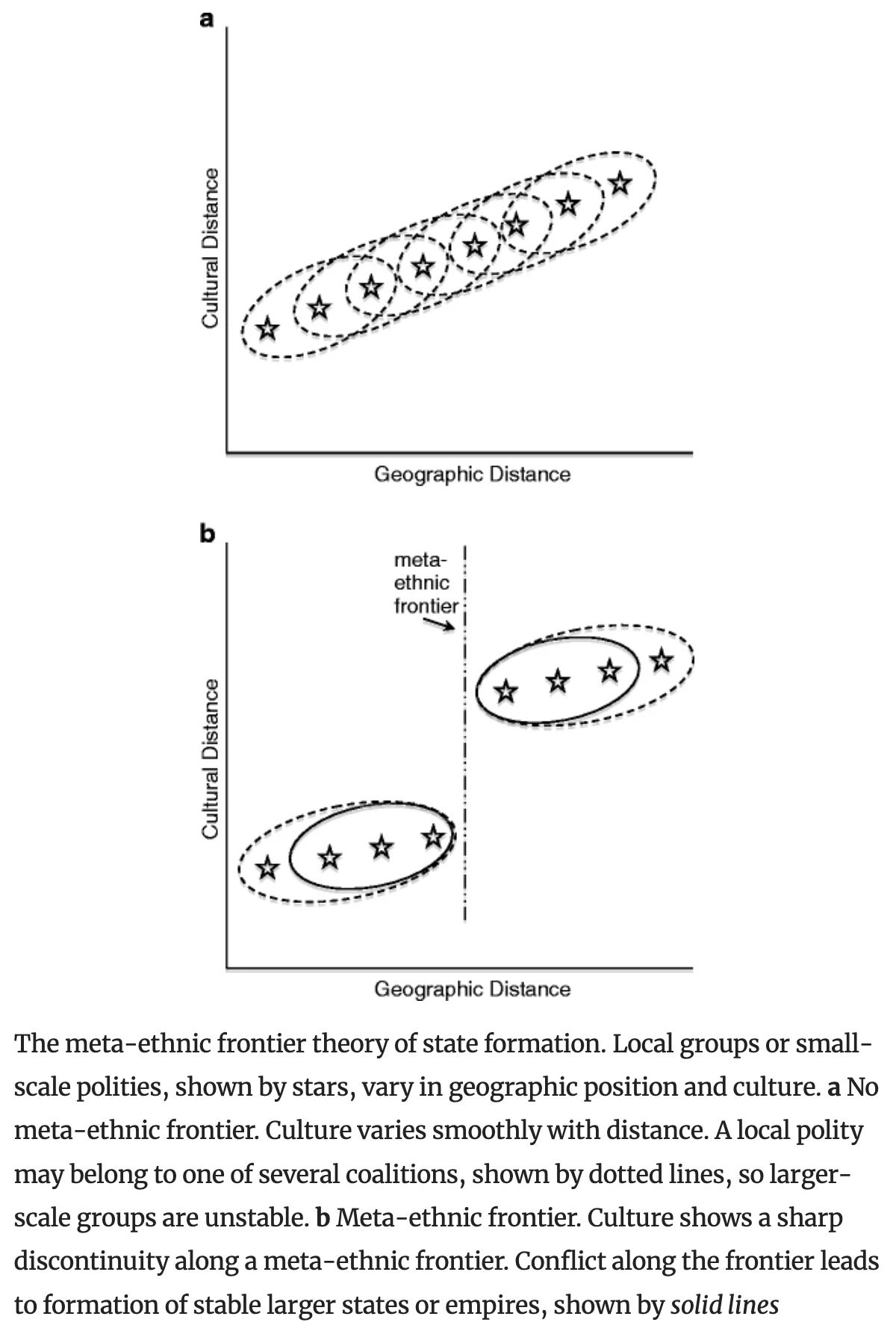
By strengthening within-group cohesiveness, groups were able to scale-up and gain military dominance. These successful populations spread over larger territories, bringing their genes, languages, kinship and technology - such as farming. This process - i.e. farmers moving into foragers’ territory - was often violent. And as external threats increased, groups may have survived by strengthening their military prowess and buttressing within-group cooperation. Or else, they were at greater risk of rape, pillage and enslavement.
While external warfare could encourage societies to coalesce into larger, more centralized states, Jones suggests there was also a small-scale alternative: matrilocality.
If men are dispersed across villages through matrilocal residence, they may be more likely to rally together, unite villages for shared defense, and cooperate as a larger tribe. Thus if a man lives with his wife’s family in one settlement, while his brothers marry into two neighbouring communities, they may be inclined to rally together against shared foes. Families might adopt this arrangement to strengthen their own security.
The Mundurucú of the Brazilian Amazon
Jones gives the example of the matrilocal Mundurucú, who cooperated across 20 villages, not engaging in violence or revenge raiding within this network. Beyond this dispersed community, they nevertheless engaged in external warfare. Some reports suggest they actually switched to matrilocality for this bellicose advantage.
Anthropologist Murphy noted that men united in cooperation, especially for defense:
“Although [a Mundurucú man] owed respect and some service to his father-in-law, the locus of his social and economic life was the men’s house; this provided the framework within which a group of men from diverse villages was welded into a highly unitary working and fighting force” (Murphy 1957, 1029).
Men “engage in common pursuits, frequently in cooperation, to the virtual exclusion of the other sex” (Murphy 1959, 96-97).
Thus while matrilocal marriage could connect brothers across villages, men’s houses likely strengthened solidarity among men from different communities, generating a cohesive fighting force.
The Bantu expansion and matrilineal belt
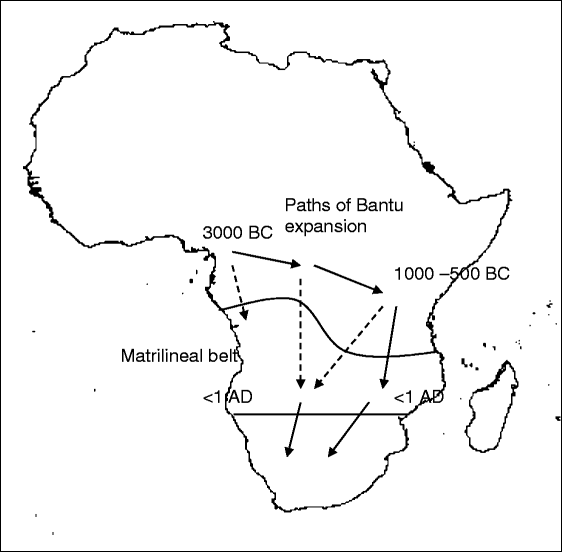
From around 3000 BC, Bantu-speaking farmers migrated out from West-Central Africa, spreading out across much of Africa south of the equator. As farming villages expanded, some earlier inhabitants fought, were driven out, co-existed or intermarried with newcomers.
Matrilocality may have been ancestral. But where groups adopted cattle herding, they may have shifted into patriliny - especially around the Great Lakes and southern Africa. However, across Africa’s matrilineal belt (where I used to live, and spoke a Bantu language fluently), communities practised hoe agriculture.
Yet as Jones notes, hoe agriculture is not a sufficient explanation for this variation in kinship; elsewhere in Sub-Saharan Africa, communities also practise hoe agriculture yet remain patrilineal and polygamous.
Jones hypothesises that matrilocal residence could have been an evolved response to warfare, enabling cooperation across villages in contested frontiers. Personally, I’m not sure that that the available evidence is conclusive on whether warfare encouraged communities to switch to matrilocality, or whether it rewarded arrangements that already existed.
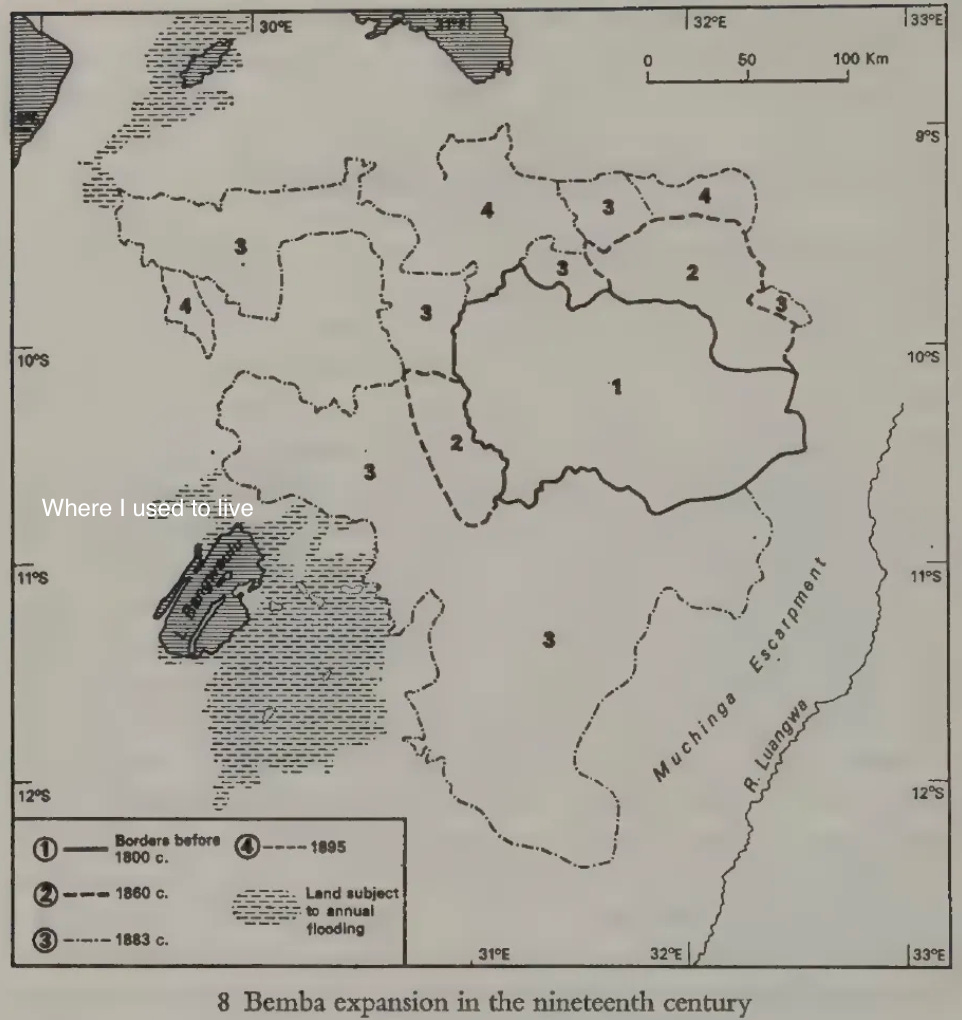
By the 19th century, matrilocality certainly co-existed with expansionary warfare: Bemba chiefs gainwd territory by raiding neighbouring groups and taking captives. In 1832, Gamitto reported that ‘the Bemba.. are today powerful and feared by all for their fierceness’. In 1895, [Chief] ‘Ponde’s men captured Chitimbwa’s village, killed the chief and carried away rich spoils of cloth, salt and women’.
Matricentric Austronesians
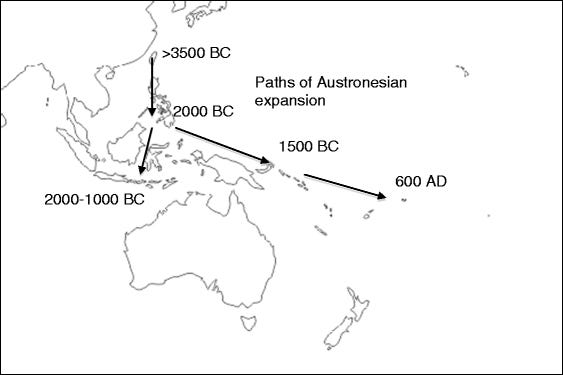
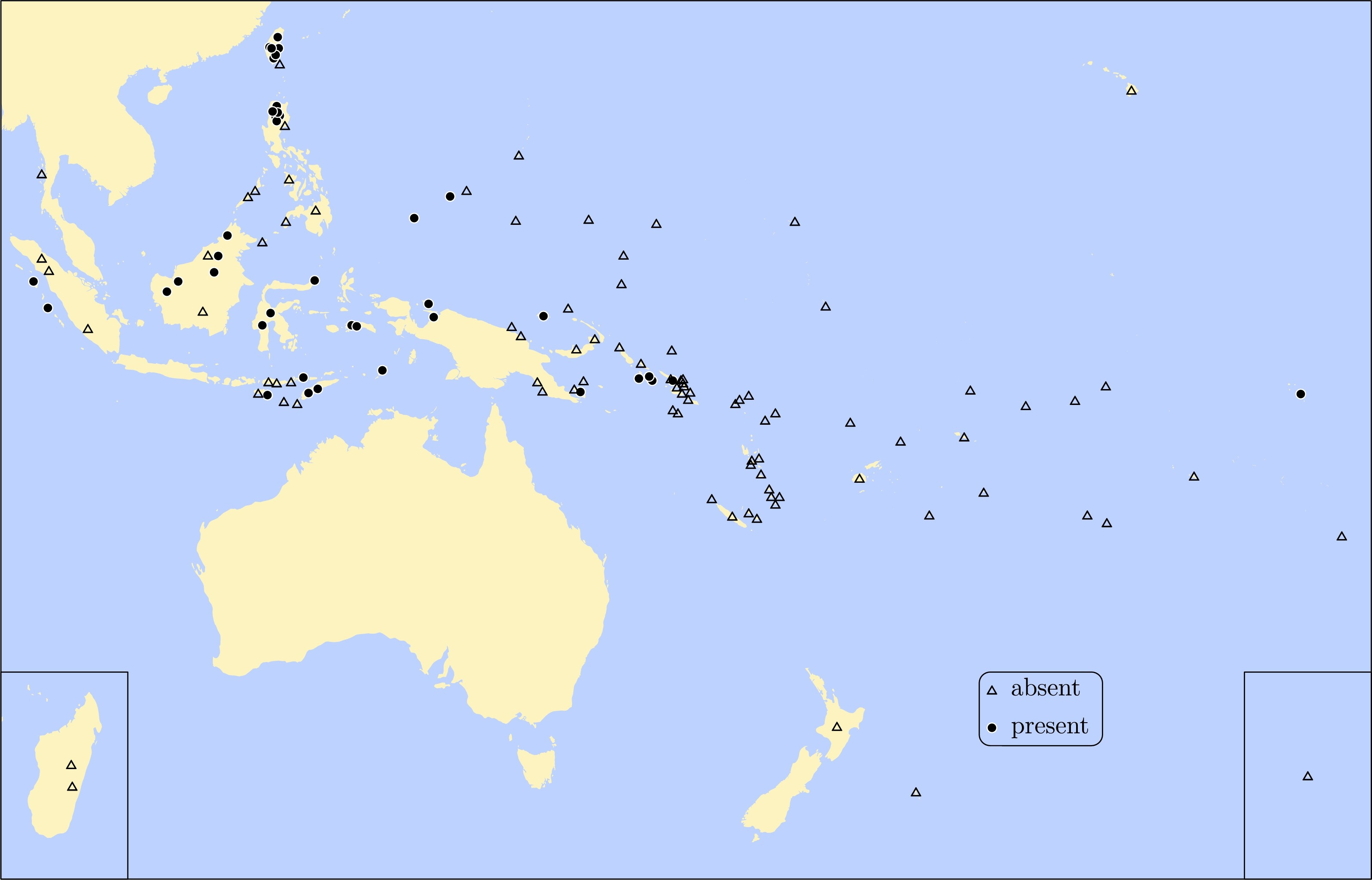
Austronesians originally hail from Taiwan. Around 3000 BC, Austronesian speakers moved out to the Philippines, then around 2000 BC, some headed to western Indonesia. Their descendants colonized Polynesia and eastern Micronesia.
Matrilocality may have been ancestral, with some Austronesians later shifting into patrilocality. This frontier may well have been violent, with many groups practising headhunting. Again, matrilocality could have persisted as response to this conflict.
Let me add, the Austronesian institution of “men’s houses” (discussed in my essay on the Siraya) could have strengthened solidarity among men who arrived from different communities (just like 19th century English elite schools and universities).
Did violent conflict drive matrilocality?
Human communities are tremendously inventive, constantly innovating new ways to survive, expand and out-compete external threats.
Doug Jones’s hypothesis certainly makes me think that kinship is not necessarily determined by crop systems or women’s contribution to agriculture. He makes a valid point that many African societies practise hoe agriculture, but only some practise matriliny.
Jones also makes a convincing case that while warfare could increase the returns to Turchin-style state expansion and cooperation, that’s certainly not the only solution. When confronted with similar challenges, human societies have innovated culturally different solutions: some cross rivers with boats, others build bridges.
By the same token, I don’t believe we have sufficient historical data to identify the timing of matrilocality. It’s not clear from the available evidence whether warfare: (i) encouraged communities to adopt matrilocality, (ii) helped preserve established arrangements; or (iii) interacted with changes in subsistence. Matrilocality could have been deeply ancestral, and then gained advantages amid frontier warfare.
To test each hypothesis, I await delivery of my time-travelling gizmo…
External threats encouraged male military cooperation
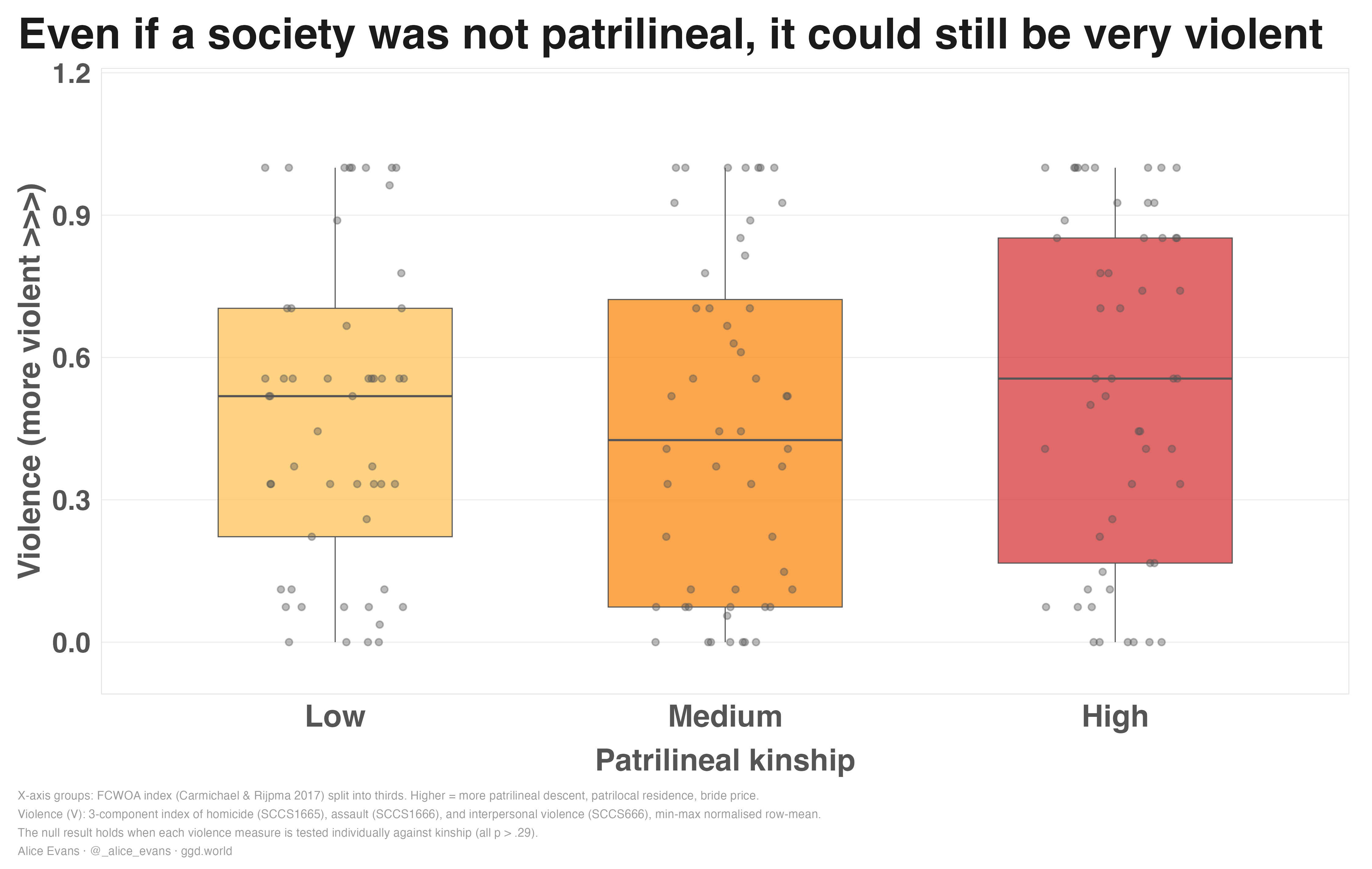
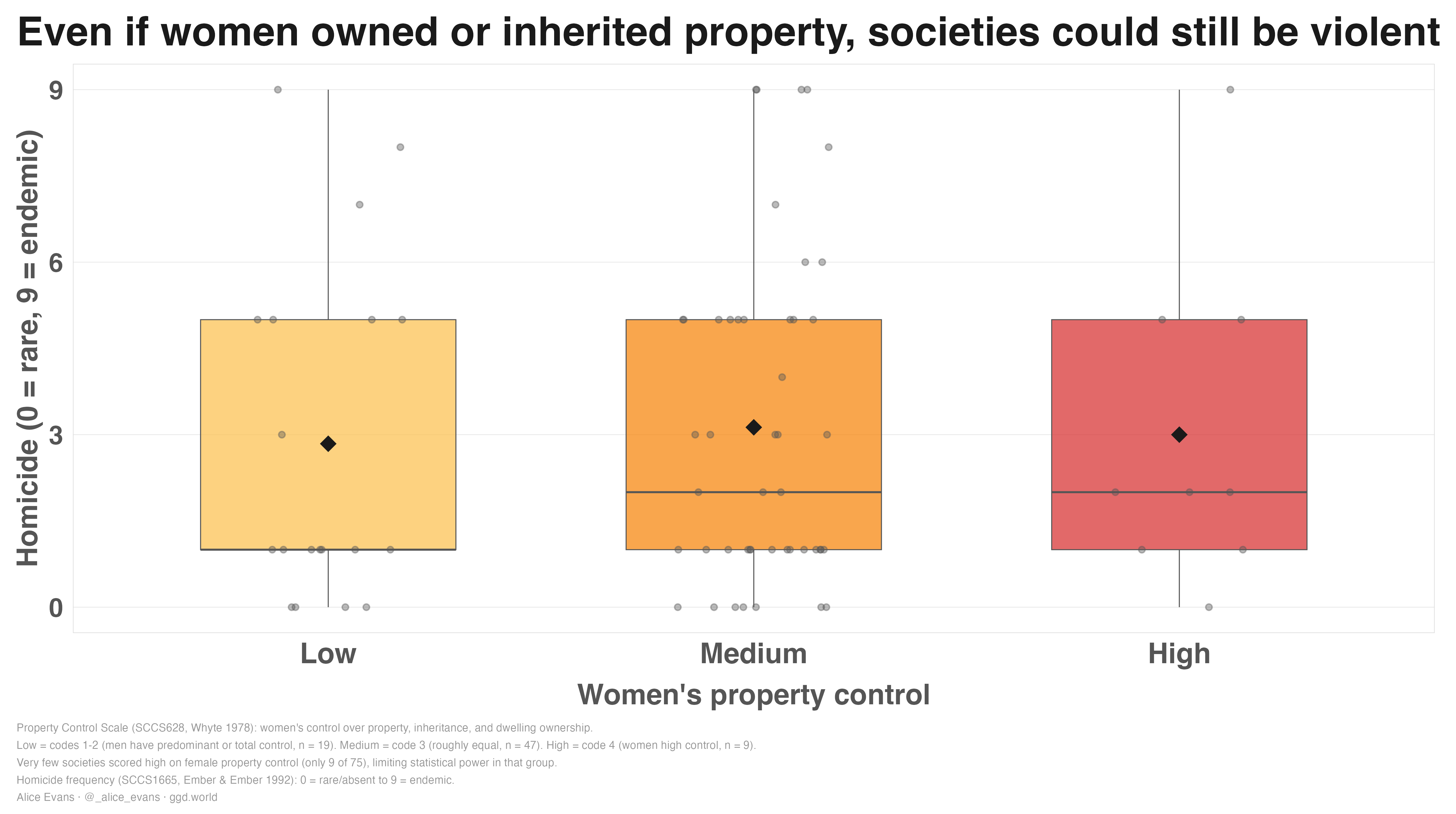
My reading is that communities facing attacks had strong incentives to strengthen cooperation, yet they could creatively do so through many different institutional innovations. For this reason, there is no correlation between kinship and violence (recall my data visuals below).
Matrilocality could connect brothers across villages, rallying them together against shared enemies. Jones acknowledges, however, that this arrangement struggled to scale, as any particular pair of settlements might lack a personal affinity. I would add that when rivals did become militarily powerful, matrilocal societies have tended to get crushed. The Siraya, for example, got battered by larger empires, like the Qing and Meiji.
But who gained power through this cooperation?
These accounts of social cooperation omit something fundamental: militarism compounded patriarchy. As warriors banded together, outcompeted rivals, and became dominant, they gained power, which in turn forced competitors to consolidate their own reliance on warriors. Whether warriors banded together in gotras, clans, tribes or dispersed matrilocal villages, violent competition increased the returns to military cooperation.
And where communities depended on these coalitions for protection, warriors gained power and prestige - whether or not men lived with their wives families. Militarism could thus compound patriarchy even if women reside with natal kin. Matrilocality, therefore, could restrain internal feuding, while enabling outbound warfare, without necessarily giving women political authority. The matrilocal Siraya were governed by all male-councils.
Thus while other scholars, like Turchin and Jones, have argued that within-group cooperation encourages military survival and expansion, I would add that this has overwhelmingly been male.
The empires that ultimately came to dominate and carve up our world were those with the largest, most powerful armies. From Romans to the Qing, states grabbed and consolidated territory through outbound conquest, then used the state’s coercive powers to extract revenue to feed ever larger forces. Rulers then empowered religions that sanctified their righteous dominance. And, they were all patriarchal.
The brutal truth is that the modern world was created by patriarchy, and could not have emerged without it.
Very interesting article. Really enjoyed reading it.
Emmanuel Todd offers an explanation for the appearance of less dense family structures at the Western and Eastern ends of Eurasia (i.e. nuclear family and stem family in W Europe and Stem family in Japan and Korea) in terms of a concept borrowed from linguistics - conservation of the periphery. He maintains that the absolute nuclear family is the most archaic form and that the stem family is more recent but not as recent as dense family structures like communitarian varieties. He argues that that is why these are the structures that are found in peripheral regions. Given the examples you cite and others such as matrilocality in Portugal and Kerala in Southern India, could this be what is happening here? i.e. that matrilocality is an/ the archaic survival at the periphery, because being out on a limb and not surrounded on all sides makes it more likely that cultural and linguistic habits remain unchanged? Just a thought.
Perhaps this is the correct model:
1. Within-group cooperation was a difficult but important problem for group survival and expansion.
2. Matrilocal arrangements were a suitable solution to this problem across a group of small settlements.
3. But other solutions to the military cooperation problem exist, though they are not necessarily easy to establish, such as the emergence of shared religions or other institutions. In this case, the group could retain a patrilocal model that might offer some group-level advantages or scale better.
This might explain why matrilocal arrangements could be useful at smaller scales, yet societies practising them eventually get crushed by patrilocal ones.
Or perhaps they switch to patrilocality after reaching a certain size.