


If you wander into a Western museum or bookshop, you’ll often encounter stories about a glorious past, where women exercised autonomy, power and agency. However, such accounts are often deeply misleading, omitting the reality of endemic violence.
Perhaps the best example of these tensions is Taiwan, before it became Chinese.
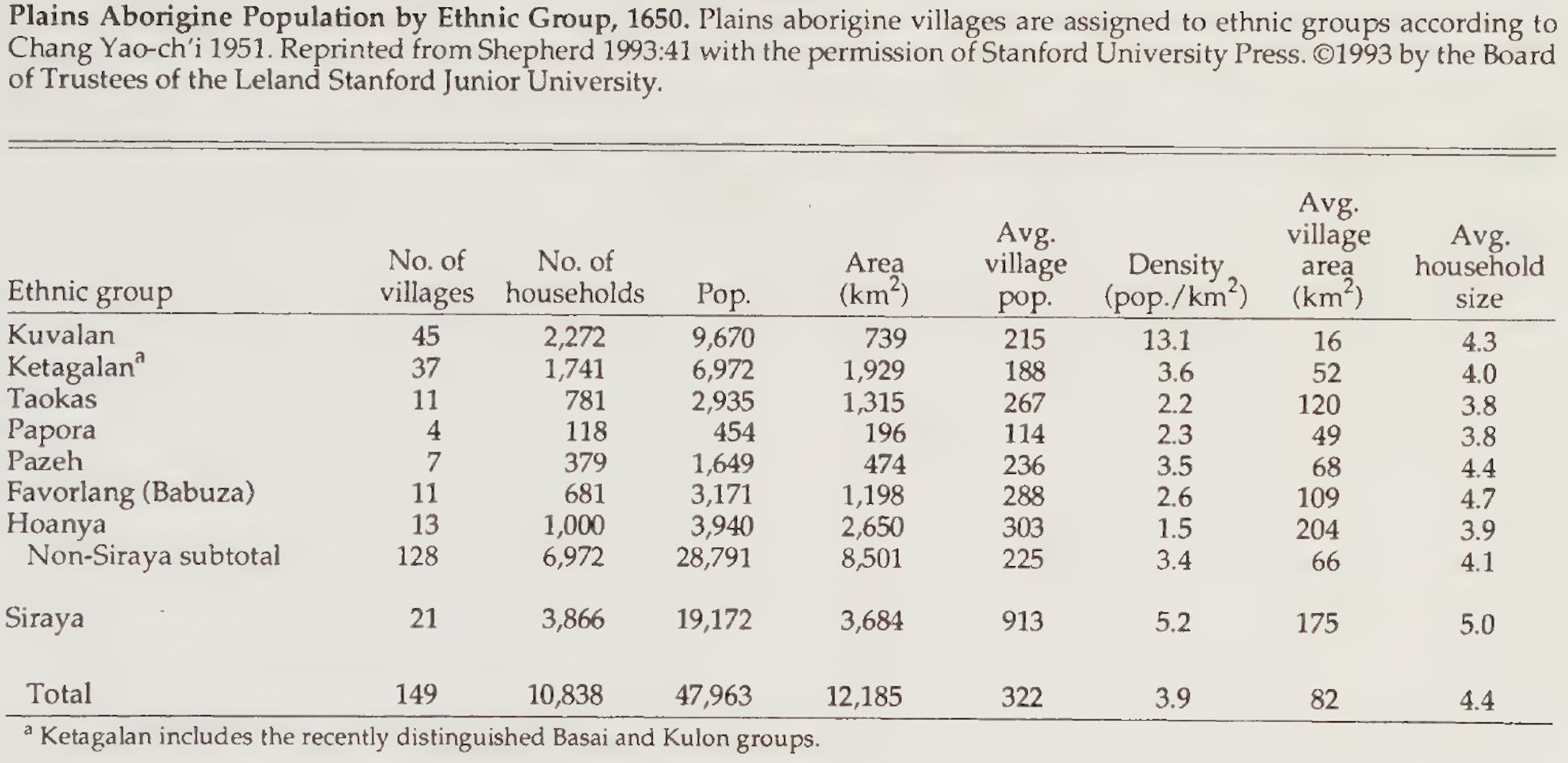
In the early 1600s, Taiwan’s coastal plains and forested mountains were inhabited by Austronesian villages. Among the Siraya of the southwestern plains a married woman continued living with her parents, inherited their lands, and moved independently in her community. Qing travellers remarked, “The savages value woman and undervalue man” (zhongnu qingnan) (Teng 2004, 177, 173).
Given matrilocal kinship, some might infer that Austronesian Taiwan had precocious gender equality, which was bashed and broken by subsequent imperialism. But this would be too swift. Learning from an early 17th century Dutch ethnography, it seems that while villages were autonomous and led by deliberative councils, these small-scale societies were often at war, young warriors lived separately, and their readiness for battle may have even been spurred by mandatory abortions.
Confused? As was I!
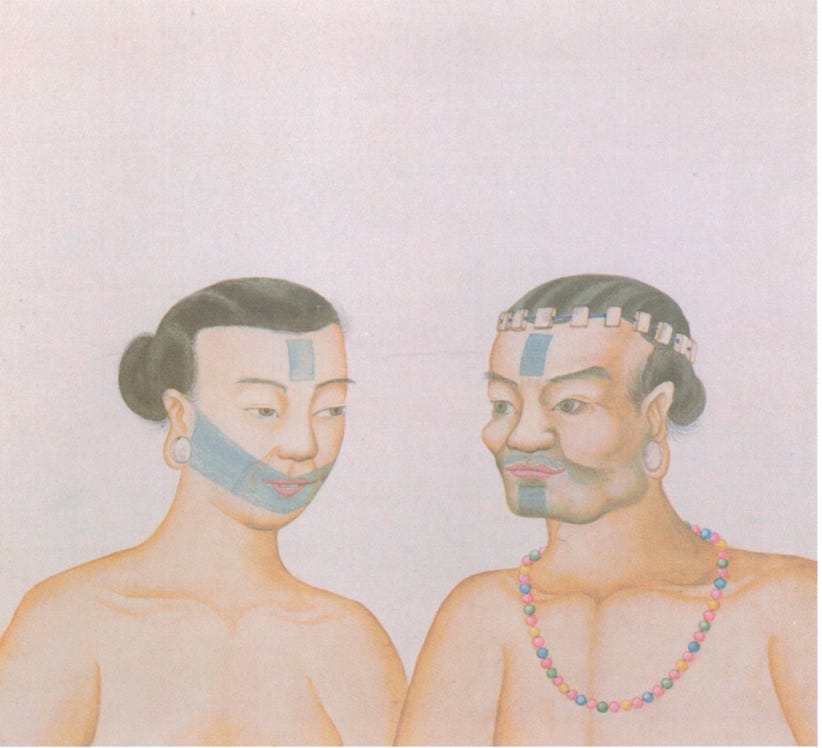
Austronesian Small-Scale Societies
In 1624, the Dutch grabbed territory in Taiwan and sought to develop its agriculture, recruiting tens of thousands of Han from Fujian. They observed scattered villages, each with a few hundred inhabitants. When wars arose, villages might temporarily ally against a common enemy but otherwise these were small-scale societies, marked by cultural and ethnic heterogeneity.
In 1662, a defeated Ming warlord - Koxinga - kicked the Dutch out and settled his own soldiers. Two decades later, in 1683, this regime was overpowered by the Qing. Han settlers continued to arrive, often defying imperial prohibitions, banding together to seize, cultivate and defend land.
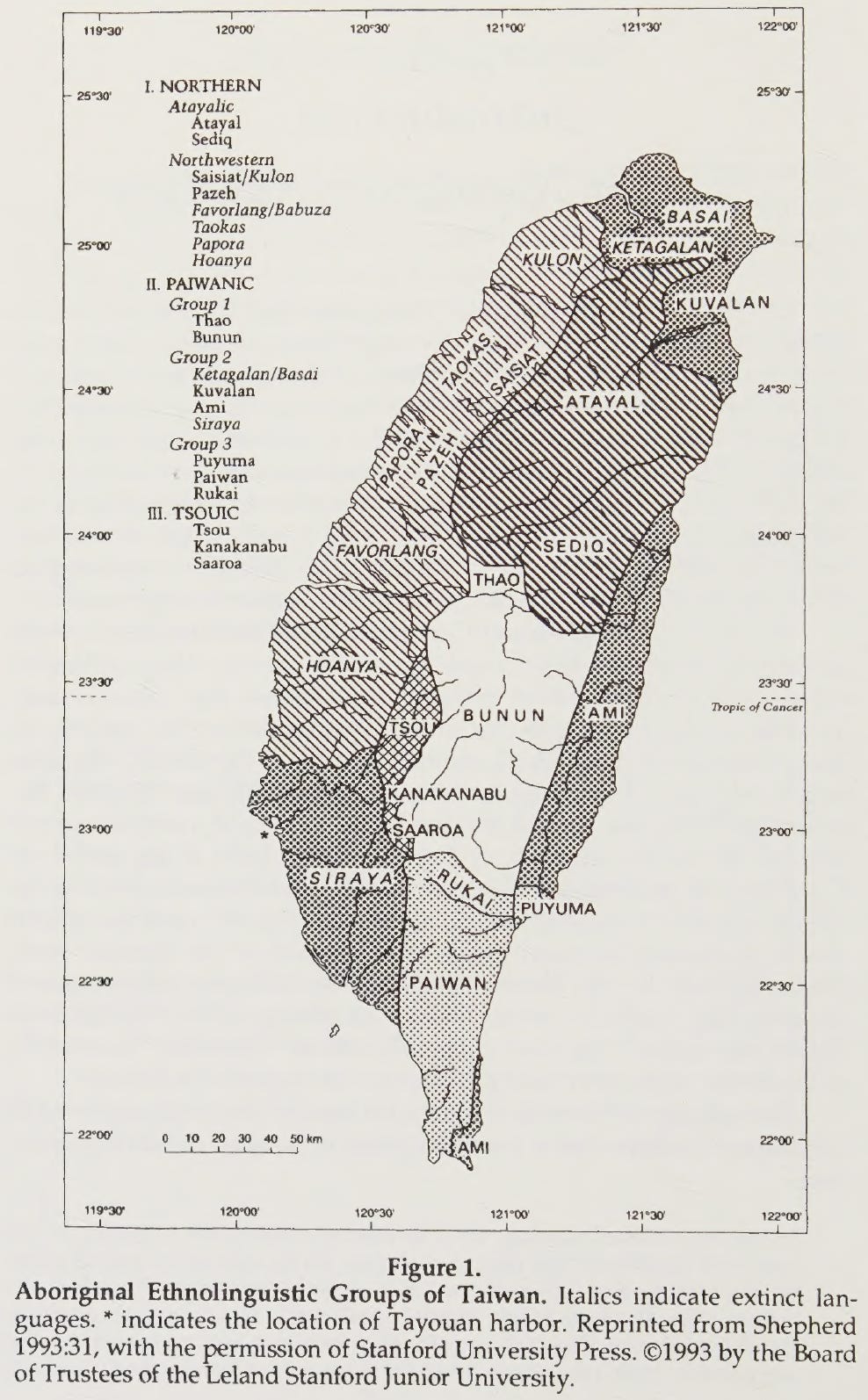
Matrilocality
Over the 17th, 18th and 19th centuries, Chinese travellers and administrators increasingly journeyed to Taiwan and wrote on native customs. Importantly, none actually lived with indigenous communities, at most they stayed at a village for a couple of nights. These accounts often referred to people as “backward” and “savages”, detailing their proclivity for head-hunting. Proceeding cautiously, these accounts provide useful clues into indigenous gender relations.
After staying several weeks on the island as part of a naval expedition, Chen Di wrote “Record of the Eastern Savages” (1603). He emphasised young women’s sexual assertiveness, matrilocality, daughter preference and ease of divorce on the southwestern plains:
“They are much happier at the birth of a girl than of a boy, in view of the fact that a girl will continue the family line, whereas a boy is not sufficient to establish the family succession..
Taking a wife is called ‘holding hands’; divorcing a wife is called ‘dropping hands’. When they do not get along, they divorce” (quoted in Teng 2004, 178, 198).
In 1697, after the Qing annexation, the sulphur prospector Yu Yonghe travelled in Taiwan, sometimes staying for a few days at indigenous villages. He likewise depicted women’s sexual agency and matrilocality.
In this Qing depiction of a wedding on the plains, the newly wed couple sit on a palanquin held up by four people. The bride sits at the front, wearing a headdress made of feathers while her stomach is on display; the groom sits at the rear. They are being led to her parents’ home.
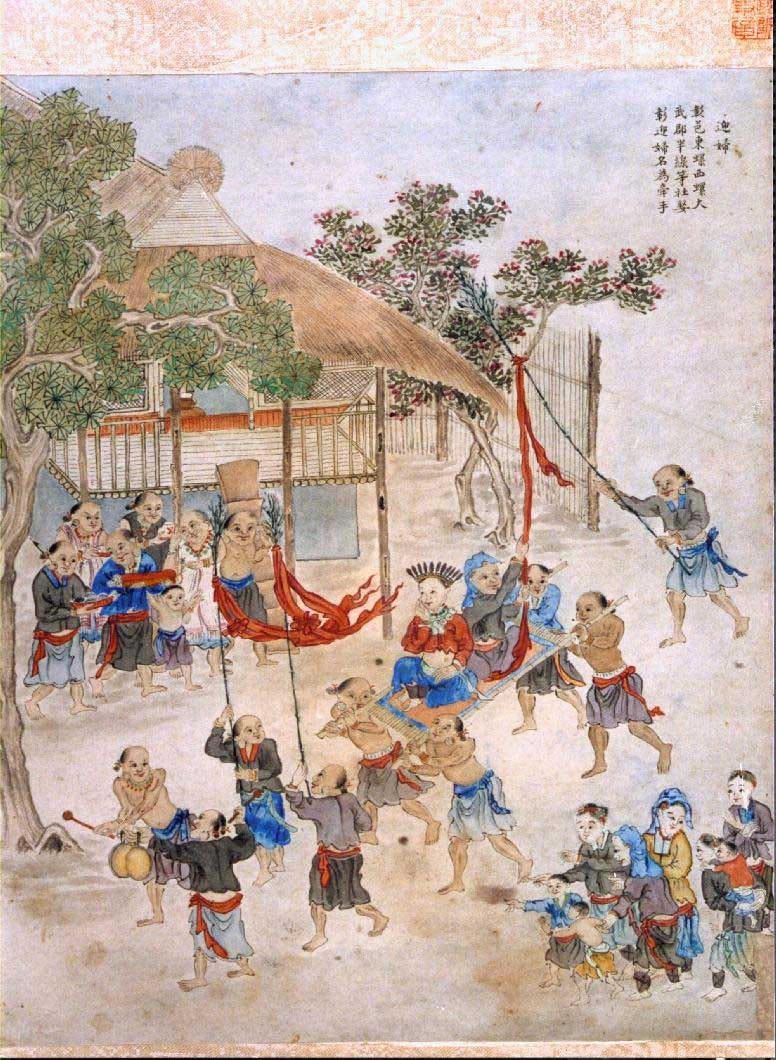
“No Taboos against Contact between Male and Female”
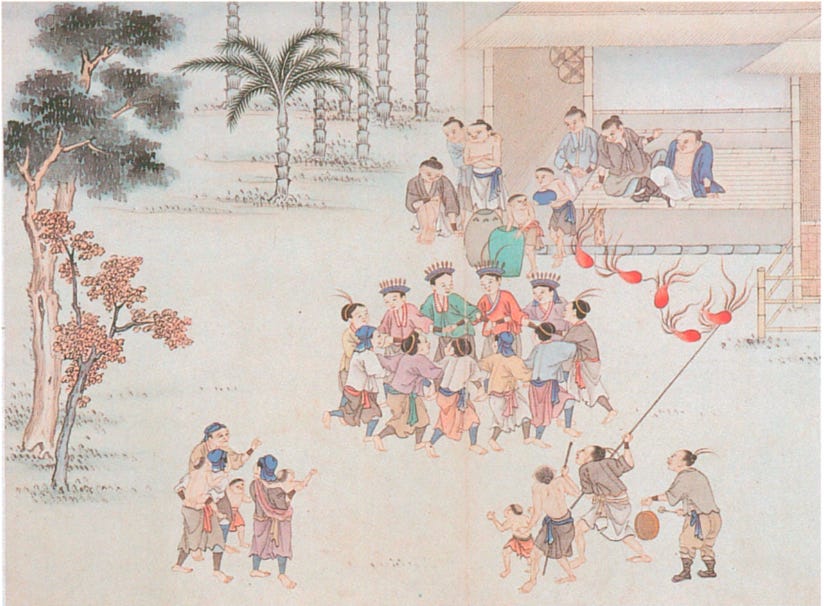
Chinese travellers observed women openly bathing, and further observed that indigenous men and women would sit together “mixed”. Qing-era illustrations also show men and women working together in the fields, also socializing together in village festivals and drinking parties.
Censor Liu-shi-qi (a Manchu official who served in Taiwan from 1744-1747, and resided in the Chinese administrative area) noted,
“The savages have no taboos against contact between male and female. When the savage woman nurses her child, those who see will play and tease from the side. She will be very pleased, thinking that people adore her child. Even if one touches her breast she will not prevent it” (quoted in Teng 2004, 185).
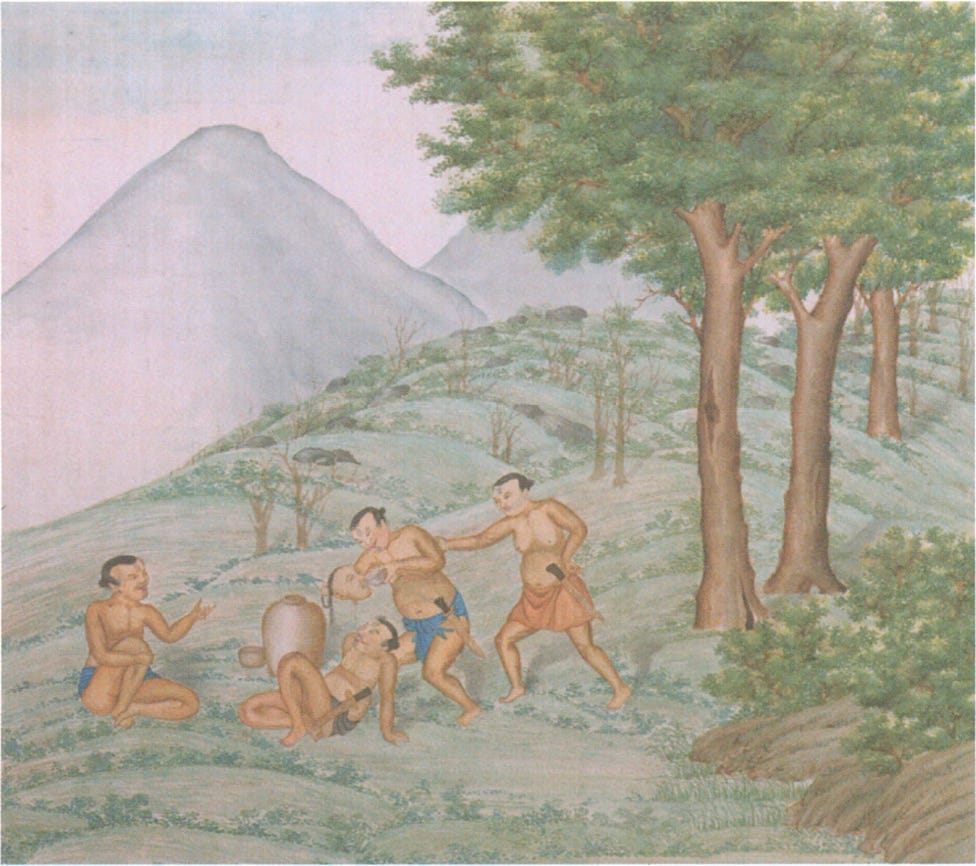
Qing travellers often interpretted this inter-mixing as evidence of indigenous people’s backwardness and lack of propriety. One Qing official also noted that natives would stack up skulls by their huts to showcase their martial prowess (Teng 2004, 218).
Egalitarianism
For a more detailed ethnography, we turn to Reverend Candidius, a Dutch Reformed Church missionary. Upon arriving in Formosa (Taiwan) in 1627, he refused to live in the Dutch castle and instead stayed in the native village of Sinkan. He learnt their language and after living there for 16 months, he wrote an account of the inhabitants. Three centuries later, Campbell (an English Presbyterian missionary) went to Taiwan and translated the records of his Dutch predecessors.
Like the Chinese travellers, he emphasized that in the summer, indigenous people would spend several months of the year “perfectly nude, without any feeling of shame. If a man passes by and sees [women washing while nude], they do not mind it very much, if at all” (Campbell 9).
He describes the communities as remarkably egalitarian - not run by a chief but a deliberative council with two year term limits:
“These villages have no general chief who rules them”, but rather a “nominal council, consisting of twelve men of good repute. Every two years the councillors lay down their office, and others are chosen…
The dignity and power of the councillors, however, is not so great that their laws must be obeyed or their commands listened to ; but whenever a difficulty arises they meet, and deliberate about the best way of solving it..
There is no compulsion; every one judging for himself of the advantages or disadvantages of the proposal (Campbell 1903: 15).
Communities are described as extremely egalitarian, while respecting older people:
“There is in reality no distinction of rank among these people, and therefore no superiors and inferiors, no servant, no master — and consequently no words for master and servant in their language, — yet… they treat one another with much respect and courtesy. They consider age to be the great mark of distinction” (Campbell 1903: 17).
Even spirituality was run by women. The Siraya only had priestesses, the Inibs, who led sacrifices and went into public trances. According to Candidius, there was no religious hierarchy or holy book,
“only some women who act the part of priestesses, but who know as little about religious matters as they themselves do ; on which account those matters are regarded as amounting to mere customs which may be followed or not, just as circumstances require” (Campbell 1903, 90).
Frankly, I’m surprised that Graeber and Wengrow did not use these examples in their book “The Dawn of Everything”, which is all about how pre-state societies could be remarkably egalitarian, while women moved independently.
However, any such extrapolation would omit a defining feature of social life.
Head-hunting
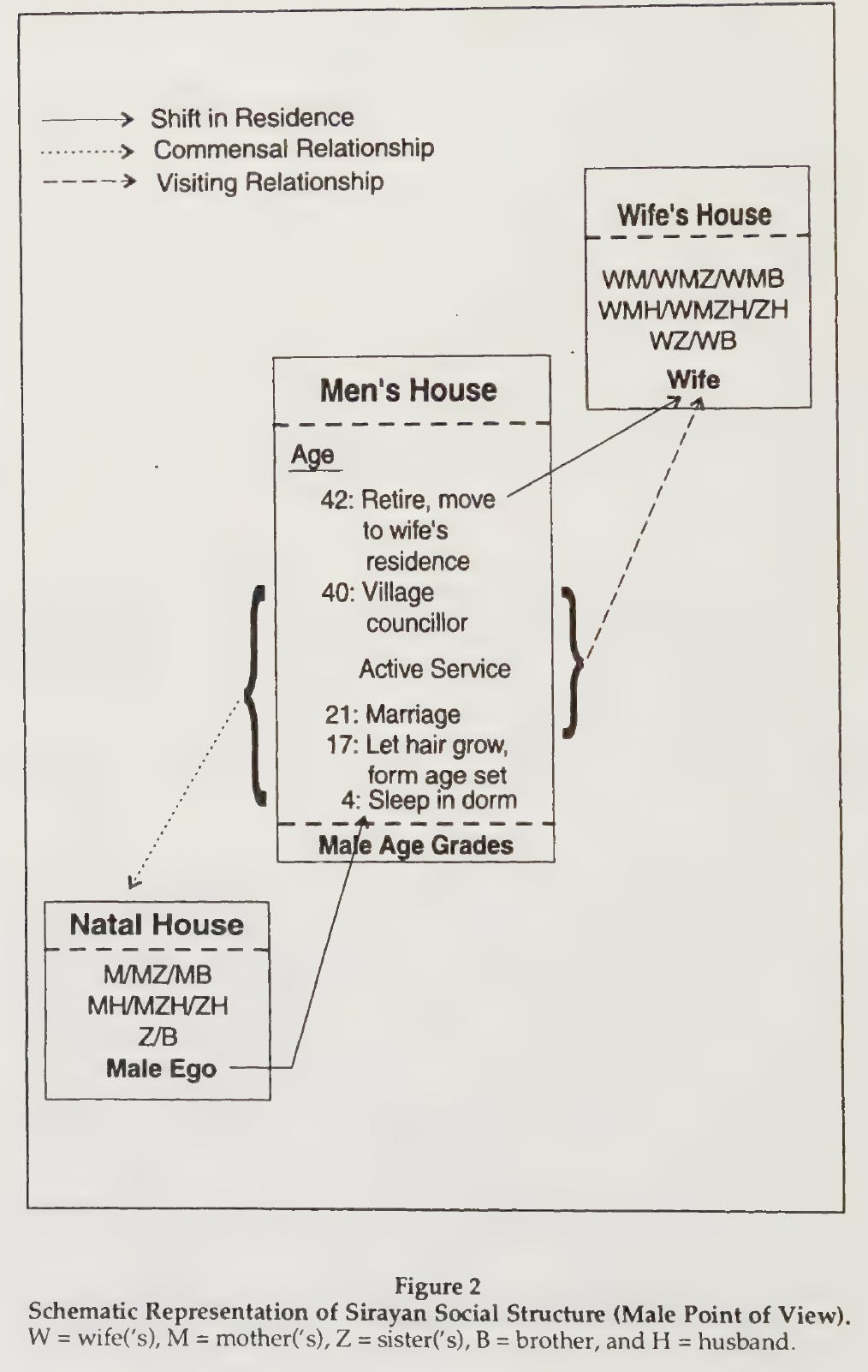
From early childhood, boys slept in male dormitories rather than in their mothers’ houses; at around 17, they appear to have entered age-set ranks. Together, they undertook military training, hunted deer and raided neighboring villages, gaining glory through headhunting:
When war was declared on another village, young men would move in at night, with the goal of getting heads (or ideally whole bodies):
“Twenty or thirty men… stealthily creep into the fields… Any one they find, young or old, man or woman, they instantly kill, and cut off their heads, hands and feet. Some times they take the whole body along with them, cutting it into as many pieces as there are warriors; each being desirous to have a part, so that on returning home he may boast of his prowess to the extent demanded by the occasion or the danger that has been run. But, if the enemy turns on them and they are obliged to flee, they take the head only..
They surprise one of the houses, kill every one they find within, and hastily cutting off the heads, arms and feet, retreat with all possible speed to escape an attack (Campbell 1903, 12-13).
When warriors returned with enemy heads, they were welcomed as heroes, with several days of feasting and celebration.
“When they succeed in cutting off an enemy’s head.. and return home, great feasts are held, they sing and shout, in short the whole village becomes jubilant.
First they take the head and carry it about the village — a great triumph for the man who has taken the head — singing hymns and songs in honour of their gods or idols, to whom they consider themselves indebted for the victory… They are received with acclamations and heartily welcomed, and the very best kind of beverage is presented to them.
They then proceed with the head to the idol house… and boil it in a pot till all the flesh falls off, whereupon it is put in the sun to dry, and the very best kind of their strong liquor is poured over it. On these occasions a great number of pigs are slaughtered in honour of their gods, and grand festivities follow. The celebration of victories like this generally lasts a whole fortnight without any interruption…
The man who has obtained a head is much honoured and respected” (Campbell 1903, 14-15).
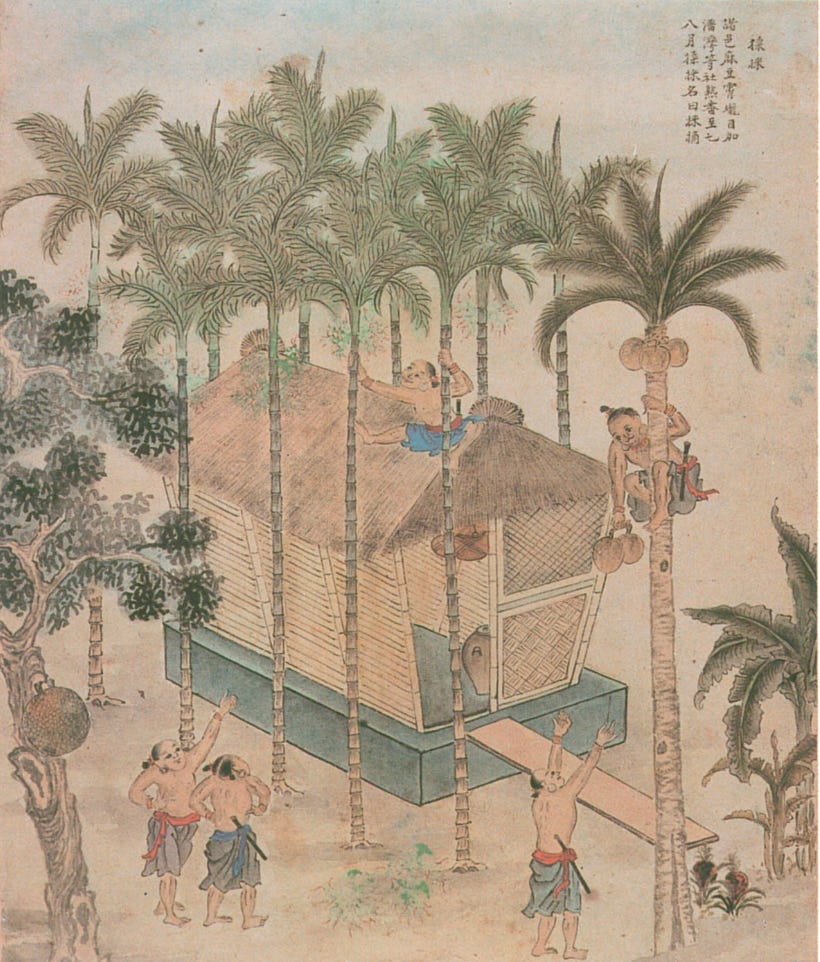
Prime age males therefore concentrated their attention on inter-village headhunting, hunting and martial prowess.
Marriage?
When a man was 20 or so, he sent a female relative to the prospective bride’s parents, and if they accepted his gifts, the couple would be married. Girls could marry as soon as they were considered physically ready, namely puberty.
Candidius details that the groom then gained exclusive sexual rights but not control over the wife’s labor nor right to remove her from her natal home. Adultery was taboo, but nonetheless occurred; the aggrieved husband simply seized two or three pigs from the offender (Campbell 1903, 17).
Until the age of about 50, a husband divided his time between his natal family (where his mother and sisters did the cooking) and the men’s houses (where he conducted his business and slept). The young couple lived apart
“The women possess their own fields with the women-folk of their own generation…. They always live together, and eat and drink in the same house… The wife does not garner for the husband, nor the husband for the wife: each house provides for itself (Campbell 1903: 19)
A man meeting his wife was apparently taboo, and could only be done in secret:
Husband and wife very seldom meet, unless they wish to do so in secret, in a place unknown to others” (Campbell 1903: 19)
Mandatory Abortions
If a wife became pregnant before the age of 35, the priestesses enforced mandatory abortion:
“A woman is not allowed to bear children till she is 35, 36, 37 years of age; for, when she is with child, the fruit of her womb is destroyed. This is brought about in the following way: They call one of their priestesses, and, on her arrival, the woman lies down on a couch or on the floor, and is then pushed, pinched, and roughly handled till abortion follows, which occasions more pain than if the child had been brought living into the world…
It would be considered a great shame, a great sin, if women bore any children before the age mentioned above, and thus the fruit of their wombs is generally destroyed” (Campbell 1903, 20).
Women told Candidius that they had aborted 15 or 16 times before being permitted a live birth. I have not heard of such practices elsewhere - if true, it would be a good example of the global heterogeneity in culture…
John Shepherd (an anthropologist) offers a plausible explanation. He suggests that mandatory abortions may have been enforced so that young men would be reckless in battle: “they radically postponed conjugal family life (but not sex) in favor of the warrior ideal and exclusive male age grade service”. On this theory, young men thus lived with their age-mates, so as to strengthen fraternal solidarity and martial prowess.
One may wonder whether delayed reproduction would really be sustainable, given women’s limited reproductive years and pre-industrial rates of infant mortality. Unfortunately, we lack any means to triangulate these claims: perhaps the women understood “age” slightly differently, and pregnancies were only aborted till women reached their early 30s?
Headhunting & Warfare
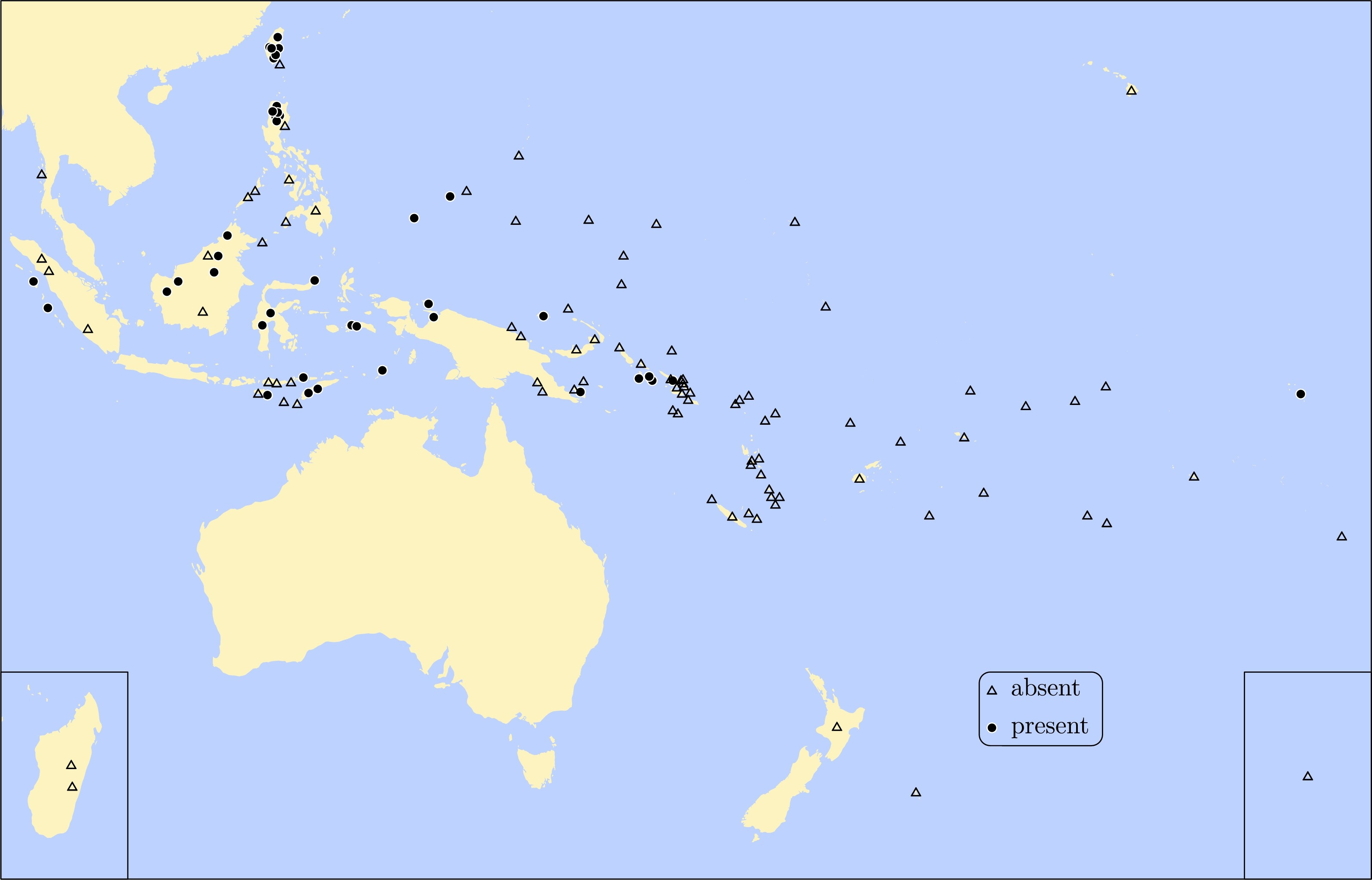
Curious to understand why societies might practise headhunting, Boris Gershman and Tinatin Mumladze analyze Pulotu, an ethnographic database of 137 Austronesian societies, mostly observed before 1935.
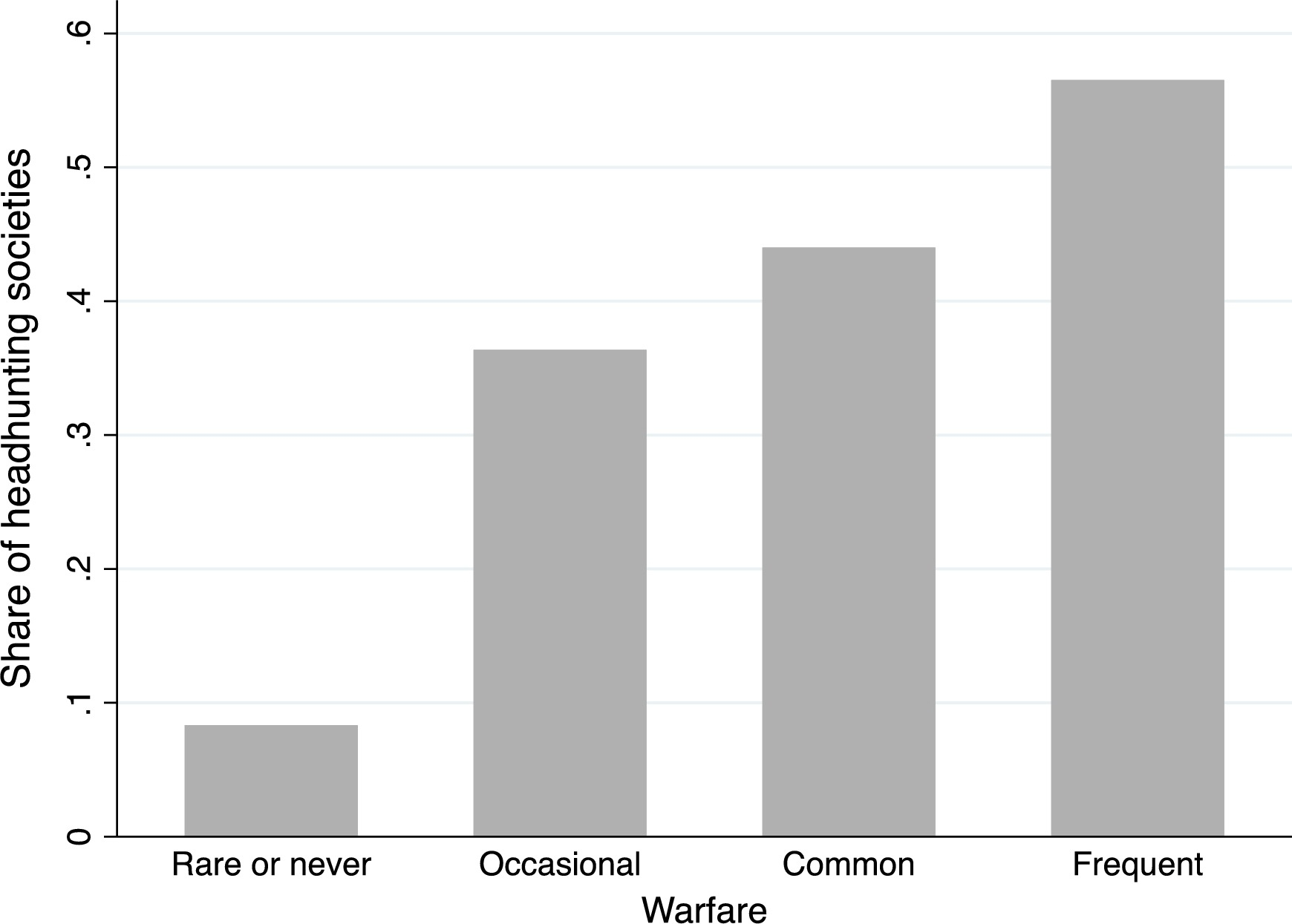
Headhunting was observed in 31% of the 129 societies where its presence or absence was recorded. It is strongly correlated with warfare: 50% of the societies with frequent warfare also practise headhunting.
They suggest that headhunting may provided a means by which warrior develop skills and participate in risky raids, while demonstrating their performance. Training and rewarding men for such daring feats could have been useful in societies exposed to frequent warfare.
Of course, this is only a cross-sectional analysis, and does not rule out reverse causation. For our purposes, it seems sufficient to note that some societies were extremely violent…
Is Matrilocality Over-Rated?
If one just clutched at a couple of conventional indicators - matriliny, matrilocality, women’s labor force participation and control over the distribution, women’s spiritual authority, and ease of divorce - and rammed them into a cross-sectional regression, the Siraya might top the charts in terms of gender equality. They would also score exceptionally well in terms of democracy and egalitarianism - with strict two year term limits.
But the Siraya were nevertheless impoverished and violent. Women spent all day toiling in the hot sun with pickaxes, while men lived together and embarked on hunting and raiding. Priestesses were no allies - they pummelled young women till they aborted. And given the prestige of head-hunting, villages were constantly at risk of raids.
It is only in the 20th century that Taiwan actually built up a strong state, which effectively monopolized violence, then punished and deterred male predation. Today, it registers extremely low homicides and is one of the safest places in the world.
Related Essays
References
Campbell, William. 1903. Formosa under the Dutch: Described from Contemporary Records, with Explanatory Notes and a Bibliography of the Island. London: Kegan Paul, Trench, Trübner & Co. (Includes Rev. George Candidius, “A Short Account of the Island of Formosa” (1628).)
Chen Di. 1603. “Record of the Eastern Savages” (Dongfan ji). Quoted in Teng 2004.
Gershman, Boris, and Tinatin Mumladze. 2024. "Headhunting and Warfare in Austronesia: A Phylogenetic Comparative Analysis." Journal of Economic Behavior & Organization 220: 768-791.
Graeber, David, and David Wengrow. 2021. The Dawn of Everything: A New History of Humanity. London: Allen Lane.
Shepherd, John Robert. 1995. Marriage and Mandatory Abortion among the 17th-Century Siraya. American Ethnological Society Monograph Series, No. 6. Arlington, VA: American Anthropological Association.
Teng, Emma Jinhua. 2004. Taiwan’s Imagined Geography: Chinese Colonial Travel Writing and Pictures, 1683 - 1895. Cambridge, MA: Harvard University Asia Center.
Yu Yonghe. 1697. Pihai jiyou (Small Sea Travel Diaries). Quoted in Teng 2004.
Depends if the proposed connection is "matrilocality is correlated with more gender equality" or is "matrilocality is correlated with a peaceful society with less toxic masculinity" (my impression is that modern - and probably also the old - feminism tends to associate the two things, but it seems two independent dimensions)
re the final paragraph: what lead to this dramatic change from 'head hunting by males' to the current minimal amount of interpersonal violence?
:How have the incentives to commit deadly violence changed? ie less reward from zero sum violence
:Have the original Austronesian (headhunting) cultures been replaced with a more pacific (East Asian originated) culture?
:Has there been an ethnic (genetic) replacement of Austronesians with (more pacific) East Asians?