

As a teen, did you often get in physical fights? If a guy in your community was publicly insulted and hit back, how would he be judged? Answers surely vary worldwide and profoundly shape men’s lives, yet we have very little comparative data on inter-male attacks, aggression, and negative spillovers. Today, I’m excited to share new survey results in collaboration with YouGov!
Discussions on boys falling behind in school usually focus on delayed entry, more male teachers, more technical education, and more support for atypical male jobs like health and education. Richard Reeves’s best-selling book Of Boys and Men has been catalytic, but says very little about cultures of violence.
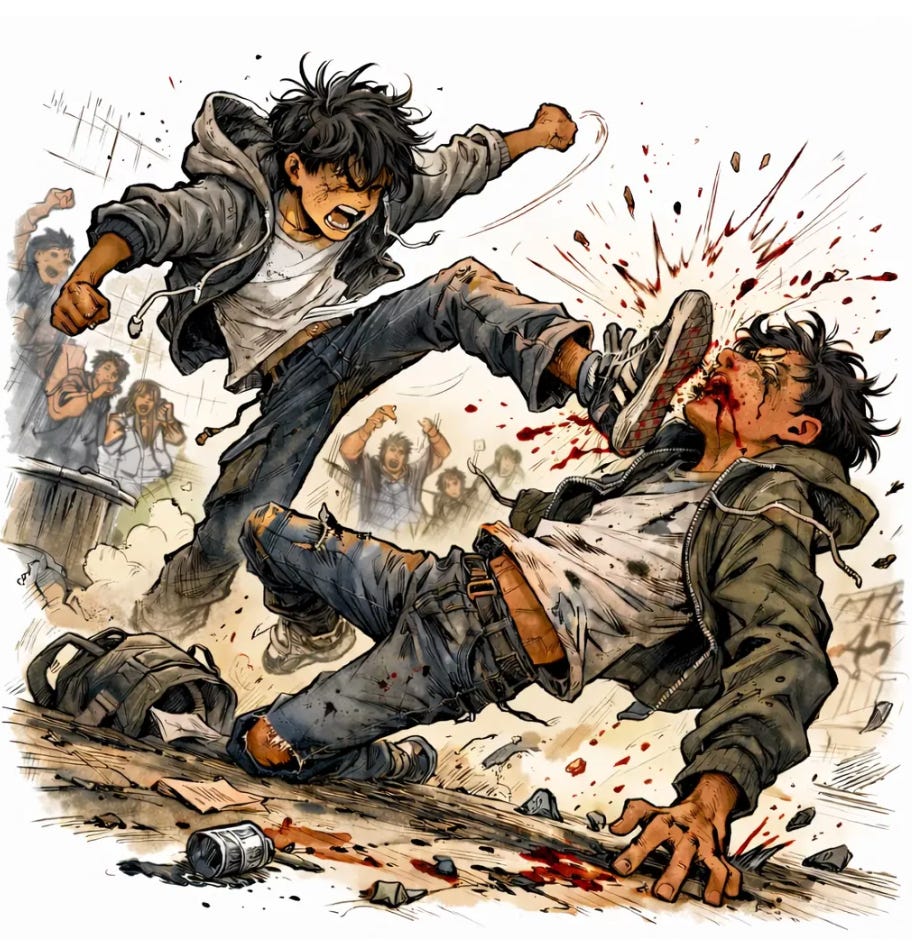
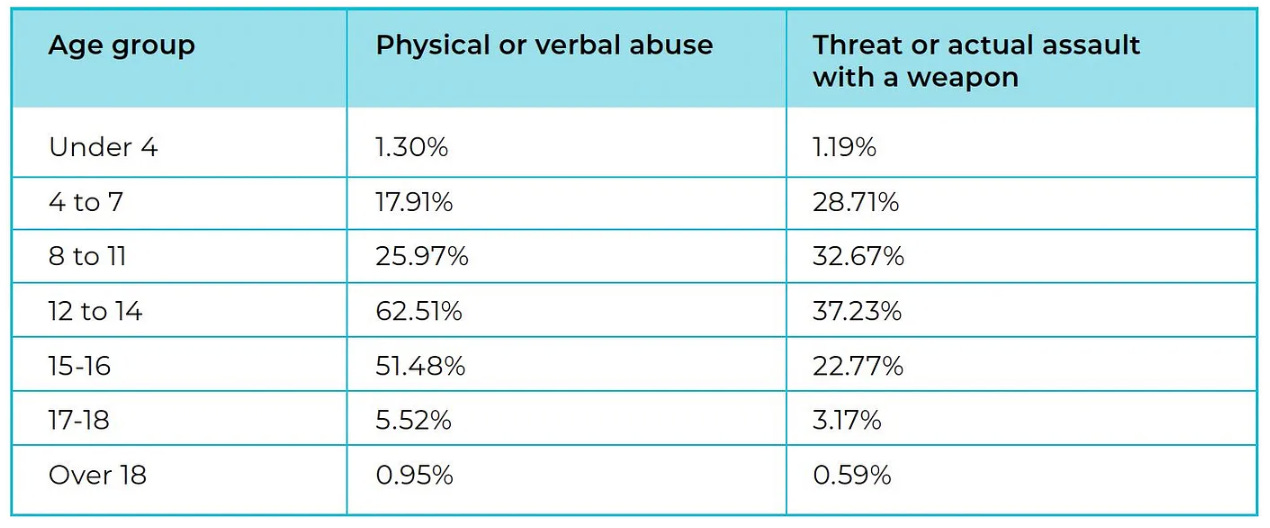
Yet teachers repeatedly insist that the biggest problem is violence. 56% of surveyed US teachers said they experienced some form of physical violence from students during the past year, while 80% report verbal or threatening aggression. 60% said student behaviour as worsened.
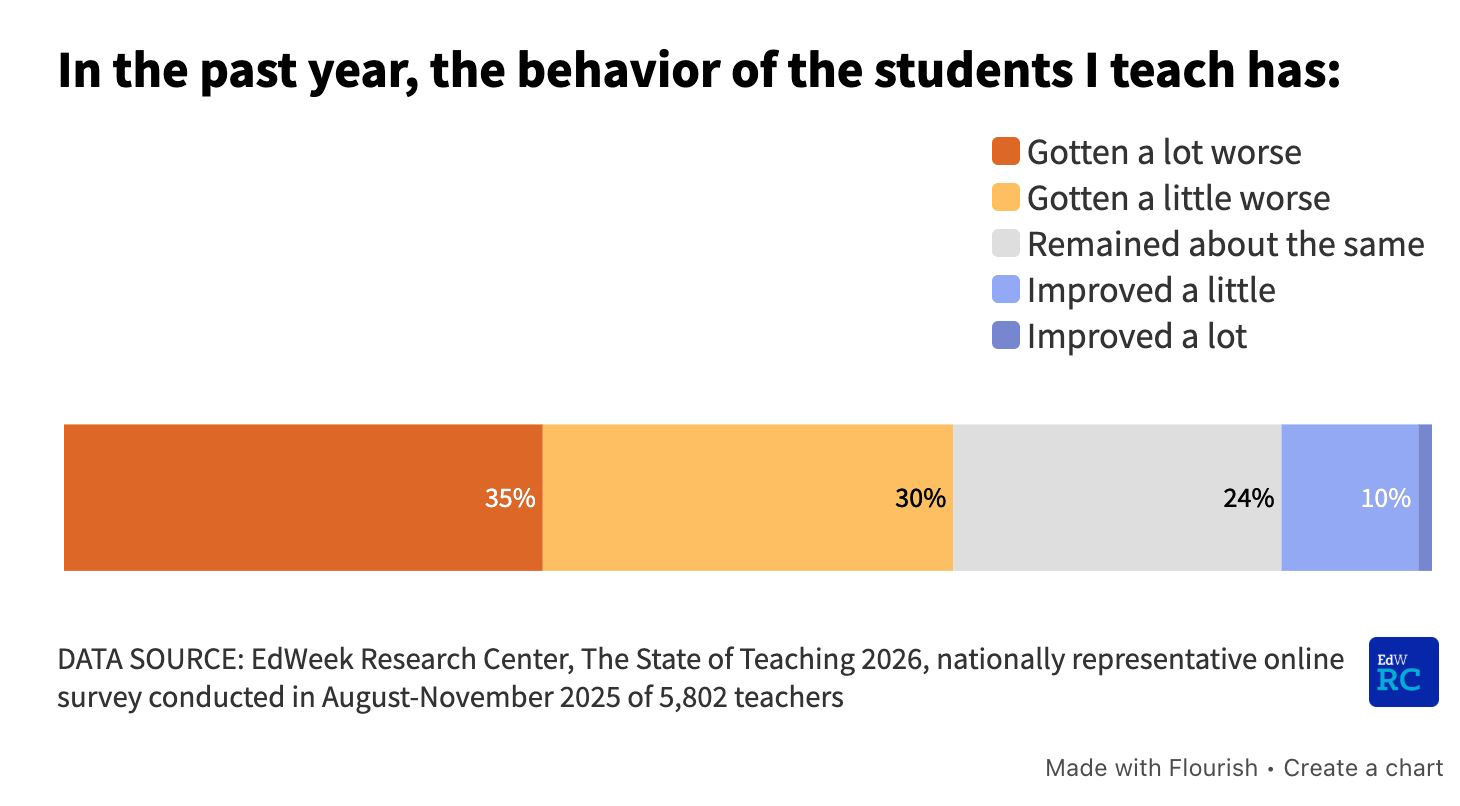
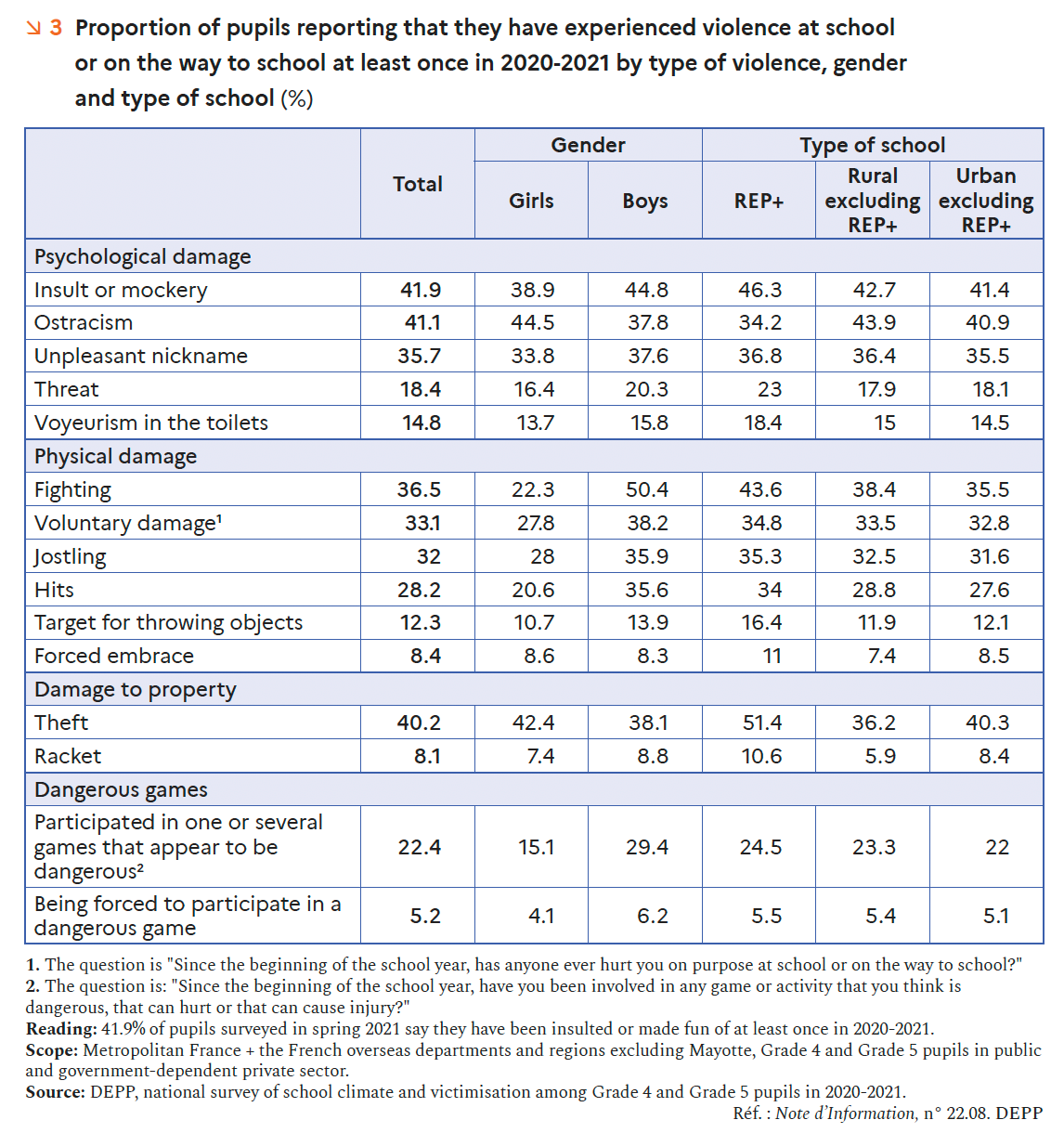
In Germany, 47% of teachers report psychological or physical violence among students at their school, rising to 69% in socially disadvantaged schools. The French Education Ministry records increased assaults on teachers - last month, a 14 year old repeatedly stabbed a 60 year-old art teacher in front of 20 other students. During a bag search last summer, another teacher was stabbed to death.
Over in Britain, 24% of surveyed teachers say they’ve been pushed or shoved in the past year, while 62% report recent verbal abuse. 1 in 7 British secondary school teachers say they are attacked by pupils at least once a month. In 2023/24, there were a million suspensions at state schools. Teachers at two primary schools in Greater Manchester recently went on strike against ‘almost daily’ pupil attacks: biting, kicking, ripping skin off hands, throwing chairs through windows, and bringing knives. Allegedly, one was “locked in the room by students so I’ve not been able to get out”. Scotland’s largest teaching union reports that a quarter of its members in Aberdeen were physically assaulted last year, while a third see violence every single day.
Strikes and surveys are not necessarily representative. Distressed teachers may be more likely to express their grievances and mobilise for industrial action. But all this does raise alarm bells, which societies might take seriously if they value human capital. Classroom havoc is obviously disruptive, undermining everyone’s learning, also causing bullying, trauma and physical harm.
“We still have teachers experiencing on a daily basis, objects being thrown at them and being pushed, punched, slapped, kicked and bitten” - Scottish trade unionist.
“Increased anxiety, more pupils becoming more introverted, more pupils ‘playing along’ so as not to be targeted themselves.” - British teacher.
The Machismo Trap
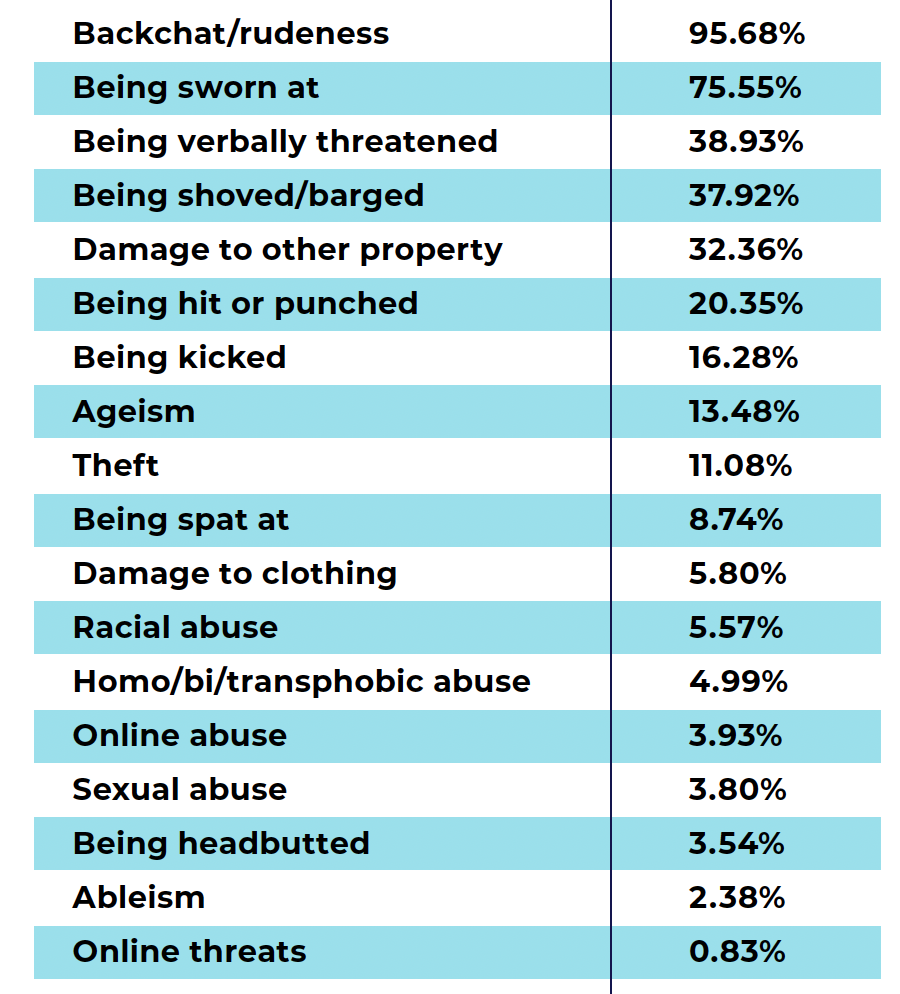
Yet it can be difficult for adolescents to escape cultures of violence. Naturally, we all seek status and social approval, but in communities where this is achieved through brutal aggression and physical dominance, boys may project toughness in order to gain respect, deter attacks and avoid humiliation. Bravado may even be glorified - like Russian men uploading videos of their fights and YouTubers streaming house invasions for clout. Academic boys may then be mocked, maligned, belittled and bullied. Entire communities may come to prioritise brawn over books. I call this the Machismo Trap.
How often do men get into fights?
Over the past three decades, surveyors have dramatically improved our understanding of violence against women. Yet male victimisation remains strangely neglected, even though men suffer the vast majority of assaults and homicides worldwide. Official statistics are also patchy. In countries with weak state capacity, both lethal and non-lethal violence are routinely under-reported. When I was attacked and left covered in blood in Mexico, the police showed little interest.
So, how can we systematically study men’s violence? Surveys are useful, but must be triangulated with wider data. A thug who smacks randoms in the street seems unlikely to diligently complete our questions. If the survey is in person, what administrator is brave enough to enter areas under criminal governance, and request a full compendium of brutality? Even if the survey is representative, will men truthfully report their own violence or victimisation? Given social desirability bias, questions must be designed carefully.
Fight Club, USA?
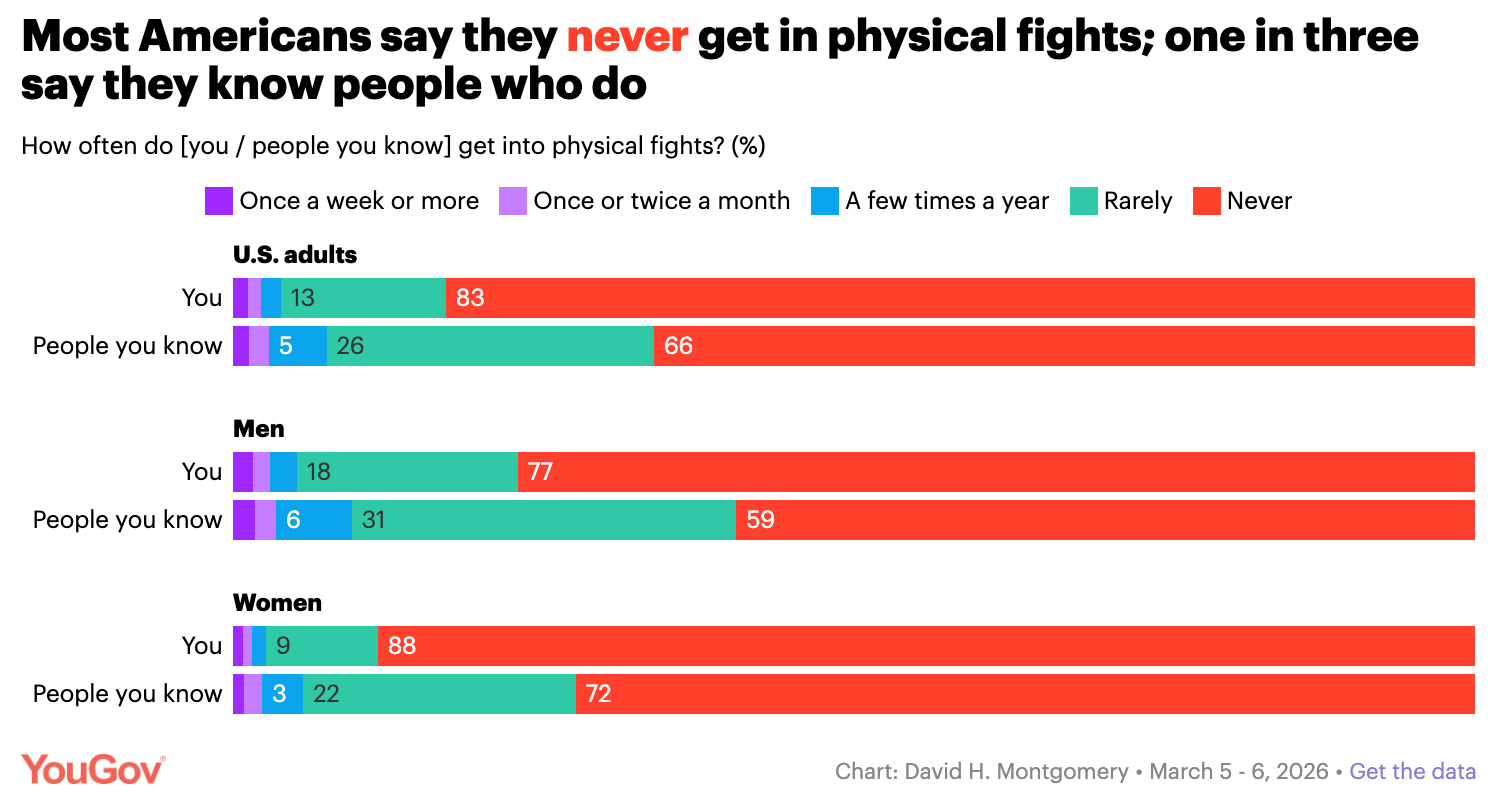
This week, I collaborated with YouGov America to design several questions. With the caveat that violent people are unlikely to answer polls, the survey usefully depicts significant variation.
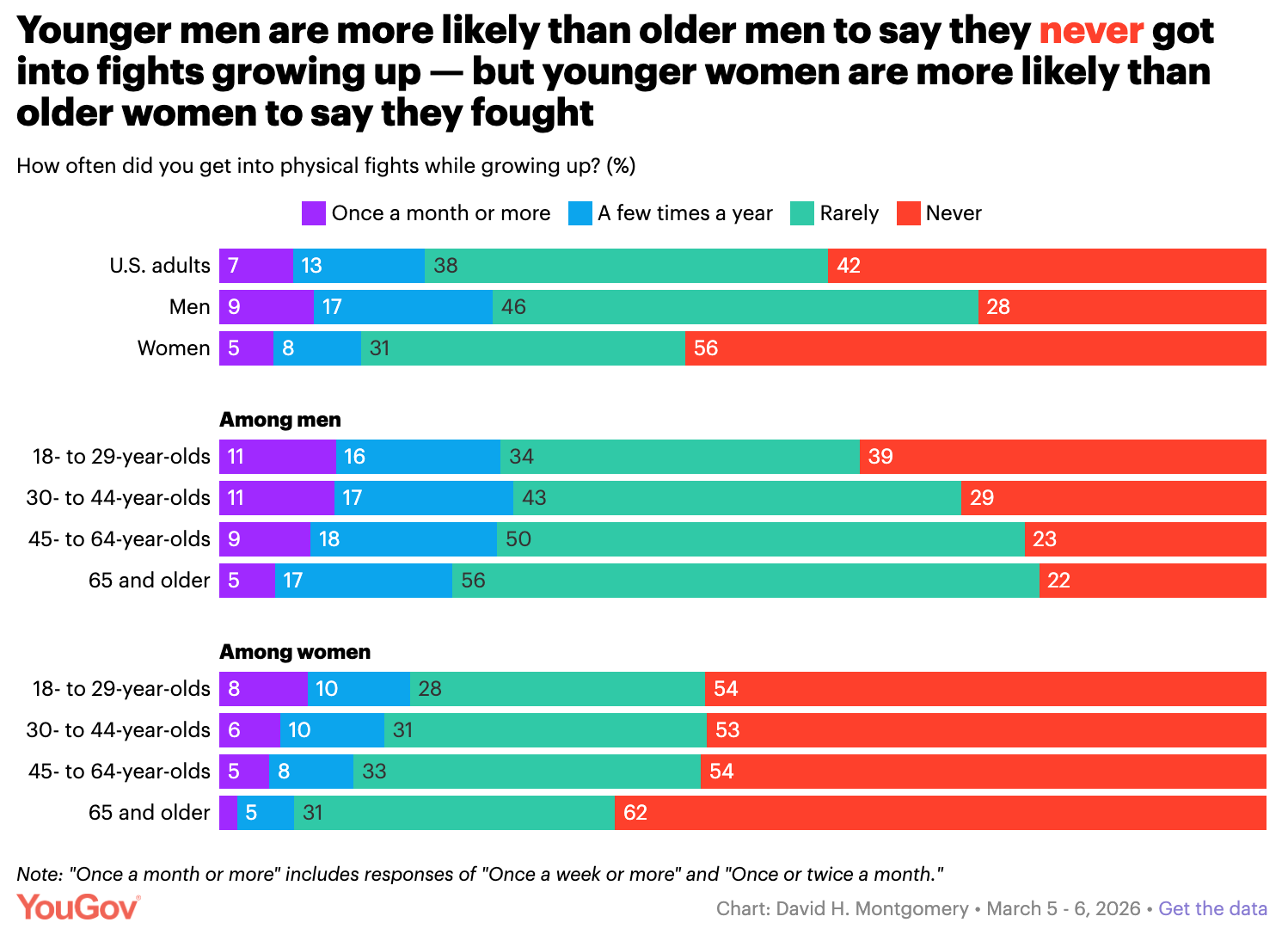
27% of young men say they got into fights at least a few times a year while growing up. 11% say they fought once or twice a week.
Older women usually say they never got into fights, but this gender gap is smaller among younger generations.
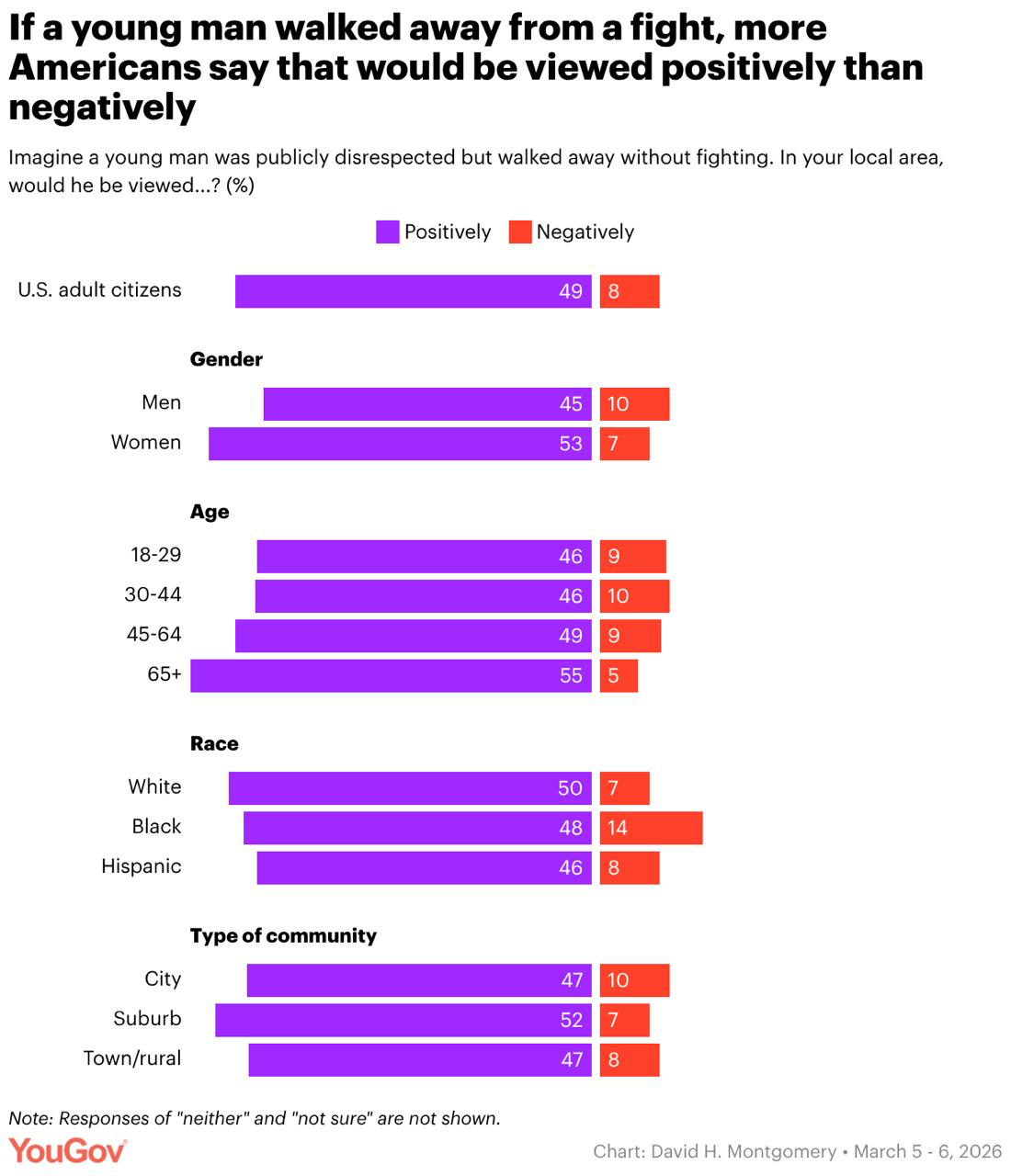
Imagine a young man was publicly disrespected but walked away without fighting. In your local area, would he be viewed positively or negatively?
With this question, we wanted to gauge whether retaliation would be respected. Personally, I would have preferred the wording to be that he ‘hit back’, so as to signal that such behaviour could be acceptable, and thereby reduce social desirability bias.
In response, most Americans say this would be ‘positive’. There is some variation, but overwhelmingly a lot of support for ‘turning the other cheek’.
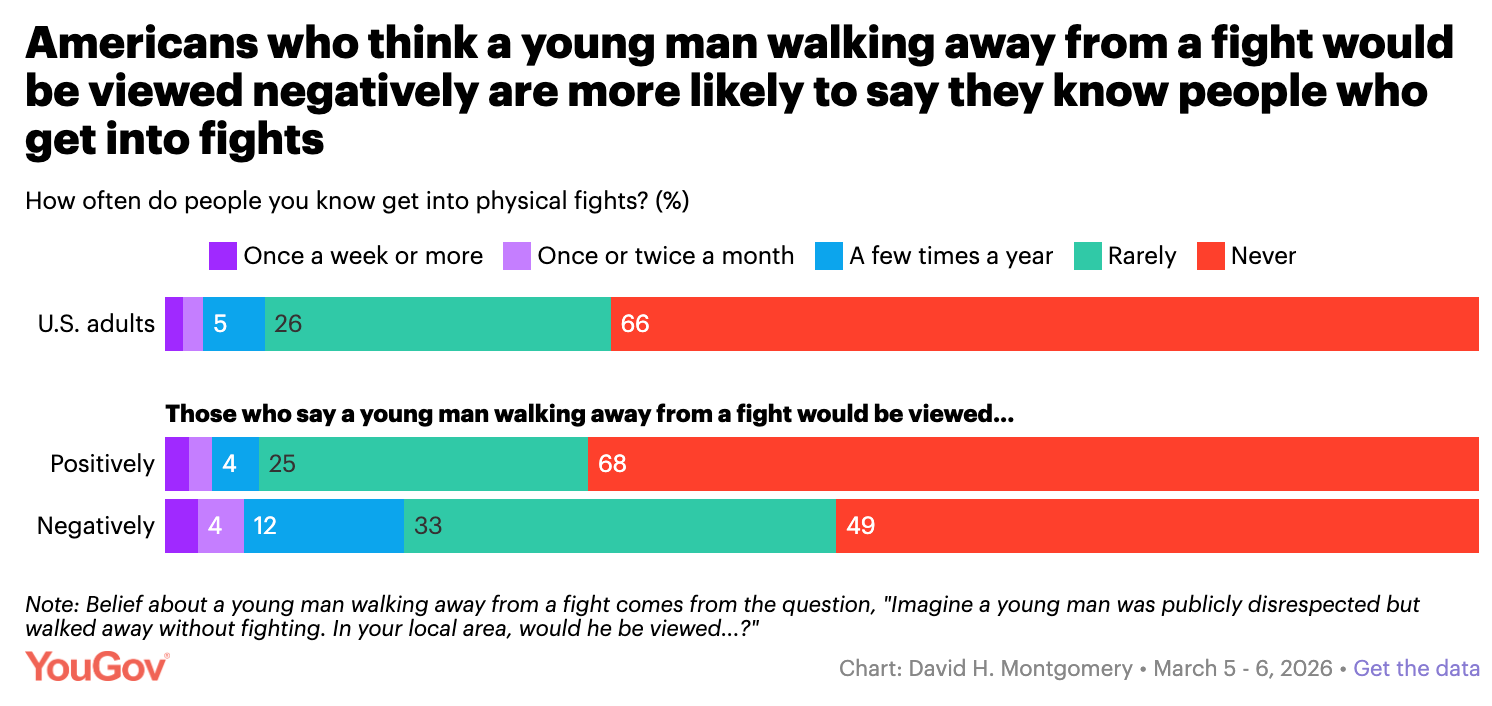
Putting this all together, we see “The Machismo Trap”. Americans whose friends get into fights are more likely to say that walking away would be viewed negatively. This fuels a vicious cycle: if boys grow up believing that respect comes from intimidation, then classrooms become battlegrounds.
If every classroom of 20 pupils includes 2 with a proclivity for fighting, this may be highly disruptive. Discussions on boys falling behind in education might take this Trap more seriously, and engage with the rich empirical literature on how to promote emotional regulation, reduce the social returns to retaliation, and ensure that policing creates effective deterrents. Such moves would benefit everyone.
How does male violence vary worldwide?
Going forward, I am keen to study male violence across all regions, triangulating responses from surveys with official crime statistics.
So, what do you think of the following questions:
How often do you get into physical fights?
How often do people you know get into physical fights?
How often did you get into physical fights while growing up?
Imagine a young man who is insulted in public and fights back. In your community, how would others see him?
Do men in your community get more respect if they win fights?
How often do you watch fighting matches, eg boxing/ wrestling?
Men gain protection from being part of a group known for toughness. Dis/agree.
Can the police be trusted to punish criminals?
Would you report theft to the police?
Growing up in Brazil (born in 1980), getting into fights was routine, from the age of 10. It happened all the time.
I was not a bully and never started fights, but had to defend myself frequently.
Some of those fights were quite serious and life threatening, got jumped by a gang and had to run for my life bloodied at the age of 17.
That was normal.
Would it be worth asking separate questions about starting fights vs responding once challenged/provoked/attacked? Not responding once attacked could invite future violence, of course. But this may make the questions too subjective.