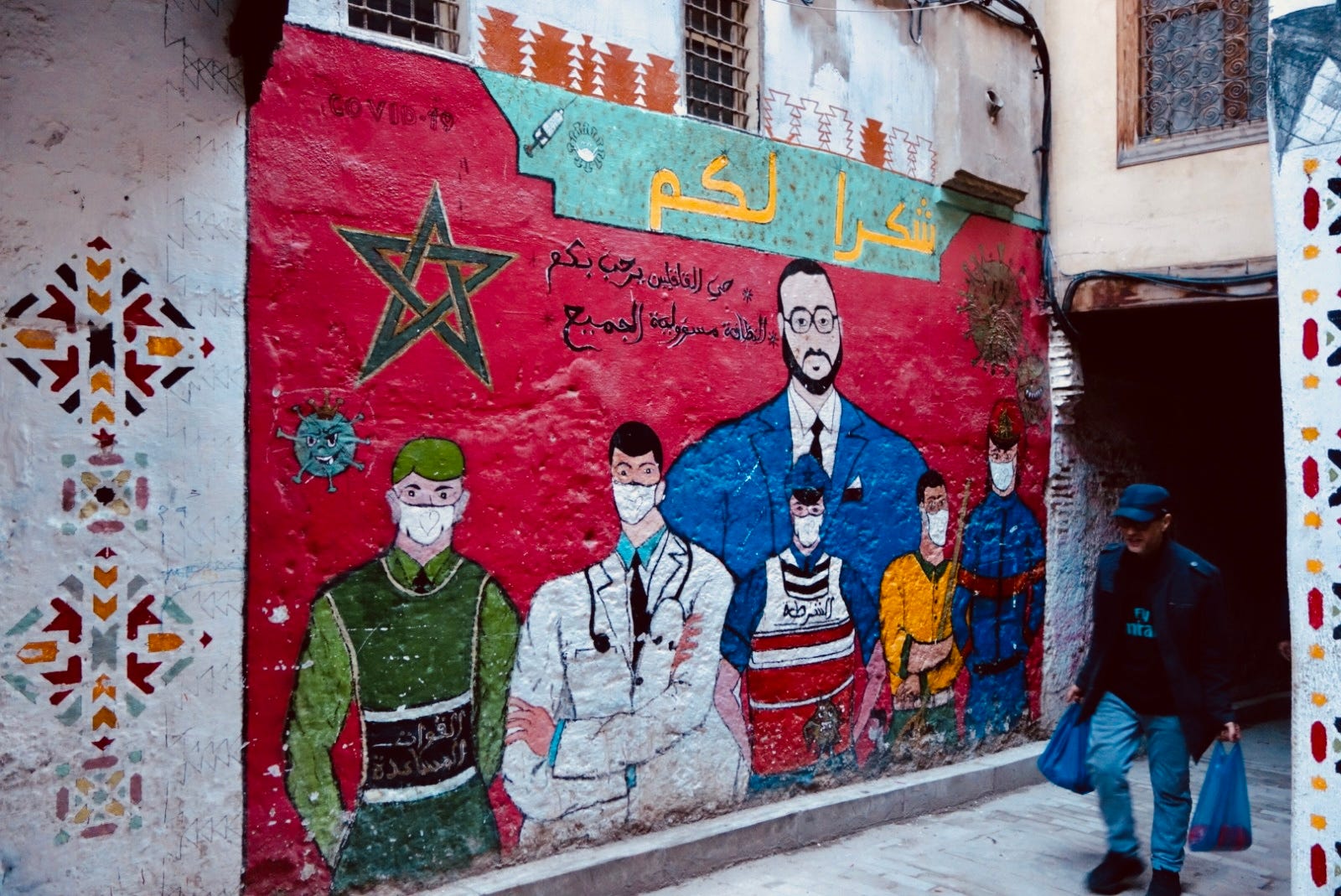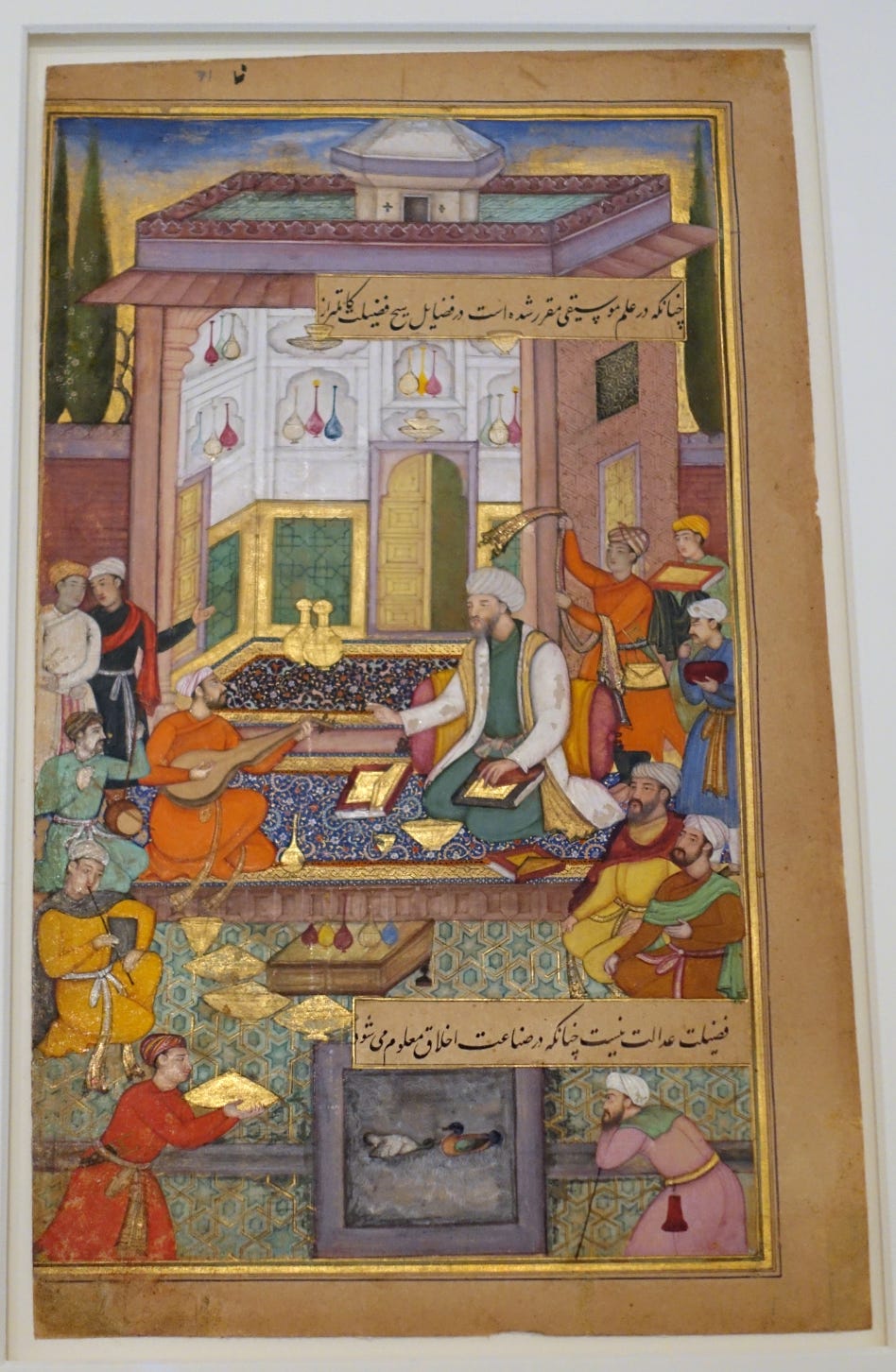

Empire-building is seriously tricky. First, you need to organize a ginormous coalition of armies, thereafter you need all these disparate ethnicities to develop a sense of cohesion, solidarity and loyalty, such that they come to cooperate together, without coming to blows.
For most of the past 300,000 years, humans struggled to coalesce, so instead lived in very small-scale bands of hunter-gatherers. It’s only in the last several thousand that they amassed into vast empires.
A wealth of literature has recognized this challenge and explored different strategies that enabled societies to scale up: religious rituals, moralising supernatural punishment. But much downplays one central friction: men’s sexual rivalries over women.
Tribal societies made this problem especially acute. Where men’s primary loyalty was to kin, a slight against one man’s sister could offend his entire lineage, prompting blood feuds. The same men who might prosper through trade or fight together as allies could also see each other as threats to their wives and sisters.
Islamic empires achieved something remarkable: they ruled much of Central Asia, South Asia, the Middle East, and North Africa for centuries, governing societies where many remained loyal to kin. In Baghdad, Cairo, Aleppo and Delhi, men of different tribes, languages and origins traded in the same markets, worshipped together in the mosques, and lived side by side. How on earth did Islam achieve this phenomenal feat?
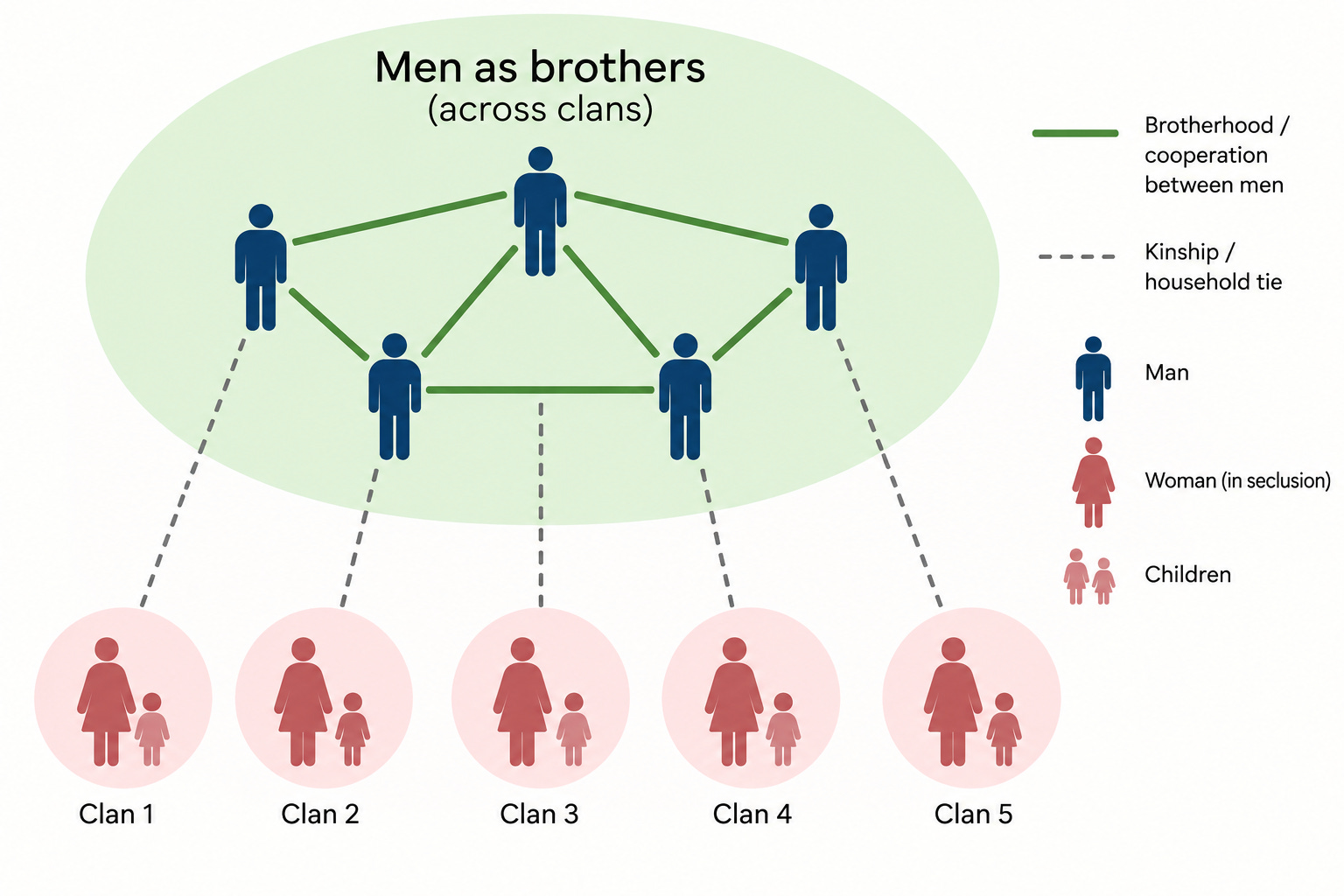
I suggest that Islamic empires built a brotherhood, without dissolving the clan. Islam brought diverse men together in shared devotion, binding them in obligations of mutual assistance, hospitality and restraint. Sharia courts and jurisprudence provided a common legal framework to resolve grievances. Preachers motivated compliance by emphasising God’s omniscience and the Day of Judgement: promising paradise and threatening hellfire.
Islamic empires also developed extensive restraints on encounters that might provoke men’s sexual jealousy and rivalry. By praising female seclusion as a mark of piety and raising concerns about fitna (sexual temptation/ disorder), preachers curbed men and women’s intermixing. Fraternities could meet in mosques, markets and Sufi lodges without trespassing on one another’s women.
Female seclusion, I suggest, helped reconcile patriarchal kinship with fraternal cooperation by restricting encounters that might provoke men’s sexual suspicions and rivalry.
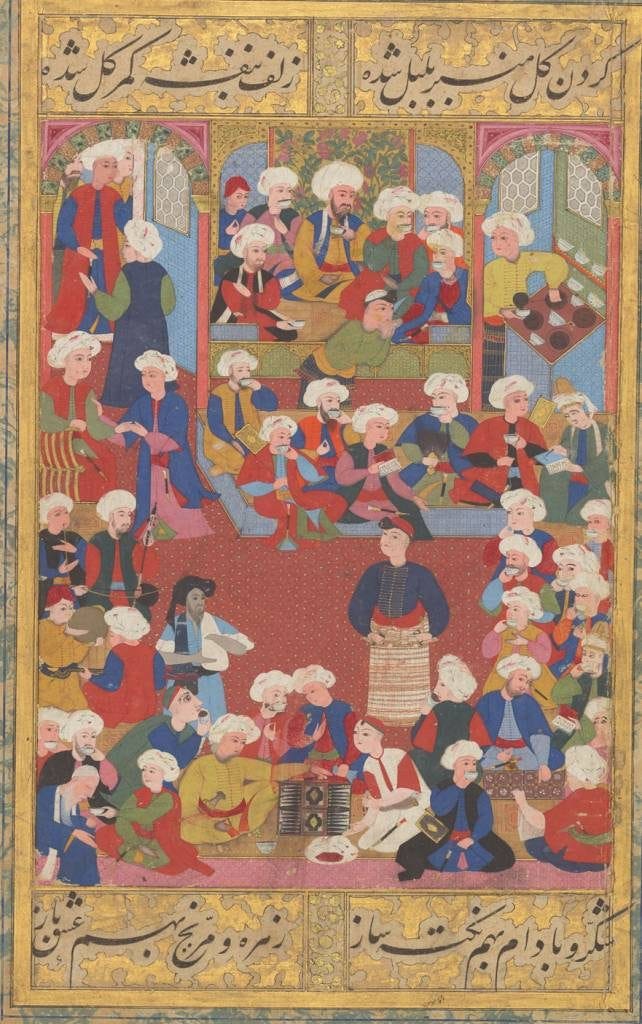
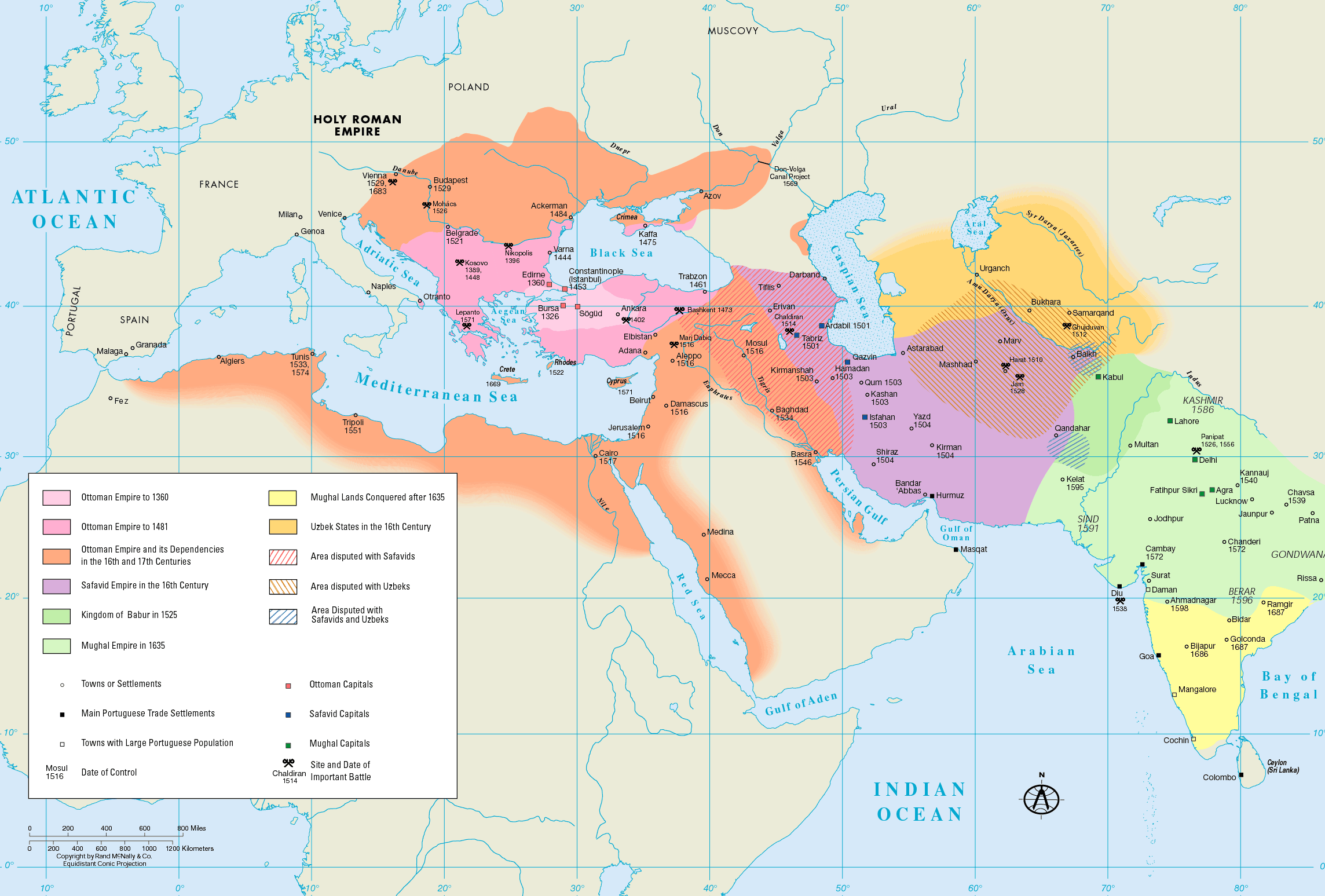
State-building through Military Slavery
The early caliphs confronted a major challenge of tribalism, explains Francis Fukuyama. Men might rally behind their chiefs, yet those chiefs could withdraw their followers after a quarrel (Fukuyama 2011, 192).
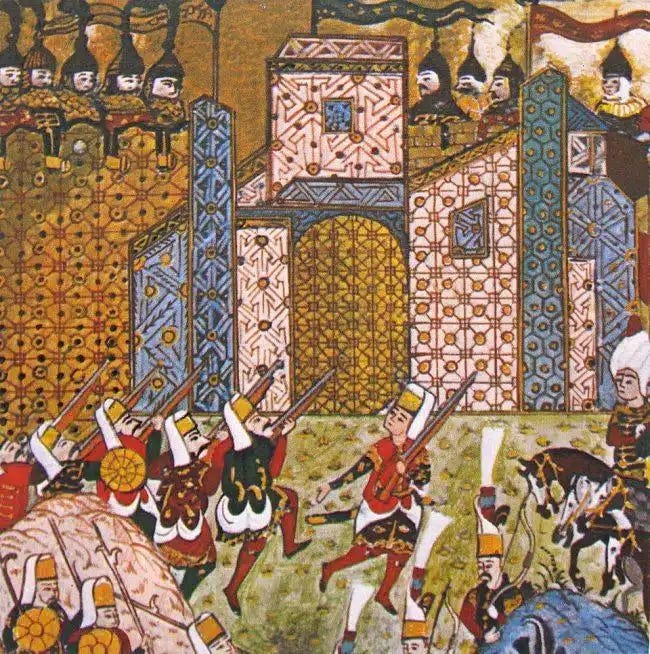
Abbasid rulers developed another strategy: foreign slave soldiers. Recruited individually, slaves were detached from the kin networks through which tribal leaders commanded loyalty. Their training and advancement was organised as service to the ruler. Under al-Mu’tasim, Turkic soldiers were trained in separate academies, supplied with enslaved women as wives, and forbidden from mixing with the local population (Fukuyama 2011, 198-200).
The Ottomans later recruited through the devşirme, requiring Christian populations to surrender boys, who were raised as Muslims, trained for military or administrative service. Janissaries were barred from marrying while in service.
Fukuyama thus argues, “The system of military slavery emerged as a brilliant adaptation designed to create a strong state-level institution against the backdrop of one of the most powerfully tribal societies on earth” (2011, 192).
Of course, dynasties remained vulnerable. Slave soldiers often developed their own solidarities and seized power for themselves. Ottoman Janissaries deposed and installed sultans, while Mamluks in Egypt seized the state itself, then presented themselves as defenders of Islam and celebrated military victories over the Mongols as jihad.
Over in Mughal India, nobles were assigned numerical ranks (mansabs) that determined their status and pay, alongside military obligations. Officers were expected to maintain specified numbers of cavalry. By regularizing rank and remuneration, this system may have strengthened imperial stability (Moosvi 1981).
The crucial point is that Islamic rulers repeatedly developed institutions to overcome the challenge of tribalism. Military slavery did this by supplying soldiers detached from kin networks; mansabdari provided a common hierarchy of rank and military service. But these were not the only innovations…
Protecting the Brotherhood
Unrelated men can become valuable allies, but not if they spar in sexual rivalry. Societies that successfully scaled-up tended to develop cultural, religious and institutional restraints on men’s sexual rivalry - from punishing adultery, to enforcing monogamy, to restricting encounters that might generate sexual temptation.
Islamic scripture strictly proscribes a wide range of encounters that might generate sexual temptation. In the Quran, men are instructed to lower their gaze (24:30), while women are instructed not to stamp their feet so as not to draw attention to hidden adornments (24:31); believers were asked to address the Prophet’s wives through a barrier (33:53). Muhammad also said that a woman should not be alone with a man unless chaperoned by a close relative (Sahih al-Bukhari 5233).
Curiously, the Quranic prescriptions concerning gaze, adornment and separation all appear after Muhammad went to Medina, where he became a political leader of a rapidly expanding political-religious community. His followers now faced a much greater challenge of cooperation across tribes. Indeed, in 627, Aisha was left behind on an expedition, later accused of adultery, and this scandal nearly ignited a physical fight between two tribes.
In many well-known hadiths, the Prophet warns about sexual temptation,
“The woman advances and retires in the shape of a devil, so when one of you sees a woman, he should come to his wife, for that will repel what he feels in his heart” (Sahih Muslim 1403).
“After me I have not left any fitna more harmful to men than women” (Ṣaḥīḥ al-Bukhārī 5096, Ṣaḥīḥ Muslim 2740).
“The world is sweet and green (alluring) and verily Allah is going to install you as vicegerent in it in order to see how you act. So avoid the allurement of women: verily, the first trial for the people of Isra’il was caused by women (Sahih Muslim 2742).
Fitna literally means a trial. This term is repeatedly used by Islamic scholars and preachers to refer to both sexual temptation and also disorder within the Muslim community. Major civil wars in early Islamic history are known as the First, Second, Third and Fourth Fitna, followed by the Fitna of al-Andalus (a civil war in Islamic Spain). The word thus evokes the danger of communal discord.
As warriors went out to wage holy war, Muhammad also assured them that their wives would be safe, stating that anyone who violated their wives “will be made to stand on the Day of judgment” (Sahih Muslim). Men’s obligations to absent comrades were reinforced by threats of Allah’s wrath.
Women attended public prayers in the mosque during the Prophet’s lifetime, but with one proviso: Muhammad told them not to wear perfume. By the 11th century, jurists discouraged women from attending congregational worship, by citing concerns about fitna. Ibn Rushd, a Maliki scholar in Cordoba, permitted ‘an old woman for whom men no longer have any desire’ (Katz 2014, 24-25). Andalusian mystic Ibn ʿArabī (d. 1240) disagreed, saying that such men were just succumbing to base sentiments of sexual possessiveness (ibid, 41). Such resistance was generally over-ruled, and concerns about sexual temptation became the central rationale for pushing women to pray at home.
Islamic ethicists like Ghazali praised men’s sexual jealousy, and urged men to prevent their wives going into the marketplace. A wife should avoid approaching her husband’s friends, and refrain from conversation if one called while he was absent.
Seclusion thus created an asymmetry: by confining women, men could preserve the clan while building wider networks.
Restricting Love Marriages
The means by which Islam scaled up men’s cooperation had major consequences for women. Early conquests may have preserved cousin marriage and clan loyalties, then prescriptions of female seclusion may have increased men’s control over sisters and daughters, inhibiting love marriages.
Cousin marriage is especially prevalent across areas once under the Umayyad Caliphate that remain Muslim, possibly due to emulation of Arab conquerors. Cousin marriages preserved clans, which persisted for centuries by commanding loyalty over other attachments.
Strict surveillance of wives, sisters, daughters and cousins was encouraged by religious restrictions against mixing with non-mahram men. Men’s honor depended on female seclusion, and male relatives faced criticism if women mingled with unrelated men.
Love marriages were obstructed. As men sought to guard against fitna (sexual temptation/ disorder), daughters were ideally kept in seclusion while men arranged matches. Girls were usually married young, and their consent was secondary. Restrictions on courtship meant that men could secure a wife and sexual pleasure without winning her affection.
A husband’s bargaining power was substantially enhanced by his unilateral right to divorce and permission to take additional wives. Leveraging such threats, he could extract more patriarchal rents.
Reinforcing a Husband’s Bargaining Power
Scholars maintained a system of jurisprudence that preserved patriarchal prerogatives and wifely obedience. This includes men’s easy exit.
A Muslim husband’s bargaining power was strengthened by his unilateral right to divorce and permission to take additional wives. Since divorce was regarded as a disaster for women (depriving them of support, protection, while remarriage jeopardized child custody), men could thus use threats of divorce to enforce obedience (Rapoport 2005, 69). Reviewing evidence from medieval Mamluk Cairo, Damascus and Jerusalem (1250–1517), Rapoport surmises:
“Husbands threatened their wives with repudiation in response to any breach of their authority, even petty ones… A husband would threaten his wife with divorce in order to deter her from visiting a neighbor, from hosting a female friend, or from divulging a family secret”.
A wife might not even claim some of her legal rights, or refuse sex, because she feared divorce. In the early 14th century, a question was submitted to Ibn Taymiyya, “For many years, a wife is incapable of demanding the marriage gift owed to her by her husband, in order not to cause a divorce” (Rapoport 2005, 55; see also Ali 2010, 126, 195).
Islamic jurists often likened wives to slaves and marriages to commercial transactions. They conceived of marriage as a transaction in which a husband paid a dower and gained a form of dominion (milk) over the wife’s sexual and reproductive capacity (Ali 2010, 6). Marriage established his exclusive sexual claims, which others were bound to respect. In 14th century Damascus, Ibn Taymiyya suggested that a wife should serve her husband because he was her master and she was a “captive in his care” (Katz 2022, 173).
Wifely obedience was repeatedly sanctified by religious scholars, promising salvation if women pleased their husbands. “A woman cannot be righteous … without being obedient … to her husband”, declared al-Razi. Reviewing pre-colonial Sunni commentaries, Ayesha Chaudhry notes that a husband’s sexual disinterest was often explained by his wife’s age, appearance or behaviour, while her sexual refusal was condemned as disobedience deserving punishment (Chaudhry 63-66). Some jurists advised husbands to beat wives for refusing sex or swearing (Rapoport 2005, 76).
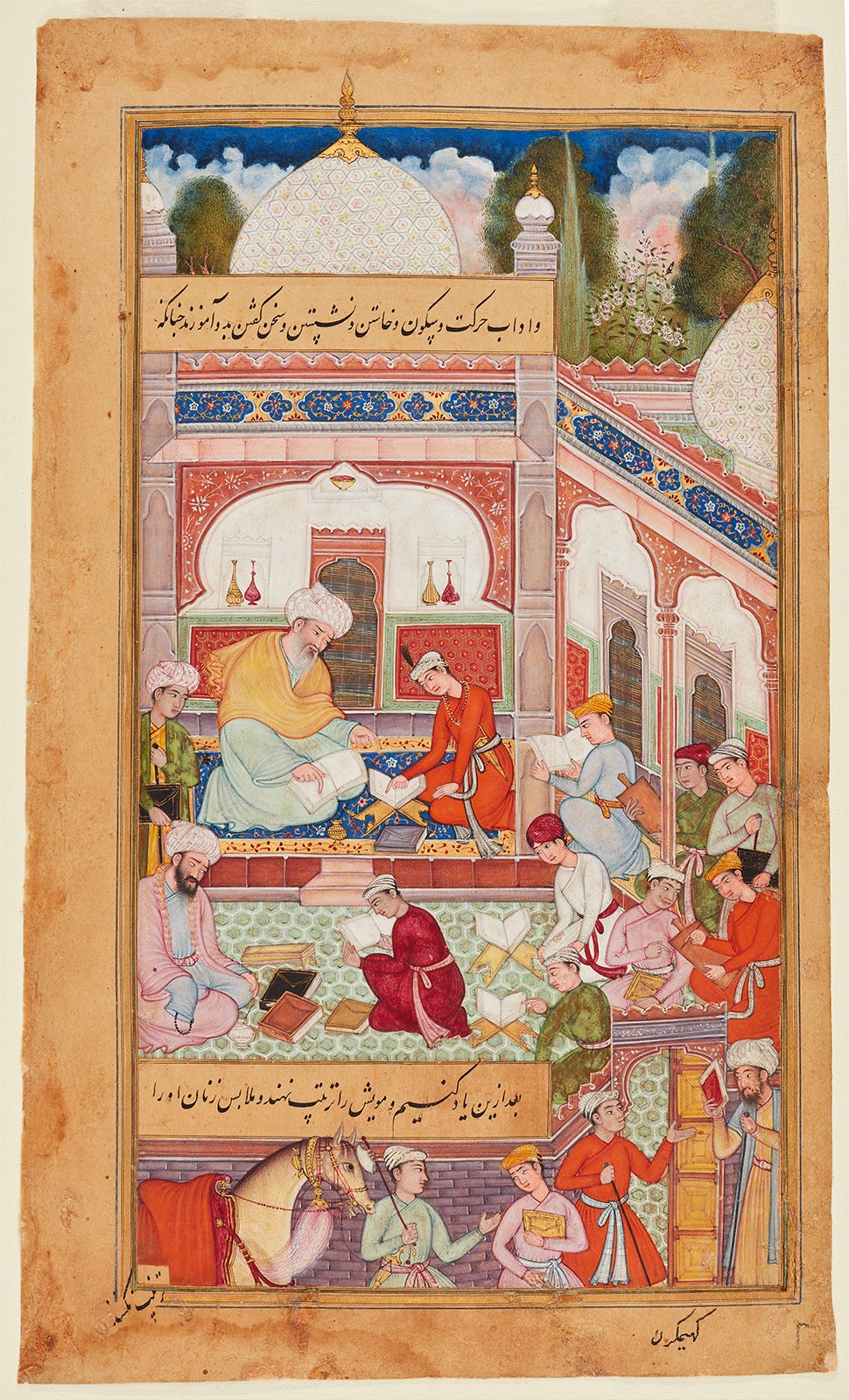
Our knowledge of the medieval period overwhelmingly comes from men: their chronicles, biographies, legal opinions and written records. Even where girls were educated, their literary expression was strictly restricted (Rapoport 2005, 8-11).
Glorifying Brotherhood
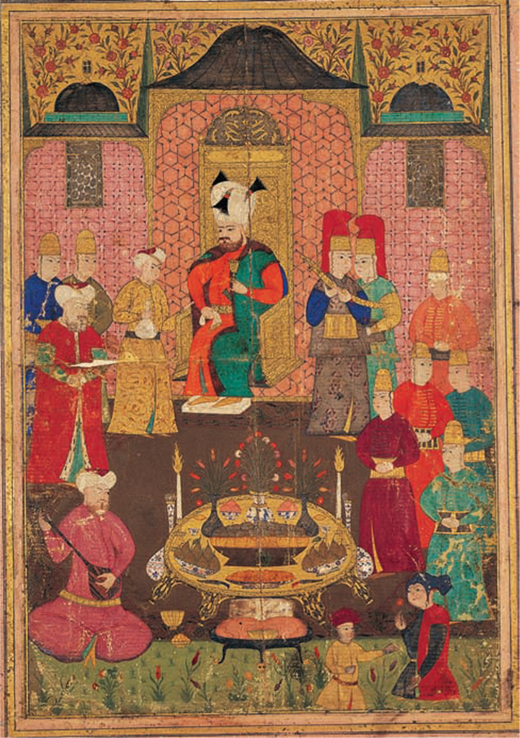
Islamic ethicists repeatedly elevated brotherhood. Men were called upon to pray together in Friday jummah, regularly assembling in shared devotion
Ghazali extolled the primacy of male friendships: men should seek virtuous companions to cultivate spiritual refinement. He urged men to cooperate as comrades, provide material aid, keep each other’s secrets, and remain loyal. Ghazali quotes Al-Hasan as saying
“Our brothers are dearer to us than our families... If a man stands by his brother to the end, then on the Day of Resurrection God will send angels from beneath His Throne to escort him to the Garden of Paradise” (Holland 2010, 32).
Women, meanwhile, were often belittled. Reviewing Ghazali, Tusi and Davani, Zahra Ayubi shows how these ethicists treated women as intellectually deficient, assigned care of the home, so that men could focus on spiritual refinement. Rūmī asserted that women should not be consulted or trusted, due to their lack of reason.

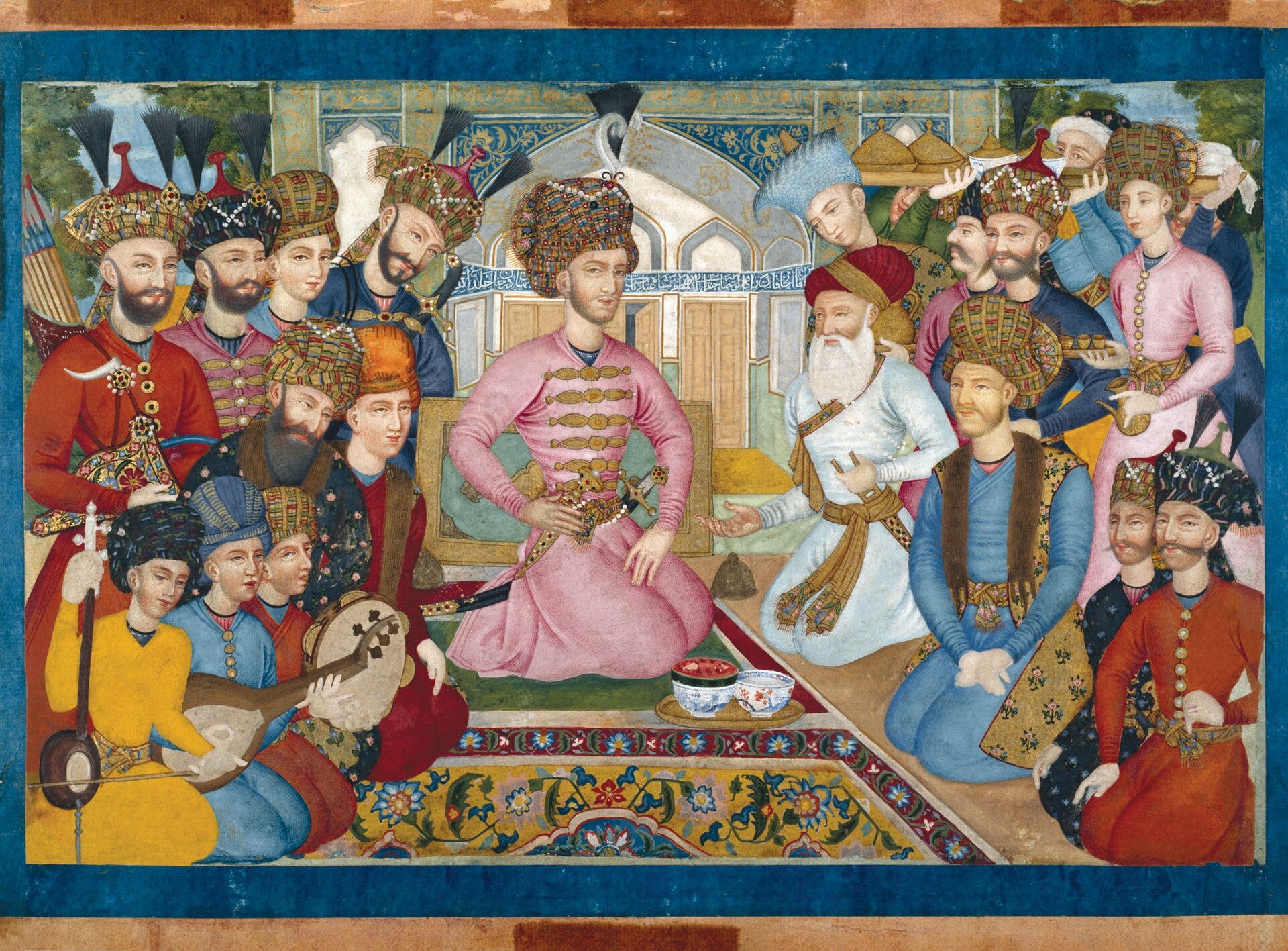
Futuwwa Brotherhoods and Ottoman Guilds
Futuwwa brotherhoods emerged across the Islamic world, comprising young men. Members were to emulate prophets, saints, and Sufi sages.
In the 14th century, the Anatolian brotherhood of the Akhis brought together craftsmen, merchants and other townsmen who shared their earnings, food and possessions, while building zawiyas (lodges) for social gatherings, shared meals and spiritual Sufi devotion.
Ibn Battuta (1304-1377) visited several Akhi hospices in Anatolia, always greeted with great hospitality and compassion. At one, two hundred young akhis from different trades had elected their leader, the shaykh.
“After the afternoon prayer they bring… their collective earnings; with this they buy fruit, food, and the other things needed for consumption in the hospice. If, during that day, a traveller alights at the town, they give him lodging with them; what they have purchased serves for their hospitality to him and he remains with them until his departure” (quoted in Ridgeon 2010, 80-81).
The 16th century saw the emergence of more centralized guilds. Members pooled money into common funds, bought raw materials collectively, shared tax liabilities, selected representatives, enforced production standards and agreed not to poach one another’s apprentices.
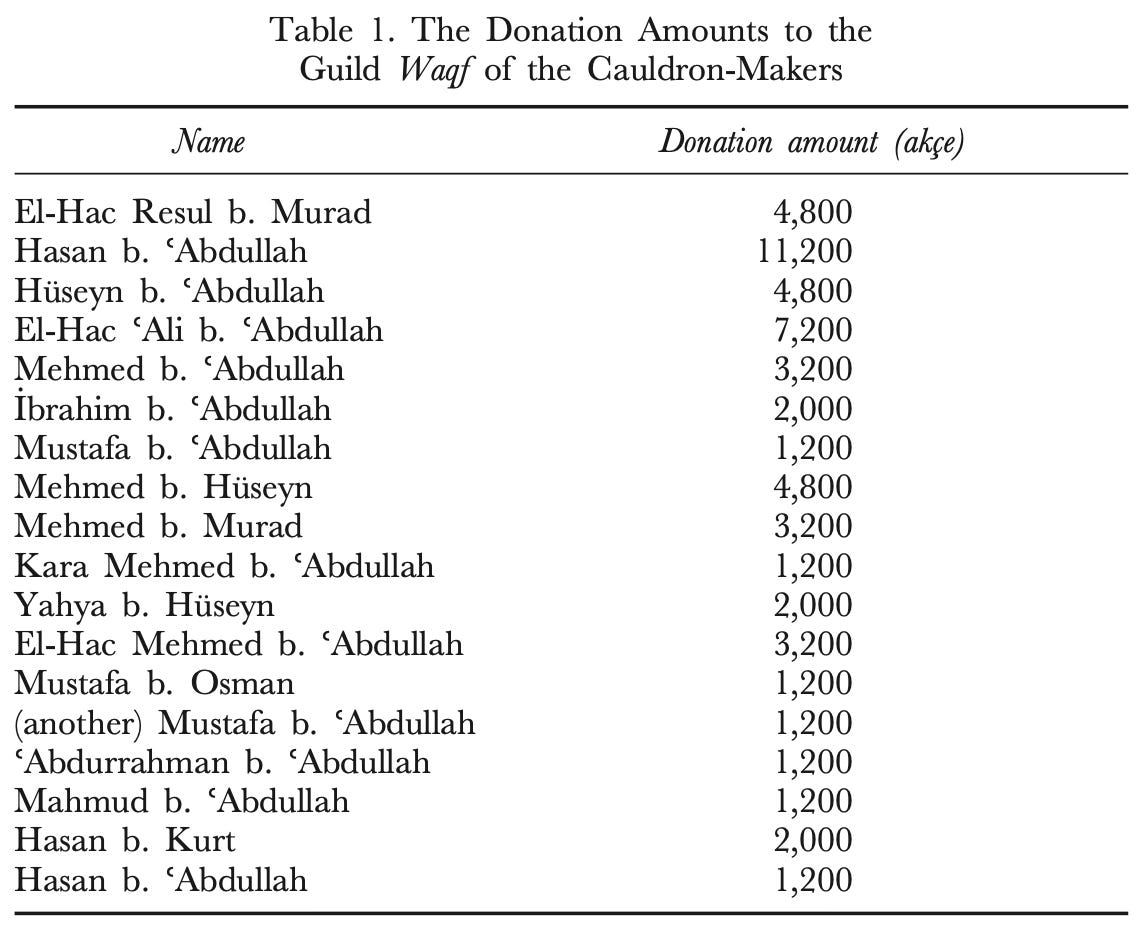
In the 1640s, Istanbul’s cauldron-makers created a cash waqf, then used the returns to pay collective taxes and military requisitions. Saddle-makers pooled funds to pay for communal meals (Yi 2004, 61–62, 85). The oil-makers bought sesame and linseed collectively, paid the tax, then divided the supplies between themselves under guild supervision. One tanner who secretly purchased 448 goatskins outside the collective arrangement was hauled before the court and accused of creating disorder. He was warned that another violation could mean expulsion (ibid, 81–82).
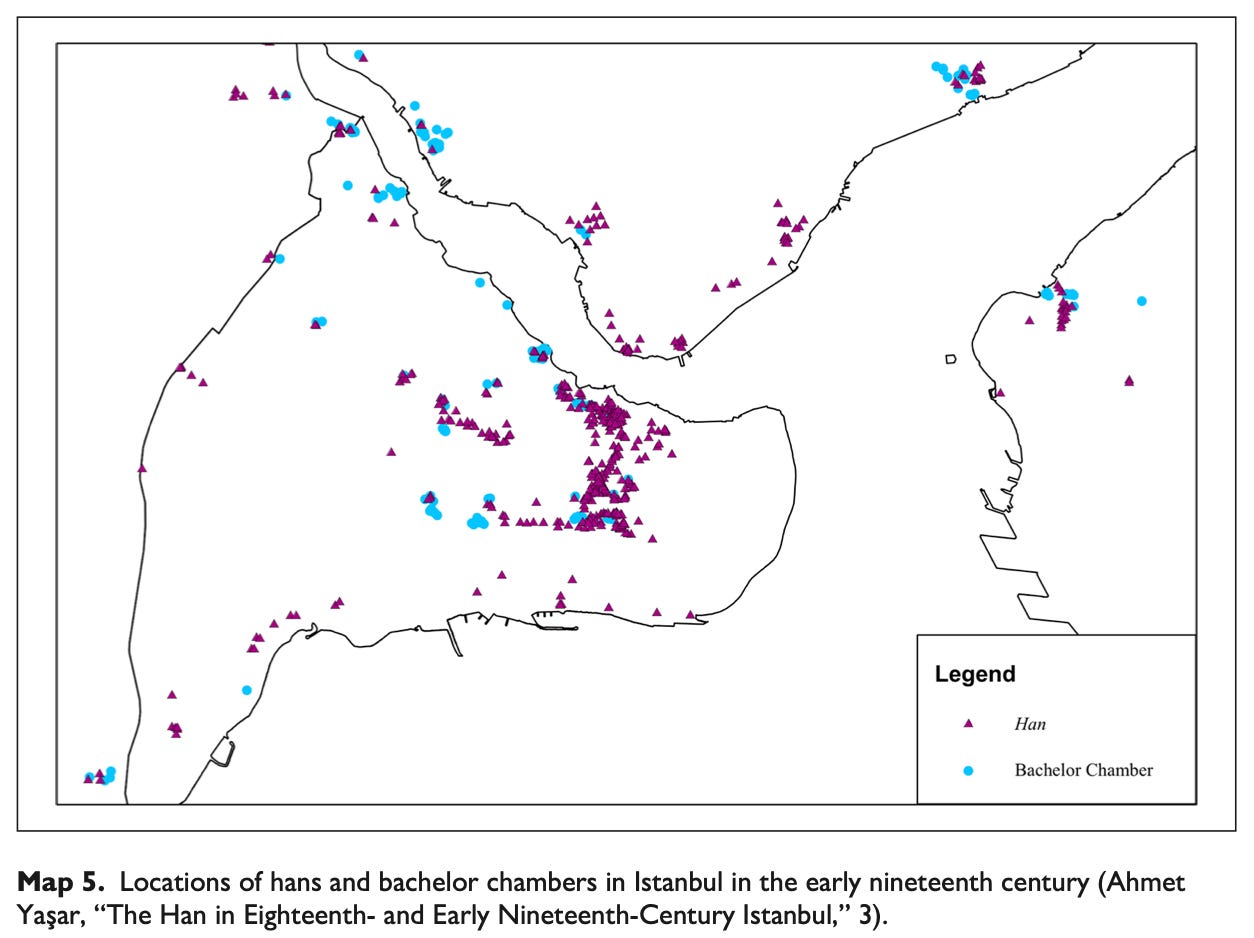
Guilds also cultivated solidarity through feasts and religious rituals. In Istanbul, artisan organizations usually regarded holy men from early Islamic history as saintly patrons, while members visited dervish lodge or saint’s mausoleum, for devotion and a communal picnic. Evliya Çelebi reports that the barbers held annual assemblies in honor of their patron saint, Selmân-ı Pâk, while goldsmiths organised festivals at Kâğıdhane. Some guilds also financed pious activities, such as reciting poems in praise of the Prophet Muhammad. By the 18th century, Sarajevo saddlers admitted new masters at a Mevlevi dervish lodge (Faroqhi 2009, 73–74, 124, 173). Craftsmen might also meet in a member’s shop, a mosque courtyard, or guildhalls (ibid, 125). If men travelled to Istanbul, they might stay in ‘hans’ - commercial inns, often with male dormitories for artists, traders, and porters.
Women’s labor was certainly vital to home-based production, but it was men who built wider connections. Together, they built up trust, loyalty and fraternity.
Brewing Fraternity
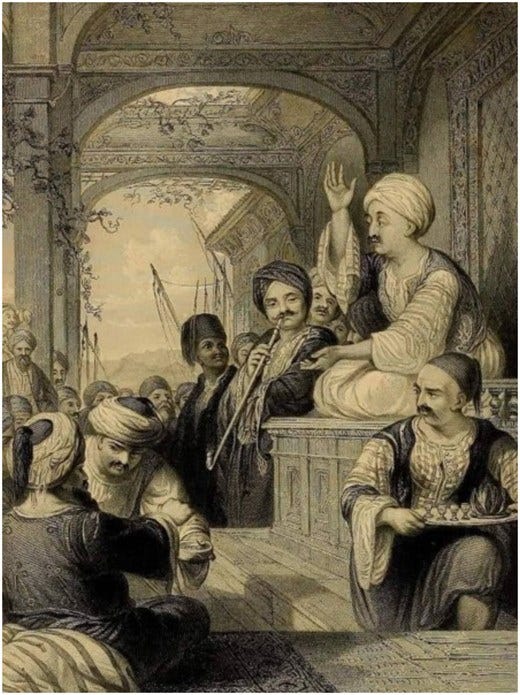
In the 1840s, Istanbul had around 2,500 coffeehouses. These establishments attracted a diverse clientele - men from different classes, trades, professions, sects and countries - but were exclusively reserved for men.
Coffeehouses were thriving centres of commerce, places to exchange news, information and ideas. Men also listened to stories and histories, including tales of great Islamic battles. Cheering heroes and cursing villains, they imagined themselves as heirs to a shared martial past (Kirli 2015; Wishnitzer 2026).
Commanding Right & Forbidding Wrong
As the Ottomans warred with their imperial rivals, the Habsburgs and Safavids, they cultivated a Sunni group identity - establishing mosques and sharia courts across each district, staffed with centrally-appointed kadis (judges) (Akiba 2024). Moralists condemned women leaving the house, such as to go meet non-relatives. Men scaled up their connections through collective worship in mosques and Sufi brotherhoods (Zilfi 2012, 19, 56).
One kadi (Islamic judge) in 16th century Eyüp, a suburb of Istanbul, declared:
“Women are going into the cream shops on the pretext of eating cream, and they’re sitting down with unrelated people [namahrem] and transgressing shari’ah law”.
The police were charged with strict enforcement, patrolling the streets with sticks, staffs, paddles and canes. In 1757, Osman III commanded that “women remain in their own houses except of needs sanctioned by holy law” (Zilfi 2012, 57, 73). Grabbing this righteous mantle, male thugs were equally zealous in commanding right and forbidding wrong (Zilfi 2012, 74). Over in the Syrian city of Aleppo in 1762, several residents entered a house, discovered several unveiled women sitting among men, and successfully petitioned the court for them to be expelled from the neighborhood. In 1754, a qadi ordered a shop to close because it had permitted their male and female customers to mix freely (Marcus 1986, 165, 169).
Islamic jurists maintained that anyone who sees a wrong should try to correct it by hand, tongue or heart. To maintain the righteous path, believers should either intervene physically or verbally. Failure to prevent widespread wrong-doing will surely lead to punishment in the afterlife. This religious obligation falls upon all legally competent Muslims - explains Michael Cook. State capacity therefore was not a pre-condition for strict moral policing.
While some women clearly transgressed, prompting further campaigns against moral laxity, and poor female labourers and slaves traversed the city for piece-work, the prestigious ideal was still female seclusion. That did not prohibit royal and wealthy women in medieval Cairo from using their inheritance to own property or endow madrasas, but there is little evidence of them acting professors or students in formal education (Berkey 1992, 163). When families prospered, it was men who established networks across religious education, commerce, salons, armies, and governance. Men befriended other men.
In Ottoman cities, it was even considered improper to inquire after the female members of a man’s household - even government authorities were expected to abstain. Aleppo’s census only included women in the 1880s, with men being allowed to present information on behalf of secluded relatives (Marcus 1986, 170, 175).
What about Iran?
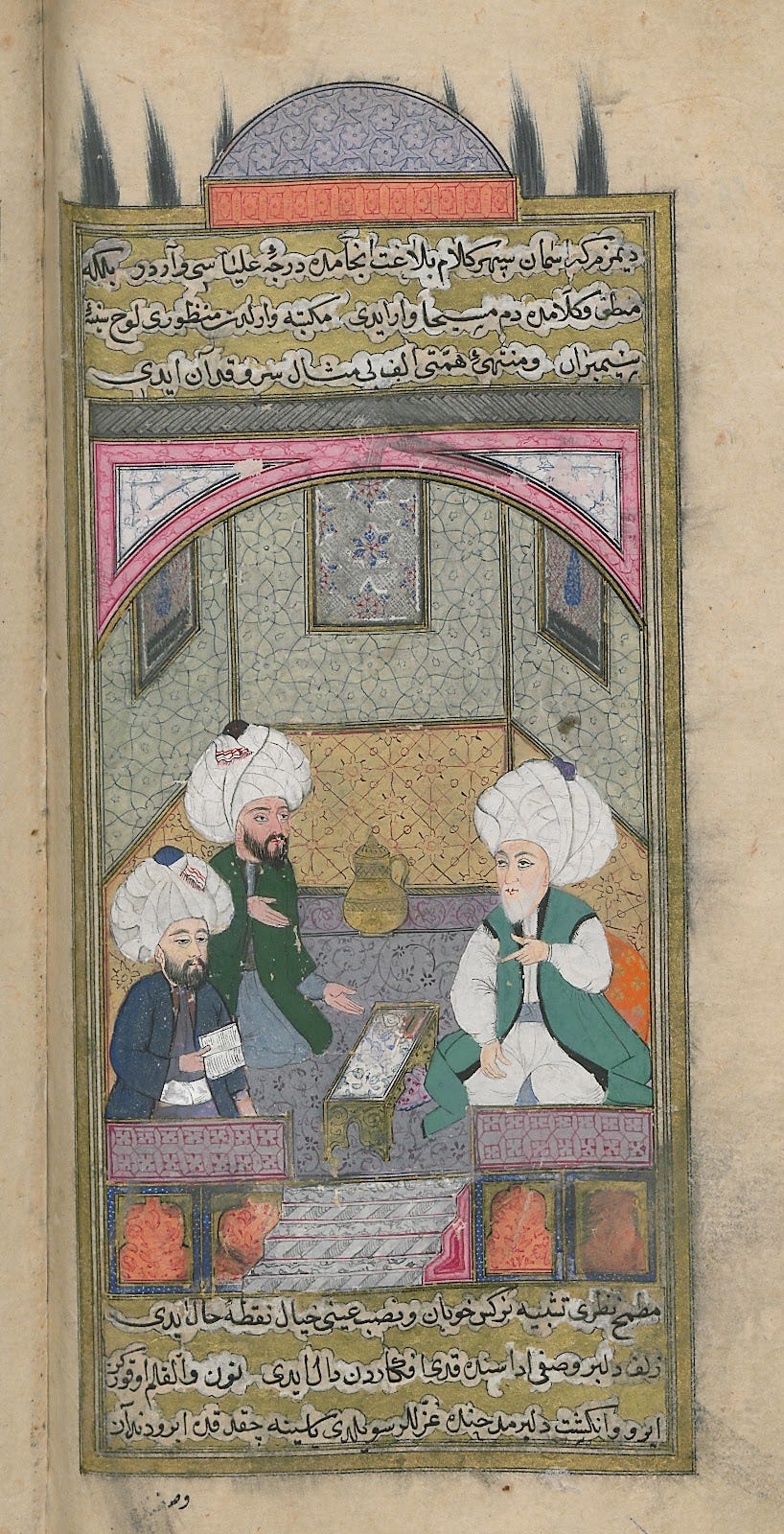
Gender segregation was enforced so strictly in Safavid Iran that muezzins rarely made the call to prayer from the top of a minaret, as otherwise they might see women in their enclosed gardens! Yet elite men nevertheless hosted lavish feasts with copious drinking, female dancers and young male singers (Matthee 2005, 9, 55, 67). Men could bond over shared pleasures, as long as their own women were secluded.
In 19th century Qajar Iran, Shi‘i fiqh proscribed men and women’s intermingling. These restrictions extended to speech and song - since her voice could arouse sexual desire. Muhammad Hasan Najafi, a prominent cleric, argued that men should not listen to an unrelated woman’s voice, even in devotional settings (Vejdani 2024, 25-26).
The Islamic duty of commanding right and forbidding wrong was repeatedly invoked to justify moral policing - by sovereign, governors, ulama and ordinary people. In Shiraz, ‘ulama sometimes took matters into their own hands. In 1894, Sayyid ‘Ali Akbar Falasiri mobilised two to three hundred seminarians and mob ruffians to raid a house hosting prostitutes. Both the women and the neighbourhood headman fled. The government despatched attendants to expel the raiders, but they were beaten up instead (Vejdani 2024, 189). Thus even on the verge of the 20th century, religious followings could overpower the state and forbid wrong.
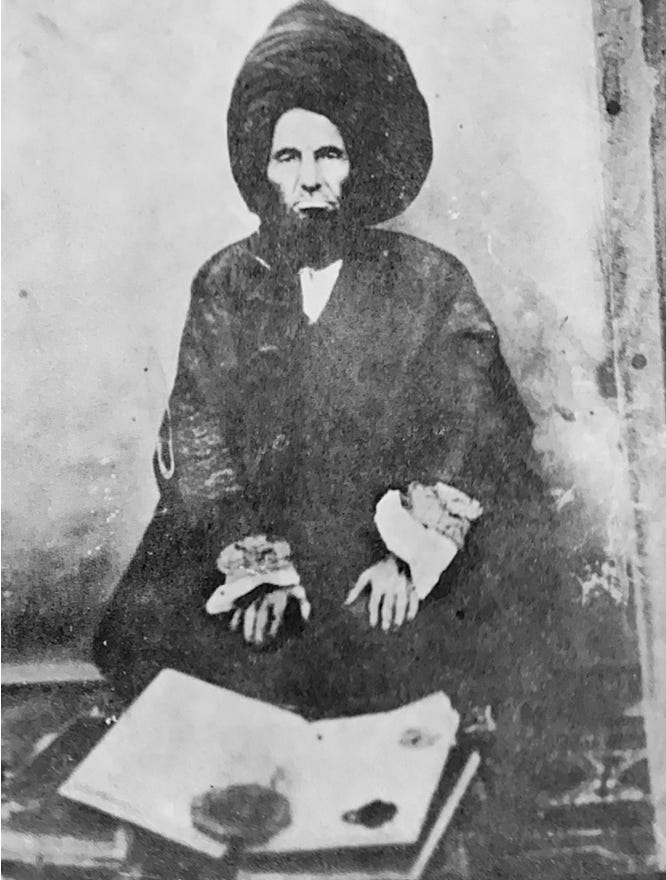
Reverend Wilson, a missionary, was based in Tabriz for 15 years. He writes, “The most striking fact in the condition of woman in Persia is her seclusion. Her dwelling is shut in from the street and the view of the neighbors by high mud-walls” (Wilson 1895, 255). Further, “the social intercourse of men and women is not permitted, and the idea of it shocks their sense of propriety” (Wilson 1895, 243).
“The wife never sits at a feast with her husband’s guests, nor receives male visitors.
The latter must not even inquire about her health, or refer to her. The husband, if occasion calls for it, speaks of her as the mother of Ismiel” or “of Hasan,” or uses some other circumlocution. Another man may refer to her as the mother of Zebedee’s children.”
If a man enters the gate unannounced he must cry, “Women, away!” that they may have time to conceal themselves. It is a misdemeanor for one to open a window overlooking his neighbor’s yard.
A Mussulman requested me to raise the wall surrounding the school, because the boys could look from the roof upon his women. A pigeon-trainer was accustomed to go on his roof to follow the birds, and so overlooked his neighbor’s yard. He was warned not to do so, and on repeating the offense was shot dead. So carefully do they guard their Bathshebas from the sight of any David” (Wilson 1895, 255-256).
Wilson details that women left their houses wearing a chaddor, concealing their bodies and faces. One time, the wife of a Persian official from Istanbul went out in Tabriz wearing her foreign costume: “The mujtehid sent his servants to warn her to cease to do so or she would be beaten” (Wilson 1895, 256).
Noruz (new year) was the most important social celebration. The finale was a children’s festival, in which “boys crowd the streets, and women gather on housetops”. A chief activity during Noruz was to visit acquaintances, but such social gatherings were primarily reserved for men. Women, therefore, performed a huge volume of labour cooking and cleaning, making kulva and peshmak confectionary, as gifts and generosity for men’s social connections (Wilson 1895, 245-247). I call these ‘patriarchal rents’.
Misogyny
Islamic jurists and preachers repeatedly warn men against listening to women, belittling them as intellectually inferior and ignorant.
From the late 19th century, reformists challenged these narratives. In the 1886 preface of the women’s magazine Şükûfezar, Arife Hanım, noted that ‘We are people who have been subjected to the mockery of men who say, “Women are long-haired, short-witted” (see also Zilfi 2012, 16). Abdülgani Seni wrote a newspaper article in Salonica, arguing that women’s capacity to engage with the wider world had been restricted by seclusion: they ‘lived their lives like caged chickens’. In Egypt and Tunisia, reformists likewise argued that confinement kept women ignorant, reinforcing misogyny.
In Tabriz, Reverend Wilson recorded a popular saying, “a man’s worst enemy is his wife” (Wilson 1895, 259, 266). He further details:
“A wife is in subjection to her husband.... She occupies the position of slave to man’s pleasure and comfort... She does not sit down to eat with her husband, but eats after waiting on him. If perchance she accompanies him on the street, she walks some distance behind him. Wife-beating is very common, and is allowed by law and custom. Despising his wife as a woman, and having inbred ideas of her inferiority, the husband corrects her and punishes her as a child. A Persian woman said to a foreign lady,” You are not married. Then happy are you, for you have no one to beat you.” (Wilson 1895).
Wilson observed men maligning women as ignorant, and justifying violence as necessary for patriarchy:
“In a village where some men had gathered around me, and the women, all chattering at once, were making a great hubbub around Mrs. Wilson, a man attacked the women and struck them with his cane, saying, “Get away; you are making such a noise you confuse our conversation. You can’t understand anything, anyway.” If one protests against the beating of women as a barbarous practice the reply is, “How else shall we rule them?”. Even when a Persian gentleman would by instinctive feeling be polite to a lady, he is restrained by the thought of his own dignity, saying,” Oh, she is only a woman; it won’t do to show respect to her” (Wilson 1895, 257).
Jewish Communities and Fraternal Networks
These dynamics were not unique to Islam. Other communities living within Islamic empires also organised commerce and kinship through patriarchal households and male networks.
Our evidence on the Jewish community in 10-13th century Egypt primarily comes from the Geniza documents: personal and administrative letters, court records, and legal documents. Most were written by men - suggesting they were the ones cooperating at scale. Krakowski (2018, 15) notes that with the exception of slavery, marriage and informal adoption, “women seem not to have created recognized social relationships with non-relatives”. Women were thus far more dependent on kin.
Marriages strengthened male networks: prospective grooms courted a woman’s male relatives, seeking relationships that could cement commercial partnerships, while her own preferences remained peripheral (Krakowski 2018, 227, 232). Court documents also suggest that women often appointed a man to speak on their behalf.
In 19th century Istanbul, Jewish first marriages were usually arranged by parents, motivated by business considerations. Reviewing two registries of the rabbinic court of Istanbul for 1833 to 1847, Rozen notes that betrothals could be arranged for infants, and consummated once a girl turned 12 - so long as women testified to the presence of two pubic hairs.
“her fate was determined by her father or grandfather, in much the same way they would sell an object… in which the emotional component.. was utterly ignored” (Rozen 2014, 172).
Muslim Travellers to Europe
Arab travellers often remarked that European men were not jealous when their wives joined social gatherings and spoke to other men. Edward Lane, based in Egypt from 1833 to 1835, reports that an Egyptian friend asked another Egyptian, who had been to Paris, what was most remarkable in the land of the infidels. The traveller is quoted as saying,
“It is a custom… to invite his friends and acquaintances, both men and women, to an entertainment in his house.... The men and women assemble promiscuously; the women, as you well know, unveiled; and a man may sit next to another’s wife, whom he has never seen before, and may walk, talk, and even dance with her, in the very presence of her own husband, who is neither angry nor jealous at such disgraceful conduct.” (Lane 1836).
The Egyptian traveller’s astonishment reveals something crucial: he expected a husband to be angry when his wife spoke to another man. I suggest that Islamic-Egyptian prescriptions of female seclusion had reduced occasions for such antagonism.
Why Restrict Women’s Writing?
In the pre-modern era, Muslim scholars rarely considered women’s writing. Exceptions include 10th century al-Ḥakīm al-Tirmidhī, who wrote that if women learnt to write they would write to those they actually desired, which would only cause discord (fitna). 12th century al-Shayzari’s manual on Hisba states, “The educator must not teach a woman or a female slave how to write, because this makes a woman worse, and it is said that a woman learning to write is like a snake made more venomous by being given poison to drink”.
14th century scholar Badr al-Din Ibn Jam’a said that women should not even inhabit buildings with windows overlooking madrasas, so that males would not be distracted by their allures (Berkey 1991, 167). In the 16th century, Shāfiʿī jurist Ibn Ḥajar al-Haytamī concurred that women’s writing poses a risk of corruption, for “if a woman learns to write”,
“it leads her to corrupt purposes, and those who are corrupt can reach her with much greater speed, eloquence, and treachery than [they would be able to do] otherwise” (cited in Wright 2022, 83)
In 19th century north India, elite Muslim families sometimes taught their daughters to read the Quran, but rarely to write. Why? Because many feared that a girl might send letters to a marriageable man, violate purdah and impugn her family’s izzat (honor) (Minault 1998, 24).
Debates became much more animated in the late 19th century, when colonial governments and missionaries established schools. In British India, Ahmad Reza Khan (founder of the Barelvi revivalist movement) issued a fatwa in 1898, “teaching women to write is religiously prohibited”. In Egypt, Mukhtār al-ʿAẓmī warned that primary schools would break Sharia and mean free-mixing with men. Both cited a (widely-rejected) Hadith that the Prophet forbade teaching women to write.
Reformists, by contrast, encouraged female education for national development. Breaking the deadlock, the Deobandi scholar Ashraf ʿAlī Thānawī proposed that women could be taught to write, but within Islamic constraints (Wright 2022). Mumtaz Ali (Sunni scholar) argued that some men lock their women away partly because they believe that all other men, including their close friends and relations are untrustworthy. Instead of saying ‘wife’, a man might even say ‘the person in my house’ (Minault 1998, 86-87). Aligarh girls’ school maintained strict purdah: only close relatives could visit the students; and Begum Abdullah checked incoming letters against handwritings of each pupil’s relatives (ibid, 246).
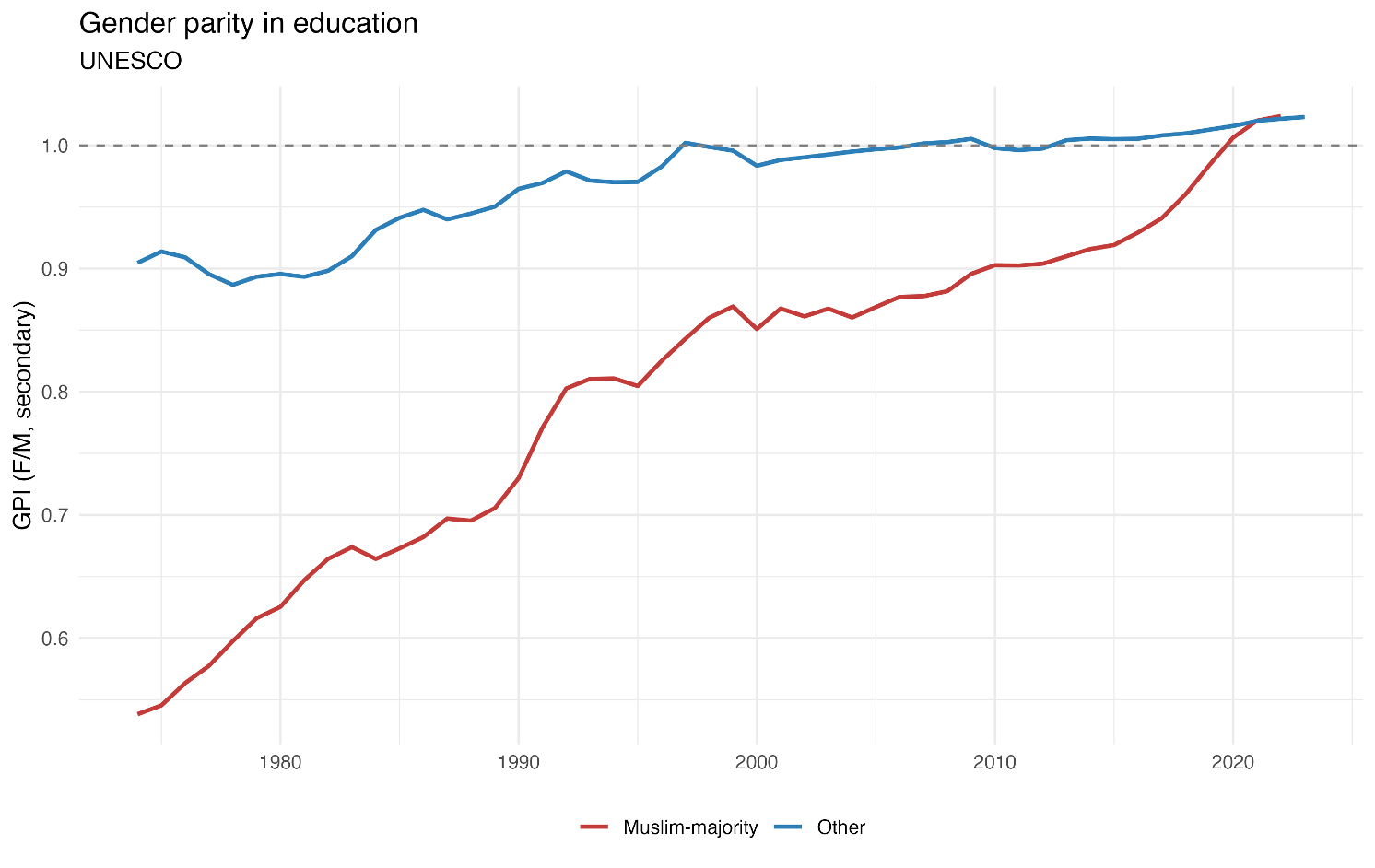
These debates reflect serious concerns about young women intermixing with men and writing love letters. Even in the 1970s, Muslim-majority countries had much larger gender gaps in secondary schooling: for every 100 boys, there were about 54 girls.
Islamic Empires and Brotherhood
Islamic empires achieved large-scale cooperation in societies with powerful loyalties to kin. Shared worship, duties of mutual assistance, a common legal framework, and threats of eternal hellfire may have encouraged men from diverse families, languages and origins to cooperate as brothers.
Female seclusion, I suggest, helped reconcile this wider brotherhood with patriarchal kinship. By sanctifying female seclusion and proscribing free-mixing, Islam reduced occasions for men’s sexual rivalry and suspicion.
Men gained allies across guilds, salons, Sufi lodges, coffeehouses, and the state - often consolidating these fraternal connections by arranging their daughters’ marriages. In such cases, husbands could gain a wife without first securing her affection. Threats of divorce or polygamy could further enforce wifely obedience.
Women’s cooking, cleaning and childbearing sustained households, while also enabling men to host guests and cultivate wider social connections. These alliances weren’t just built on women’s domestic labor, but from their exclusion.
A few years ago in Fes, my friend and I passed two men in the street; afterwards she told me that they were her neighbours. Curious, I asked why she did not greet them: “it would disrespect my brothers”.