


Driving through Rajasthan, Faizan narrated ongoing quarrels in his village. “Men argue over three things, zar, zan, zamin” (gold, women and land). Such feuds could tear communities apart, triggering acrimony and leaving lasting bitterness.
Here lies a crucial challenge for cooperation at scale. Societies gained strength by expanding alliances, increasing agrarian production, building ever larger armies and cities. But the more they expanded, the more that strangers intermingled, including with each other’s women. Sexual rivalries over women are especially prone to violence, because (unlike gold and land) a woman cannot be partitioned or divided. The effectiveness of any alliance therefore depended on how well men managed their competing sexual interests.
Looking back at history, we can see many examples where military alliances crumbled because - to be blunt - men could not keep it in their pants.
The Rape of Dinah
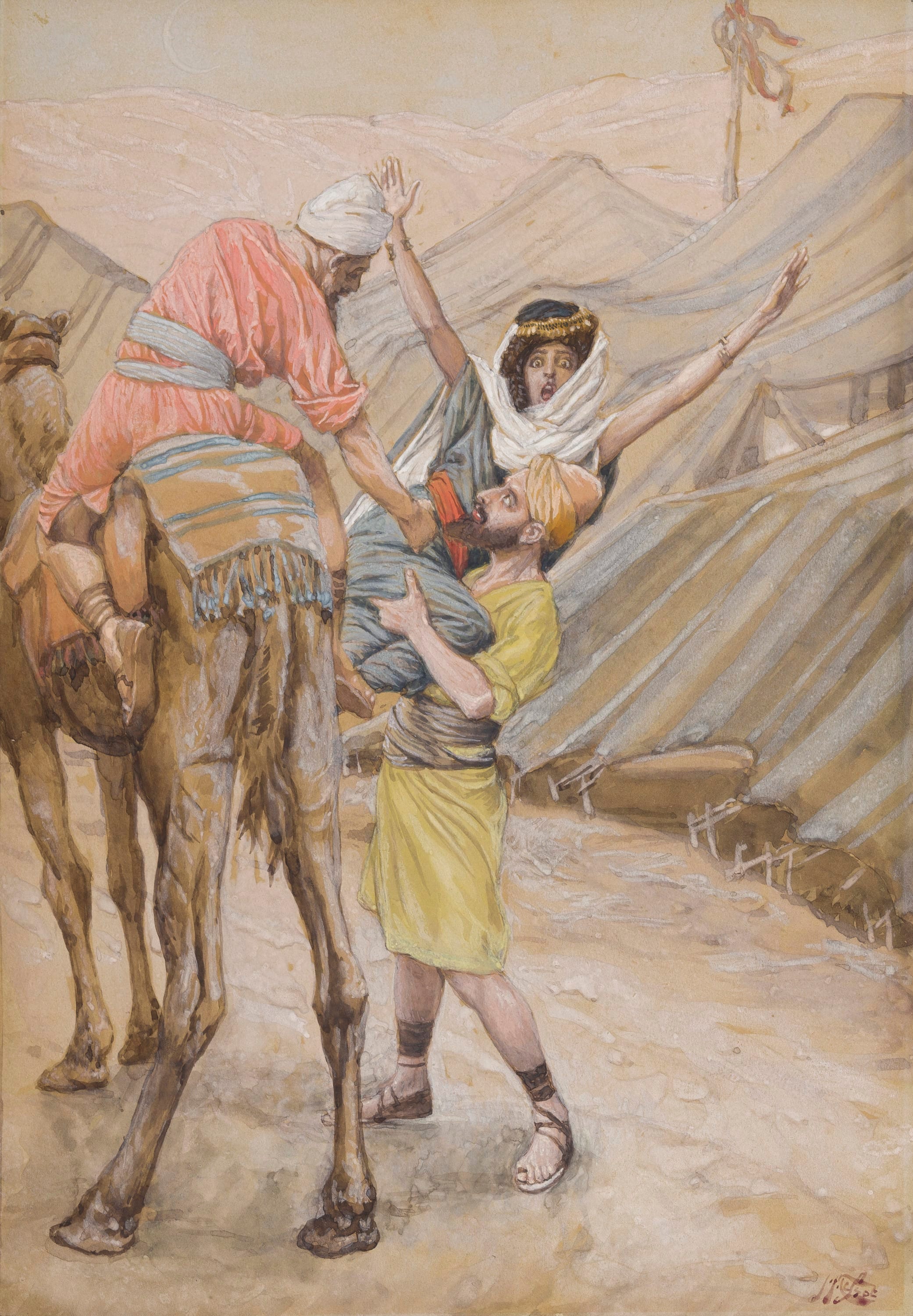
Early in the Torah and Bible, we read a tale of rape and revenge. Genesis 34 details that Dinah (daughter of Jacob) once went out to visit women. Shechem (son of chief Hamor) “saw her, took her, lay with her and disgraced her”. Shechem, in love with the maiden, asked his father to get Dinah as a wife.
“The sons of Jacob.. were distressed and very angry, because he had committed an outrage in Israel by lying with Jacob’s daughter”. Hamor asked for marriage, promising more inter-marriage, land and trade, ultimately becoming “one people”. Shechem offered any bride price they wished.
Deceitfully, Dinah’s brothers said they would permit the marriage on one condition: every man under chief Hamor must be circumcised. At the gate of their city, Hamor and Shechem persuaded their townsmen that they could make an alliance on the condition of mass circumcision. All men complied.
On the third day, “when they were in pain”, Dinah’s brothers attacked the city:
“Brothers of Dinah took each his sword, came upon the city.., and slew all the males… [They] came upon the slain and plundered the town, because their sister had been defiled. They seized their flocks and herds and donkeys, all that was inside the town and outside; all their wealth, all their children, and their wives, all that was in the houses, they took as captives and booty”.
Hamor had offered land, trade, wives and any bride price. So why had the brothers refused? Perhaps one important factor was that Canaan lacked a state to enforce the rule of law, meaning that a tribe’s only protection was their reputation for retaliation. To accept a payment would be to tell every neighbour that Jacob’s women could be taken for a price.
Jacob, their father, was nevertheless angry. These testosterone-fuelled young men (Simeon and Levi) had waged battle, potentially aggravating other tribes, and jeopardising wider political security. He chastised them:
“You have brought trouble on me, making me odious among the inhabitants of the land, the Canaanites and the Perizzites; my men are few in number, so that if they unite against me and attack me, I and my house will be destroyed.”
But they said, “Should he treat our sister like a whore?”
On his deathbed, Jacob still condemned Simeon and Levi: “their weapons are tools of lawlessness.. cursed be their anger, for it is fierce” (Genesis 49: 5-7).
Genesis, the first book of the Torah and Bible, thus dramatises a major challenge for trade and peaceful cooperation at scale: a young man takes a fancy to another group’s woman, her kinsmen retaliate, and a single assault triggers wider discord, which threatens state-building.

The Mahabharata
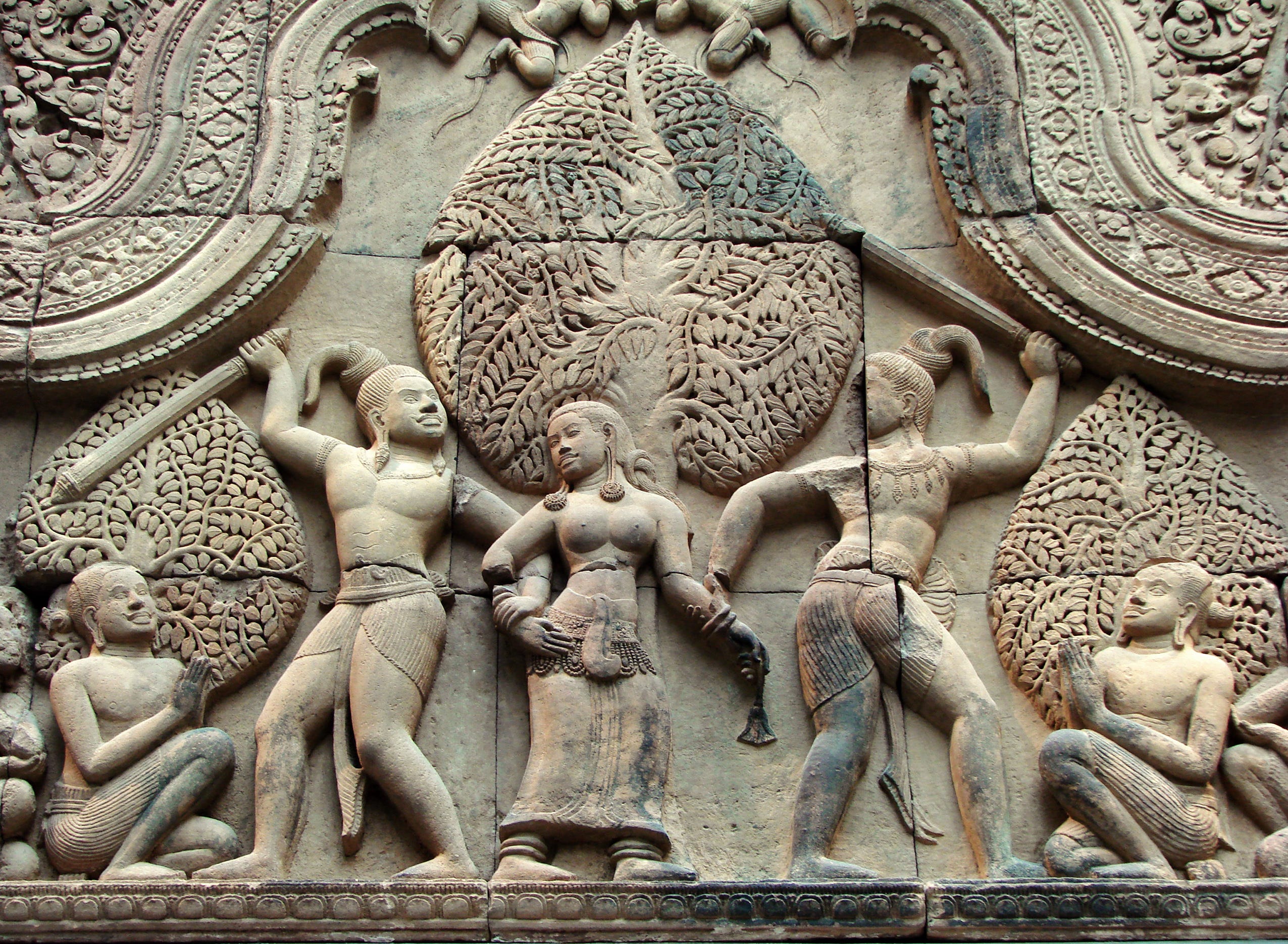
In the Mahabharata (c. 400 BCE - 400 CE), the divine sage Narada tells a tale of two brothers, Sunda and Upasunda, who lived together and ruled the same kingdom. Together, they were invincible, except if they killed each other. But… both fell in love with Tilottama (an apsara created to sow discord), and beat each other to death.
As this 10th century Khmer temple wall conveys, this story was retold across cultures, warning that a powerful martial alliance could be destroyed by sexual rivalry. Emphasizing these risks, the divine sage warns the men, “they must establish a rule”.
The Hittite Treaty of Non-Compete
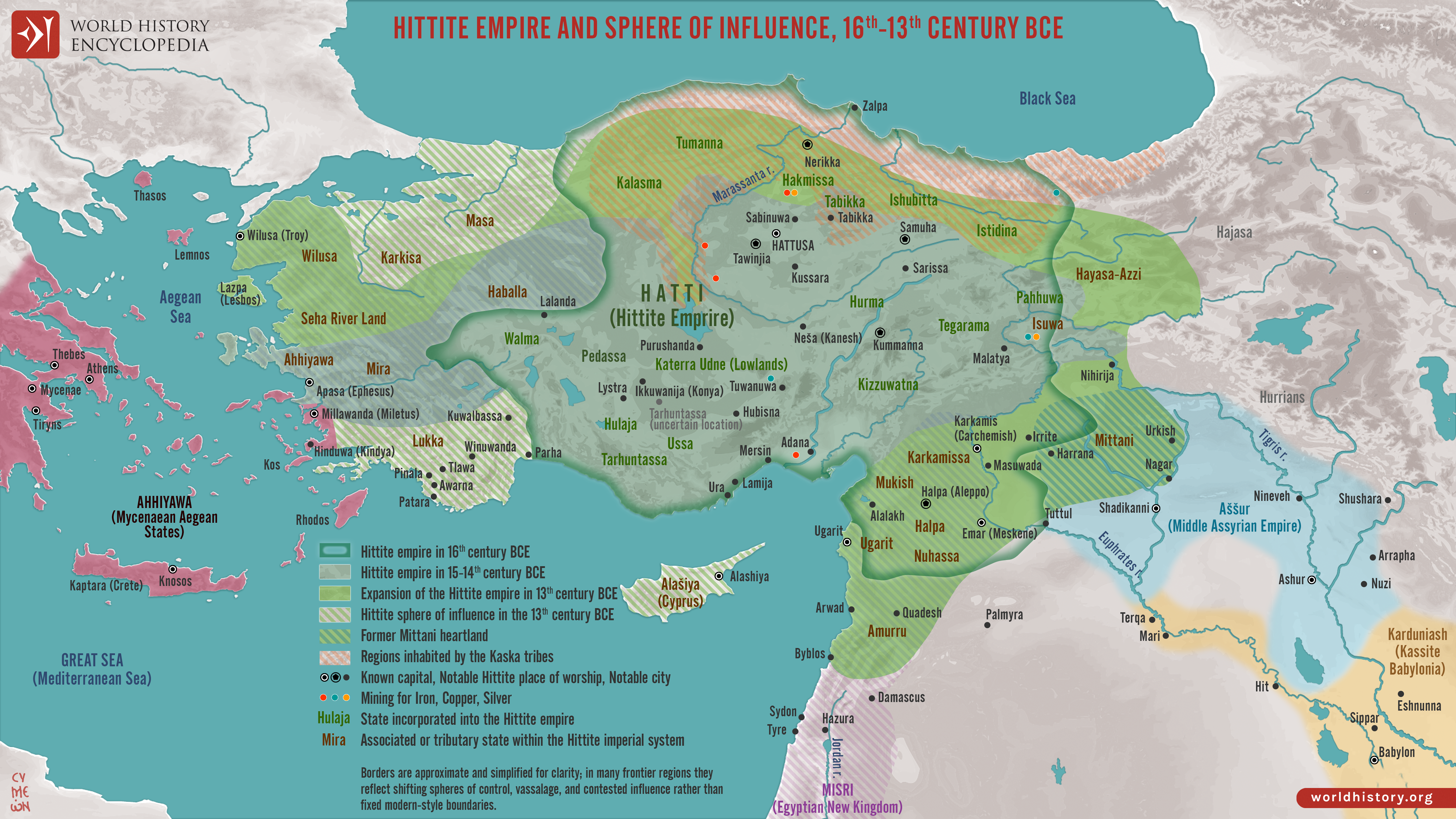
For almost five centuries, the Hittites were an Anatolian superpower. In the mid-14th century BC, Hittite Great King Suppiluliuma I made a treaty with Hukkana, king of Hayasa, sealing the military alliance by giving his sister in marriage. In the treaty, the Hittite king states,
“beware of a palace woman, whether she be free or a concubine (?), do not approach her and do not come near to her and do not speak a single word to her; and do not let your male slave or female slave come near to her, be very cautious of her. When a palace woman goes by, flee discreetly out of the way and free the path for her” (quoted in Diakonoff 1984, 50).
Avoiding the king’s women was a sworn condition of their military alliance.
The Rape of Lucretia, 509 BC
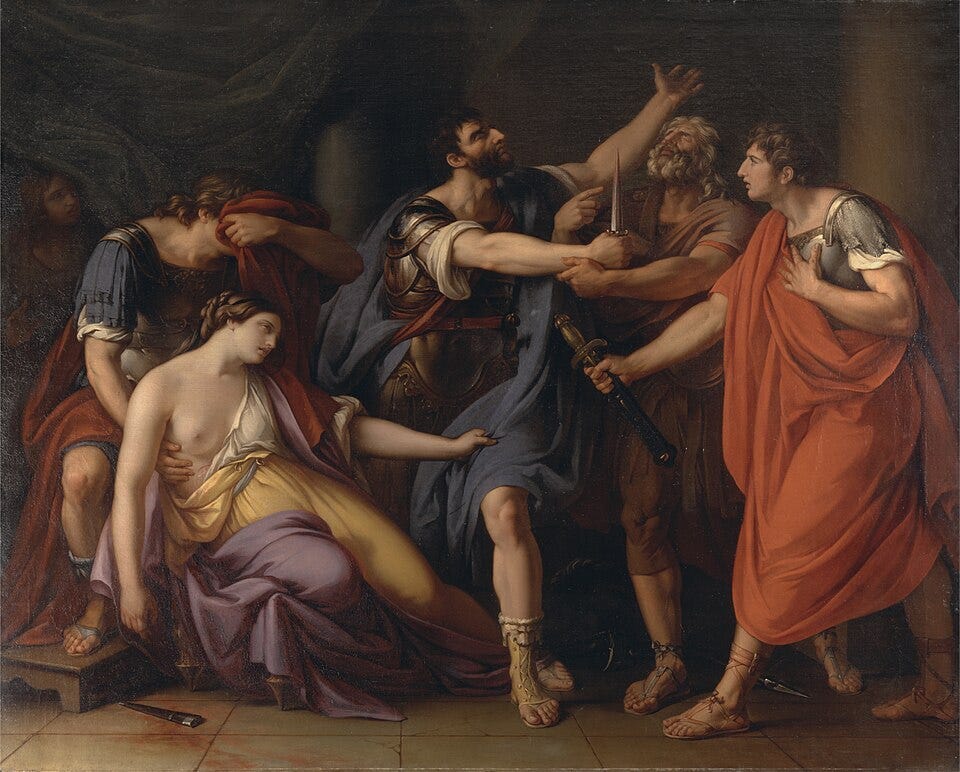
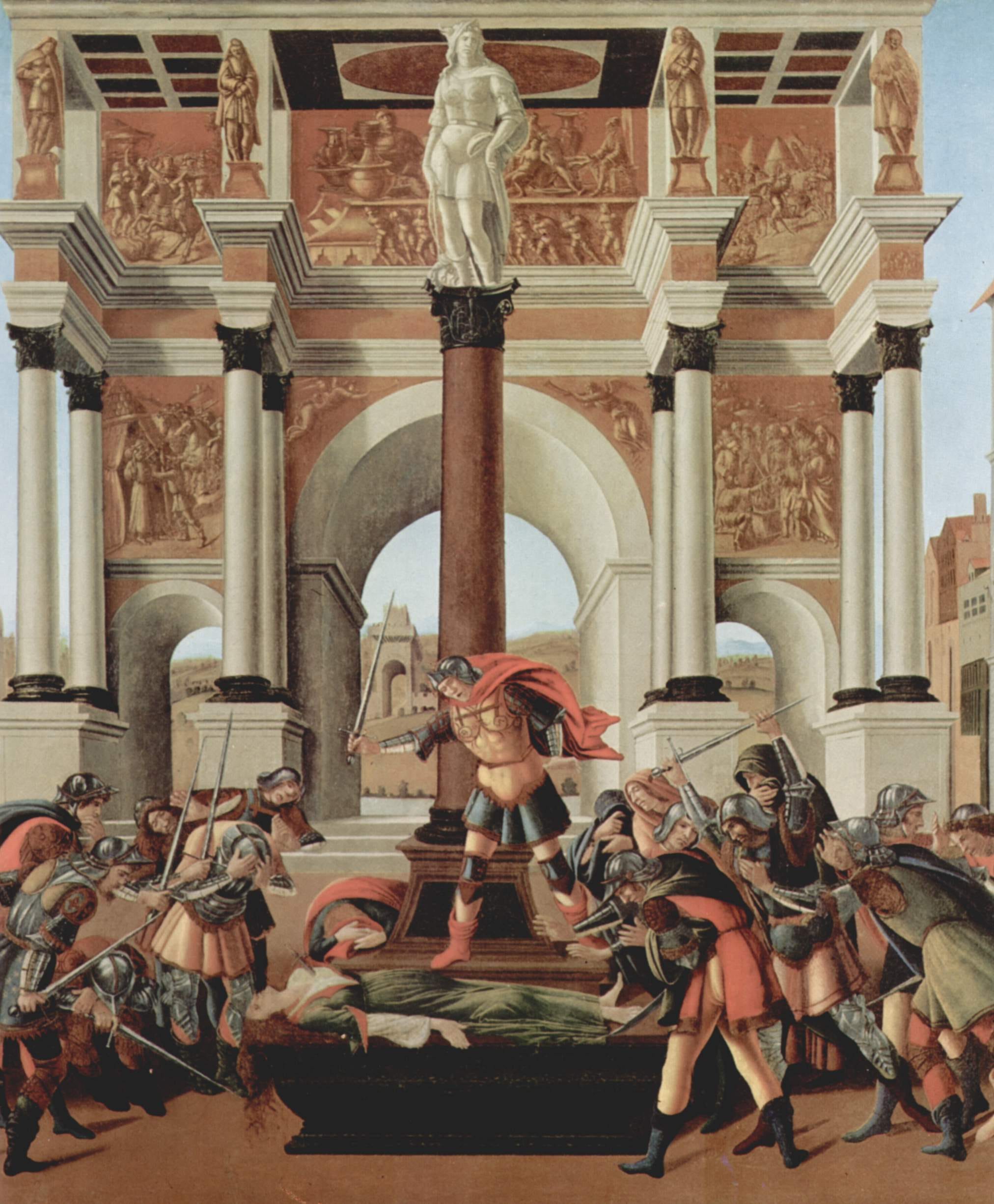
The rape of Lucretia is the foundational legend of the Roman Republic, where assault triggered armed revolution, overthrowing the Roman monarchy. Unfortunately, we have no contemporaneous sources, so must rely on much later accounts from Dionysius, Livy and Ovid. While the exact particulars are uncertain, what really matters is that men repeatedly told stories that sexual assaults could destroy a dynasty.
During the siege of Ardea, several princes were drinking together, debating whose wife was most virtuous. Collatinus declared that actions speak louder than words, so they should see for themselves. Galloping to Rome then Collatia, they found his wife, Lucretia, weaving wool with her maids, and deemed her the most virtuous.
Sextus Tarquinius (son of the tyrannical Etruscan king of Rome) was then “burning with passion”, and secretly returned to rape Lucretia, threatening to kill her, and portray her as adulterous. Distressed, Lucretia summoned her father and relatives, asking them to exact revenge. Plunging a knife into her heart, she committed suicide.
Her relatives then carried Lucretia’s body into a public square, mobilizing armed supporters, who condemned “royal villainy”. Incensed, they expelled the Tarquins, and the monarchy fell (Livy, History of Rome 1.57-60).
This legend captures a crucial challenge for any empire: men are prone to revolt if the ruler seizes their women. It was most famously retold by Botticelli and Shakespeare.
The Heiress of Ardea, 5th century BC
Ardea appears again in Machiavelli’s Discourses on Livy, under the chapter: How Women are a cause of the ruin of States.
A plebeian and a noble suitor both wanted to marry the same heiress. This dispute became so heated that the men of the city split into two armed camps: nobles with their fellow noble, plebeians with the plebeian.
The conflict then escalated into a factional war, involving neighbouring states. The plebeians sought help from the Volscians, while the nobles sought help from Rome. The Romans arrived, surrounded the Volscians, and cut off their supplies, forcing their surrender. Entering Ardea, they put the ringleaders to the sword.
Machiavelli then warns his reader,
“we see how women have been the occasion of many divisions and calamities in States, and have wrought great harm to rulers…
Neither absolute princes nor the rulers of free States should underrate the importance of this matter, but take heed to the disorders which it may breed and provide against them while remedies can still be used without discredit to themselves or to their governments”.
Syracuse
“In revolutions the occasions may be trifling, but great interests are at stake”, explained Aristotle in 4th century BC. He recounted an old episode in Syracuse, where a sexual rivalry between two young men in government divided the city.
“While one of them was away from home his beloved was gained over by his companion, and he to revenge himself seduced the other’s wife. They then drew the members of the ruling class into their quarrel and so split all the people into portions” (Aristotle, Politics V. 4, translated by Benjamin Jowett).
Mongol Īlkhānate, 14th century
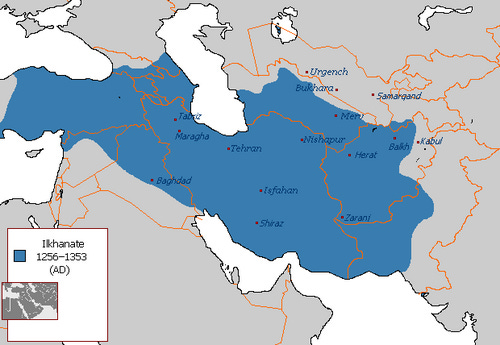
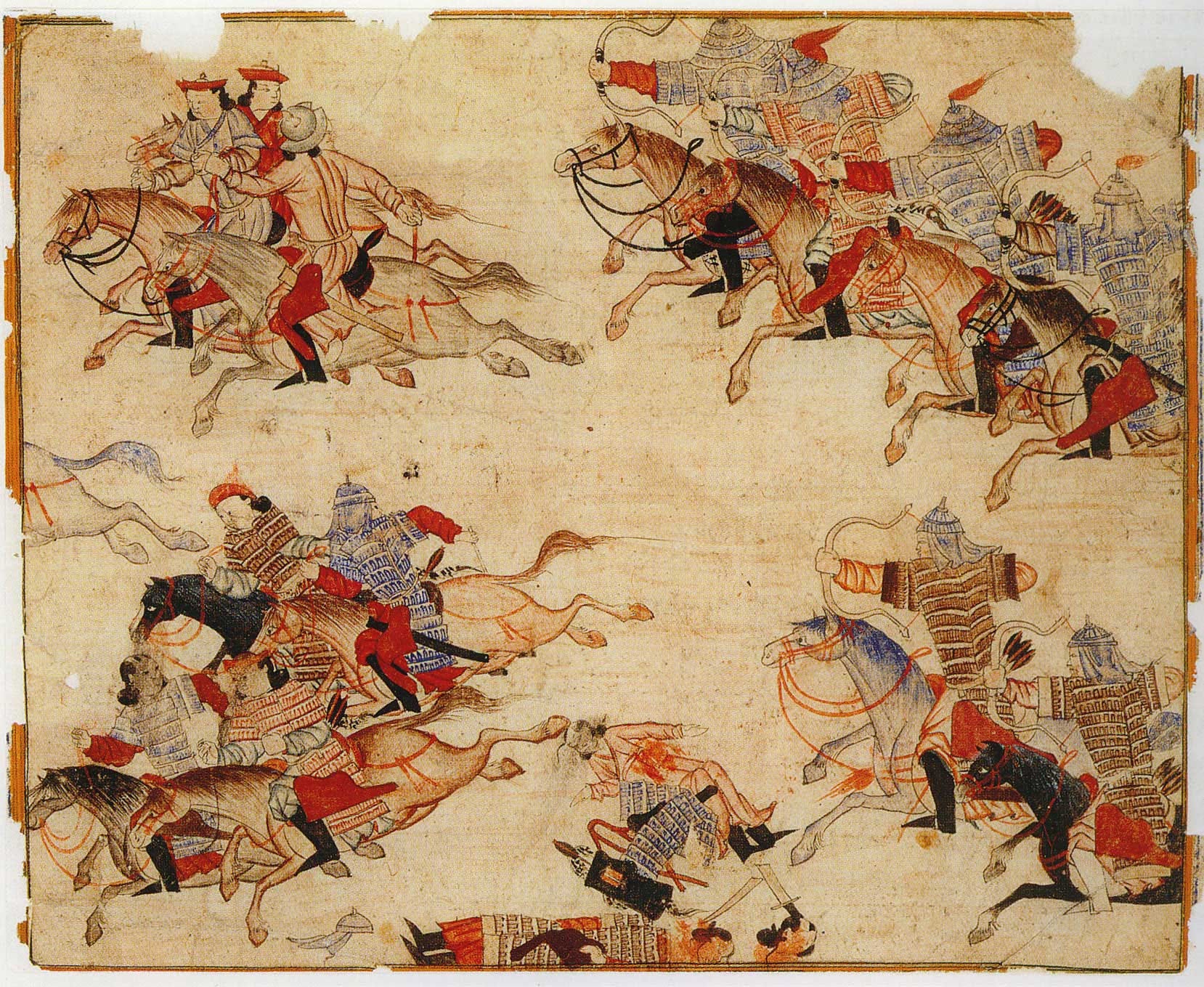
At age 12, Abū Sa‘īd inherited the throne of the Mongol Īlkhānate, which ruled over Iran, Iraq, the Caucasus and much of Anatolia. In these early years, he heavily depended on his chief amīr, Chūpān, who appointed his own sons to the top military and administrative posts. Then they fell out - over women…


Abū Sa‘īd wanted Chupan’s daughter, Baghdad Khatun. She was already married: Chupan had given her to Ḥasan Buzurg, a powerful amīr, and would not break that alliance. When Chupan rejected his advances, Abū Sa‘īd became sad and resentful, withdrawing from the ordu (royal camp). Humiliated, the young Īlkhān vented at Chupan,
‘I have put the reins of power over all the world into your hands and you refuse to grant me one moment of respite from this torment’ (quoted in Hope 2016, 192-193).
Chupan then left with an army to defend the eastern border. In his absence, two amīrs informed the Īlkhān that Chupan’s son, Dimashq Khwājah, had entered the royal harem, and pursued a secret love affair with one of the Īlkhān’s late father’s concubines. Ibn Battuta reports one of the late sultan’s widows saying “Last night he passed the night with Tugha Khatun, and he has sent to me saying “Tonight, I shall pass the night with you”.
“The affront to his honour roused Abu Sa’id to anger”, reports Ibn Battuta. Abū Sa‘īd ordered his amīrs to murder the young Chupanid. Ibn Battuta adds, “The sultan gave orders to pillage his house and to kill all those of his attendants and mamluks who put up a fight”. Dimashq was caught and executed.
Hearing the news, Chupan assembled his own amīrs and commanded them to swear an oath of allegiance to him personally, and marched against the Īlkhān. Ultimately, Chupan was killed, and Abū Sa‘īd married Baghdad Khatun. After his death in 1335, the Īlkhānate broke up among rival amīrs (Hope 2022, 189-196).
Women may not have been the sole cause of their downfall, but failure to resolve these tensions had certainly undermined lasting cooperation.

Mughal-Timurid, 16th century
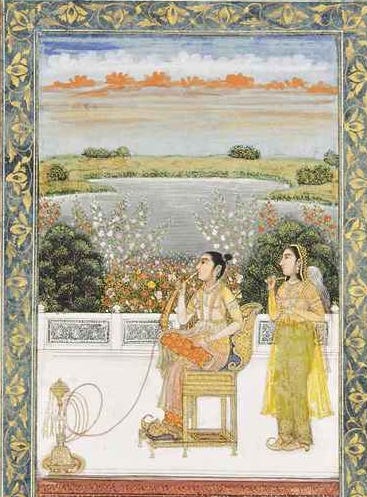
Gulbadan Begum (born in 1522) was a Mughal princess, daughter of Emperor Babur. She wrote the Humayun-nama. In this chronicle, Gulbadan Begam recalls that Humayun and his fellow princes, including Kamran and Mirza Sulaiman, promised to preserve a military concord. However, Kamran then sent a love letter and handkerchief to Haram Begam, Sulaiman’s wife. Outraged, she summoned her husband and son, declaring this a breach of trust between political ‘brothers’.
Gulbadan blames this affair for the men’s subsequent antagonism: Sulaiman and his son became Kamran’s enemies, and wrote to Humayun against him (Beveridge 1902, 191-201). Attempted seduction broke the alliance.
Small-Scale Societies also Raided Women
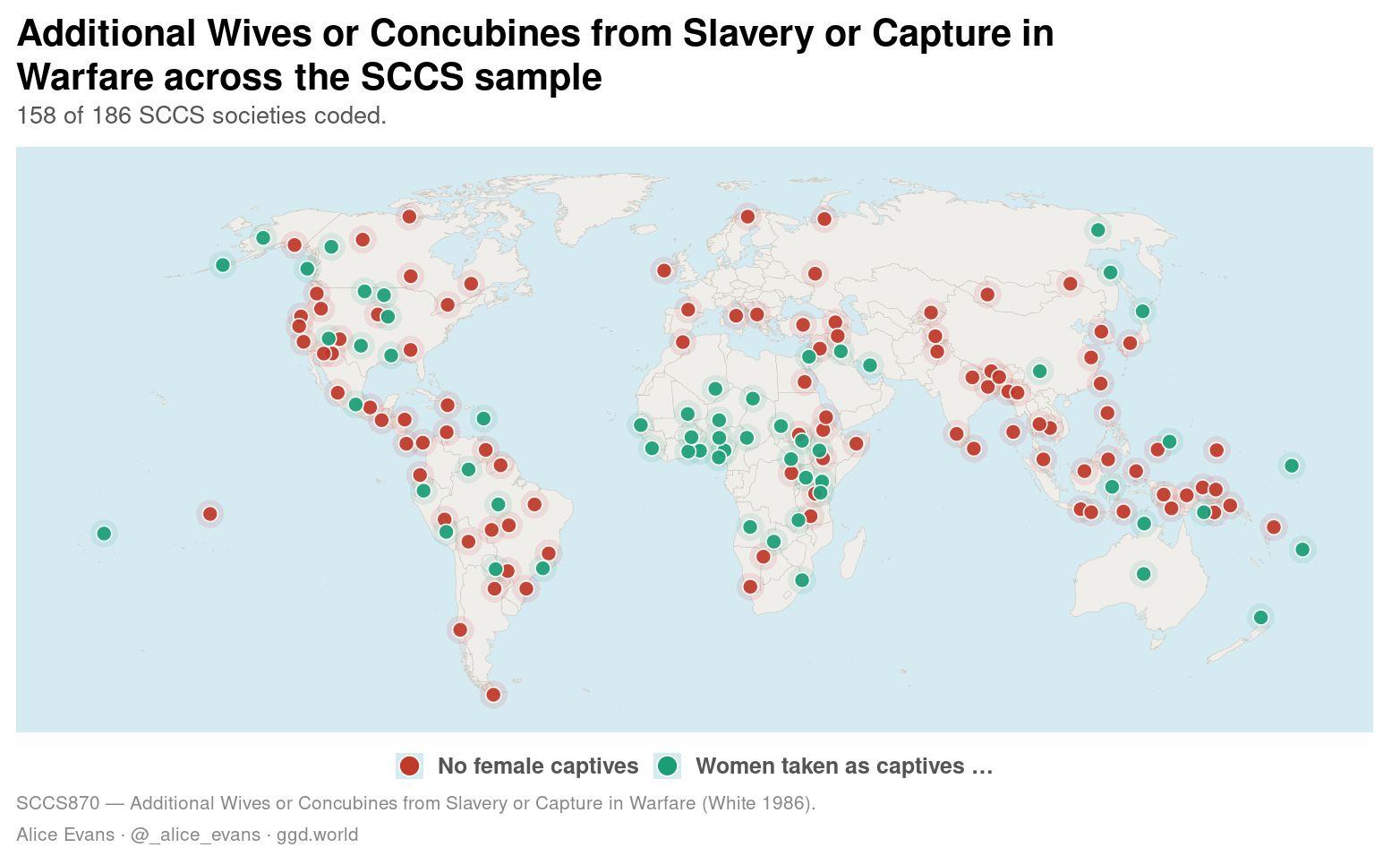
Ethnographies from the 19th and early 20th centuries suggest that many small-scale societies raided neighbouring communities for women. In what is now Guinea-Conakry, Layes Kunda recalled that Samori’s men returned with women captives and were asked,
“Where did you get these beautiful women? … The men said, “A new war has just started, if you go and capture some people, they are yours.” This is how Samori’s war became popular. They captured people then took them to Sierra Leone to exchange them for guns”.
Men’s Sexual Jealousy was one of the Biggest Challenges for Social Co-operation
These cases span three thousand years, but repeat the same sequence: a man makes an advance on another man’s wife or daughter, her kinsmen retaliate, their followers take sides and a private grievance escalates into a wider conflict. At Shechem, it ended the promise of becoming “one people”. At Ardea and Syracuse, it split the cities; in Rome, it brought down a monarchy; and in Iran, it turned the Īlkhān against his chief amīr.
Offenders clearly took different forms: Sunda and Upasunda, Kamran and Sulaiman, as well as the young men of Syracuse were allies of equal rank. Shechem, meanwhile, was an outsider. And Tarquin was the son of a despotic tyrant, taking from his own subjects. But all created discord.
These dangers were widely recognized: the Hittite king demanded that the avoidance of palace women should be part of a military treaty, Aristotle saw a love quarrel as kindling for revolution, while Machiavelli warned rulers to prevent such disorders.
To scale up, preserve military alliances, and secure peaceful cooperation in cities, states often sought to punish extra-marital affairs, so as to create credible deterrence. Hammurabi’s laws decreed that adulterers should be bound and thrown into the river. But private acts are often difficult to spot.
I suggest that the empires that came to conquer and dominate much of our world were those that effectively regulated men’s sexual rivalries and secured the peace. Religions played a crucial role in threatening moralizing supernatural punishment, instilling fears that an omniscient being was always watching, condemning sins with hellfire.
Some religions went even further still, and radically reduced the opportunity for sexual rivalry. They proscribed women from leaving the house at all. As I shall explore in my next essay, the price of men’s scaled-up cooperation sometimes became women’s confinement.
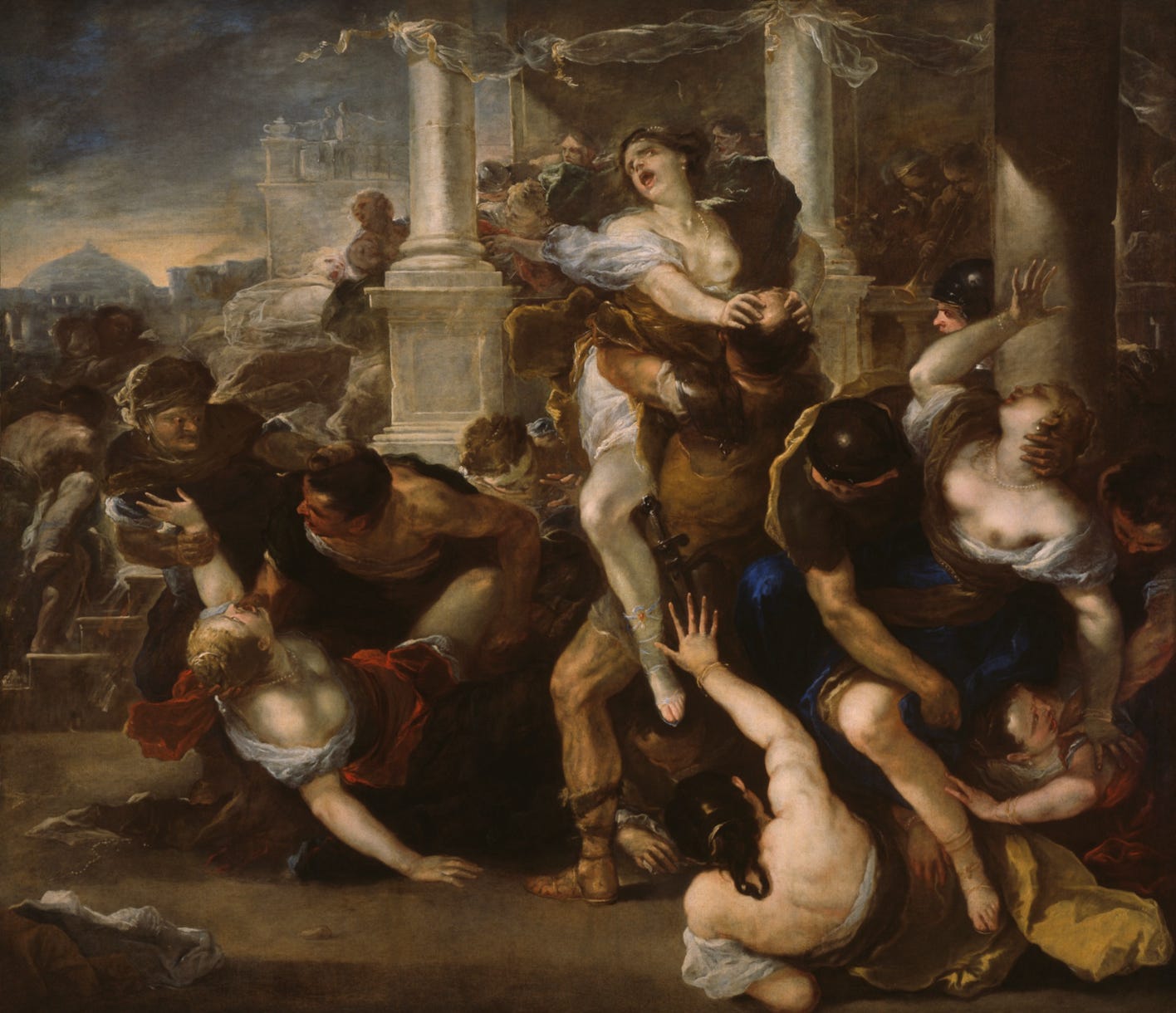
Wouldn't it be great if the women's agency was respected and they got to say "no" or choose!