


Western literature begins with wars over women. The founding works revel in warriors’ quests for glory and their deep fraternal bonds of friendship. Banding together in solidarity, warriors embark upon mighty voyages, lay waste to cities, and keep fighting because their path to honor lies in conquest. Martial valor earns praise, while female captives remain mute. A man’s wife, meanwhile, preserves his honor with sexual virtue - and any infraction provokes bitter wrath.
I speak of Homer’s Iliad and Odyssey, composed around the 8th century BCE, narrating the Trojan War and Odysseus’s long journey home.
These epic poems offer hugely valuable insights into ancient patriarchy as they teach us what was glorified. Men gained power and prestige by uniting in fraternal solidarity, conquering rival cities, seizing female captives, keeping their own wives close to the home. The Iliad and the Odyssey are thus prime illustrations of my last essay: “Confining Insiders, Raping Outsiders”.
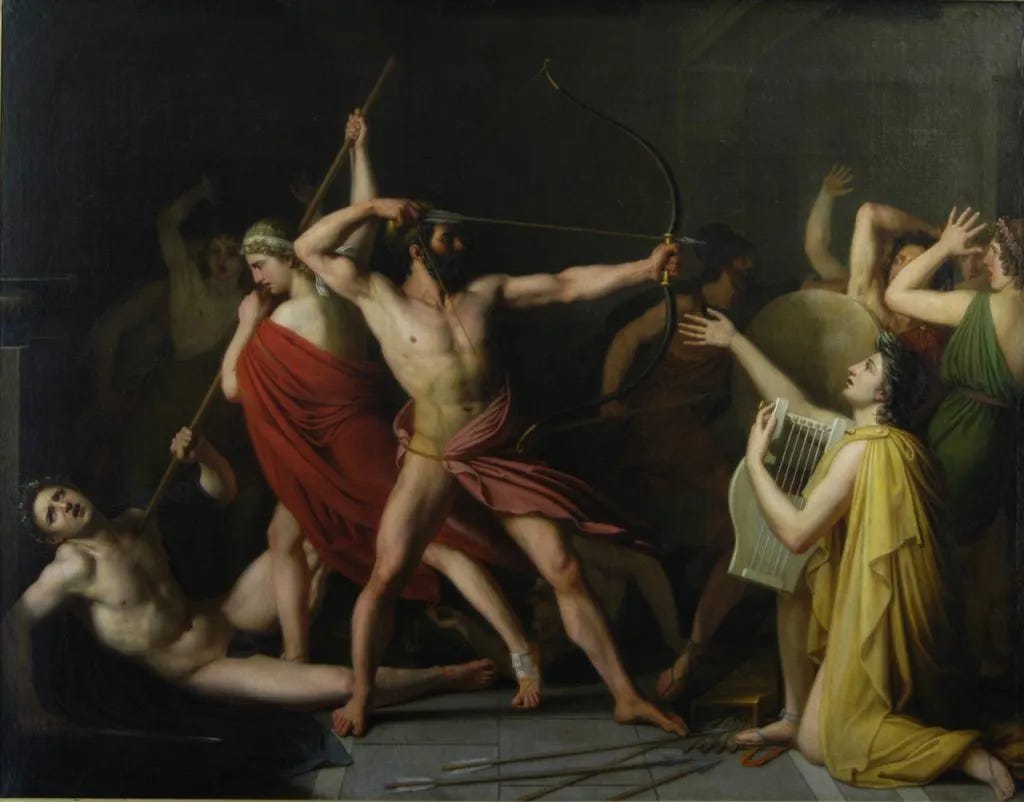
Martial Glory!
A crucial part of the Greco-Roman fraternal bargain was that even the elites fought, and their martial valor was celebrated, so as to encourage other men to fight.
Sarpedon, a Lycian commander and son of Zeus, encapsulates this by turning to his comrade and asking,
“Why do we get the finest seats at banquets, full cups of wine, the choicest cuts of meat? And why does everyone in Lycia gaze at both of us as if we were divine?.. Because we have to stand beside our people, out on the front line and confront the heat of battle, so that any Lycian fighter, clad in thick armor, may declare, ‘Our rulers, the men who hold great sway in Lycian lands… they are also brave and strong. They fight among the Lycian fighters at the front” (Iliad, Book 12).
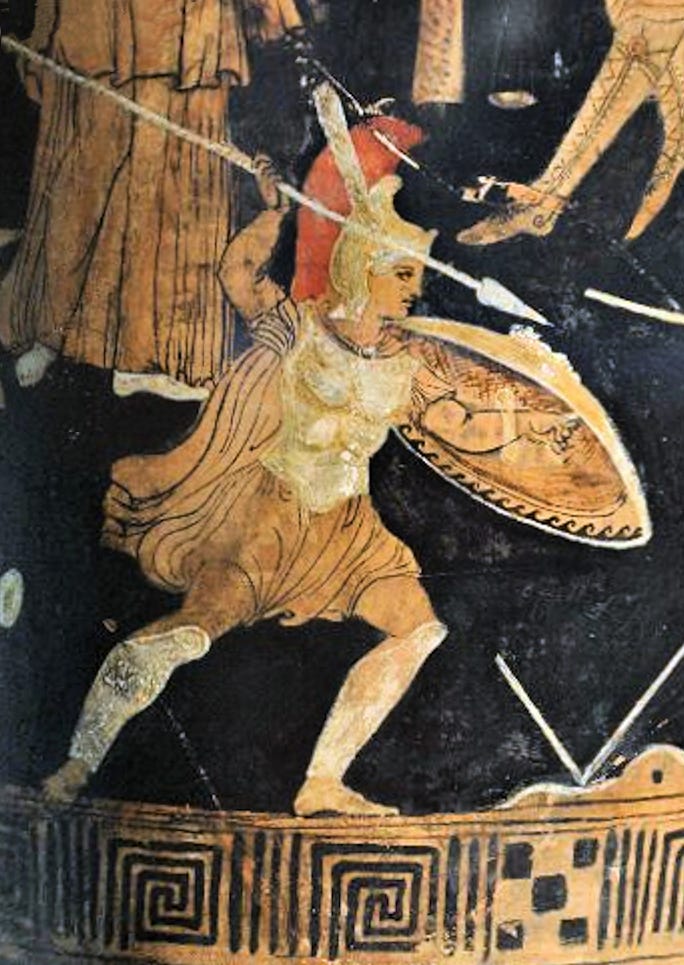
Hector also relishes martial glory (kleos) - leaving his wife alone and vulnerable, so that he can pursue battle, since he would otherwise feel shame (aidōs) before the Trojan men.
This is a fundamental part of how Europe became so patriarchal: the most successful armies scaled up, subjugated others, and entrenched that masculine dominance, while poets, storytellers and artists celebrating military might by encouraging yet more foot soldiers to join their wars.
Fraternal Bonds
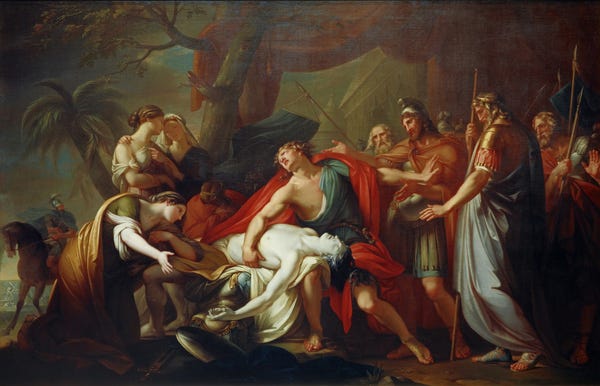
Homer celebrated male bonds of friendship, embodied in Achilles’s grief over Patroclus’s death. He laments, “My friend Patroclus, whom I loved, is dead. I loved him more than any other comrade. I loved him like my head, my life, myself”. He then cries: “I want to die right here and now, because I could not save my slaughtered friend” (Iliad, Book 18).
When Patroclus’s spirit subsequently visits Achilles in his sleep, he reminisces about their upbringing and requests, “let a single urn hold both our bones” (Book 23).
Later, Achilles avenges Patroclus’s death by seeking out Hector (who killed him), tying Hector’s ankles to his chariot and dragging him around in torment.
Patriarchal Rents
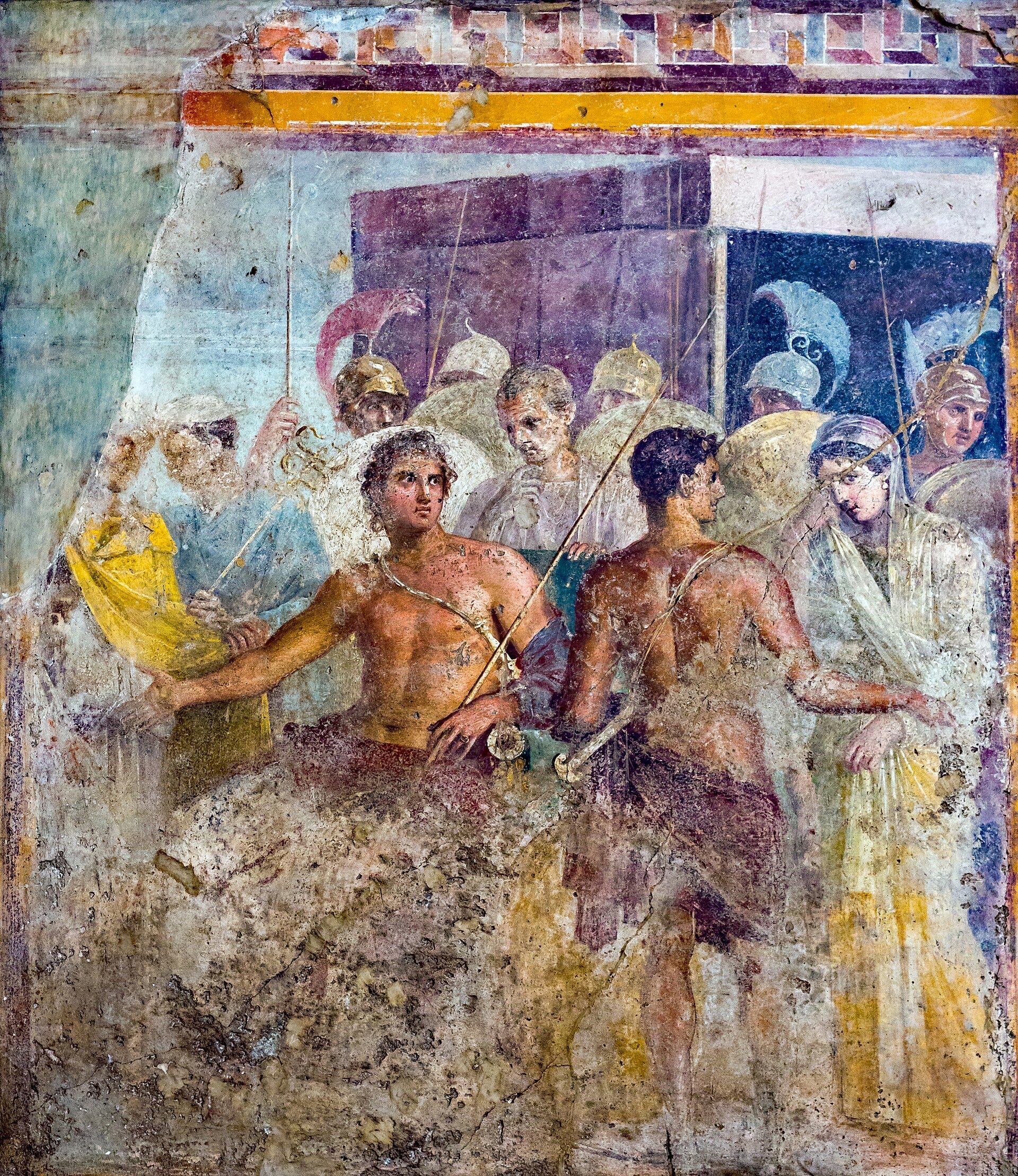
In Book 9, with the Greeks facing disaster, Agamemnon tries to win Achilles back with “lavish gifts of friendship”. He offers seven tripods, ten bars of gold, twenty cauldrons, twelve racehorses, and seven skilled slave women from Lesbos (Iliad Book 9). This is a good example of what I call “patriarchal rents”: men redistribute female captives to strengthen their own alliances.
Warriors sacked cities and seized women
When warriors sacked cities, they invariably raped the women, hauled them away as laborers, forcing them to weave textiles, satisfy men’s sexual desires, and bear children.
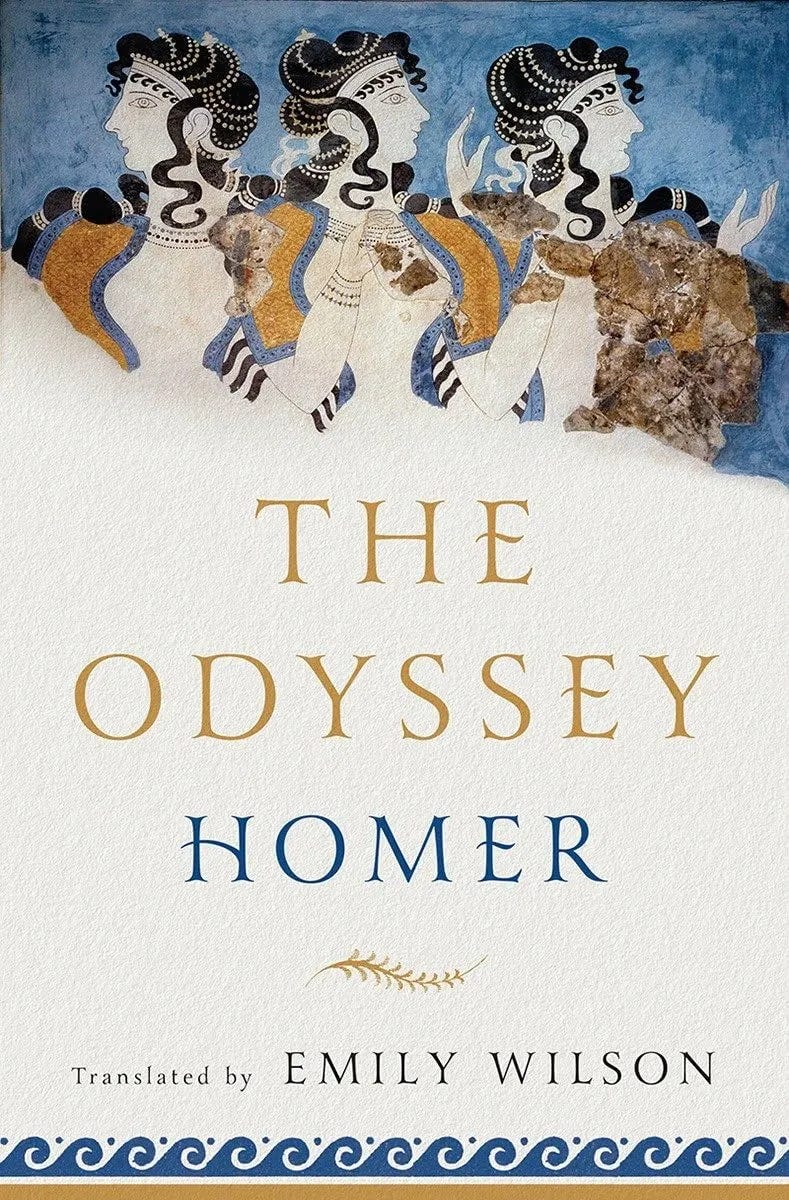
In her introduction, Wilson emphasises, “The most important warriors in the Greek encampment are all waited on and cared for by multiple female captives, of whom the most valuable are subject to repeated rapes in the beds of their enslavers. Their subjugation demonstrates the status of the enslaver to his peers. The silencing, rape, subjugation, kidnapping, and enslavement of women in war are essential instruments for the construction of male honor.” That is, warriors gain rents by capture and coercion.
In the Iliad, Andromache pleads with her husband Hector to stay and protect the city from within the ramparts. But he feels bound by martial glory (kleos) and insists on leaving, though he recognises the inevitability of her capture and enslavement.
“One day some bronze-armed Greek will capture you, and you will weep, deprived of all your freedom… But as for me, I hope I will be dead, and lying underneath a pile of earth, so that I do not have to hear your screams or watch when they are dragging you away” (Iliad, Book 6).
Eager to defy that inevitability, Hector kills Patroclus and boasts, “I suppose you thought you would destroy my city and enslave the women of Troy and rob them of their day of freedom, and take them in your ships to your own homeland. Fool!… I am the finest of the valiant fighters of Troy, and I defend the Trojan women from slavery, the day they lose their freedom” (Iliad, Book 16).
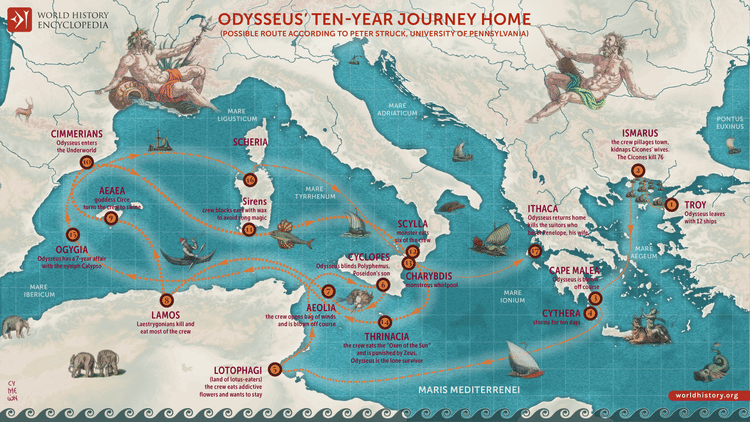
When Odysseus presents himself to King Alcinous and the Phaeacians, he describes the seizure of other men’s wives as a matter of fact, an ordinary part of warfare:
“A blast of wind pushed me off course towards the Cicones in Ismarus. I sacked the town and killed the men. We took their wives and shared their riches equally among us” (Odyssey, Book 9).
Note, the scrupulous insistence on fairness! Each man got an ‘equal share’, so as to maintain fraternal bonds.
Hanging the Slaves (not ‘maids’)
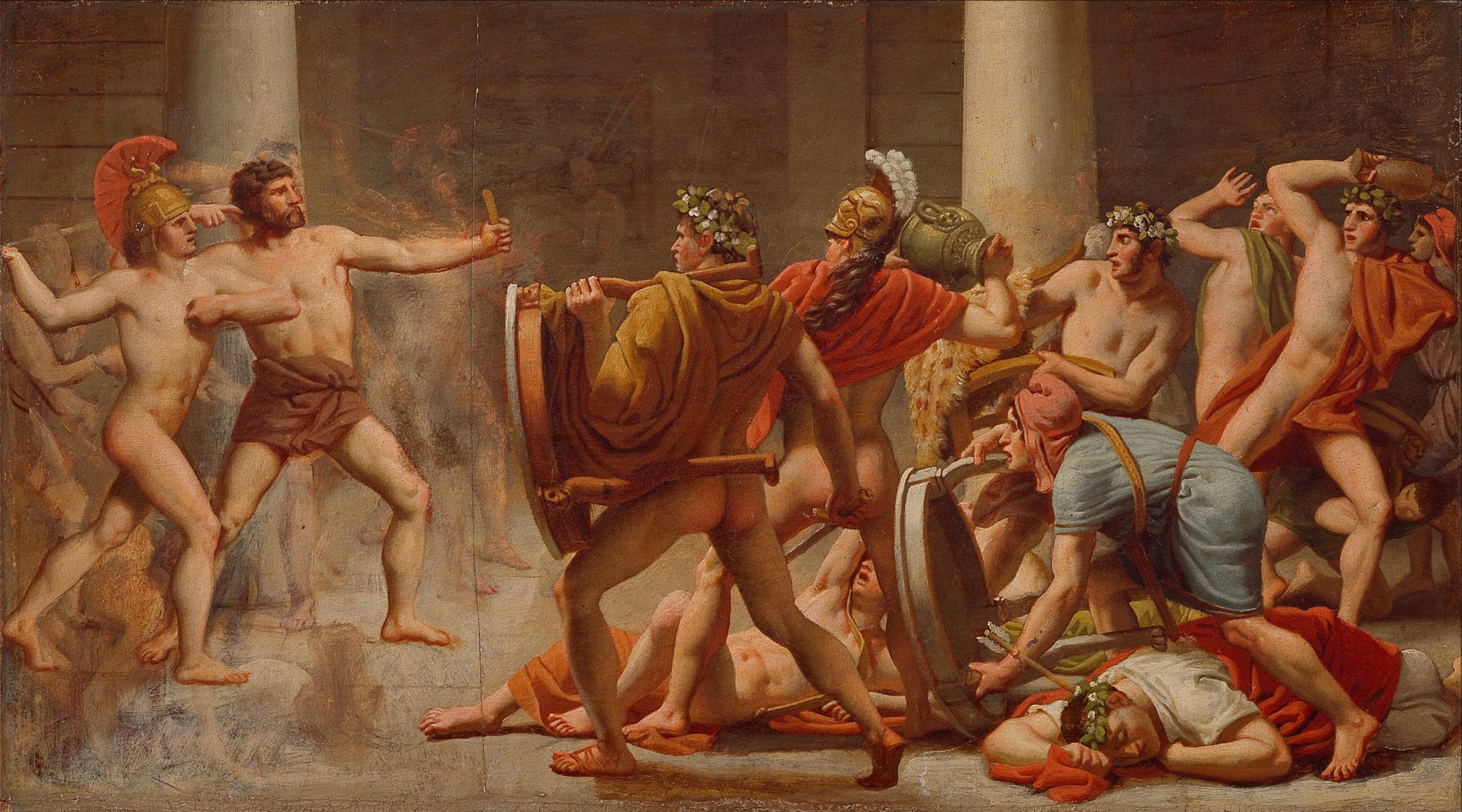
While previous writers usually translated dmoai as ‘maids’, Wilson writes ‘slaves’. After Odysseus slaughters Penelope’s suitors, he instructs his son to kill the 12 female ‘slaves’ who have slept with the suitors. Telemachus takes the initiative to add torture:
“so the girls, their heads all in a row,
were strung up with the noose around their necks
to make their death an agony. They gasped,
feet twitching for a while, but not for long” (Odyssey, Book 22).

Mute Women
While enslaved women’s labour was vital to Greek encampments, the poem rarely shares their names, let alone their voices and feelings.
When Achilles sacks Lyrnessus, he destroys the city, kills its defenders and seizes Briseis as a captive. When he hands her over to Agamemnon’s heralds, all we hear is that “The woman walked unwillingly beside them” (Iliad, Book 1). She has no speech, or even thoughts.
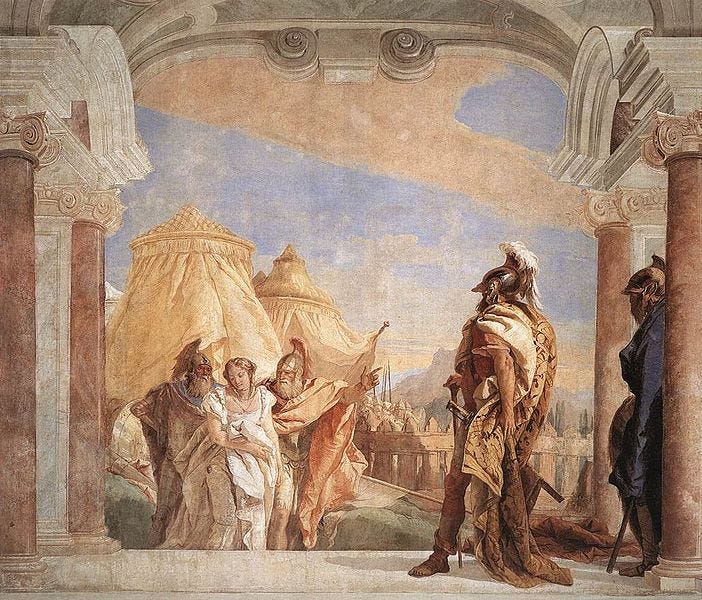
Men also gain honour from guarding their wives’ sexual virtue
“The rape and abduction of an elite woman in peacetime, like the removal of Helen from her husband’s house in Sparta, is a terrible violation of social norms, because it threatens the male homeowner’s control over his own household, including its wealth, its social power, and the subordinate household members” explains Wilson.
Her Odyssey introduction likewise notes, “women were often treated by elite warrior men as if they were objects, prizes traded in war for men’s honor, along with other possessions, like bronze tripods and piles of treasure”.
Does Penelope have agency?
Some gender historians have presented Penelope as cunning and ‘agentic’. While Odysseus is away, his wife is hassled by suitors seeking her hand and his estate.
Rather than risk confrontation and refuse the suitors outright, she promises to marry once she has finished weaving Laertes’s shroud. Covertly, she delays that eventuality by unpicking the cloth each night.
Odysseus is then congratulated for having such a devout wife, who preserves her sexual virtue and his honor. Odysseus wins, twice over. To quote Agamemnon’s ghost:
“Lucky you, cunning Odysseus: you got yourself a wife of virtue - great Penelope. How principled she was, that she remembered her husband all those years! Her fame will live forever, and the deathless gods will make a poem to delight all those on earth about intelligent Penelope” (Odyssey, Book 24).
Agamemnon’s ghost continues to scorn his own wife, “deceitful Clytemnestra”, who took a lover while he was away for ten years at Troy. Aegisthus then seizes the kingdom and murders Agamemnon on his return, with Clytemnestra as accomplice. Agamemnon also brought home a captured Trojan princess, Cassandra, whom Clymnestra then murders.
Learning from this deceit, Agamemnon’s ghost warns Odysseus: “never treat your wife too well. Do not let her know everything you know. Tell her some things, hide others”. This is a classic example of men teaching each other never to bring women into their inner circle, never give them the same loyalty you show to male allies.
Teenage Telemachus similarly asserts patriarchal authority and tells his mother to shut up - a point well-noted by Mary Beard:
“Go in and do your work. Stick to the loom and distaff. Tell your slaves to do their chores as well. It is for men to talk, especially me. I am the master” (Odyssey, Book 1).
Even with all her cunning, all Penelope can do is delay marriage. She has no alterative. Furthermore, she never gains state power, never commands an army, or wield wider influence. She can’t even force the suitors to leave her own house! Absent rule of law, what stops the suitors from seizing Penelope is fear of other men’s vengeance.
Just like the Ramayana’s Sita and Confucian ‘Exemplary Women’, she is praised for maintaining her chastity and preserving Odysseus’s honor. Preferably in silence.
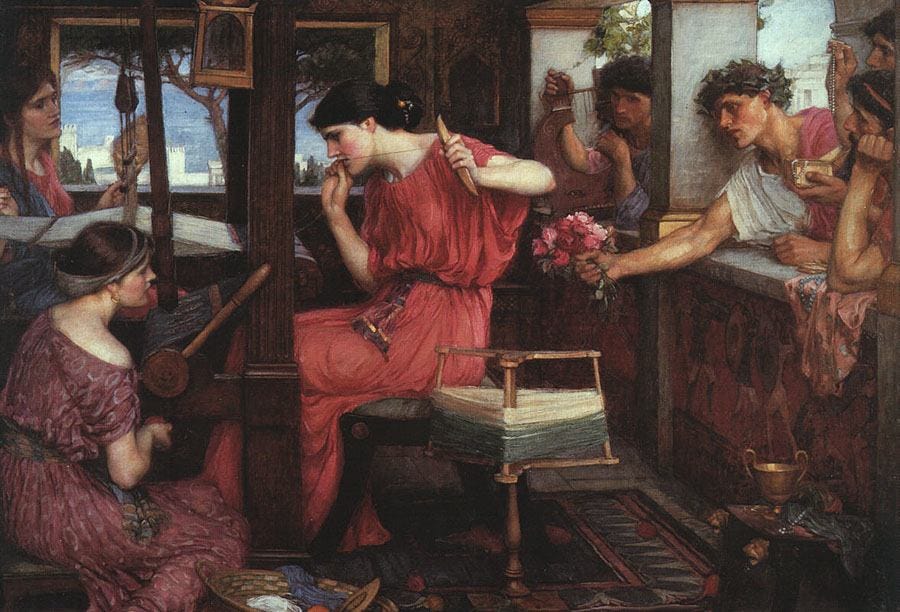
Note also the sexual double standard. Odysseus starts his epic journey home by sacking the town of Ismarus, killing the men, and taking the wives. Yet, when he finally returns, the only stain on his name is the suitors, who must be savagely killed in order to restore his honor.
In my view, it is an unhelpful distraction to ask whether women were agentic. Of course, everyone tries to better their lot. But when societies glorify women’s seclusion, submission and self-erasure, then her pathway to status stops at the front door. Men alone then compete for dominance of the public sphere.
Powerful Goddesses
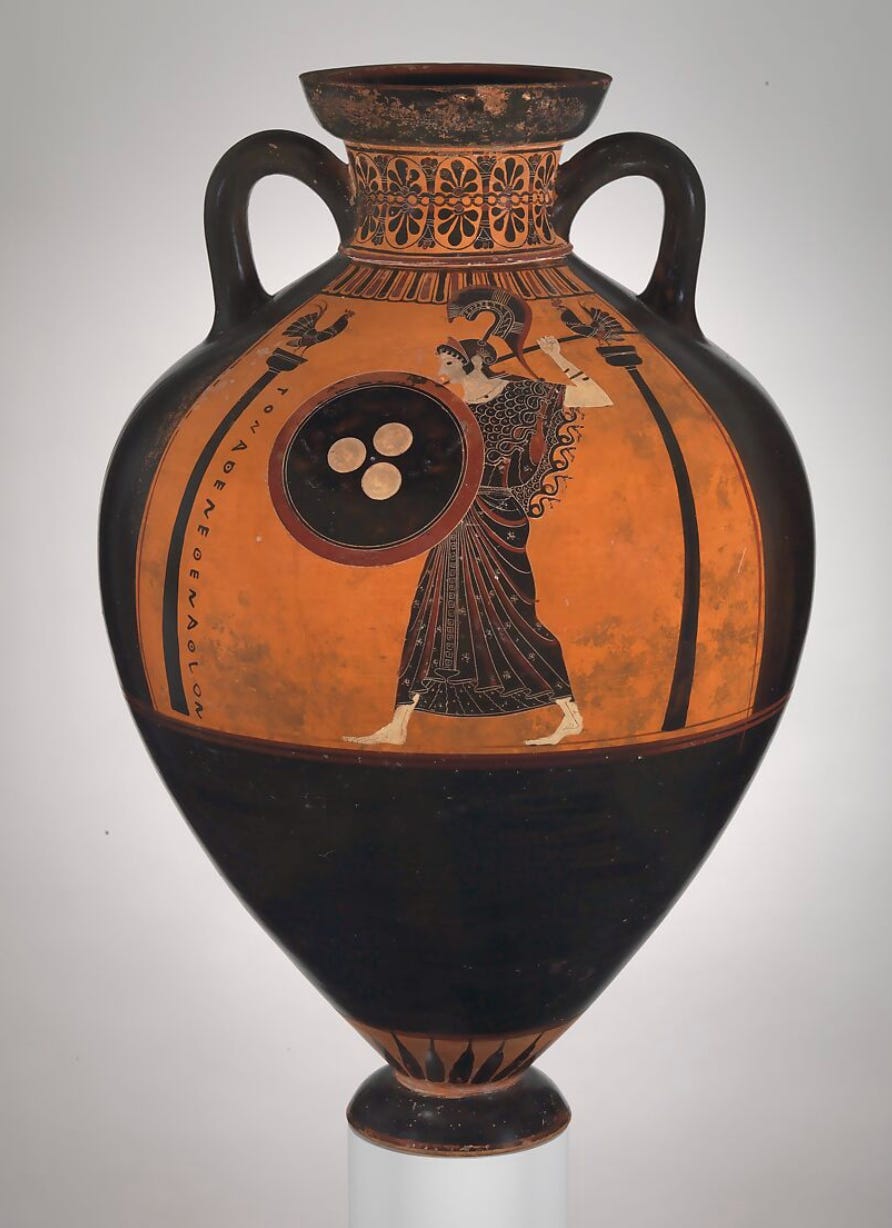
Female power abounds in the Odyssey - but only on Olympus, not on earth. Athena engineers Odysseus’s entire homecoming, Circe and Calypso each hold him captive at their pleasure. As Wilson notes “there is a vision of empowered femininity in the Odyssey, but it is conveyed not in the mortal world but in that of the gods”.
This distinction is absolutely crucial: many societies ascribed phenomenal powers to their goddesses, but kept mortal women under the thumb.
Goddesses < Rule of Law
I am very much looking forward to watching Christopher Nolan’s production of “The Odyssey”. I sincerely hope he appreciates Emily Wilson’s translation.
Far too many reconstructions of the past tend to exaggerate women’s historic power, but this is deeply misleading. The truth is that Europe really was run by warmongering patriarchs. Rival armies fought for conquest and glory, cemented fraternal bonds, while they confined their own wives and enslaved others.
Progressives might instead celebrate that Europe ultimately vanquished this militarized patriarchy: Homeric boasts would now be prosecuted as war crimes.
Let’s scrap the mythology. Women’s safety has never been guaranteed by powerful goddesses, but by the rule of law and credible deterrence, alongside a culture where men’s pathway to prestige does not rely on confining insiders and raping outsiders.


Thank you. I read both of Wilson’s translations last year and totally agree with your take on them. This is also reflected in Shakespeare’s Troilus and Cressida.
This is fantastic