

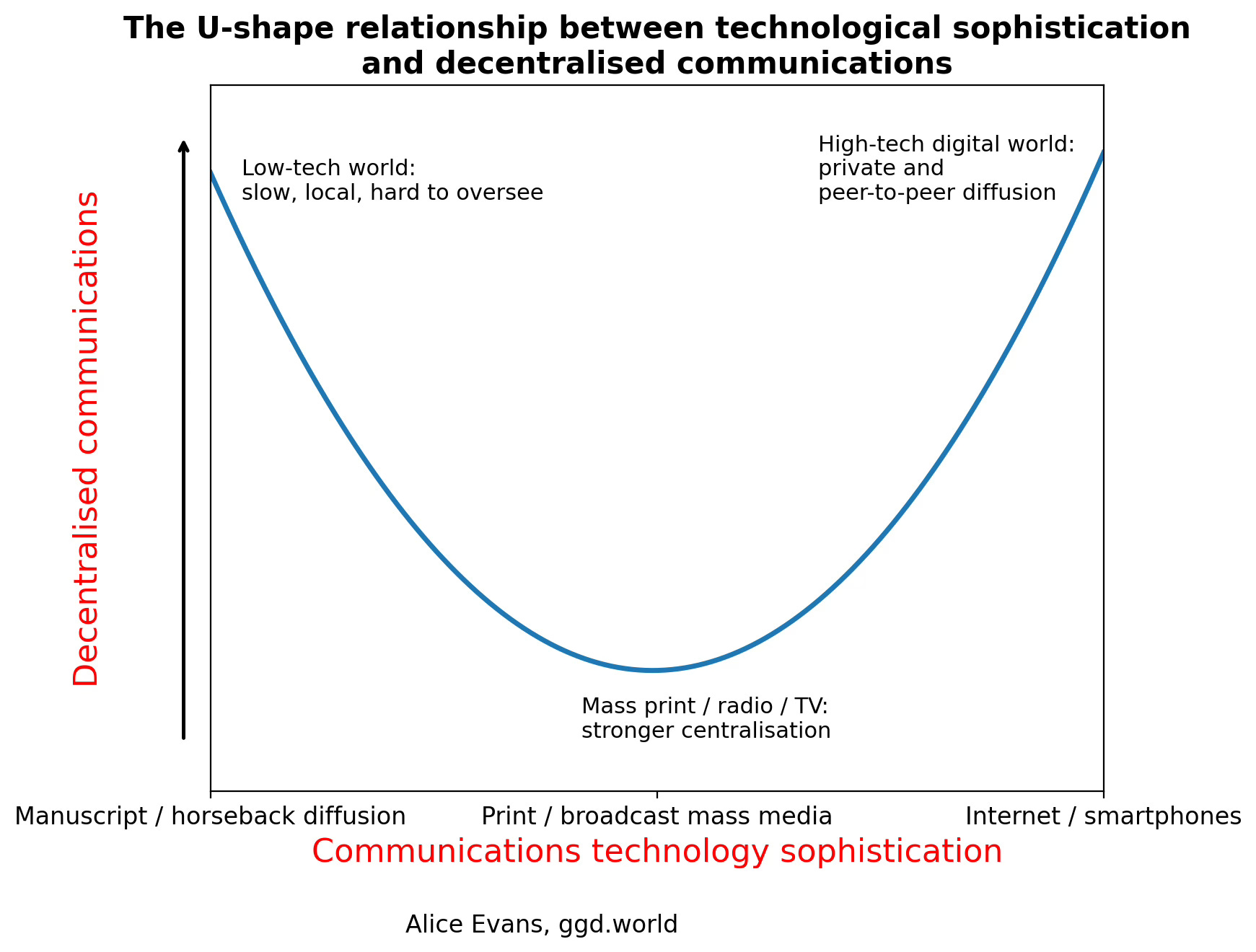
Culture is a fist-fight, and each communications revolution has widened the reach of ideological persuasion. But while earlier waves of technology built up scale through organisations with intermediaries, smart phones cut out the middleman, with major implications for feminism worldwide.
In 15th Century Paris, Christine de Pizan crafted beautiful manuscripts, championing female heroes, lampooning misogyny. England’s Queen Elizabeth I kept Christine’s books in her royal library and hung City of Ladies tapestries on her palace walls. European aristocracy noblewomen likewise passed her works among themselves like precious heirlooms. But below the upper bourgeoisie, her brilliant works remained unknown, largely forgotten. Without printing, de Pizan could not bypass the state and church. Her rebellion failed.

The Printing Press famously enabled large-scale ideological persuasion - both by dissidents like Martin Luther and also establishments like the Catholic Church. Writing in pamphlets and periodicals, Europe’s Enlightenment thinkers later lobbied for liberty and secularism. Governments also got in on the act: mandating mass education and standardising curricula. Circulating libraries brought novels to the middle-classes, enabling female authors to celebrate loving companionship. In this new era of nation-building, villages were no longer isolated but swept into wider intellectual tides.
No longer isolated in remote peripheries, Muslims in Southeast Asia and Sub-Saharan Africa bought radio and cassette sermons to learn from clerics trained at prestigious centres of Islamic scholarship. Sufism and traditional spirituality, like offering rice porridge to ancestral spirits, were increasingly condemned as bid’ah (deviant innovation). Soviet satellites, meanwhile, followed Moscow and Westerners imitated Hollywood.
All these technologies required relatively high capital investments in production and circulation, and were therefore usually controlled by organisations - national governments, book publishers, radio producers, cassette makers. Whether communist, nationalist or Islamist, gatekeepers in patriarchal countries were invariably men. They tended to amplify ideologies that reaffirmed their righteous dominance.
Smart phones smash the barriers to both entry and dissemination. No longer do women need men’s permission or approval before seeking out, sharing and promoting ideas. With a device and headphones of her own, she can bypass gatekeepers, privately pursuing whatever she finds appealing or affirming, then share it with friends, encouraging wider emulation. Fathers, clerics, and broadcasters may still scold her behaviour, but they can no longer so easily police what she sees, admires, or reposts to her peers.
Smart phones enable radical decentralisation: anyone can become a content creator. But they do not entail a particular ideological direction. They simply erode older monopolies over what people can see, admire and imitate. In Malaysia, TikTok carries both BlackPink and petitions to censor subversive movies.
So while some currents tug towards piety and control, others glamourise female freedom. Algorithms may then compound those initial differences, sorting users into polarised worlds. Young men and women from Hohhot, São Paulo, Mexico City, Puebla, San José, Istanbul and Seoul have described swiping into worlds that are more glamorous, entertaining and amusing than their immediate vicinity - whether that’s irreverent comedy skits, influencers’ glamorous travels, or K-dramas in which doe-eyed guys show tender devotion. These are all alluring adverts for women’s freedoms and status. In Istanbul, a Kurdish woman invited me to her favourite church. “Do you have Christian friends?” I asked. “Of course!,” she grinned, fully immersed, “I watch Desperate Housewives.”
But can feminist revolutions be won with YouTube shorts?
Vitriolic messages may ferment righteous anger, but passive scrolling does not furnish young women with the charisma, competence or clientelist networks to move upwards in business or politics.
In private conversations, South Korean women repeatedly described male bosses promoting junior men, then bonding over drinks in bars staffed by sexy hostesses. But they nonetheless stay silent, for fear of ostracism. Reposting content to like-minded friends doesn’t necessarily persuade wider society that men’s dominance and impunity for abuse are unjust. The individual costs of dissent thus remain extremely high, and fears of such backlash inhibit women workers from speaking up. As Kim sighed, “I must do 24/7 nunchi” (i.e. be polite to maintain harmony).
Many young men still remain in their own self-adulating message boards - where entitlements, grievances, and sexist humiliation garner constant applause. So while some women may seek more gender equal partnerships, they often face supply-side constraints. Recognising that mismatch, many young women in big cities are increasingly choosing to remain single, unwilling to cook and clean without love: “Don’t settle for less”.
My reading of the available evidence is that smart phones have not ushered in a feminist revolution. They have, however, made ideological persuasion far more decentralised, with rival visions battling for power.

Under this framework, social media-influenced persuasion would seem to have greater utility in highly patriarchal countries, but higher relative costs in the relatively equal.
This piece reminds me of ada palmer in censorship https://www.exurbe.com/tools-for-thinking-about-censorship/