
“Barbie” dominated cinemas worldwide, as Greta Gerwig and Margot Robbie crafted a vision of women who rule, celebrate each other, and emerge victorious.
Actually, it has a 15th century predecessor. Medieval France’s Christine de Pizan penned her own vision of cultural rebellion - championing female heroes, lampooning misogyny!
But why didn’t she spark a revolution? Why did we have to wait another 600 years for feminism? Studying this feminist pioneer, we see that culture is a battleground - in terms of how we perceive each other. Secular-scientific transformations were necessary before the F-word would truly ignite.

Misogyny was Rampant
Misogyny - besmirching women as idiotic bitches - ran rampant in medieval France, right across popular literature, scholarly works, and legislation. The cultural concert of woman-hating took three key forms.
“Nagging Wife”
First came complaints about the wife. Andrew Tate’s Tiktoks pale in comparison to Matheolous’s 13th century lamentations:
“This female clock is really driving me mad, for her quarrelsome din doesn't stop for a moment. A nagging wife couldn't care less whether her words are wise or foolish... There's not a grain of sense in what she says.. She finds fault with everything he does…. He will suffer without respite and he will be sorely tormented. This torture is worse than the torments of hell, with its chains, fire, and iron”
Poetic Rape
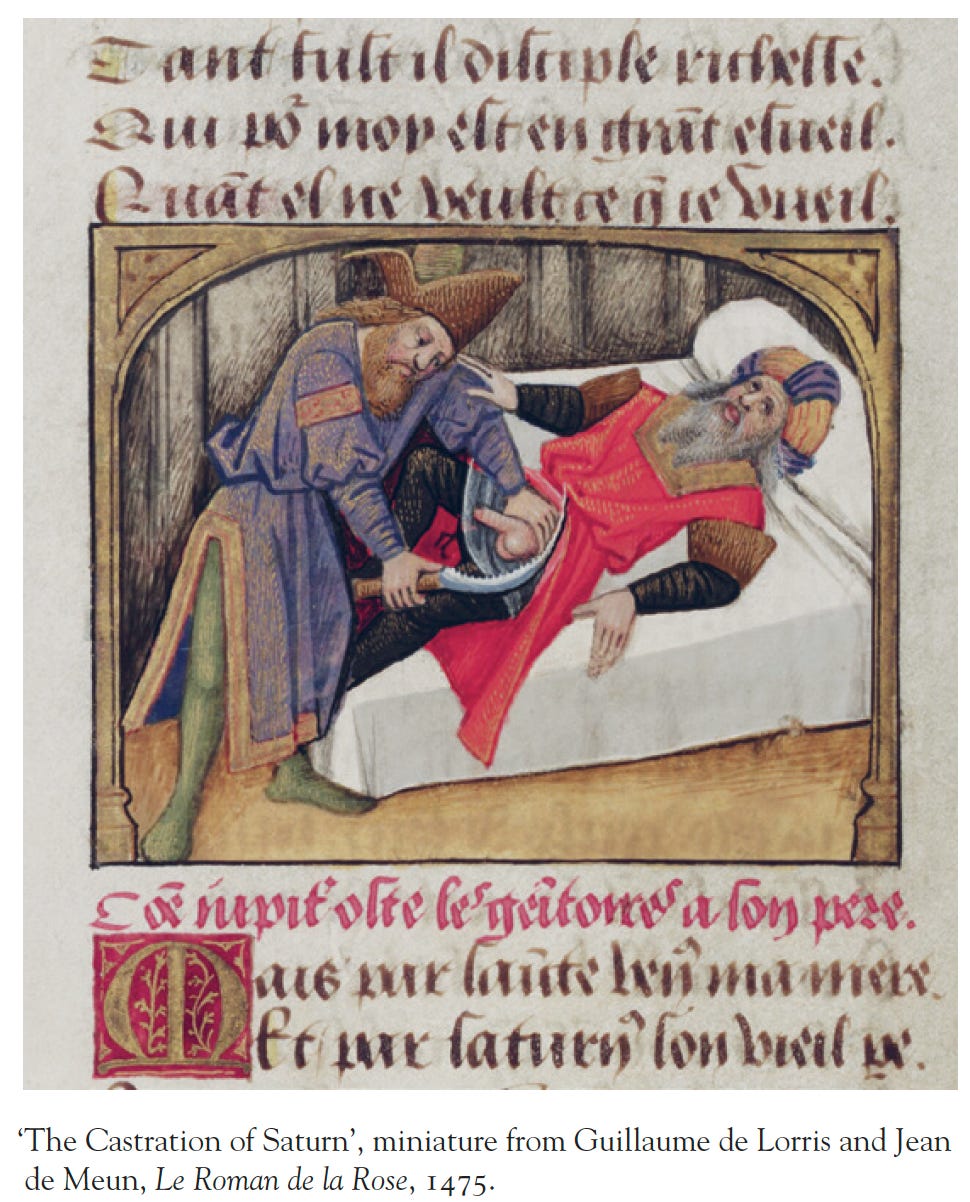
Then came stories about men’s sexual conquests. “Roman de la Rose” - one of medieval Europe’s most influential texts, with over 300 surviving manuscripts - turned rape into elegant poetry. This viral narrative follows a male dreamer’s obsessive pursuit of a feminine rosebud - a thinly veiled allegory for sexual conquest. In climax, he storms the castle safeguarding the rose-maiden. Disguised as a pilgrim, his ‘staff’ penetrates the narrow opening between pillars, violating the now-immobilised woman transformed into a statue. The message is pretty clear: women are sex objects.
Following Augustine’s theology of the Fall, author Jean de Meun theorises that sexuality is no longer governed by reason. Here, this is depicted as Jupiter castrating Saturn. All this is written for an audience of brothers, repeatedly saying “we”.
Prohibiting Female Rule
Finally came political theory. During the Hundred Years War, the Valois and Plantagenet dynasties fought for France’s crown, with Valois lawyers frantically trying to block succession through Isabella.
Their reasoning?
The crown was not private property to be inherited - it was a public dignity, a sacred office - unsuited for women. As Aristotle himself proclaimed, women are feeble, deceitful, and incapable! Royal secretary Montreuil declared women were not “de ferme et stabilement entendement, et pour ce sont comparees a enfans mineurs”. My translation: women were midwits.
In 1402, King Charles VI’s mental illness forced him to authorise his wife, Queen Isabeau, to handle the dukes’ disputes. As she gained authority, rival dynasties circled like vultures. Attacks on women’s right to rule reverberated through centuries, as French intellectuals whipped out Salic Law, to preserve the patriarchy.
Against this echo chamber of misogyny, one voice stood defiant.
Christine de Pizan: 14th Century Feminist
Christine de Pizan - born in Venice but raised at the French court where her father (a respected scholar) served as royal astronomer to King Charles V. Her privileged position gave her access to Charles V's magnificent library of 1,200 volumes, spanning Greek philosophers, Roman writers, church fathers, and contemporary poets like Dante and Petrarch. Her father’s support, elite connections, and extraordinary education would later prove to be her salvation.
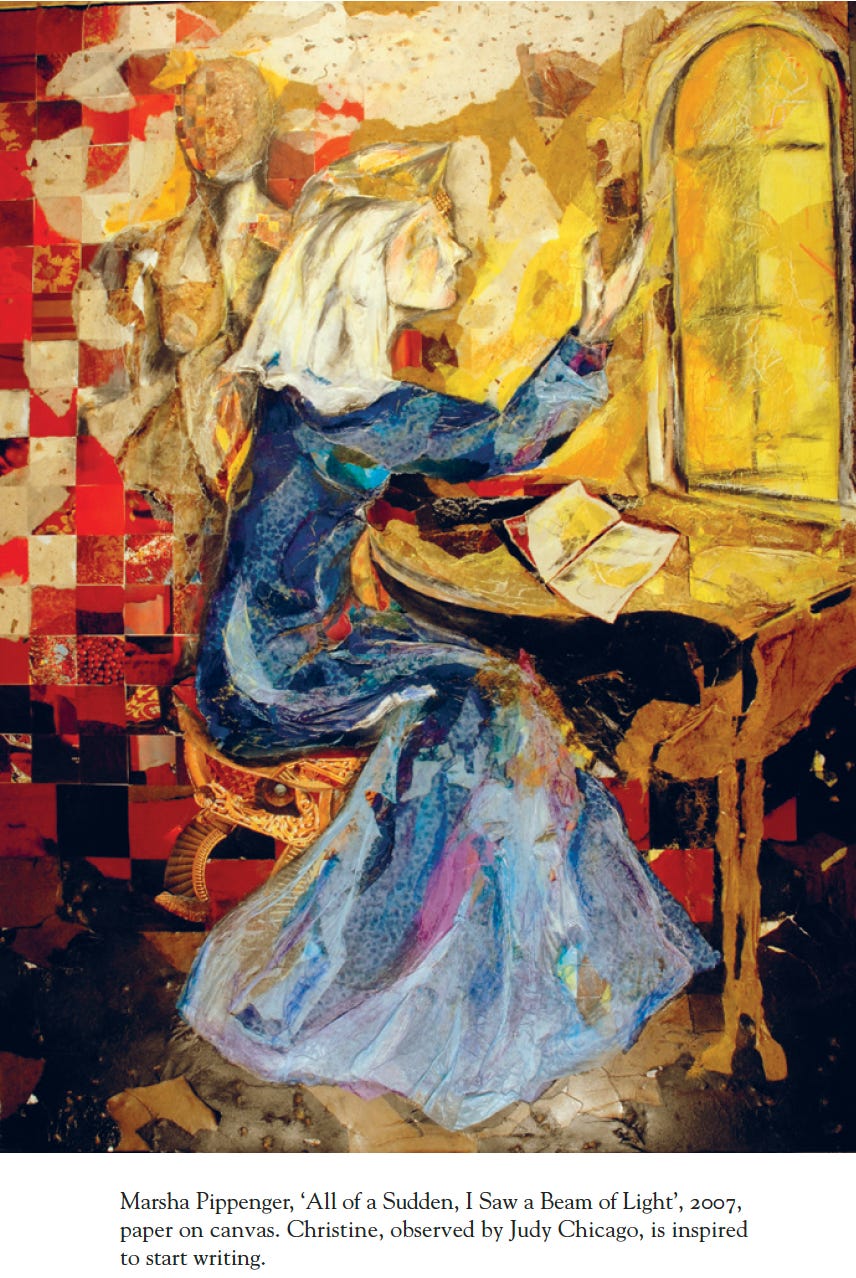
Tragedy struck at age 26, leaving Christine widowed with three young children. For the next fourteen years she battled in court to protect her inheritance, spending long hours in cold anterooms, enduring mockery from male lawyers. In a bid to survive, she became France’s first professional writer (male or female), producing poetry, courtly literature and political theory that attracted patronage from the houses of Burgundy, Orleans and Berry. Greatly respected, she even secured support from the chancellor of the University of Paris!
Rejecting Rampant Misogyny
Paris was awash with sexism - which Christine utterly rejected.
I could hardly find a scholarly book, regardless of its author, that did not contain some chapters or lines criticising women.
The names of countless authors who had written on this subject trickled into my mind like drops from an endless fountain”.
Belittling Aggressors
Countering male slander, she denigrated misogynists as frustrated losers:
“They do not know how to overcome their sadness except by attacking women, hoping to make women less attractive to other men.
Everywhere one sees such old men speak obscenely and dishonestly, just as you can fully see with Matheolus [a 13th century poet who argued that marriage made men’s lives miserable, and that women were barred from paradise] who himself confesses that he was an impotent old man filled with desire”.
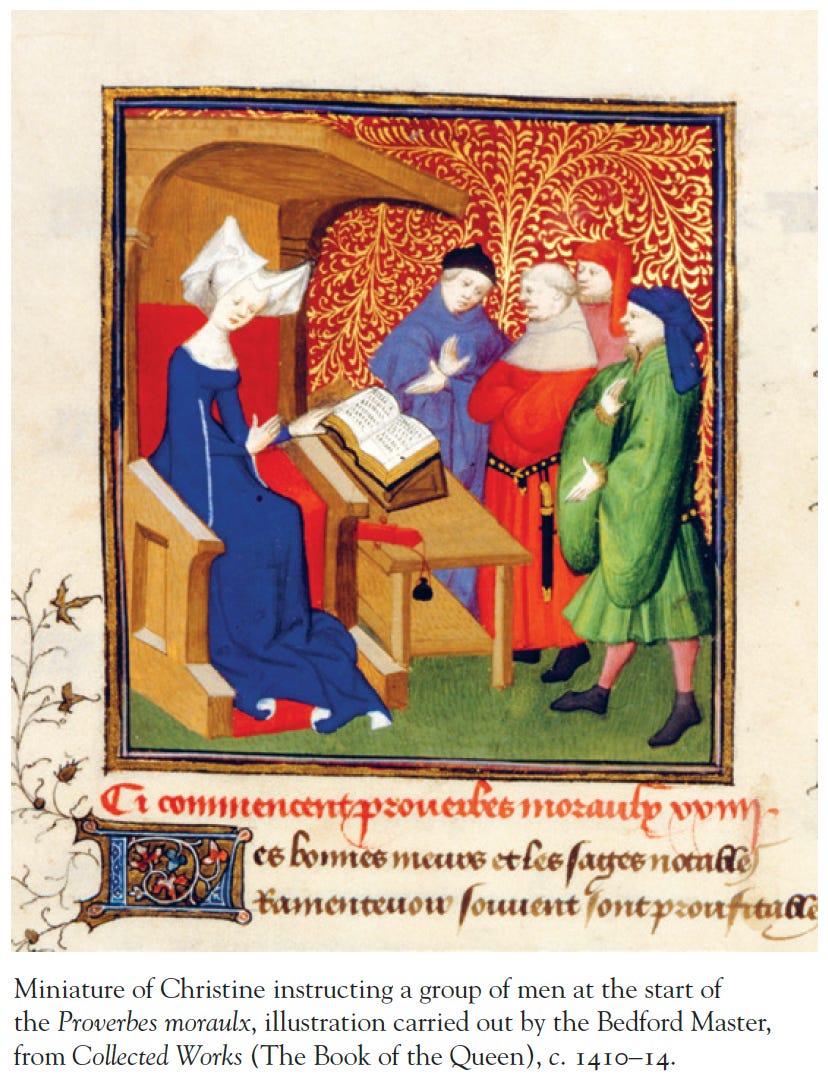
Challenging Rape
In 1402, Christine launched her first major attack, condemning “Roman de la Rose” for justifying seduction and rape. Mocking Jean de Meun’s allegations of female deception, she asked,
‘Do women come looking for you in your room? Do they beg you or take you by force?’
Reasonably, she asks how the author (a cleric) could possibly know anything about women, since he was not allowed to marry.
Patriarchal Bullying
Christine’s provocations triggered male backlash. Pierre Col rallied in tribal defence:
“You dare to judge, but yet speak only your own opinionated and impertinent presumptions. Oh, foolish presumption! Oh, uninformed words uttered too soon from the mouth of a woman, who dares to condemn a man of such high understanding, of such fervent study, who undertook such great labour as to produce such a noble book as that of the Rose.”
Creating a Legacy
Preserving this dialogue for future generations, Christine compiled all the documents written for or against “the Rose” - the Medieval equivalent of screenshotting your foes.
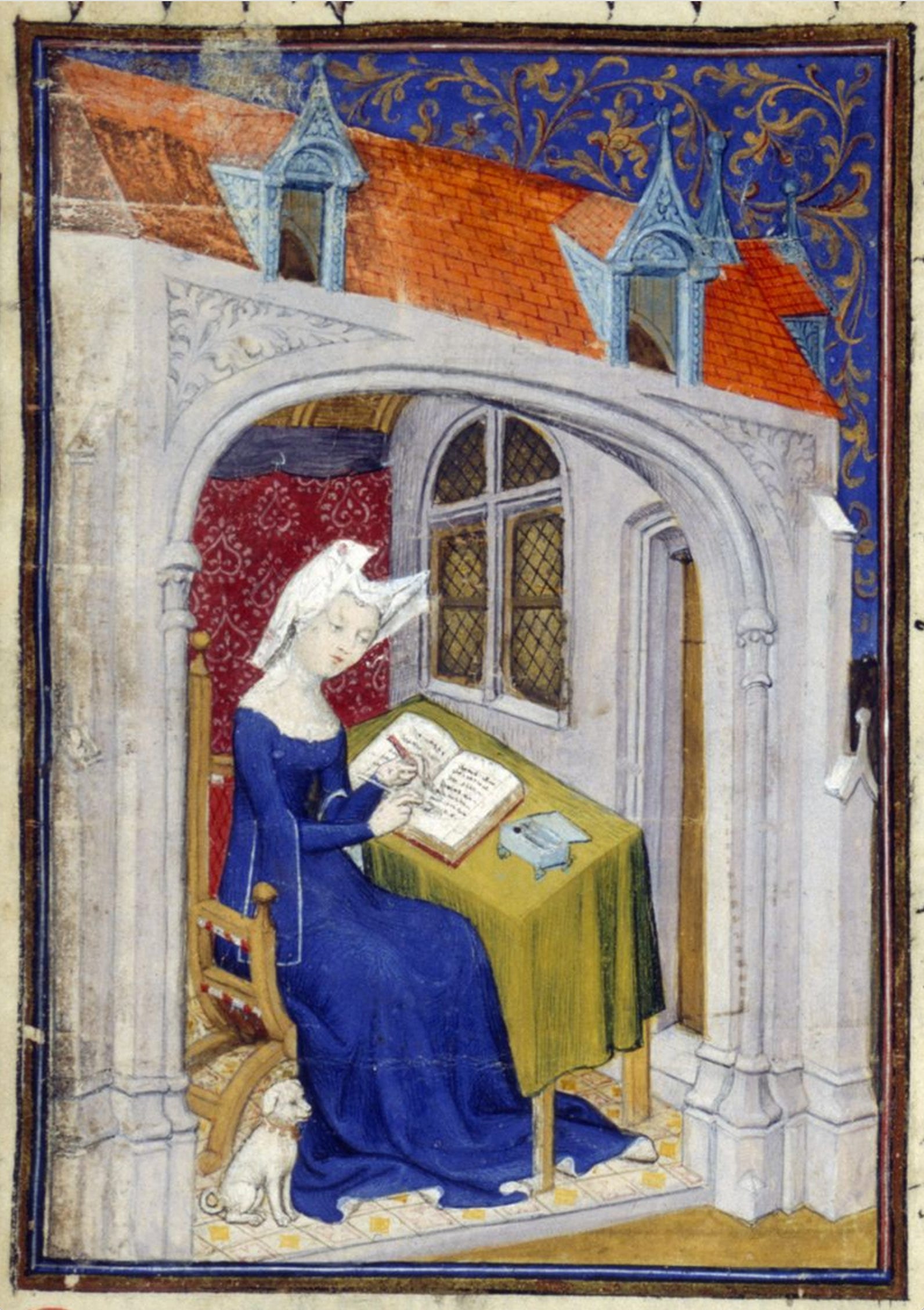
Celebrating Female Talents & Authorities!
Christine de Pizan sought to legitimise female rule. Through her illustrated writings, she staunchly defended Queen Isabel, championed female authorities and lambasted misogyny.
The City of Ladies!
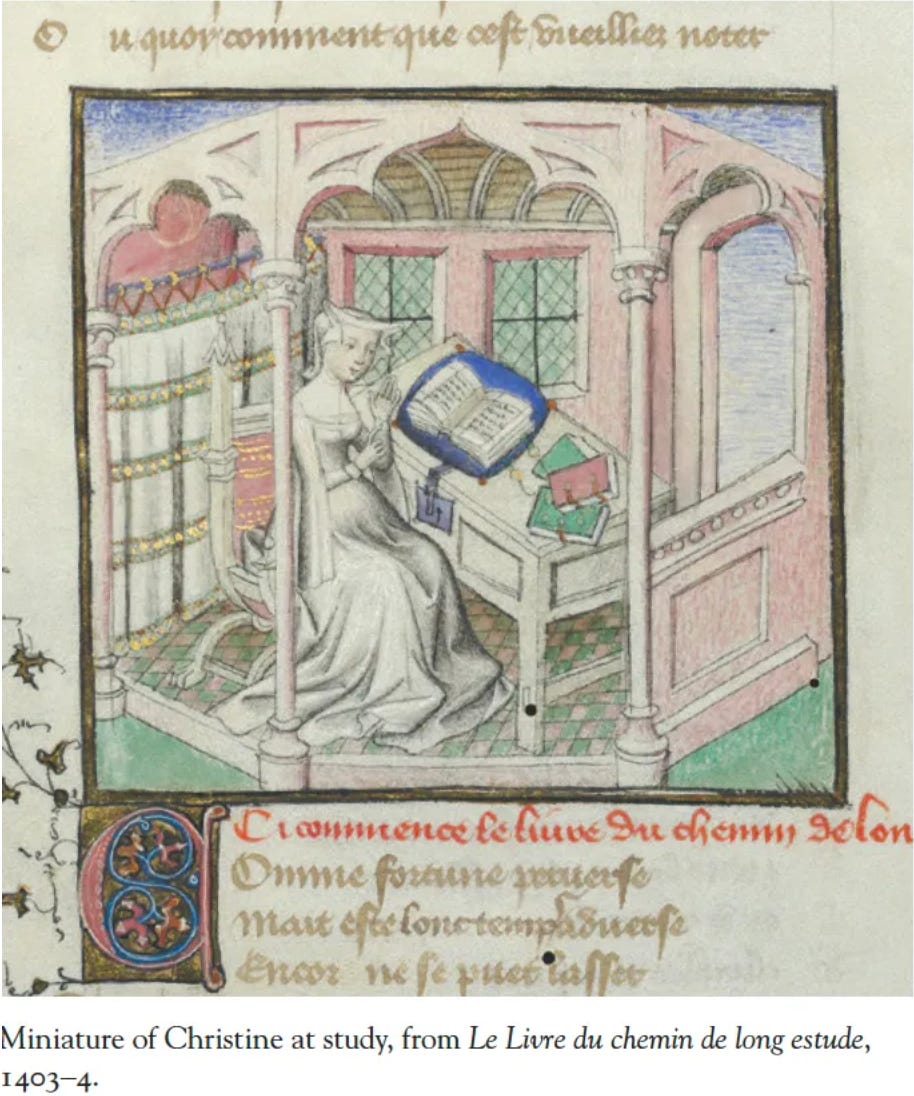
“Le Livre de la cité des dames” (the Book of the City of Ladies) arrived in 1405. This feminist utopia opens with Christine in her study, hurling a book across the room in rage at its misogyny. Falling into troubled sleep, she's visited by three guides - Ladies Reason, Justice, and Rectitude - who help her construct a symbolic city celebrating women’s achievements throughout history. Together, they offer female friendship and wisdom.
At its core, the book tackled a burning question in medieval Europe: were women fundamentally different from men? While Aristotelian philosophy suggested women’s inferiority, Christine countered with theological reasoning: both men and women were created in God’s image, their souls equally capable of divine grace. Christian theology buttressed feminist philosophy!
Slandering women as gossips, cheaters, and simpletons were just malicious lies. Rejecting accusations of women being faulty and defective, Pizan argued that if women had access to the same education as men, they would do even better because “their wit is sharper”.
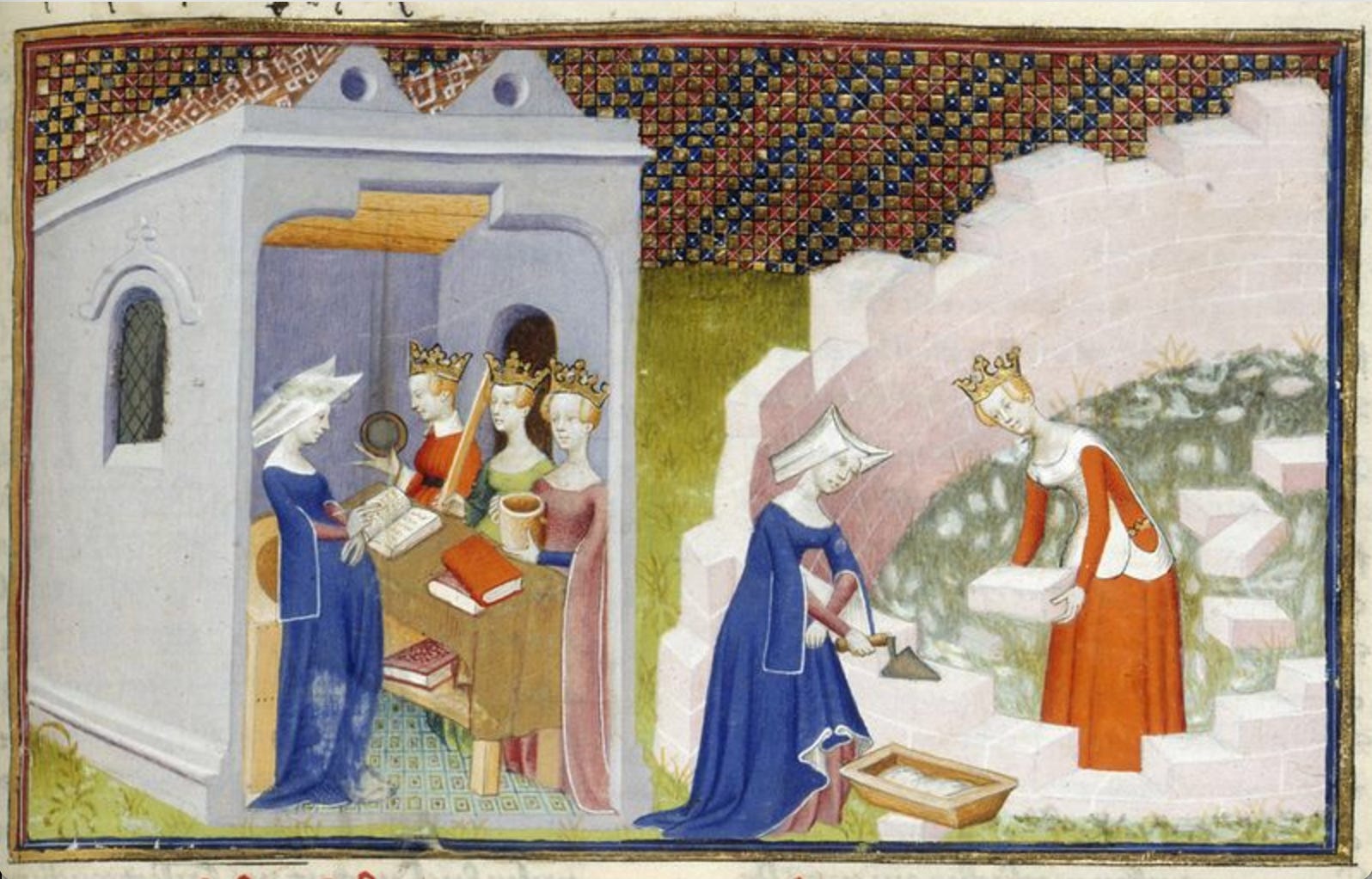
Championing Brilliant Women
Her city’s inhabitants ranged from female saints to Old Testament heroines to virtuous women of pagan antiquity. Perhaps most boldly, Christine reimagined classical mythology’s monsters as misunderstood women. Her version of Medusa wasn’t a deadly creature but a woman who deserved protection from male violence - marking the first feminist revision of classical mythology. Medea is likewise recraft as helping Jason win the Golden Fleece, and thereafter deserted. Through these stories, she cast a vision of equality, demonstrating that women can possess socially valued virtues. Medieval Barbieland!
Christine wanted her works to be widely read: to “distribute many copies [of the book] throughout the world” to “queens, princesses, and great ladies”, hoping that ‘many valiant ladies and women of authority’ would read her words, ‘now and in time to come”. Recognising the genuine risk of her female authorship being erased, Christine consciously embedded herself in her work, repeatedly using “I Christine” and showing herself in a blue dress.
The Queen’s Manuscript
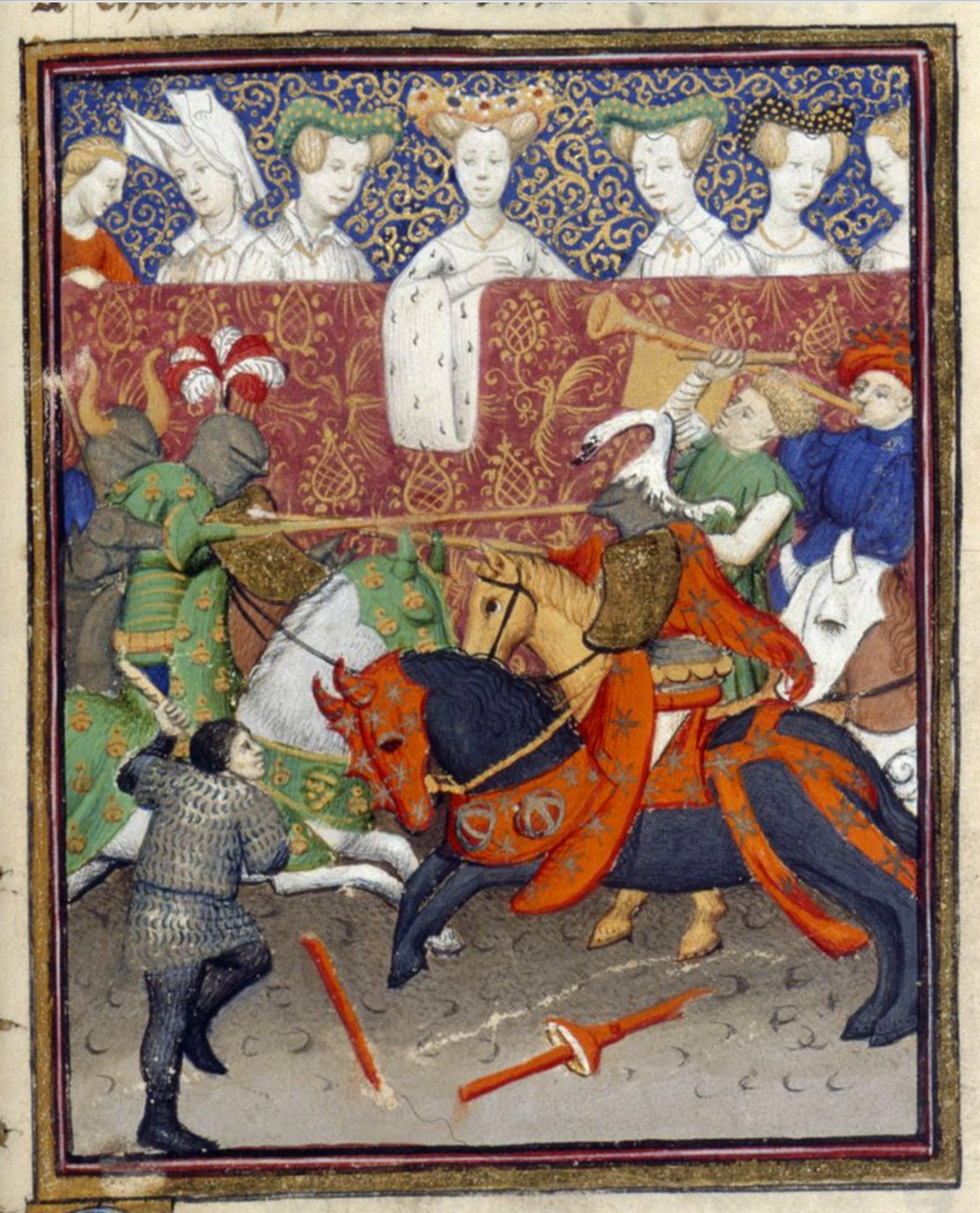
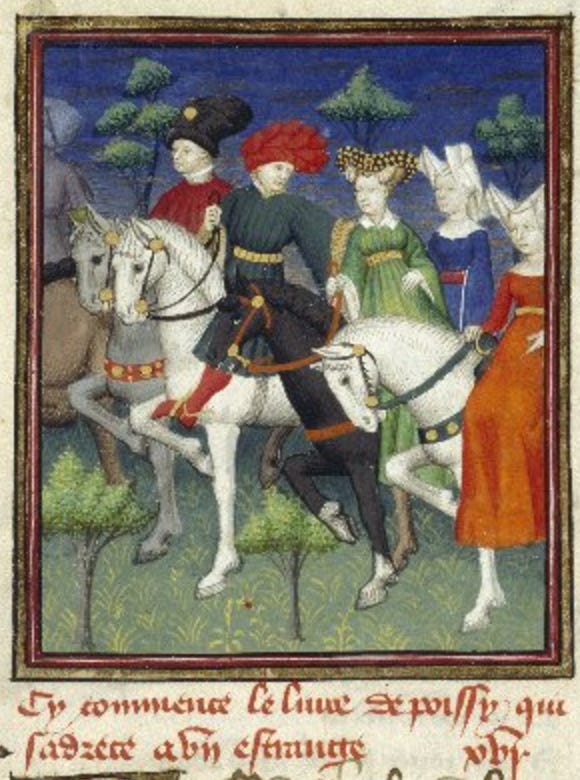
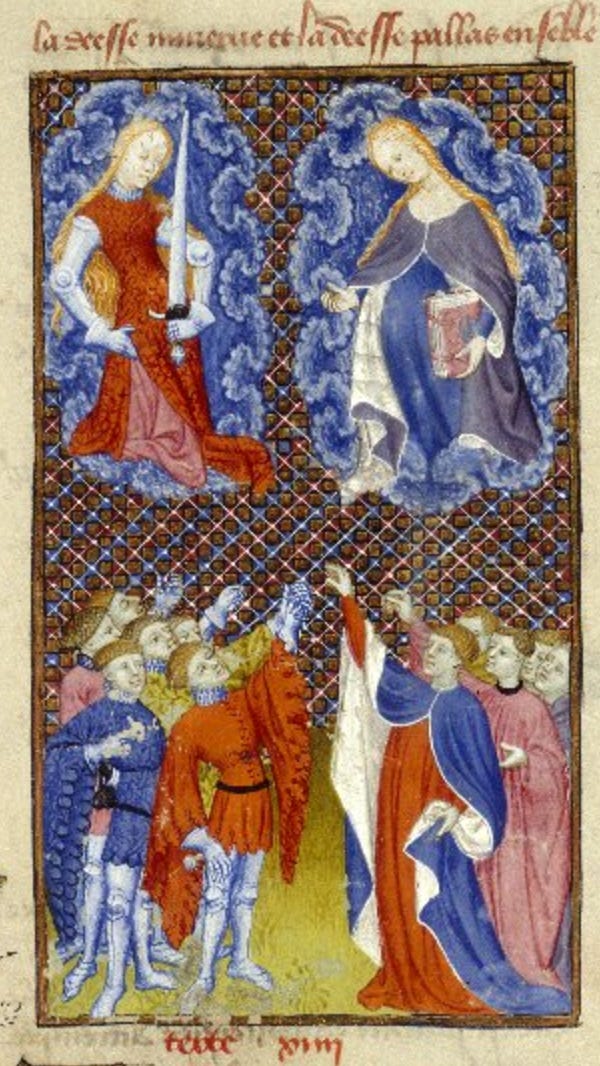
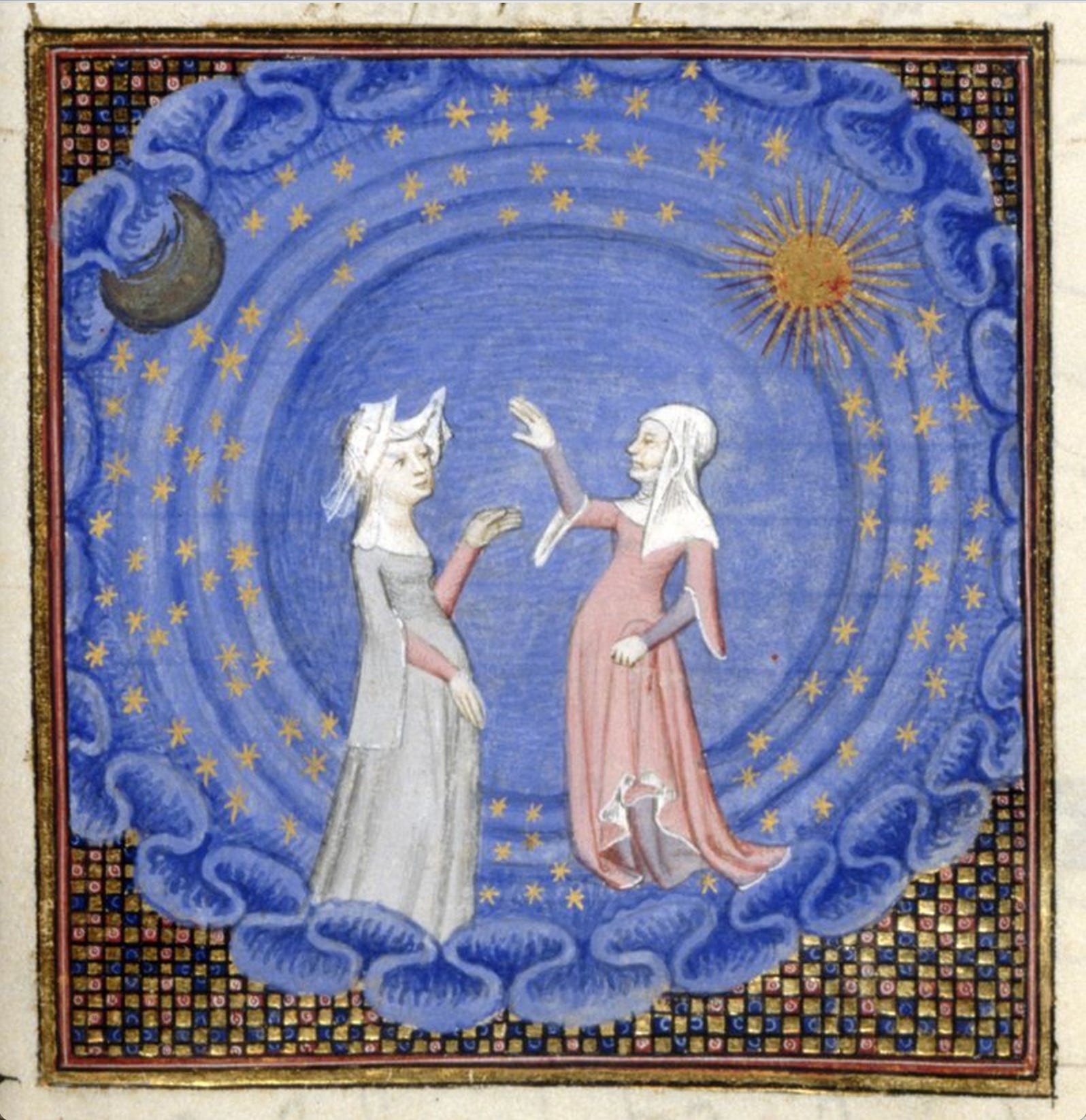
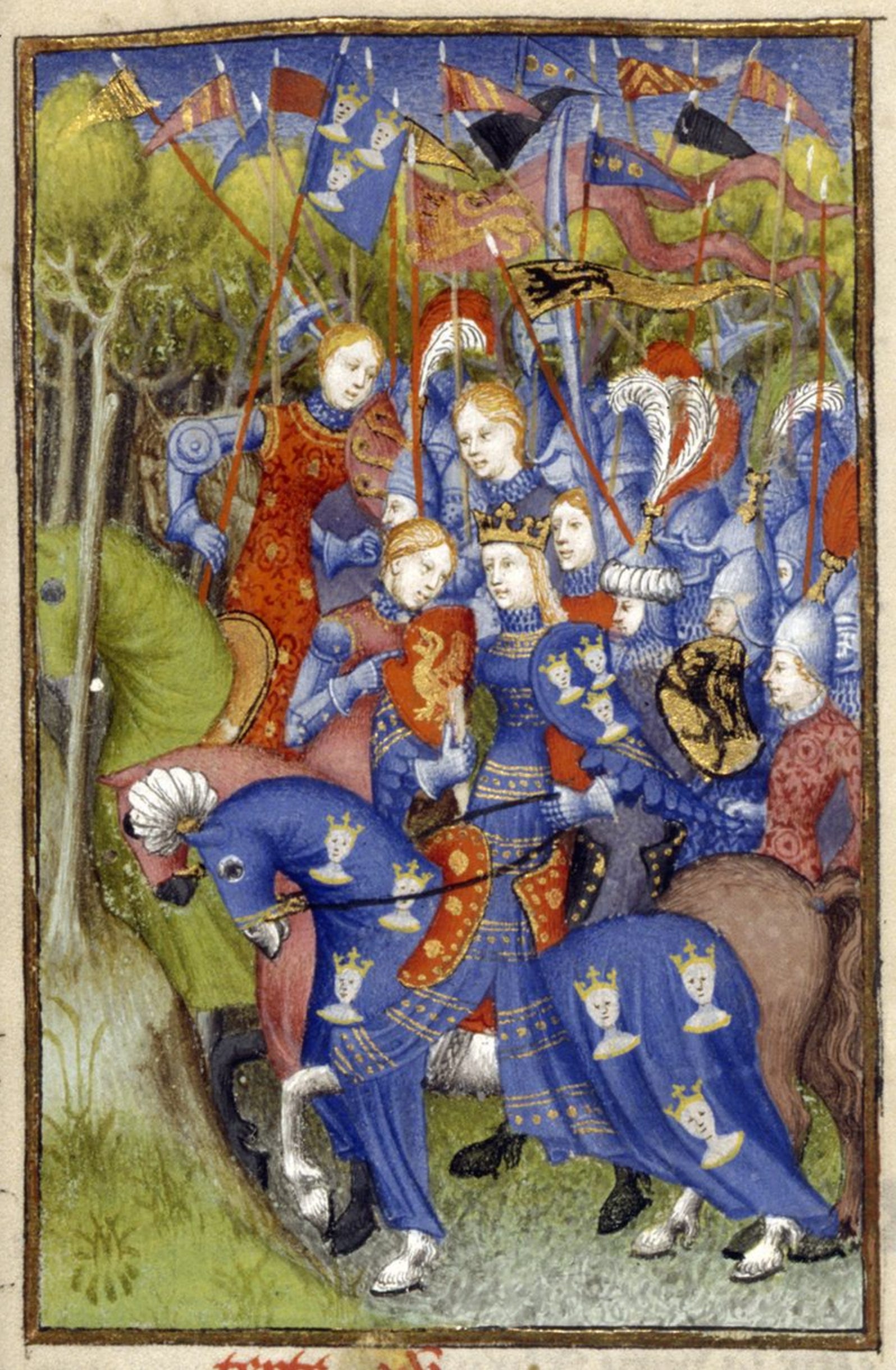
In 1414, Christine presented Queen Isabel with a lavishly decorated collection of her works - 30 texts adorned with 130 miniature illustrations. Queen Penthesilea led her Amazon army to Troy’s defence, women commanding jousting tournaments, and worshipping Venus. In one striking image, Christine herself stands with the Sibyl in the cosmic sphere, surrounded by sun, moon, and stars - women at the centre of the universe.
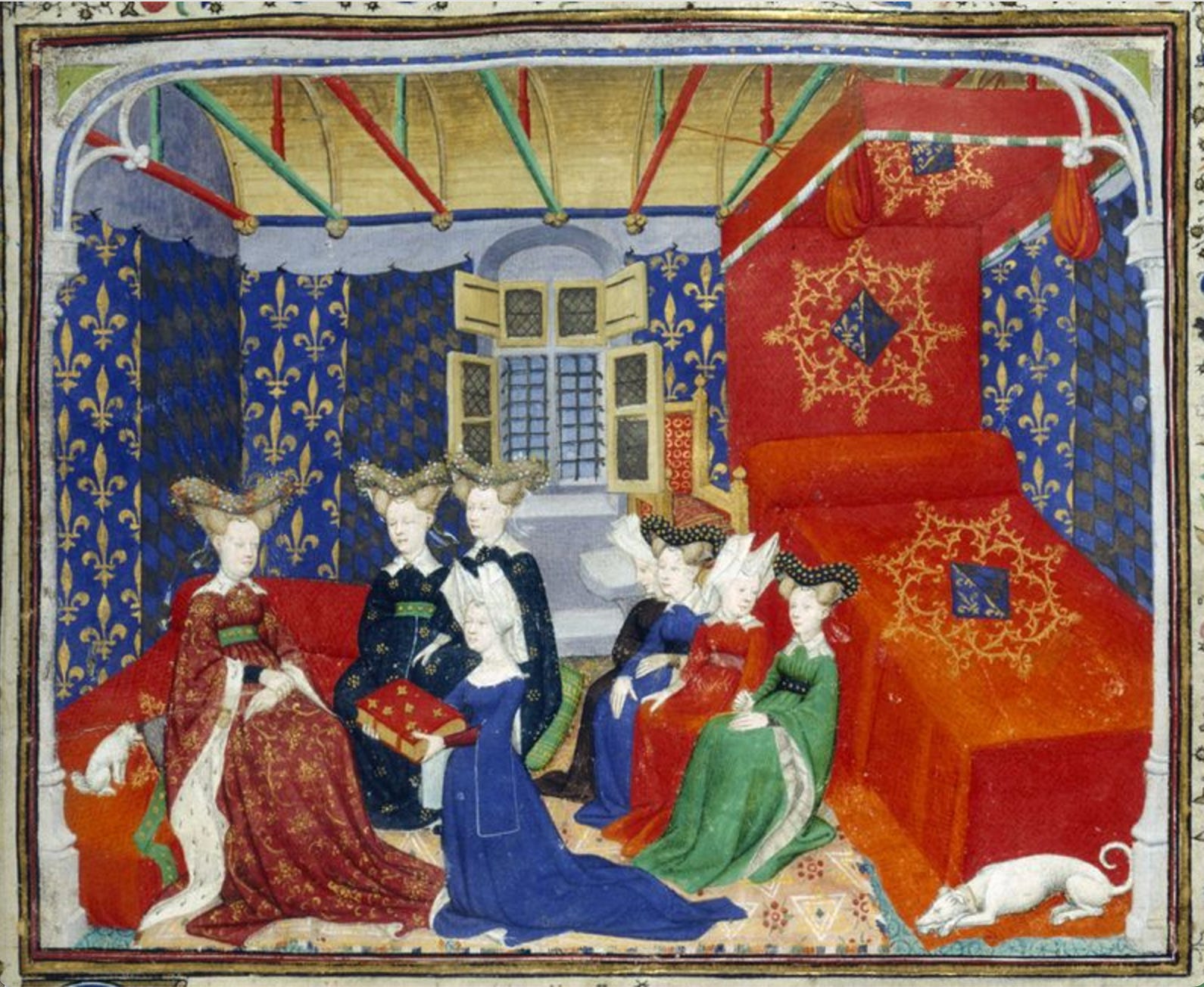
Romantic Love!
What do women want? Mel Gibson could have checked the Medieval archives.
Love takes central place in Christine’s lyric poetry. Indeed, she had loved and mourned her husband dearly.
Countering misogynistic depictions of ‘vengeful nagging’, Christine highlights caring, loyal wives. Indeed,
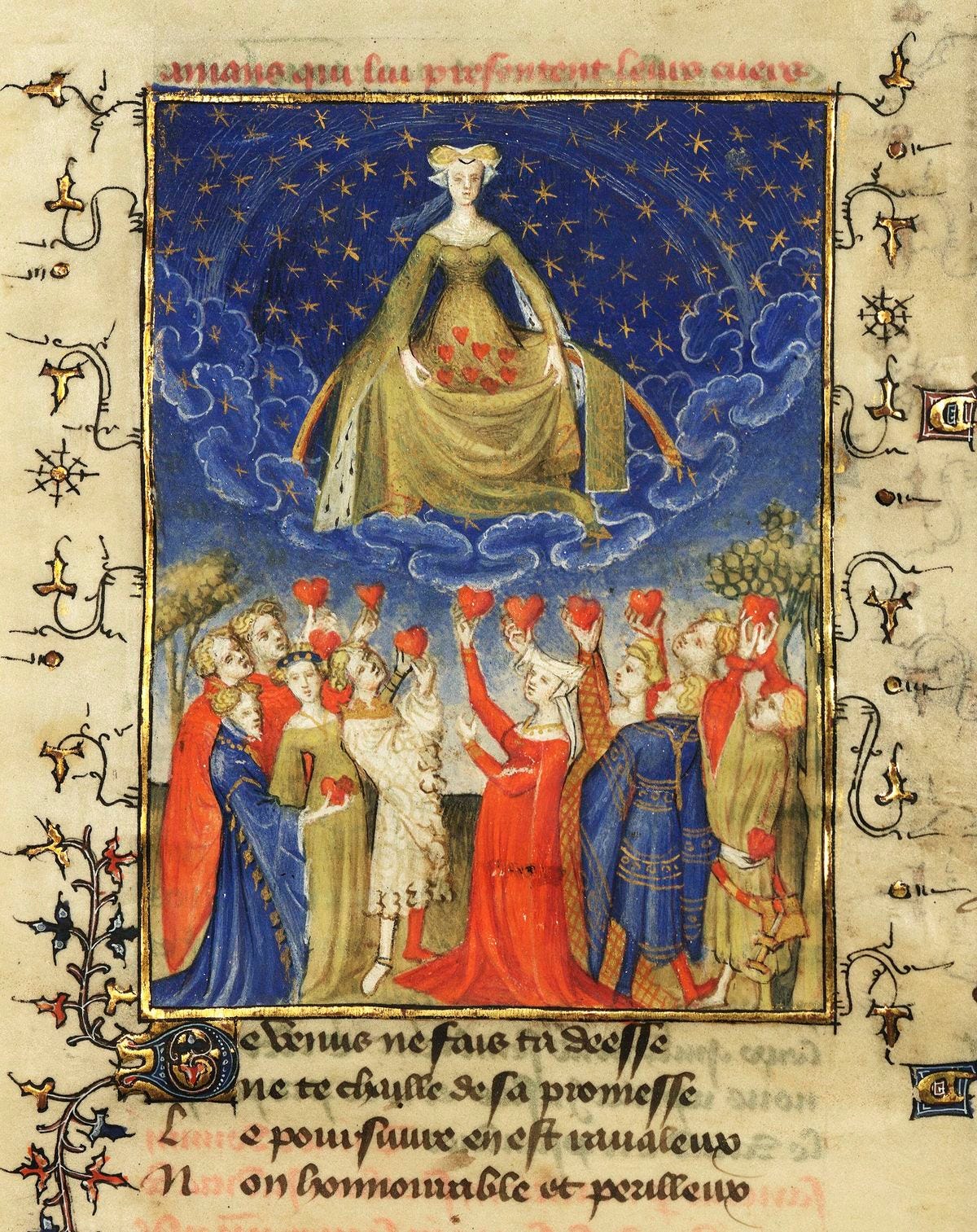
In ballade 43, Christine warns women not to believe men’s deceitful flattery. Instead, they should hold out for true love! In “Le Dit de la Rose”, she tells of a story of nobles swearing an oath to be loyal in love and defend women against defamation. Brandishing her comedic naughtiness, “Epistre au dieu d’amours” mocks male seducers’ hyperbole and ‘fake devotion’. Men stand accused of exaggerating their sexual exploits, spreading rumours which hurt women’s reputations.
Here, she celebrates Venus and her lovers.
Joan of Arc!
In 1429, a young saviour presented herself at the French court - Joan of Arc. Christine, now in her sixties, was overwhelmed with excitement, for this was the embodiment of female potential sent by God to secure French victory!
“Oh, what an honor to the female sex! That God loves it is clear with all these wretched people and traitors who laid waste the whole kingdom cast out and the realm elevated and restored by a woman – something a hundred thousand men could not have done!”.
Lone Feminists Aren’t Perfect
While Christine was revolutionary, she would be a terrible feminist by contemporary standards. Believing that marriage is for life, she called on women to obey their husbands and overlook infidelity. Without a broader network of feminist radicals, no one was urging her to be more egalitarian. So she drank the patriarchal koolaid.
Who Shared Christine’s Vision?
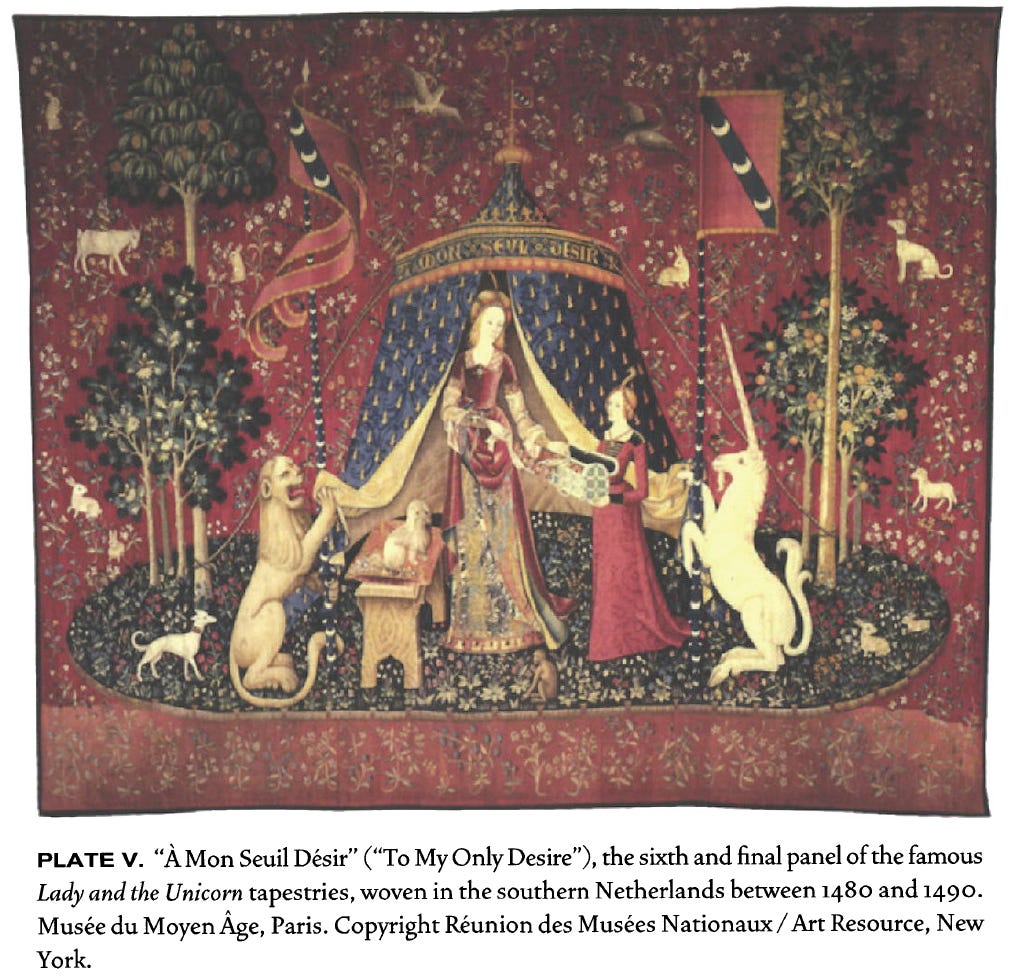
None other than England’s Queen Elizabeth I, who kept Christine's books in her royal library and hung City of Ladies tapestries on her palace walls. European aristocracy noblewomen likewise passed her works among themselves like precious heirlooms.
But below the upper bourgeoisie, her brilliant works remained unknown. In fact, they were largely forgotten. Without a supportive network, mass literacy or printing, de Pizan could not bypass the state and church to spread her radical rebellion.
Even when new editions were produced, subsequent editors erased her authorship!
Who Murdered Medieval Feminism?
Lone genius, Christine de Pizan refused to accept conventional wisdom. With privileged access to a glorious library, she defied misogyny by celebrating historical heroines.
Yet her revolution failed. In 15th century France, religious clerics reigned supreme, instilling fear of damnation. Most women spent their lives pregnant or nursing, struggling in poverty - then were denigrated as nagging idiots or sexual conquests.
Fast-forward to the 21st Century: feminist stories like “Barbie: the Movie” finally resonate globally. Technological advances enable Gerwig and Robbie to reach a mass audience, unmediated by patriarchal gatekeepers. Our world is also far more secular and scientific. Alas, the world just wasn’t ready for Christine de Pizan!

Related Essays
Excellent Books & Papers!
Susan Groag Bell, “The Lost Tapestries of the City of Ladies: Christine de Pizan's Renaissance Legacy”.
Charlotte Cooper-Davis, “Christine de Pizan: Life, Work, Legacy”
Craig Taylor, “The Salic Law, French Queenship, and the Defense of Women in the Late Middle Ages”
Thomas D. Hill, “Narcissus, Pygmalion, and the Castration of Saturn: Two Mythographical Themes in the “Roman de la Rose”
Hetta Howes, “Poet, Mystic, Widow, Wife: The Extraordinary Lives of Medieval Women”
Now I’m off to the British Library’s new exhibition on “Medieval Women”. Stay tuned for Medieval Culture Wars: Part 2!