
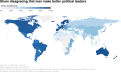

Sub-Saharan Africa scores fairly well on standard metrics of gender equality, on account of high female labour force participation. But this requires a corrective; work is not inherently liberating. If a woman spends hours fetching water, collecting firewood, scrubbing clothes, and only then heads to family farms or petty trade, her busyness does not buy status.
Female labour force participation provides a reliable proxy for whether the society permits women to move in the public sphere, but this is not sufficient for gender equality. In low-income Africa, women may move independently, but her life is still marked by relentlessly drudgery and insecurity. Too often, poor women wake before dawn and labour long after dusk, only to be stuck in the same place.
Domestic Drudgery
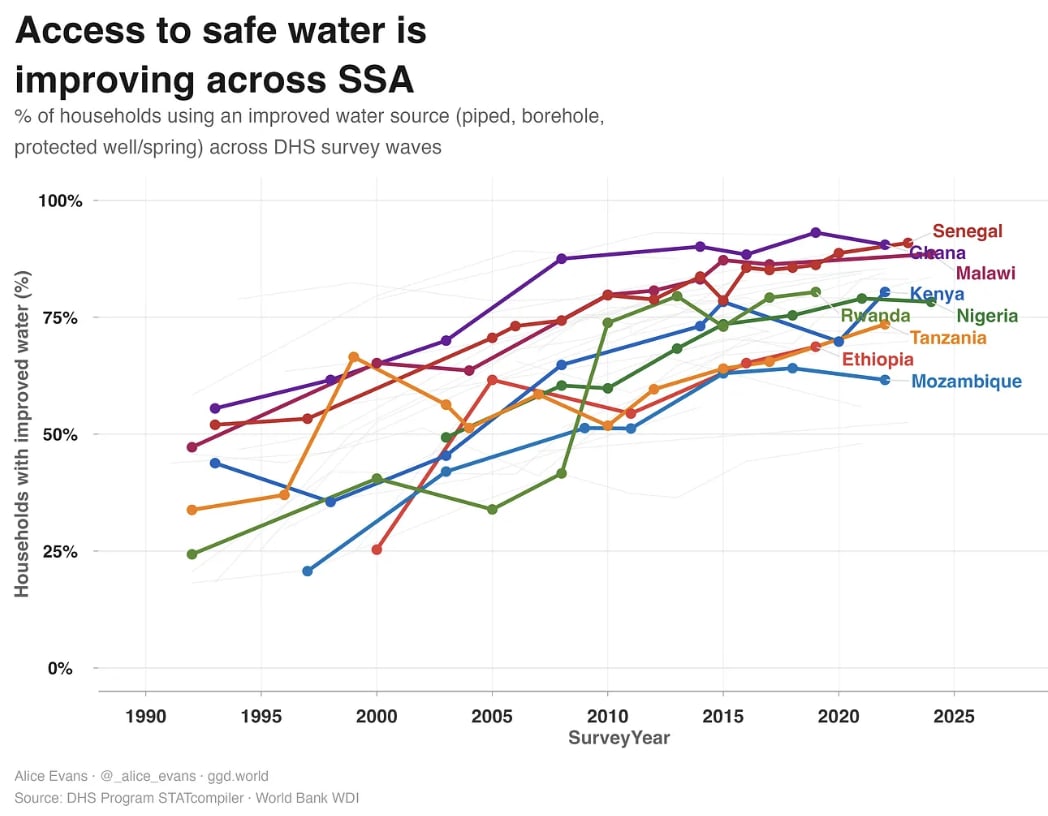
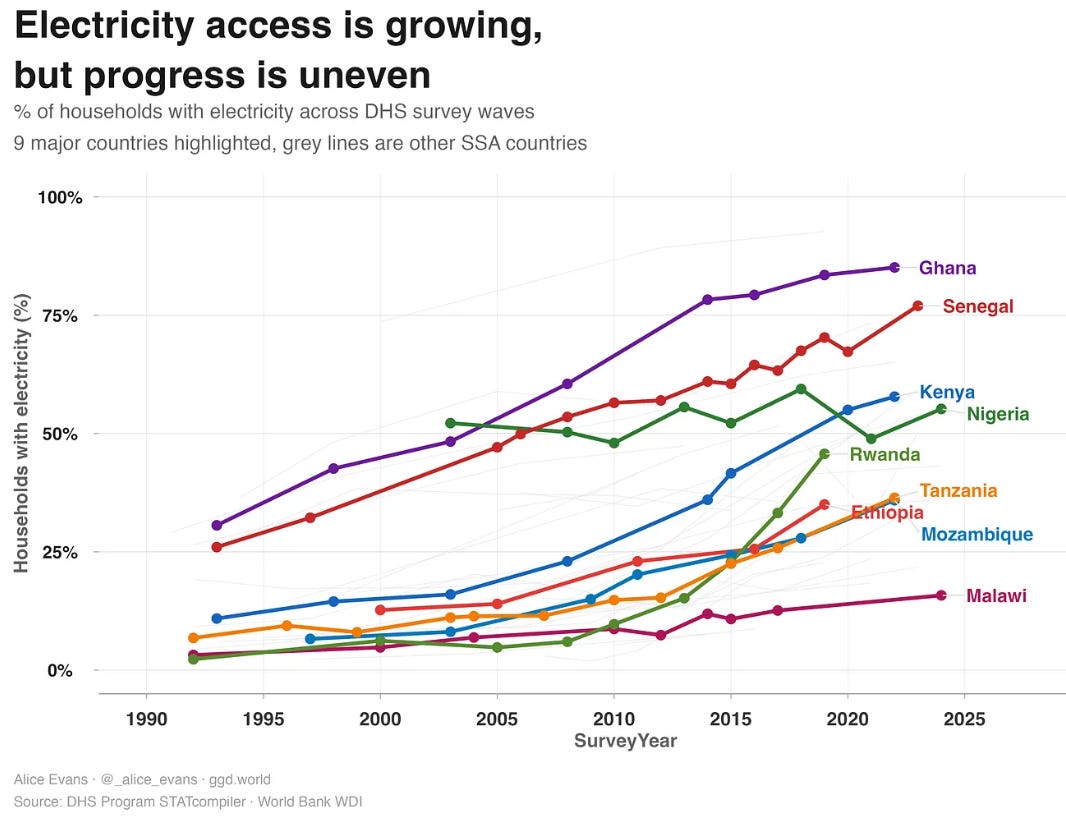
Across many Sub-Saharan African countries, access to safe water and electricity have radically improved. Ghana has been a clear leader, alongside wider economic growth.
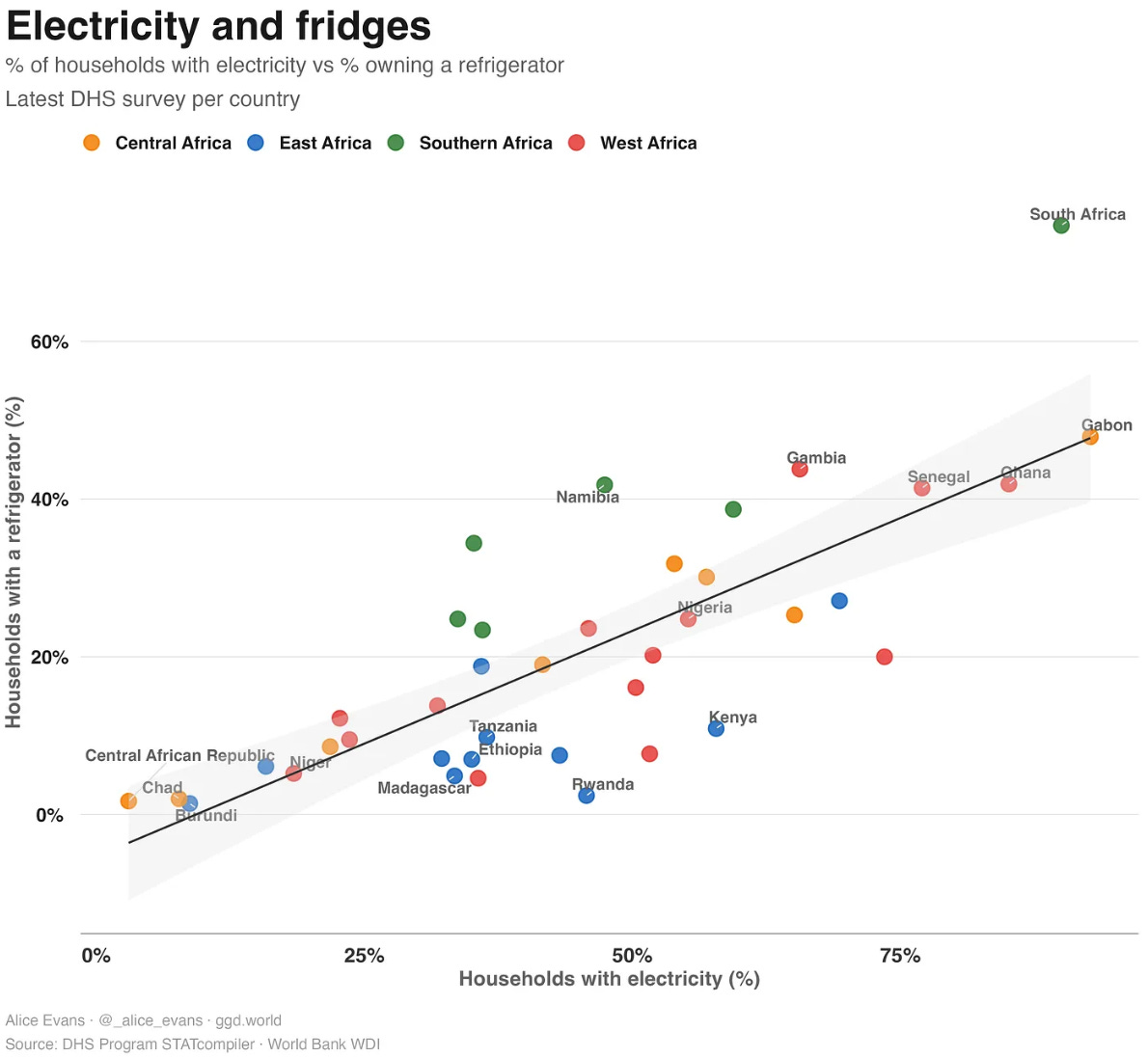
But absolute levels remain low, especially in rural hinterlands where households live far from pipes, grids, and tarmac roads. Only 22% of people in the DRC have access to electricity.
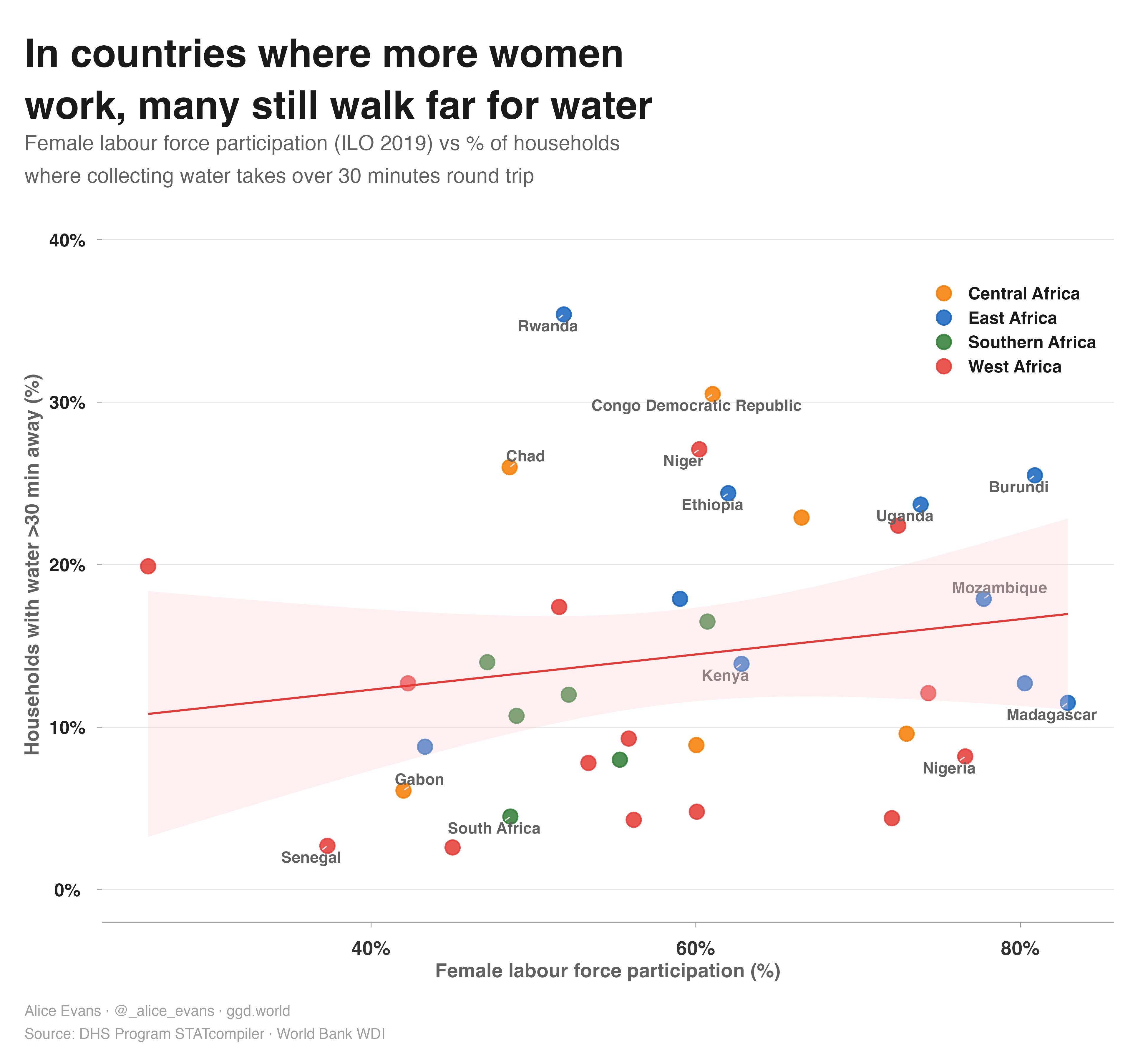
While Sub-Saharan African women work at high rates, many are also spending long stretches fetching water and firewood, and such labour is often shared with children. In Rwanda, 35% of surveyed households report that collecting water is a 30 minute round trip. And that’s just one journey. Imagine several buckets, every day, before cooking, washing, or bathing can even begin.
In Niger, Rwanda, Tanzania and Ethiopia, less than 10% of households have fridges. This is partly a function of household poverty but also state capacity, and a reliable electricity grid.
Dinkelman and Ngai have a nice paper, tracking African women’s time use. They find that South African and Ghanaian housewives often spend as much time as American housewives did in the 1920s, but under much harsher conditions, with fewer labour-saving appliances, and much more time spent on cooking, cleaning and laundry. In Uganda, Tanzania and Ghana, women spend 32-48 hours a week in home production, then only 25 hours a week in marketised work.
In richer economies, many activities once performed within the household have long since been marketised. At the supermarket, we buy food that has already been grown, milled, processed, packaged, and transported by specialists (whether that’s breakfast cereal, bagels or sausages). Shopping online, we can treat ourselves to new clothes, then wash and dry with machines. And if those (divine) appliances break, we hire someone to fix them. As housework shrinks, mothers and fathers can spend much more playing and caring for their kids, enjoying shared leisure.
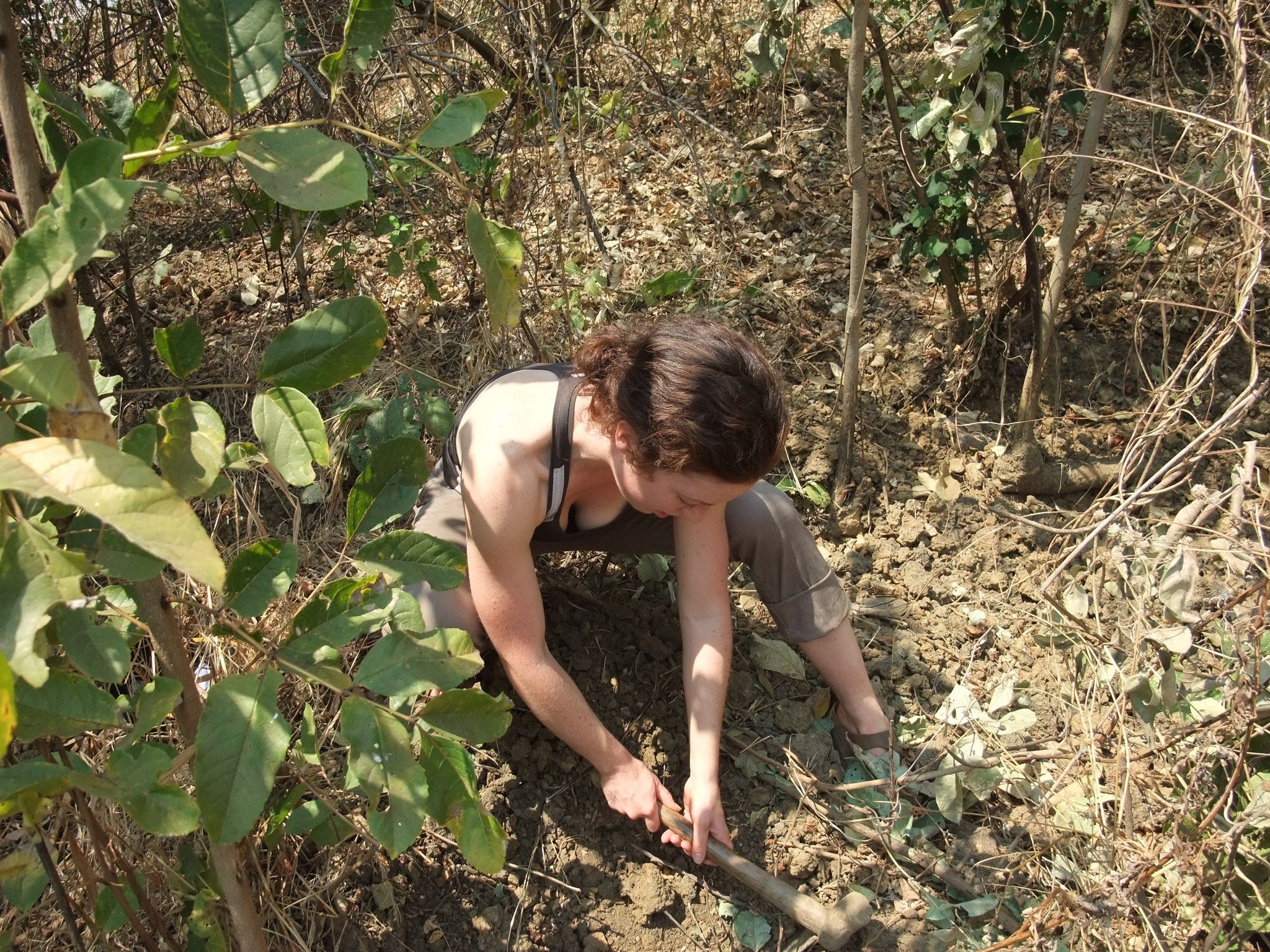
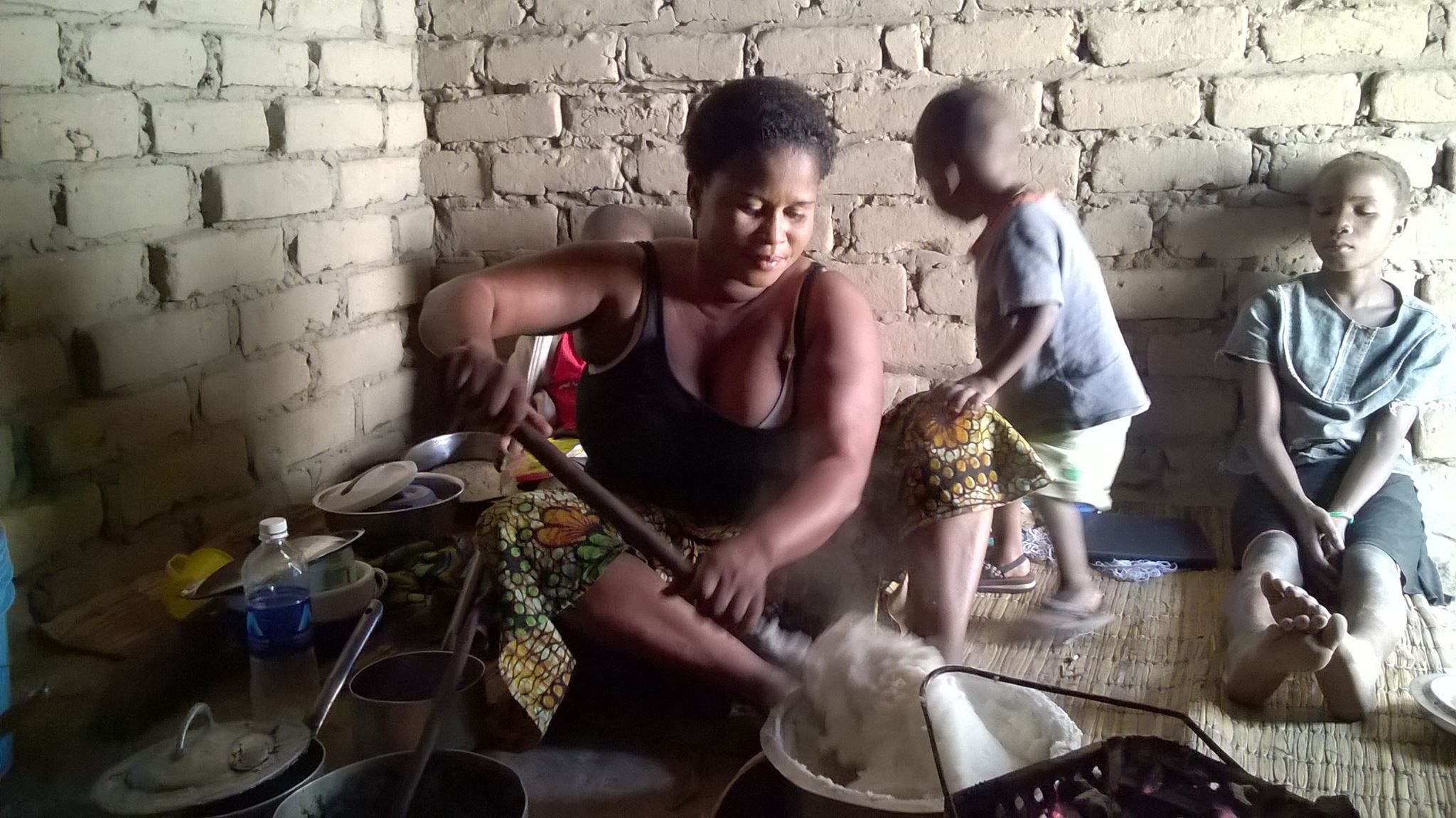
But when I lived in rural Africa, it was radically different. In Zambia, I can honestly say that I rarely saw parents ‘playing’ with their children. There was simply too much work - whether that’s hauling buckets back from the pump, scrubbing clothes, making fire, getting vegetables from the market (since we didn’t have a fridge).
What if you wanted to make dinner? Raw cassava can be poisonous because it contains cyanogenic glycosides that release cyanide. In rural Luapula, it was often dried in the open, pounded into flour, then cooked over fire as a thick porridge (nshima). In Northern Province, we would head to the bush, forage for a very specific tree with edible roots (ubusala), then boil it for three hours, yet the nutritional value was meagre. High inputs, low returns. In The Gambia, we would sit with a large calabash (dried gourd) and sort through the rice for grit.
Poor Sanitation
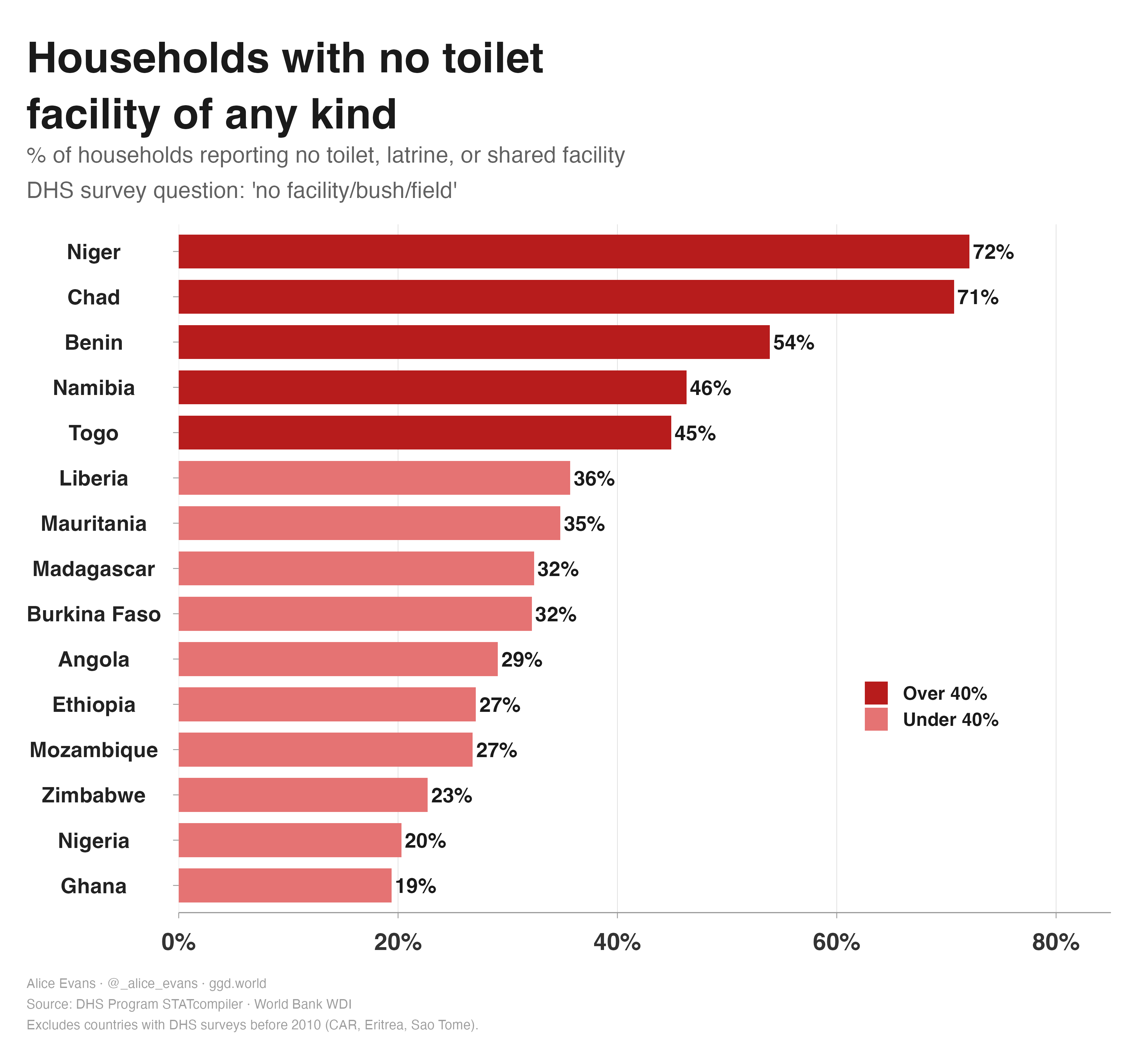
72% of households in Niger report that they have no toilet or latrine. This means they do not even have an open pit or bucket. Instead, they are going to the bush.
Open defecation is not only risky in terms of safety, but also contaminates the local area, sometimes resulting in outbreaks of cholera.
When kids get sick, mothers usually step in to provide much-needed care.
Half of Sub-Saharan Africans work in farming
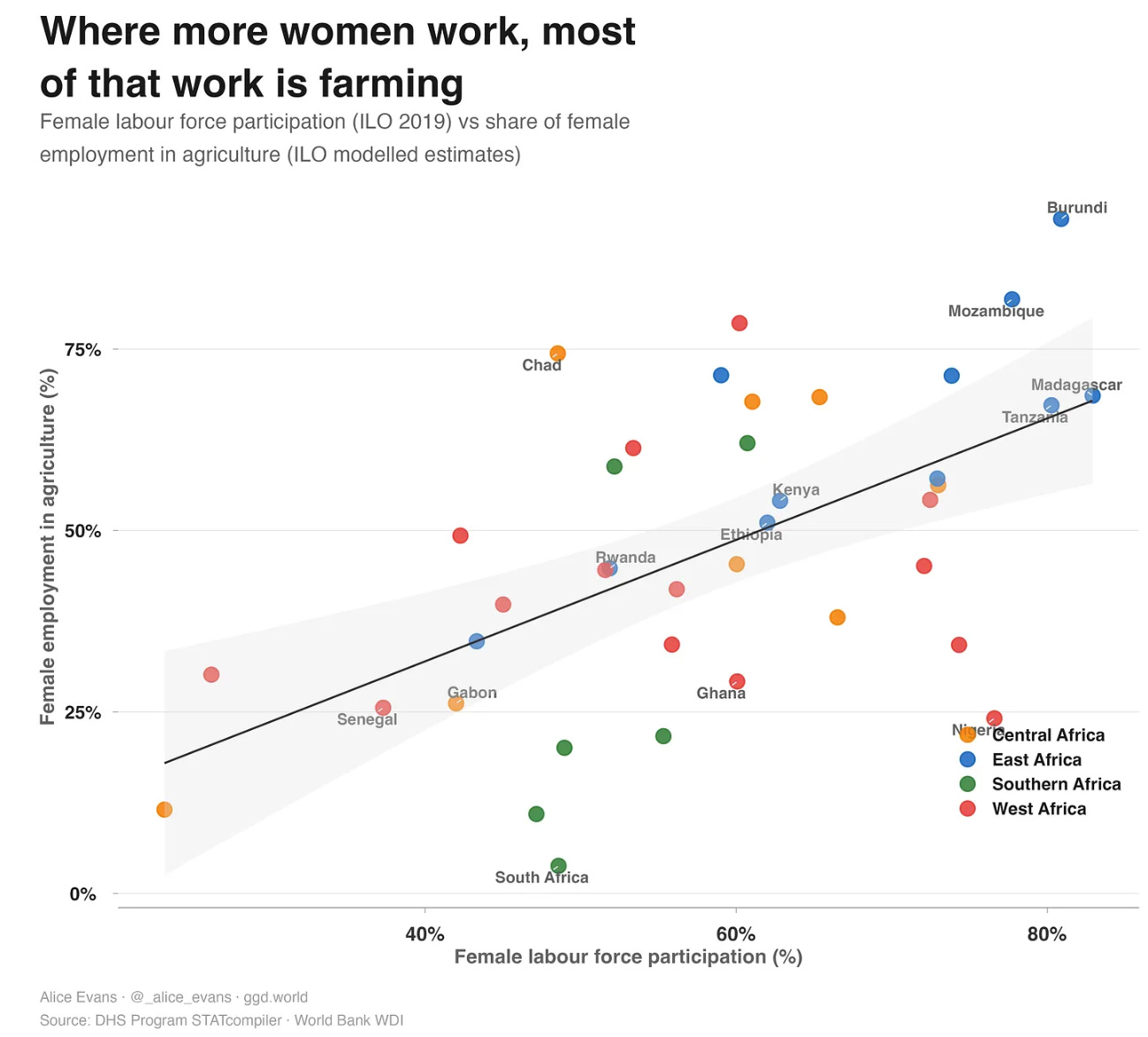
In African countries where more women work, a large share of that work is still farming. Yet African agricultural productivity is extraordinarily low. In Zambia, the agricultural value added per worker is just $244, compared to the US’s $85,000.
But without any money, how can you leave an abusive relationship? You are trapped.
Working in agriculture does not necessarily improve women’s status
In Luapula, men are widely perceived and revered as providers. As Sarah (30-year-olds, rural homemaker and mother of four) explained:
It’s men who provide for us, who buy us everything. Husbands help parents [financially] but we women don’t do it much. We don’t really concentrate on school. … We get pregnant. You’re finished now, it’s over. … A boy will make her pregnant and he will return to school; whereas the girls’ parents will refuse to educate her again. They’ll say “You will get pregnant again,” thinking it’s a waste of money.
Her mother, Mary (55), likewise maintained:
Rural girls - paying for their education is a waste of money. They’re just interested in men.
In villages, where most women bear many children and work on farms, and virtually no one has social media or televisions showing alternatives, then marriage and motherhood are often taken for granted as aspirational goals. Whereas rural girls, without social media or exposure to alternatives, didn’t necessarily see the value in education or envy such advances. As Nsenga remarked,
“In the village they just give birth and it’s all over. It’s because of early marriage. There’s nothing else they see and aspire to.
And while global elites may host glitzy conferences about ‘valuing women’s work’, I will report that this hasn’t punctuated rural Zambia. Cooking, cleaning, sweeping, fetching water and firewood, as well as weeding and planting (for subsistence agriculture) are commonly referred to as ukwikala (just sitting).
Wage labour with a contract is extremely rare in Sub-Saharan Africa
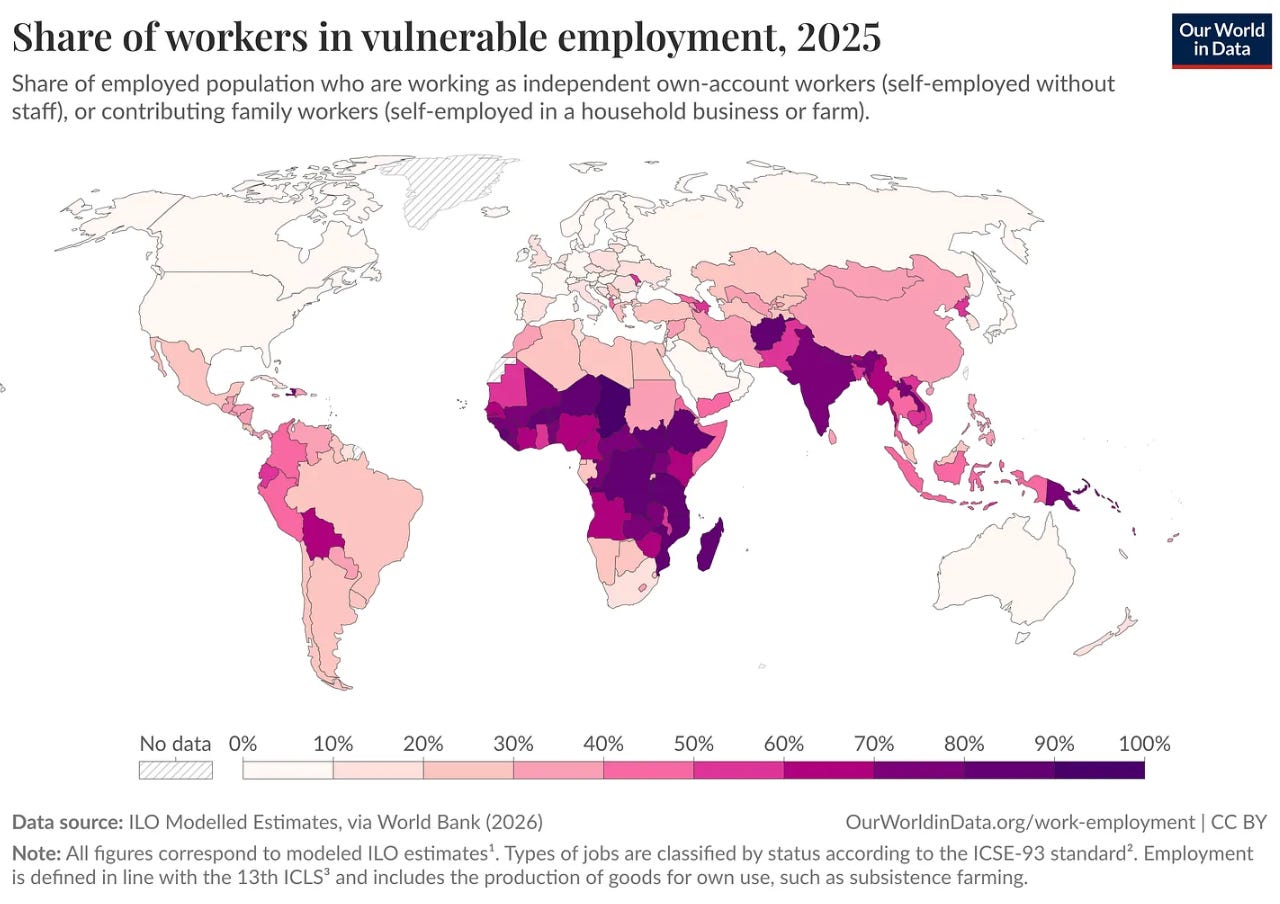
Most African women who do escape agriculture ultimately become self-employed, e.g. selling donuts or hawking dried fish in the market. Over 80% of SSA women workers are in what the International Labour Organization calls ‘vulnerable employment’ - either working on their own account or contributing to a family enterprise.
African cities have boomed in population size, but manufacturing jobs remain scarce. Instead, ever more young people crowd into saturated, low-productivity informal services - buying and reselling goods from Tanzania or South Africa - where profits continue to dwindle. All these challenges are compounded by demographic growth.
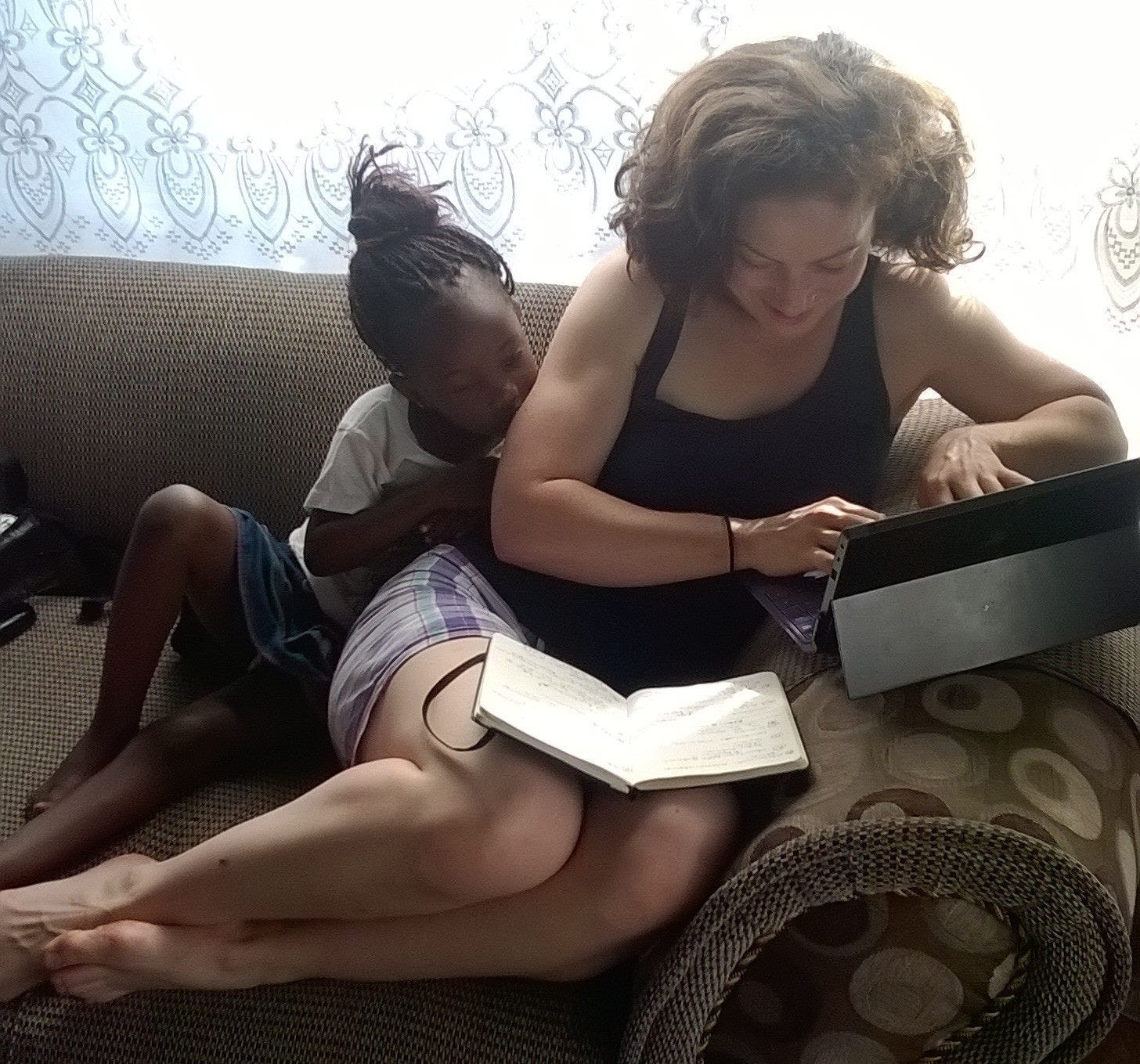
On meagre earnings, women are often extremely reluctant to leave abusive relationships. I saw this starkly in Kitwe, where I lived in a shanty compound with the elected local councillor. One day, a woman came to our house with a terribly swollen eye, pleading for help. USAID had funded a one-stop shelter for survivors, but she had no wage, no savings, and children to feed. Desperate, she returned home.
Another time, driving down a dirt track beside the fields, we passed a sixteen-year-old girl who was covered in bruises, gashes, and hay. She’d been badly beaten by her ill-tempered husband, but she was illiterate; where could she go?
When I visited a school, a 17 year old girl approached me saying that she was being raped by her uncle (also her foster-parent). Again: where could she go?
Scarcity and Harassment
Where waged work is scarce, employers gain the upper hand. Workers may be reluctant to leave or even voice grievances.
When Precious Zandonda surveyed 160 female staff at Barclays Bank and the Ministry of Community Development and Social Services in Ndola, most reported that their male colleagues made discriminatory remarks, slighted and ignored them, or habitually shade ‘suggestive stories or offensive sexual remarks, either publicly or privately’. 9% reported men ‘implied faster promotions, reward or special treatment” if they were sexually cooperative. One shared,
“I work in an office surrounded by male colleagues. Every other day I receive comments about my breasts, my thighs when am wearing a skirt and general talk about bedroom issues”.
For me, the most striking part about this dissertation is that the workplaces are named and published. Perhaps no one anticipated accountability.
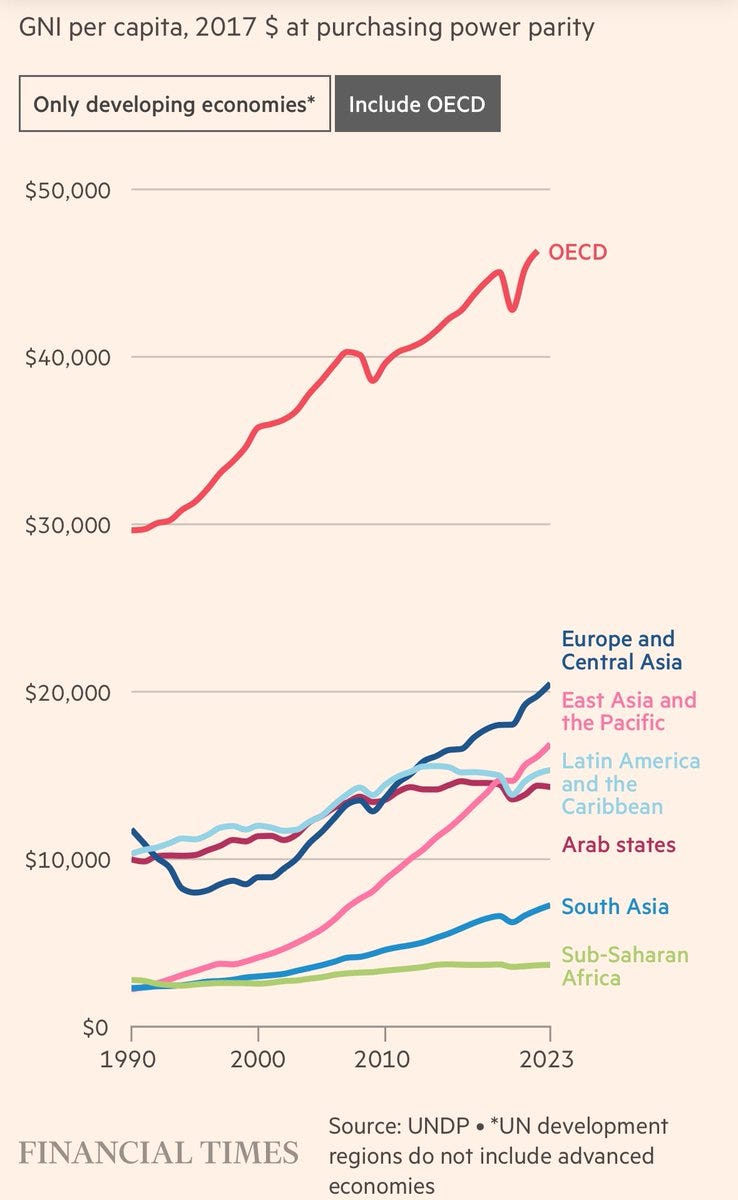
Poverty is a major barrier to gender equality
In high-income countries, employment can be a source of great fulfilment, friendships and independence. Seated comfortably at her desk, surrounded by photos of her loved ones, she typically engages in cognitively engaging work, allowing for creativity, skills and pride. Colleagues and bosses generally play by institutional rules, knowing she has outside options, and that if things turn ugly she could complain to HR, consult a union, or pursue litigation. Returning home, yes, there are chores, but much of the pain has been marketised: step into the shower, fetch supper out of the fridge, chuck dishes in the machine. Easy mode.
In low-income countries, it’s the opposite. Productivity is extremely low, so earnings are threadbare. Much of the population is stuck on family farms, or scratches out tiny returns through petty trade, seldom sufficient to accumulate savings. She may also bear heavy (and physically painful) domestic burdens because the state is incapable of providing infrastructure and her family is too poor to afford market substitutes. Poor women thus wake before dawn and labour long after dusk, only to be stuck in the same place.
Only a privileged few have secured formal jobs, and may endure humiliation and harassment rather than risk dismissal. On the Zambian Copperbelt, you’ll hear a common refrain, especially among women: “ukushipikisha”. It means to endure.
Related Essays
Note: all figures use the latest available Demographic and Health Surveys, most are from 2015 or later. A few countries have older data like Chad (2014) or Namibia (2013). All scatters exclude countries which only have older data.
In many SSA countries, “improved water” is not necessarily piped water, it can be boreholes and protected wells. People still have to walk and collect. Some jumps in this measure can reflect DHS methodology changes in water classification.
I'm glad to see you making this point.
On the other hand, this has been obvious for decades, and yet as you note, it remains "the most under-rated engine for gender equality." I realized this about 20 years ago and have been making the case for it since then. My wife, Magatte Wade, makes the case more frequently. But it has been frustrating how few people outside of economics seem to get it.
In case anyone wonders about the value if USAID....the safe house is a hood example. This was a great piece, I have traveled/ worked in some of these countries and the amount of work women do for no or little pay is astounding. When I get catalogues that sell clothing or artifacts made by women's collectibles I always wonder whether that is the limit of the women's opportunities.