

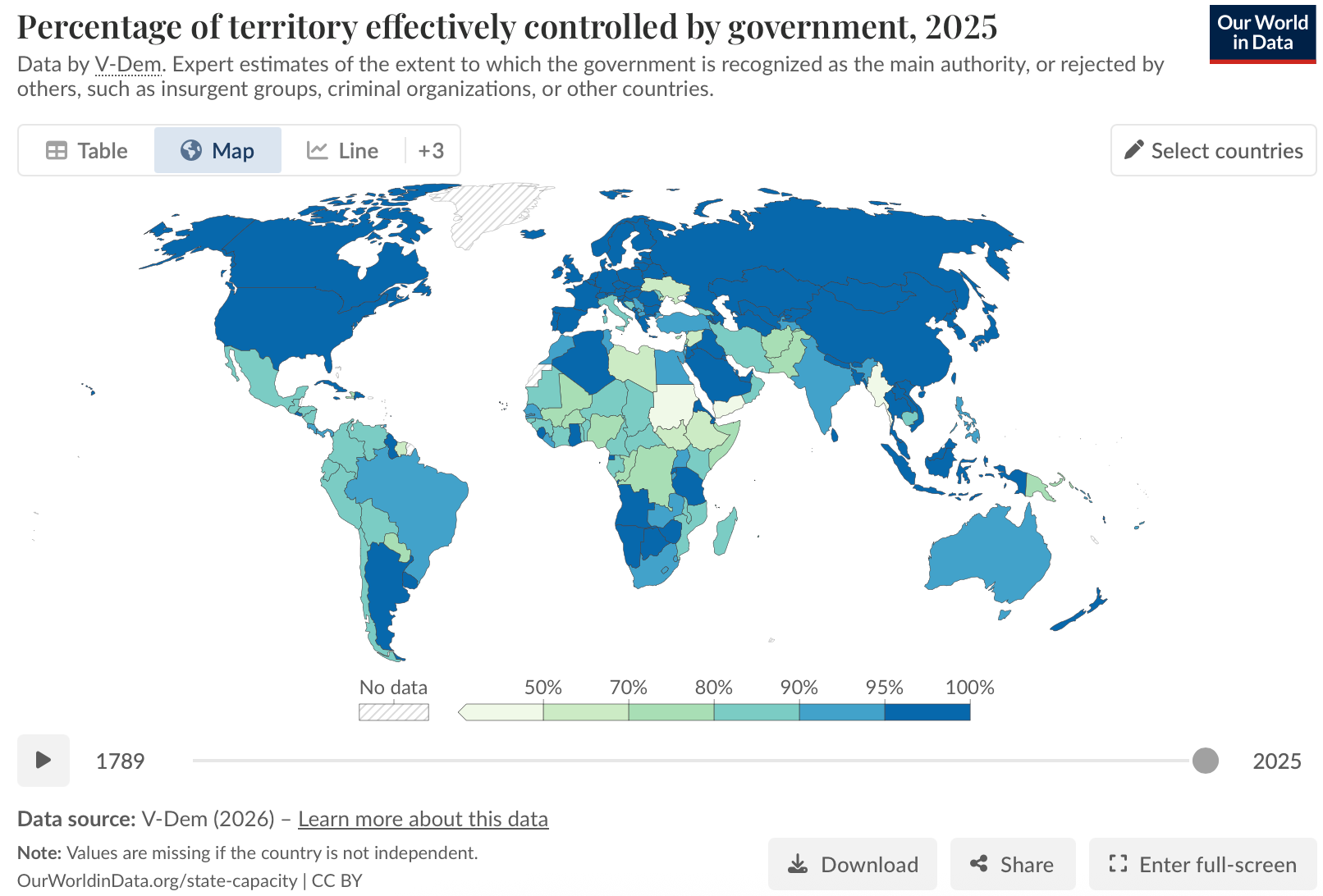
Baby booms can pay tremendous dividends, but only when states keep pace. As families grow, governments must collect taxes, staff schools, patrol streets, process court cases, and assert authority in expanding neighbourhoods before disorder fills the gap. In 20th century North America and East Asia, demographic surges coincided with economic growth and state capacity. The danger comes when the babies arrive while state capacity lags.
That, I think, helps explain a central challenge in much of Sub-Saharan Africa. Before European imperialism, much of the region was politically fragmented, comprising numerous competing polities, with weak authority over their hinterlands. Europeans then redrew borders and scaled up political units very rapidly, bringing together ethnically diverse populations that had little prior experience of shared rule or common institutions. Nairobi, for example, was only founded in 1899 as a railway depot, yet within decades it became the administrative centre of a vast colonial territory. Post-independence leaders thus inherited diverse populations without the slow historical accumulation of national institutions to govern at scale.
From 1960 to 2024, Sub-Saharan Africa’s population rose from roughly 230 million to about 1.3 billion. Western technologies and externally-financed health interventions saved millions of lives. This includes vaccination campaigns, malaria control, insecticide-treated bed-nets, indoor residual spraying, antiretrovirals and humanitarian relief. Without these interventions, especially against HIV, malaria, measles, tetanus and diarrhoea, mortality would have remained far higher.
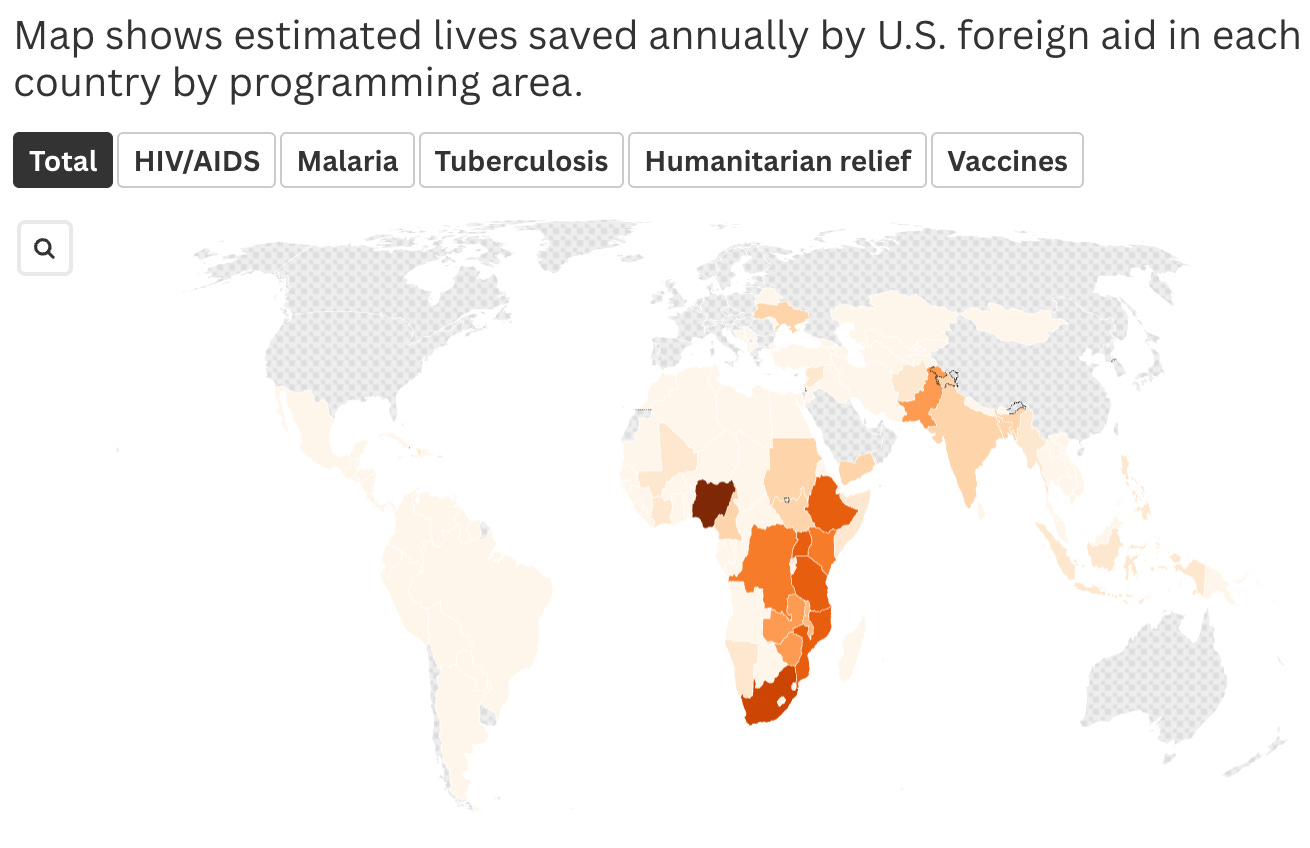
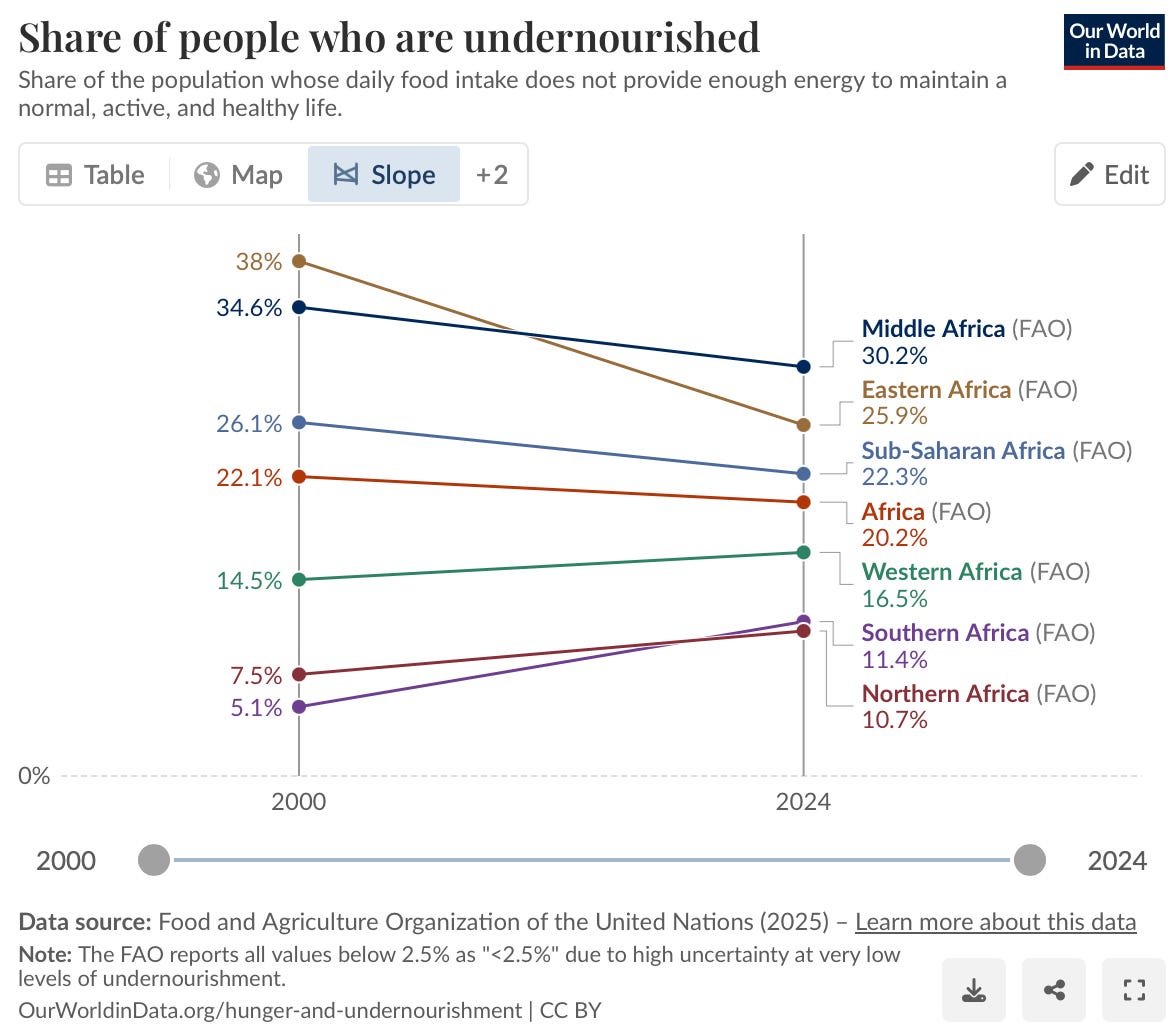
But there was a catch. Mortality fell faster than incomes, taxes, schools and courts scaled up. Municipalities across Sub-Saharan Africa often lacked the resources to police expanding populations, process court cases, or prevent environmental hazards - like lead pollution. Schools are built, yet teachers and health care workers are often absent. This creates severe learning crises: 94% of Sub-Saharan African youth are not reaching basic skills in maths and science, while even among those enrolled in secondary school, 89% still fall below that threshold. With poor services and checkered accountability, 53% of Nigerians do not trust the police. One in five Africans remain under-nourished. What should have been a triumph of human survival has become a story of institutional overstretch.
Ed Glaeser makes a related argument about ‘poor urbanisation’: cities in low- and middle-income countries are expanding at relatively low levels of wealth, leaving municipalities unable to finance core services or uphold public order. He suggests that cheap food imports can enable urban growth without productivity improvements in domestic agriculture. Let me suggest a complementary mechanism: mortality fell rapidly through imported health technologies and donor-backed public-health interventions, while fertility remained high. Populations surged, while already weak states were increasingly overstretched.
Demographic Overstretch in Zambia
Back when I lived in rural Luapula (Zambia), people would say ‘balitulekelesha’ - they have abandoned us. The village has grown, but it’s still two hours walk from the nearest health clinic, two hours drive from police posts. So who should teenage girls turn to when their school teacher keeps groping them?
A year ago, I received a message on Instagram about a Zambian friend with 5 children. Abandoned by her husband, she had become destitute, living in a shack. She couldn’t simply start trading as she lacked the tiny capital to buy dried fish for re-sale. Obviously, I wanted to send money, but even that was difficult since she didn’t have her own phone and there was no local infrastructure for digital payments. Instead, another relative had to travel six hours by taxi then coach to Lusaka to collect the cash in person.
I saw the same pattern when living in a shanty compound in Kitwe, Zambia’s second largest-city. Walking home in the evenings, it was pitch black. No street lights. Weak environmental regulation of nearby copper mines also created risks of pollution. To wash, I pinned a sack of maize across a bush then threw a bucket over my head. One time my eyes stung from a toxic leak.
Schools revealed a similar pattern. For three months, I sat at the back of local classrooms. Teacher absenteeism was rife. We were meant to have six classes a day, teachers typically came to two. If they went to do other business, they faced zero penalties. One time the neighbouring class grew so noisy that our teacher walked over and beat them all with a hose pipe. Ironically, she was writing on the board about ‘human rights’. Curious, I asked one student what she thought of the subject? “Ukulemba fye”, she replied - meaning it’s just something to learn for the exam, not actually enforced.
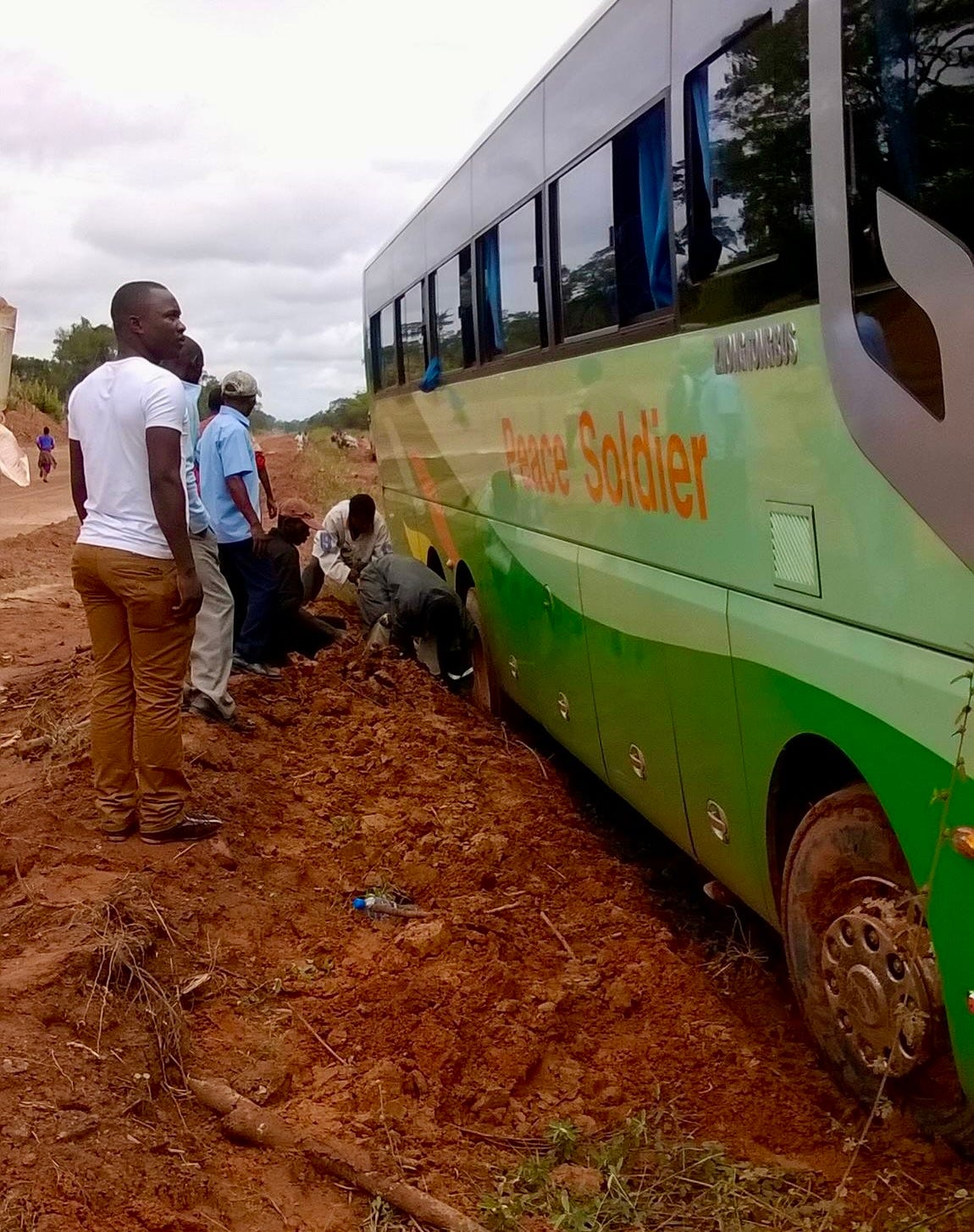
These are among the more benign consequences of demographic overstretch. When I was travelling with small-scale traders across the Democratic Republic of Congo, the coach ahead toppled and we had to dig it out of the mud, but that was surely the country’s least egregious form of state weakness.
African civil servants and parliamentarians recognise these challenges. When I shared an office at Zambia’s Ministry of Health, the most common refrain at donor-funded workshops was “The problem is implementation”. But if the state does not deliver public goods, then legitimacy is severely strained.
Overstretched states struggle with nation-building
France, Thailand, the US, Russia and China have all used schools, story-telling, symbolism and public goods to cultivate national pride, teaching children to see themselves as part of a wider national community. That project has been far harder in African polities where political centralisation came very late, linguistic diversity is very high, and ethnic particularism remains pervasive. It is even more of a challenge if teachers do not even show up.
The state then struggles to foster a sense of unity, trust, and confidence in state impartiality. 40% of Batswana said they do not trust people from other ethnic groups. 30% of surveyed Basotho and Mauritanians said they would dislike neighbours from a different ethnicity. Low trust creates frictions for markets, encourages ethnic favouritism, sharpens grievances, and can fuel unrest.
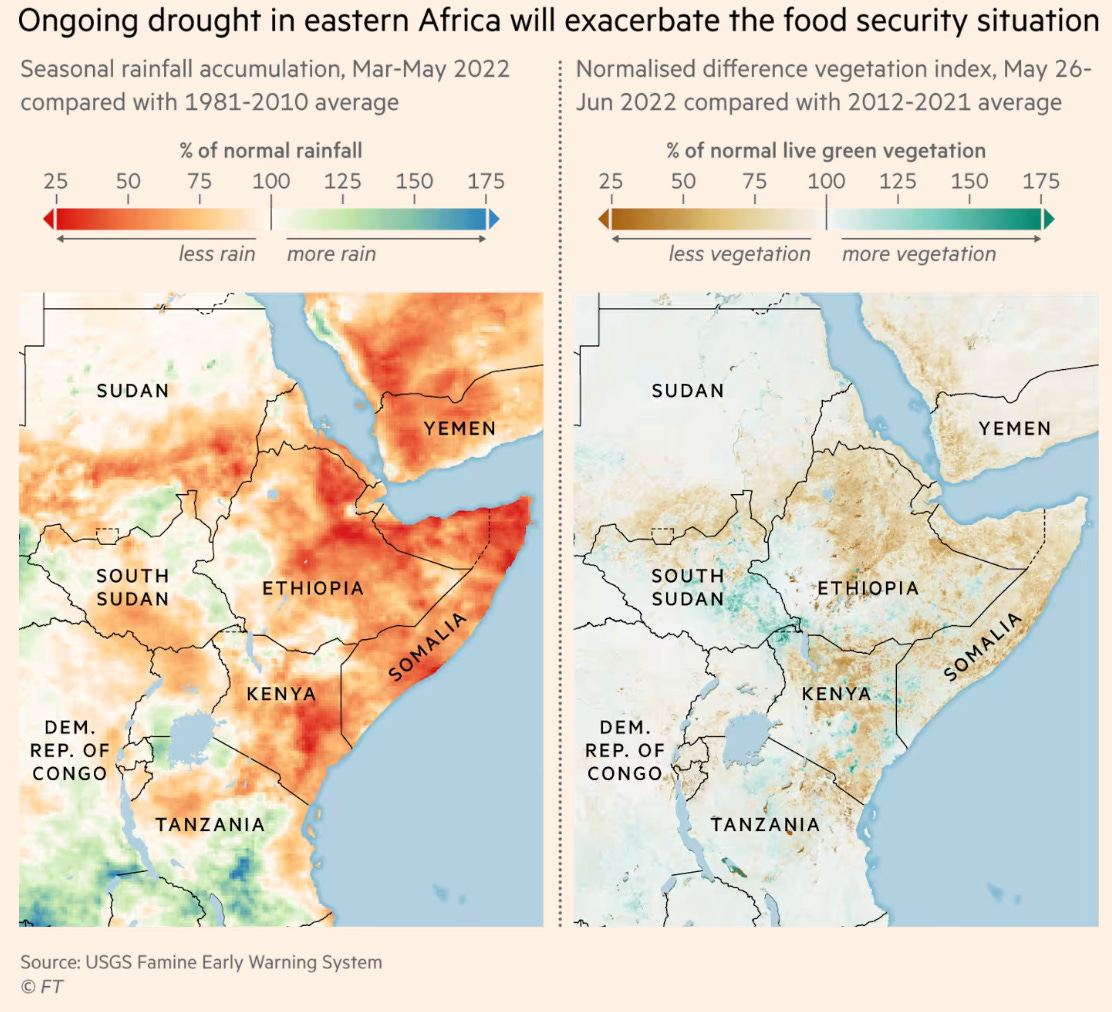
Climate stress is intensifying agro-pastoral conflicts in northern Nigeria, but these tensions are magnified by demographic pressure, as more people try to make a living from semi-arid and fragile terrain, pushing up food prices. Yet despite rising dissatisfaction, Northern Nigeria’s security forces fail to contain jihadi insurgencies.
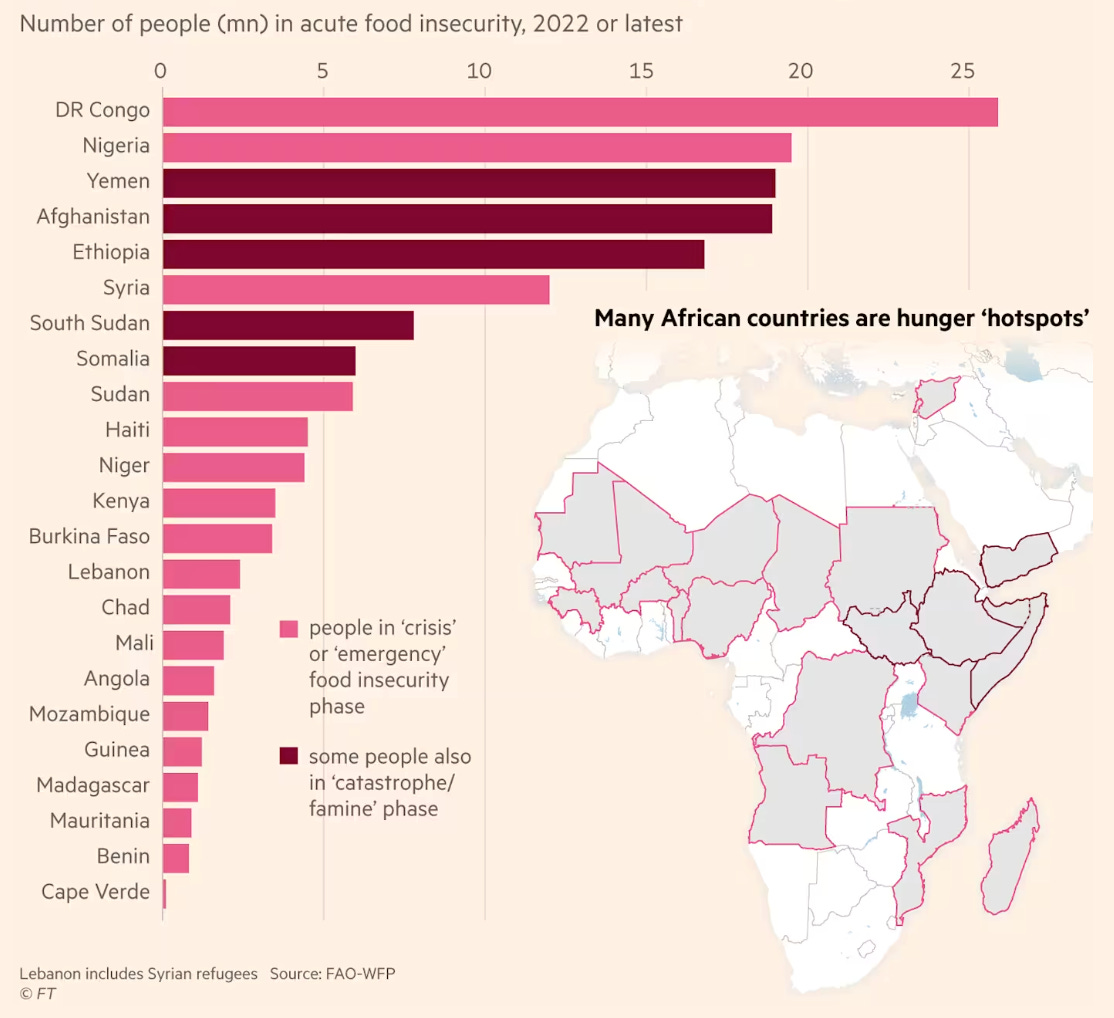
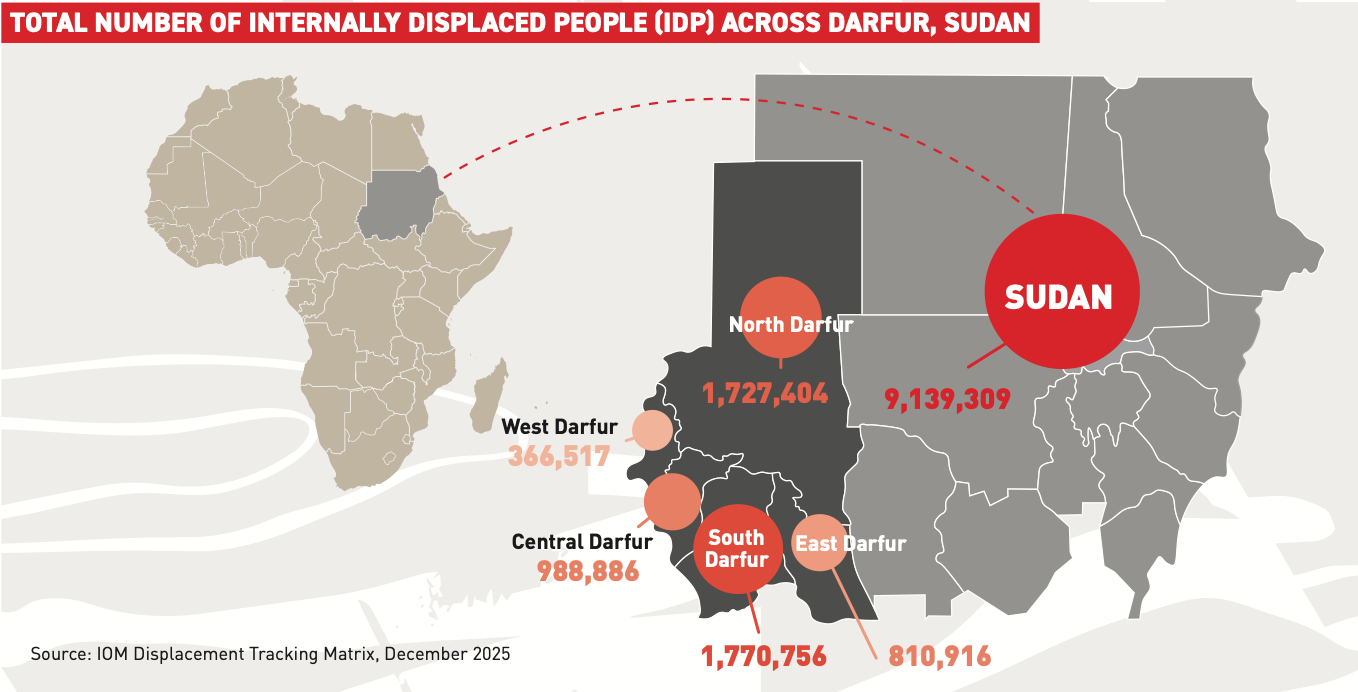
The consequences of such failure can be deadly - Sudan’s civil war has displaced 11 million people, eastern Congo faces rebel violence and foreign-backed militia, while the Sahel is becoming the epicentre of global terrorism.
Demographic overstretch slows progress towards gender equality
While Sub-Saharan African women often move freely in the public sphere and achieve high rates of labour force participation, many remain extremely vulnerable to male predation. Analysing Demographic and Health Surveys of the 20 most populous African countries, David Evans and colleagues find that “one in four adolescent girls report having experienced violence, and one in seven report having experienced sexual violence in the previous year”. In Montserrado (Liberia), 35% of women reported early sexual engagement [statutory rape], 40% of male assailants worked at schools.
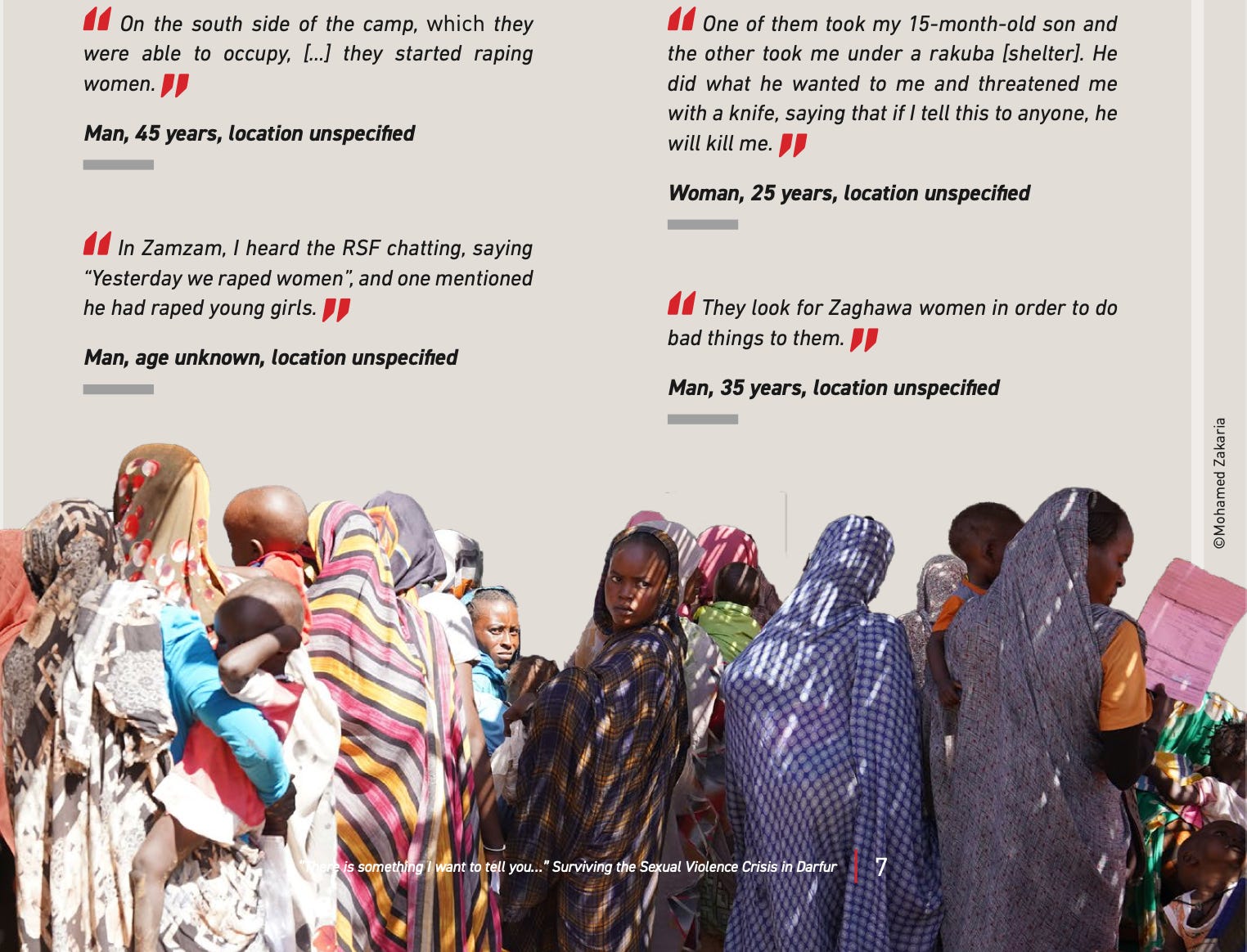
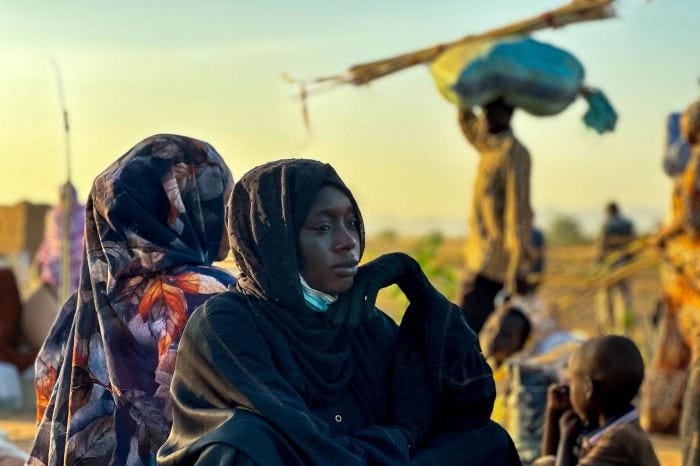
Just this week, Médecins Sans Frontières published a report on sexual violence in Darfur. One 40 year old woman is quoted as saying,
“Every day, when people go to the market, there are four or five cases of rape. When we go to the farm, this happens. Men, they will cover their heads, and they will rape women. If there is more than one woman, they can try to escape. When a woman is alone, it is difficult for her to run away and escape. A few days ago, a woman tried to defend herself against rape, nearby, and she lost her tooth… There is no way to stop the rapes. The only way is to try to stay home, and to not go out as much”.
Ed Glaeser is right that poor urbanisation creates severe governance challenges. But I would go one step further: where population booms collide with low incomes and weak state capacity, the result is demographic overstretch.
Excellent work. Also, not to mention the threat of even more radical Islamism due to the growing population and discontent. There needs to be a serious, censorship-free, comprehensive study about the upsides and downsides of subsidizing population growth in Africa via foreign aid and charity/NGOs.
Bill Gates made the same comments repeatedly, only to be met by comments that he's a racist from various African intellectuals and Western leftists (Vox, The Guardian) and some misguided economists talking about Africa's demographic dividend. This is a serious problem.
> Analysing Demographic and Health Surveys of the 20 most populous African countries, David Evans and colleagues find that “one in four adolescent girls report having experienced violence, and one in seven report having experienced sexual violence in the previous year”.
I noticed from the link (pp. 30) that Rwanda has the highest rate of sexual violence, about same as DR Congo. DR Congo is known for having unusually low state capacity even by SSA standards but Rwanda is conversely known for having high state capacity. Just an interesting observation.