


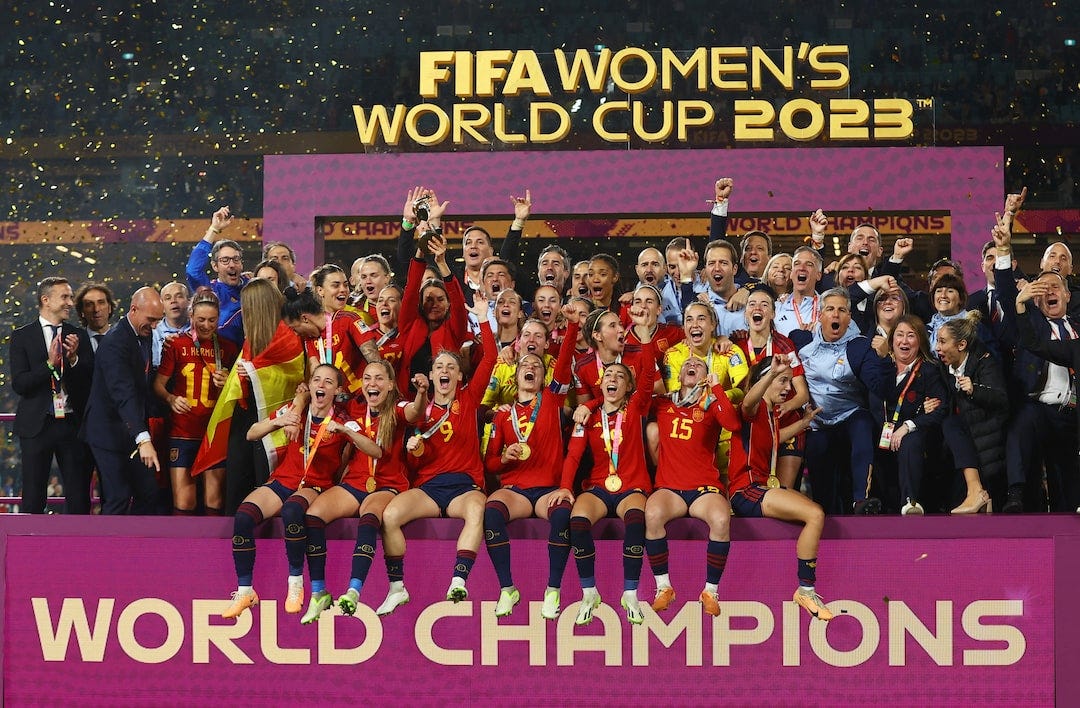
If you watched the World Cup final, you witnessed two things which are hugely important to the history of global gender relations: male coalitional violence and the rise of impartial institutions. The former explains the global spread of patriarchy, and the latter is a crucial element in the modern progress toward gender equality.
Last week, I suggested that the world of the Homeric epics was really about men seeking glory and heroism through violence. Football is an offshoot of that same martial past. Rival coalitions of young, testosterone-fuelled, muscular men jostle for status and symbolically battle for glory. Despite all the rules intended to discipline behavior, sometimes blood rises, opportunity strikes and foes get maimed. In male competition, there is always a danger that violence will break out.
In the most recent World Cup final, Argentina committed 25 fouls and collected six yellow cards and one red card - for grabbing, wrestling, elbowing, and a lunge that sent a defender cartwheeling into the air, smacking down with a thud. Spain committed 21 fouls. After the final whistle, Argentina’s players then threw some punches, punished with a further red card.
Every single society faces this same risk of male coalitional violence; progress towards gender equality depends on building institutions that punish thuggery and cronyism.

Hacking and Thwacking
Older fans may rightly insist that football was once even more violent. Until 1863, it was perfectly permissible to kick one’s opponents in the shins - aka ‘hacking’.
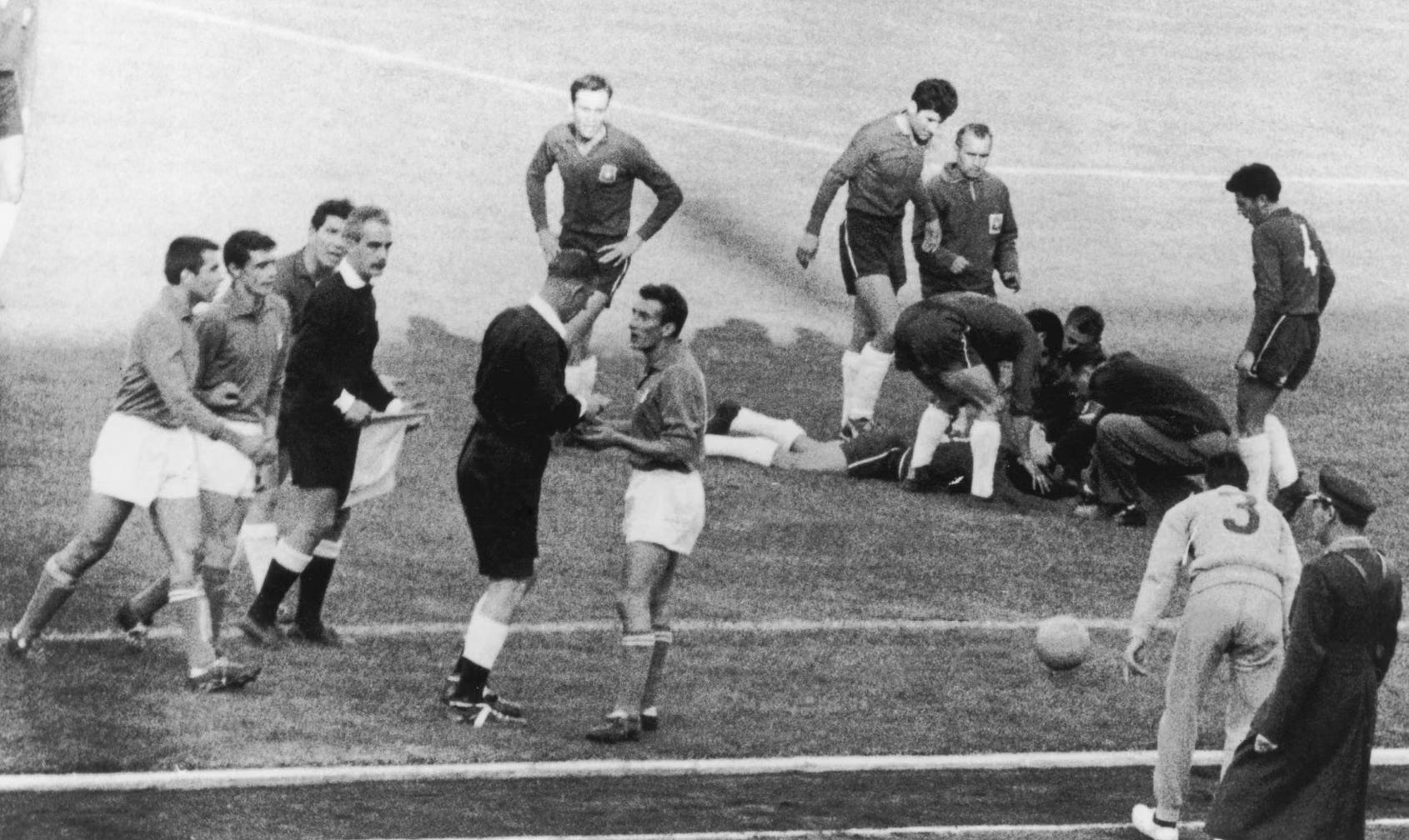
The Battle of Santiago - Chile vs. Italy in 1962 - was dubbed “the ugliest, most vicious and disgraceful in soccer history”, deserving a “horror certificate”. Refereeing was highly discretionary and unpredictable: some even tolerated tackles from behind as ‘manly’. The opening days of that tournament saw three broken legs, a fractured ankle and some cracked ribs. The Express called out FIFA for its failure to intervene, “With no action against the few out-and-out villains the ugly situation has been encouraged to spread.” Watching on their small screens, viewers were outraged.
Top talent was also frustrated. In 1966, Pelé wowed the crowds with lightning moves, chipping passes, but was tackled aggressively and severely injured. Pelé declared he would never again play in a World Cup. “Football stopped being an art, stopped drawing the crowds by its skills, instead it became an actual war”.
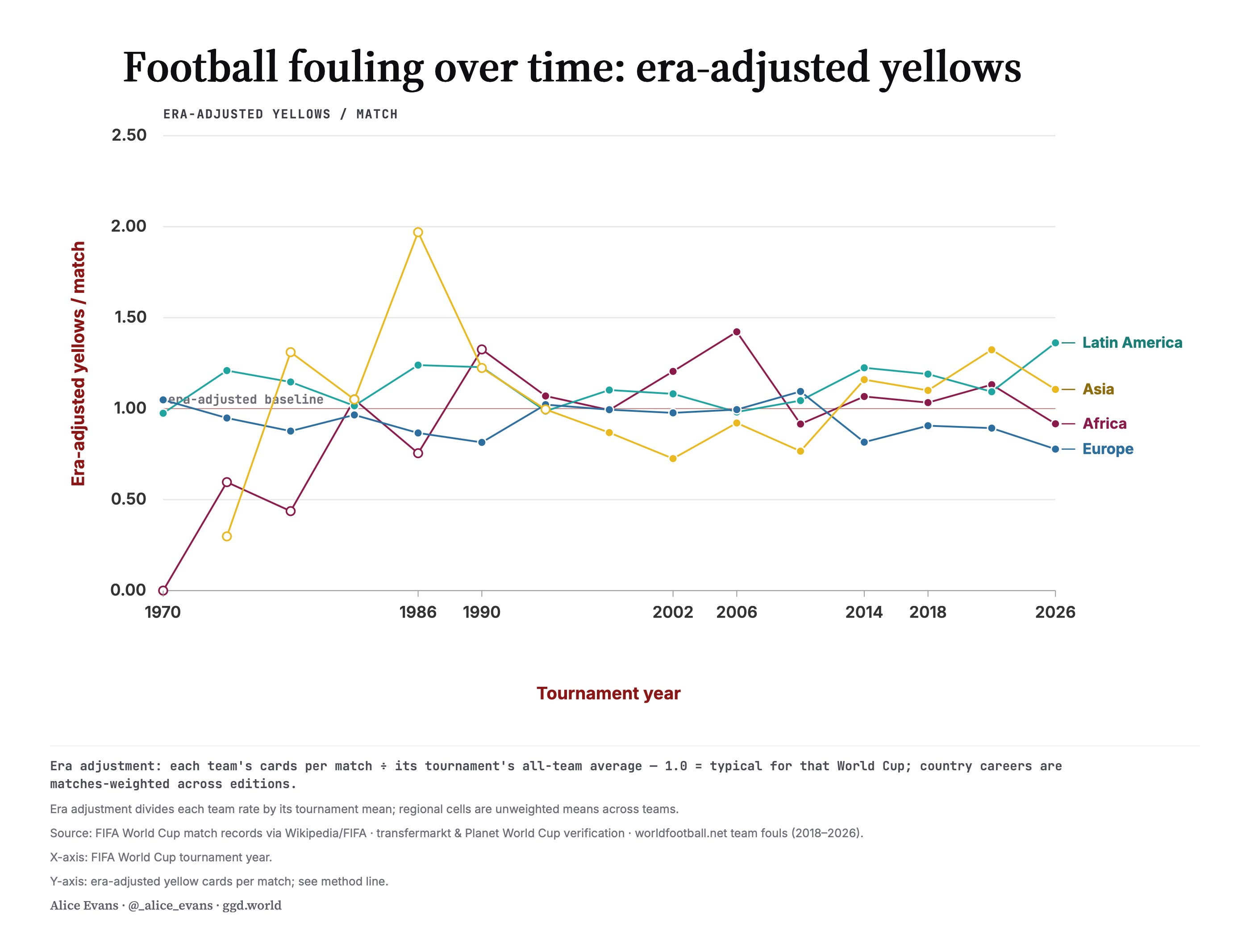
In 1970, the World Cup formalized Ken Aston’s system of yellow and red cards - stepping up deterrence. Over the years, punishments for violence have been progressively institutionalized, with mandatory red cards for ‘professional fouls’ (1990), outlawing tackling from behind (1998).
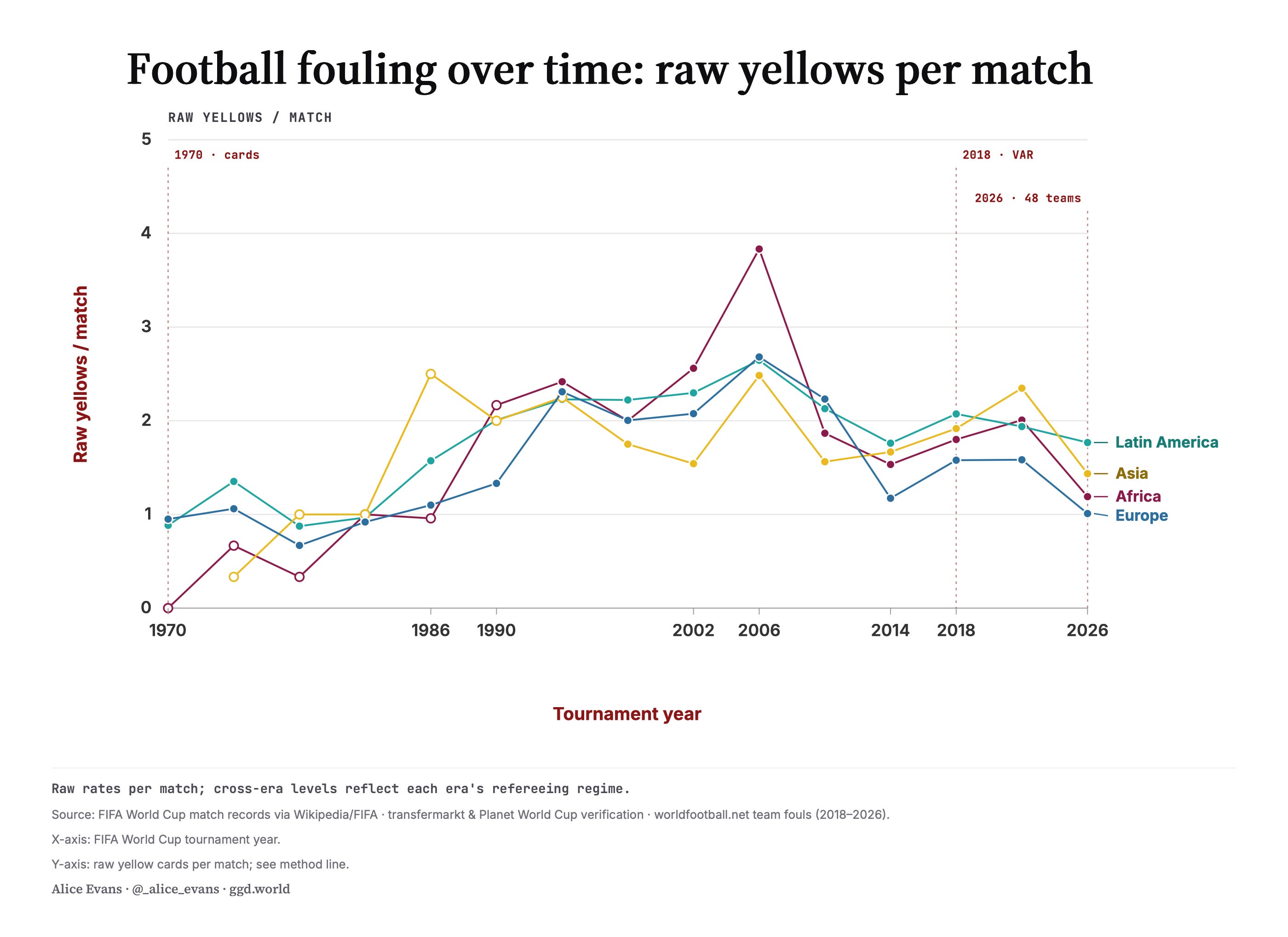
Some players still thwacked their opponents, and Fifa imposed punishment. The ‘Battle of Nuremberg’ (the 2006 World Cup) saw four red cards and 16 yellow cards. Visibly enforcing the rules, providing credible threats, appeared to provide a powerful deterrent - as you can see in the graph below.
Muscling Ahead
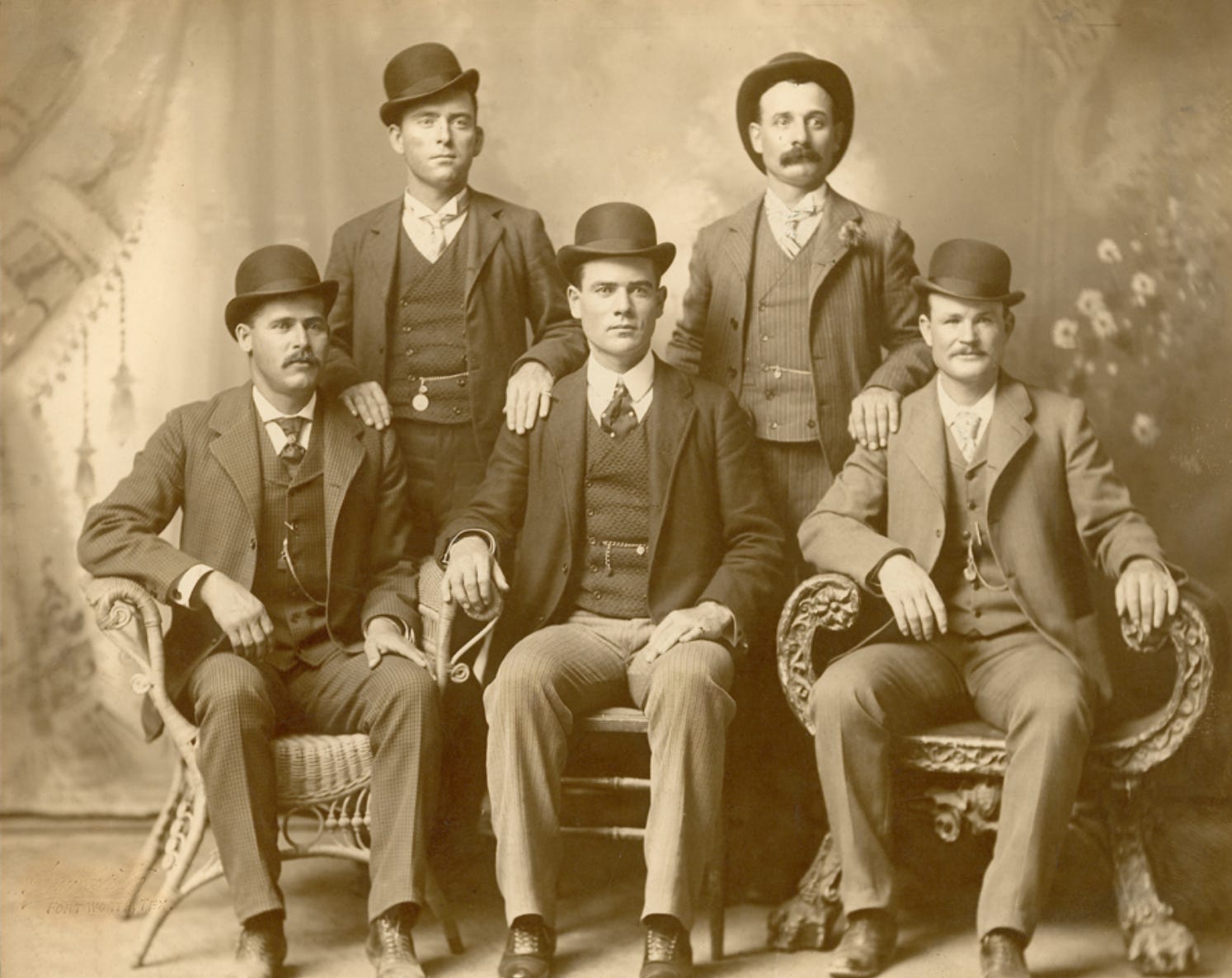
None of this is new. The grand arc of human history is fundamentally shaped by violence between men. Coalitions of violent men fought against other coalitions of violent men. When one coalition scaled up, they called themselves a state. But even then, it’s just a big coalition of violent men, invariably fighting with other big coalitions of violent men.
When ambitious kings set their sights on Troy or empires in the New World, they also played dirty. Victory came to the leaders most successful in organising coalitions of armed men. Conquerors then reveled in military might, commissioned statues, paintings and epic poems about their triumphs, and rejoiced in their rivals’ humiliation. Outsiders’ welfare counted for little.
“I sacked the town and killed the men. We took their wives and shared their riches equally among us” - boasts Odysseus. Throughout history, aggression has yielded high returns. By cultivating reputations for violence, such men intimidated their opponents, so that others wouldn’t dare. Violence persisted wherever the rule of law was weak. As Adam Smith observed, where courts offered no redress, gentlemen avenged conflicts in duels.
Today this same pattern persists in many parts of the world. As a gay black man from a Brazilian favela shared, “I had to be strong to show I was stronger. I wasn’t violent, but I had to be violent… The man needs to show their strength, their power, they’re reckless, otherwise they’ll treat him as weaker. That’s how things work, you need to learn how to use violence… Everything is about honour”.
In such dangerous and insecure environments, men and women may quite rationally rally behind whoever commands the most muscle, seeking protection from rivals. This breeds an escalating cycle of violence as guys smash their opponents and boys learn to solve problems with their fists. When I visited a school in a favela, the first thing I heard was one teen say to another in Portuguese: “I’m going to punch you in the face”.
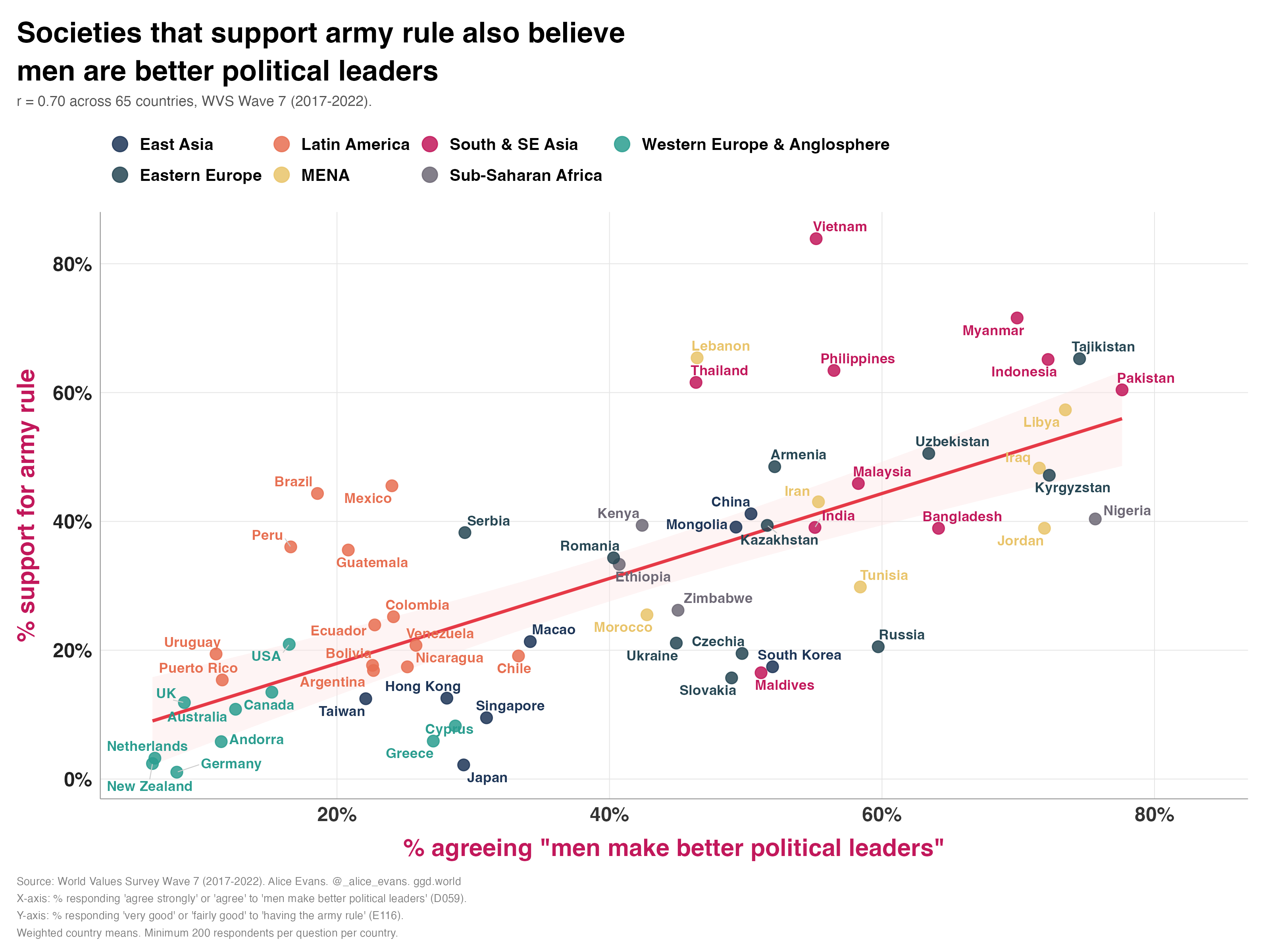
Such environments are not conducive to gender equality. Wherever there is a premium for brutality, men tend to gang together, consolidate alliances, and intimidate foes. Societies that support army rule also believe that men are better political leaders.
Pacification
Claudia Goldin won the Nobel for her path-breaking work on gender equality, showing the importance of women controlling their fertility, pursuing higher education, and then capitalising on growing demand for skilled jobs. This is entirely valid.
But if we take a step back to compare internationally, we realize that societies that have made the greatest progress towards gender equality are no longer organised to wage war and have quelled internal violence.
Beyond Military Pathways to Prestige
Traditional agrarian societies were organized to expand the ruler’s territory at the expense of other rulers, the ruling class were thus warriors. Some societies (such as China, early Russia or any society exposed to the steppe) were organized around defending against constant external threats. In either case, the ruling class is primarily militaristic, not commercially orientated.
Since power is gained by whichever group is most effective in waging war and consolidating military dominance, warriors exercise competitive advantage and consolidate their patriarchal dominance. War-making structured entire societies. Feudalism was permanent mobilization in the sense that the nobility retained their own private armies which the king could call upon. In Roman times, there was a strong connection between land holding and military rolls. Aztec “houses of youth” were intended to turn boys into killers; German roads were designed to move millions of troops.
As militarism loses its stranglehold over economic and political life, men can gain status through alternative pursuits. During the Enlightenment, for example, men established clubs and societies that celebrated scientific innovations and commercial prowess. Savant-fabricants (knowers and tinkerers) eagerly networked, exchanged useful knowledge, and collaborated to get ahead. Instead of sneering at trade, shopkeepers could now gain status.
Certainly, some states were militaristic, commercial, scientific and literary. British imperialism coincided with a vast range of innovations, discoveries, novels and social reforms. Jane Austen penned her classics while Beatrice Webb later pushed for women’s and workers’ rights. Crucially, society was not entirely dedicated to waging war; there were alternative routes to power and prestige. Status was not monopolized by brutes; mild-mannered nerds could also advance!
This is the thesis of ‘doux commerce’ - usually applied to trade, but also applicable to peaceful men and women gaining prestige!
Punishing Thuggery
Crucially also, states must pacify their own societies - ending common thuggery and removing violent coercion from everyday affairs, like commerce.
State penetration were always extremely weak in herding societies. Nomads on horseback could raid nearby villages, plunder the loot, then escape into the steppe, evading taxation and regulation. Without effective rule of law, men’s only source of protection lay in their own collective strength and reputations for violent revenge. These herding societies tended to glorify aggression.
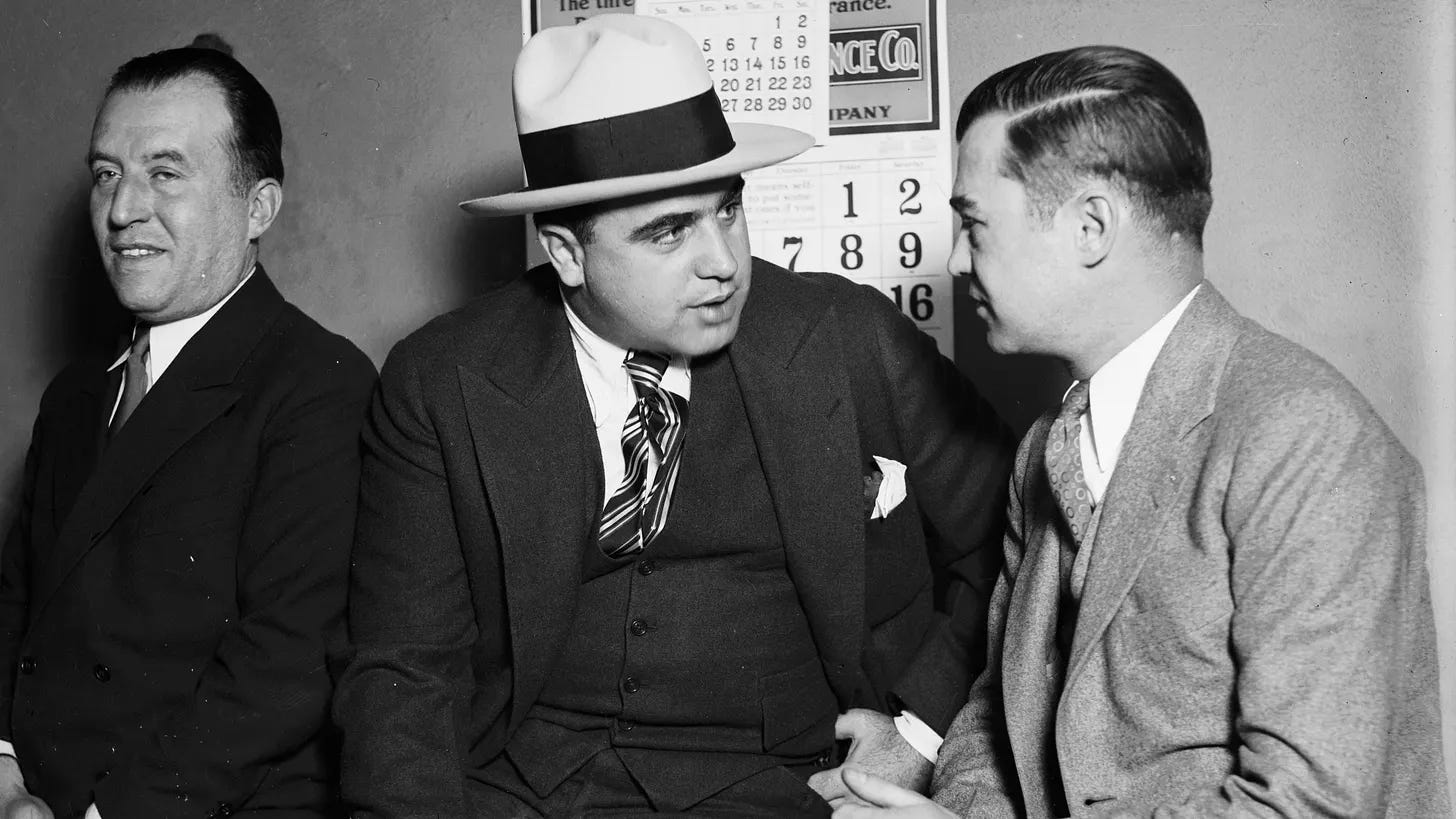
So too in the 20th century, wherever state enforcement is weak or breaks down, violent entrepreneurs may try to extort rents through intimidation and coercion - threatening others with dead fish or a severed horse’s head. When the USSR collapsed in the early 1990s, streets became over-run by organized criminal gangs who sold protection, guarded shipments, and butchered rivals. Russian women worked at high rates, but skills still earned far less than bratva - criminal brotherhood.
And where women fear attacks (as in some parts of Delhi), they may even back out, choosing lower-ranked colleges to avoid dangerous neighborhoods.
Rules of the Game!
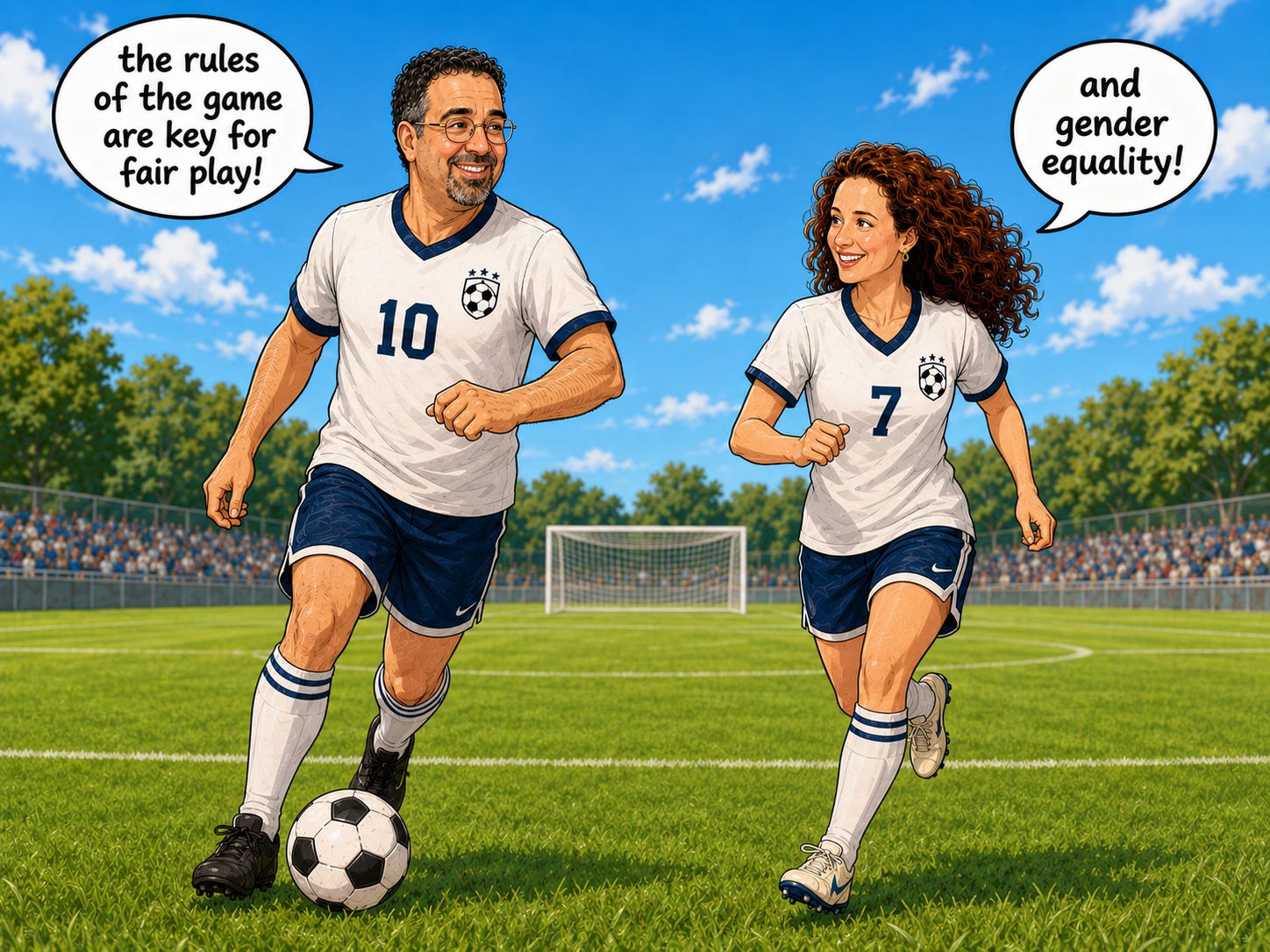
“Institutions”, explained Douglas North, “are the rules of the game in a society or, more formally, are the humanly devised constraints that shape human interaction”. This is extremely apt of football and also highly applicable to gender.
While football may be the (rare) topic that Daron has not (yet) published on, it is in fact a fantastic example of the rise of impartial institutions - with striking parallels for progress towards gender equality.
Coaxing the Ref
Favouritism has been a major problem in football. Luis Garicano and colleagues found that referees repeatedly favor home teams, ceding to pressure. When the stadiums emptied (due to Covid19) that bias shrank and home teams were treated less favourably!
After Italian club executives were caught arranging favourable referees, leagues moved to randomise appointments and remove discretion with surveillance technology - permitting video assisted referees (VAR) in 2018. Recognising potential for bias, FIFA also cracked down on racism.
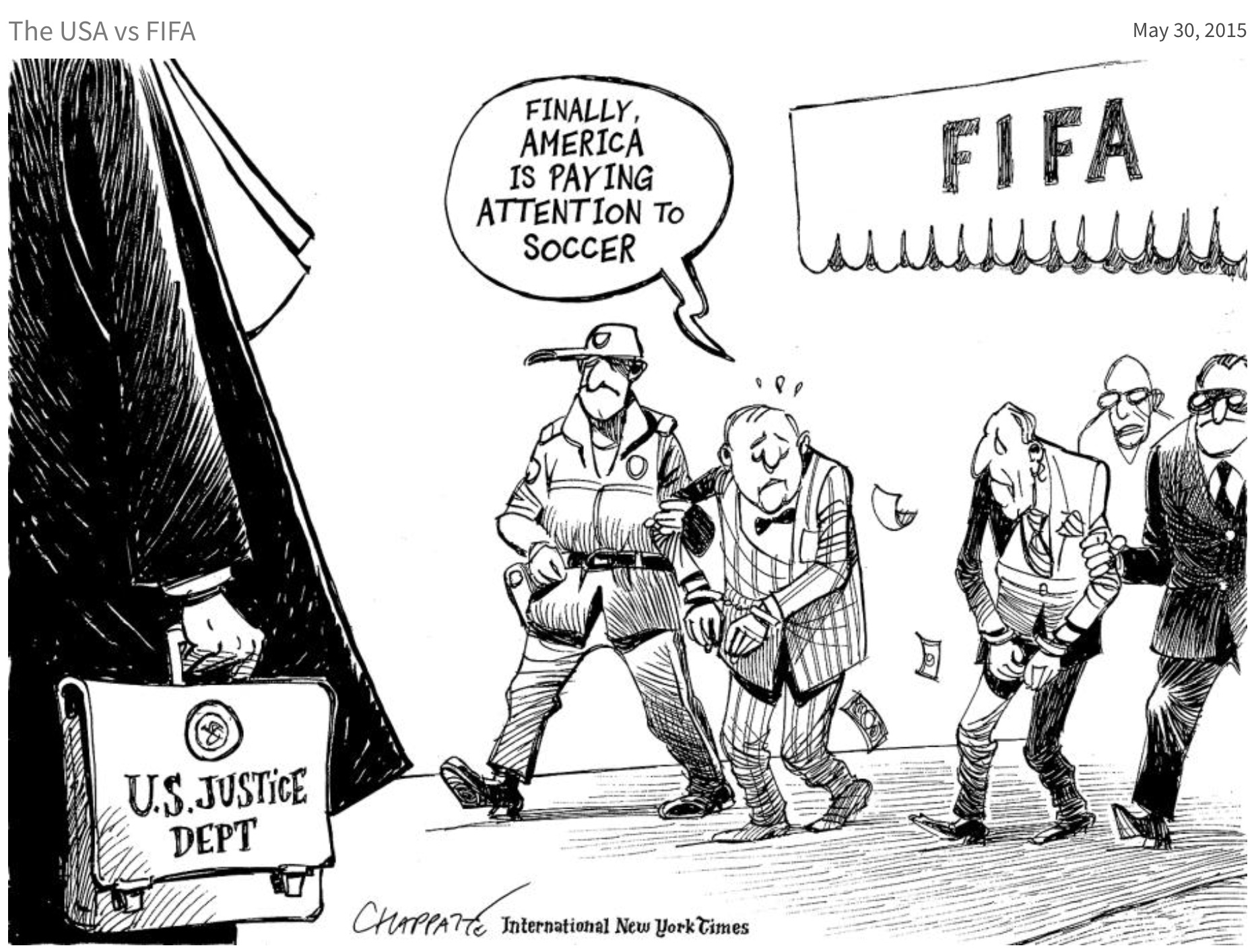
This constant tendency for in-group favouritism and personalistic relations calls to mind one of the big themes of political science and state-formation, the transition from patrimonial rule to impersonal rules-based governance…
Smashing the Patriarchy with the Rule of Law
Just as football referees bent to the home crowd, company managers and state officials can rig the game for male insiders. In South Korea and China, the police and courts have repeatedly dismissed violence against women. In Japan, companies escaped laws against discrimination by simply outsourcing women’s work. With scant activism and toothless sanctions, Japan registers one of the largest gender pay gaps in the OECD.
North America and Western Europe’s progress towards gender equality is only possible due to effective rule of law and activism to prevent fraternal cronyism. During the counter-cultural revolution, US activists tackled sex discrimination. They mobilized for equal pay and workplace equality (1963-64), and repeated court cases made companies ensure compliance. Over the 1980s, the Supreme Court repeatedly ruled that all-male civic and business clubs could be compelled to admit women. Old boys’ clubs came under attack - for monopolising access to spaces where “business deals are often made”, and thereby creating an uneven playing field. Thanks to feminist organising and litigation, courts increasingly punished fraternal favouritism.
In 1976, a Tribunal of Crimes Against Women met in Brussels. This was a people’s tribunal - much inspired by Bertrand Russell’s people’s tribunal on crimes in Vietnam. Over 2000 women from 40 countries came to share tales of abuse and demand public safety. London’s Fleet Street was a total boys’ club: women were treated as servile secretaries and sex objects. Men patted their bottoms, complimented their shapely legs, treating it all as ‘a bit of fun’. But feminist activists were defiant, they marched ‘take back the night’ and demanded state protection.
Levelling the playing field - preventing cronyism and thuggery - isn’t just important for fairness, but also better allocation of talent. So we don’t miss out on the future Pele and Goldin! Feminists and football fans thus have more in common than they might otherwise recognize. Both have mobilized to punish partiality so that games can be won on talent!
Congratulations to Spain - who now hold both the men’s and women’s FIFA World Cup trophies!

Related Essays

Excellent. Not very encouraging as we witness the decline of the rule of law in the US and the increase in corruption and might makes right
I don’t recall how I found you but I’m eternally grateful I did. Everything I feel, you so eloquently illustrate. I’m hugging you through the screen 💕