

Late industrialisers can import machines faster than they build impartial states. Rather than invent everything from scratch, they can buy frontier technologies, combine them with cheap labour, and yank workers out of low-productivity agriculture. This sounds like a win, heralding structural transformation and rapid urbanisation.
But here lies an under-rated asymmetry. While an Uzbek factory can quickly install foreign machinery, it’s far harder to assemble rules-based governance. The UK’s Metropolitan Police only became impartial after decades of parliamentary wrangling, press scrutiny and civic activism, which slowly reshaped expectations. This was an uphill slog, lambasting corruption, forcing officials to treat everyone alike.
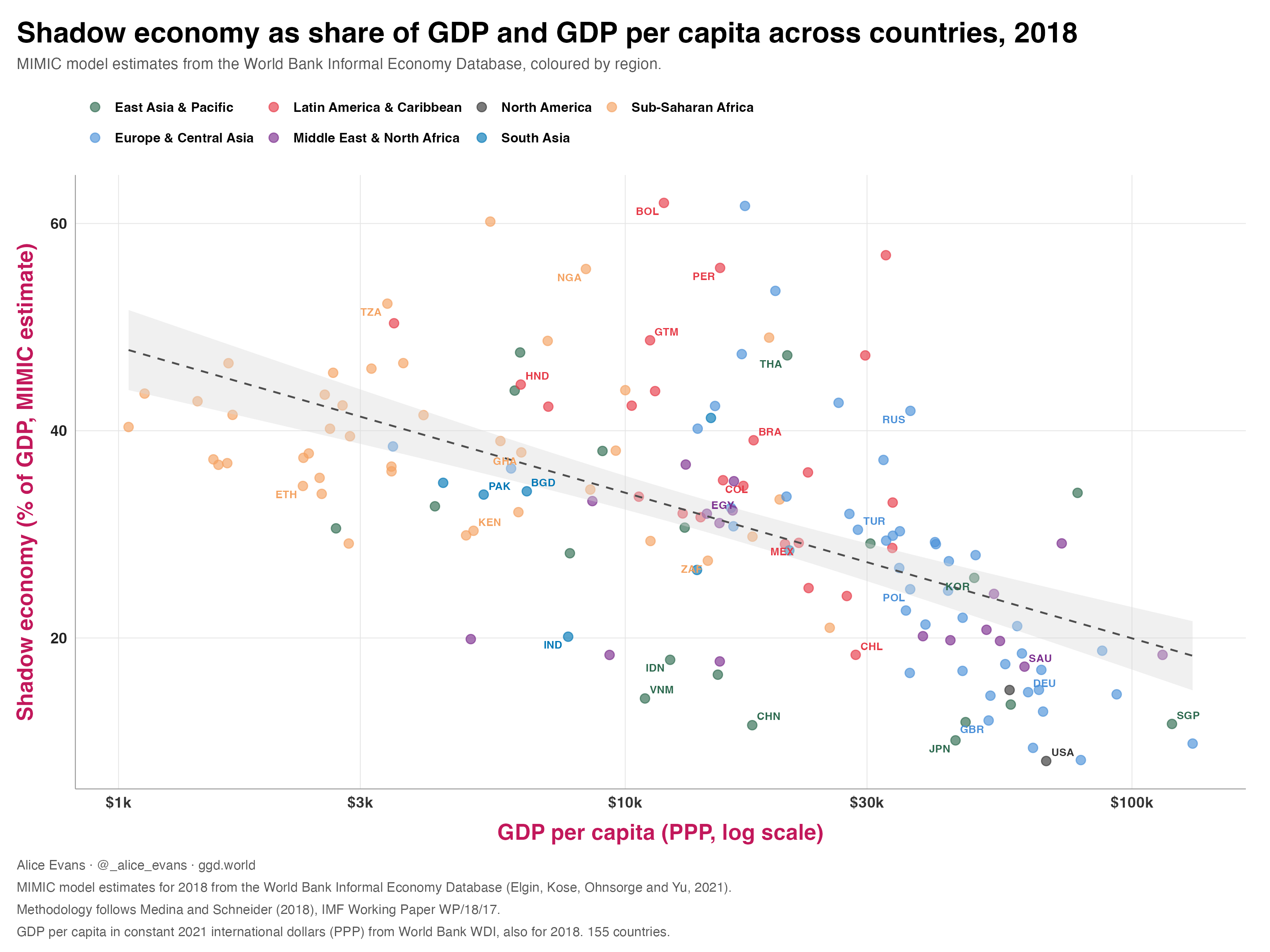
That asymmetry helps explain why cities can outrun the state, creating large ‘shadow economies’. This can include criminality. If formal job creation is weak and policing is ineffective, expanding cities can swell with people stuck in saturated informal economies, crowded in poorly serviced favelas, routinely exposed to violent predation. Criminal gangs profit from growth - running illicit markets, fighting for valuable turf, bribing politicians to look away. Under these conditions, the road to prosperity can widen the scope for violent predation.
Samuel Huntington made a related point in Political Order in Changing Societies. He was writing about political contestation rather than ordinary criminal violence, but emphasised the same problem of sequencing. When rapid economic and demographic change outrun governing institutions, this drives disorder. Building on his insight, I suggest that in weak states, rapid urbanisation often culminates in criminality.
Village Surveillance
“What is a village but a sink of localism, a den of ignorance, narrow mindedness, caste and communalism”, asked Dr. Ambedkar.He rightly emphasised that villages can be oppressive, but this intense surveillance also tends to enforce order..
In the village, everyone knows your name, your business, and your mother. Whatever happens, others will soon discover. A young woman from Haryana shared that within three minutes of leaving her house, her parents would receive this news by observant neighbours. Impoverished villages also tend to be highly dependent on each other for support and loans in a crisis. This mutual dependence may be reinforced by collective rituals, like weekly worship and celebratory festivals, which all reinforce community cohesion. Combined, this mutual dependence, social policing and fears of ostracism can encourage pro-social behaviour.
East Asia Escaped the Trap
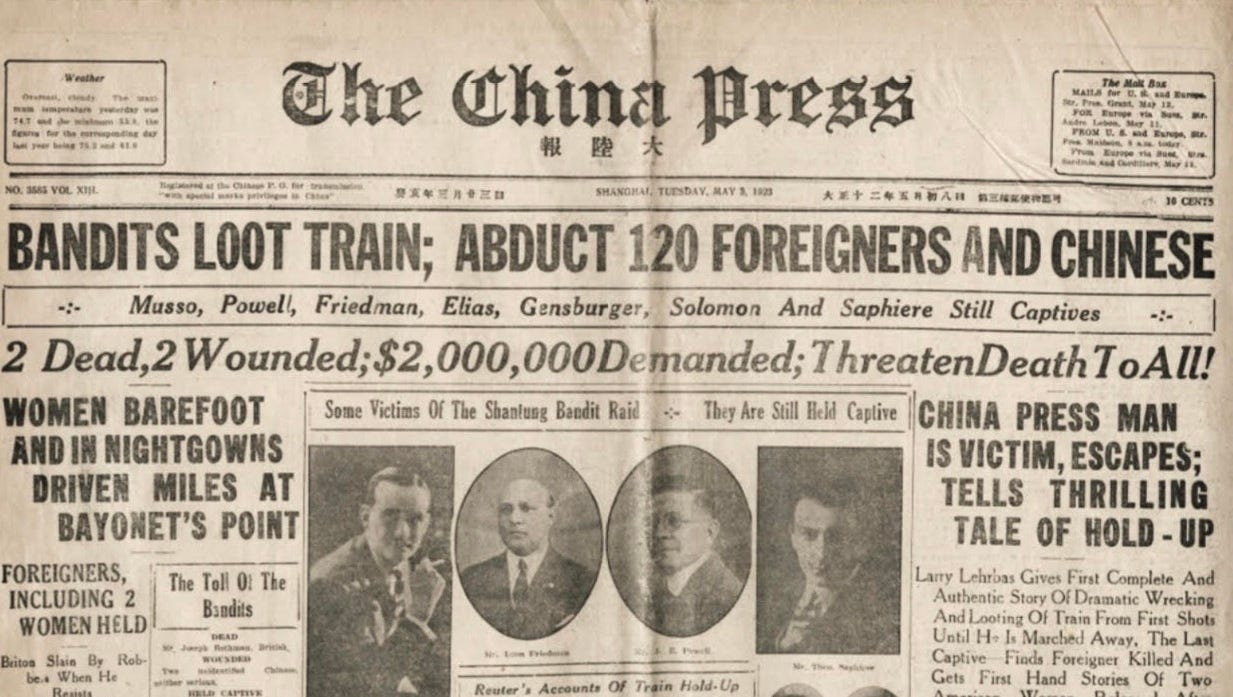
Early 20th century China was quite lawless. In 1923, bandits hijacked a train in Shandong, abducting over 300 passengers. East Asia escaped this trap by combining job-creating economic growth and repressive, muscular states. Cheap educated workers found employment in factories and offices, while states iteratively enforced the rules. A woman from Shanghai shared with me that her grandparents often worried about kidnappers, but this is no longer the case thanks to strong security.

Migration in Weak States
When states are weak and wage jobs are scarce, urbanisation can magnify disorder.
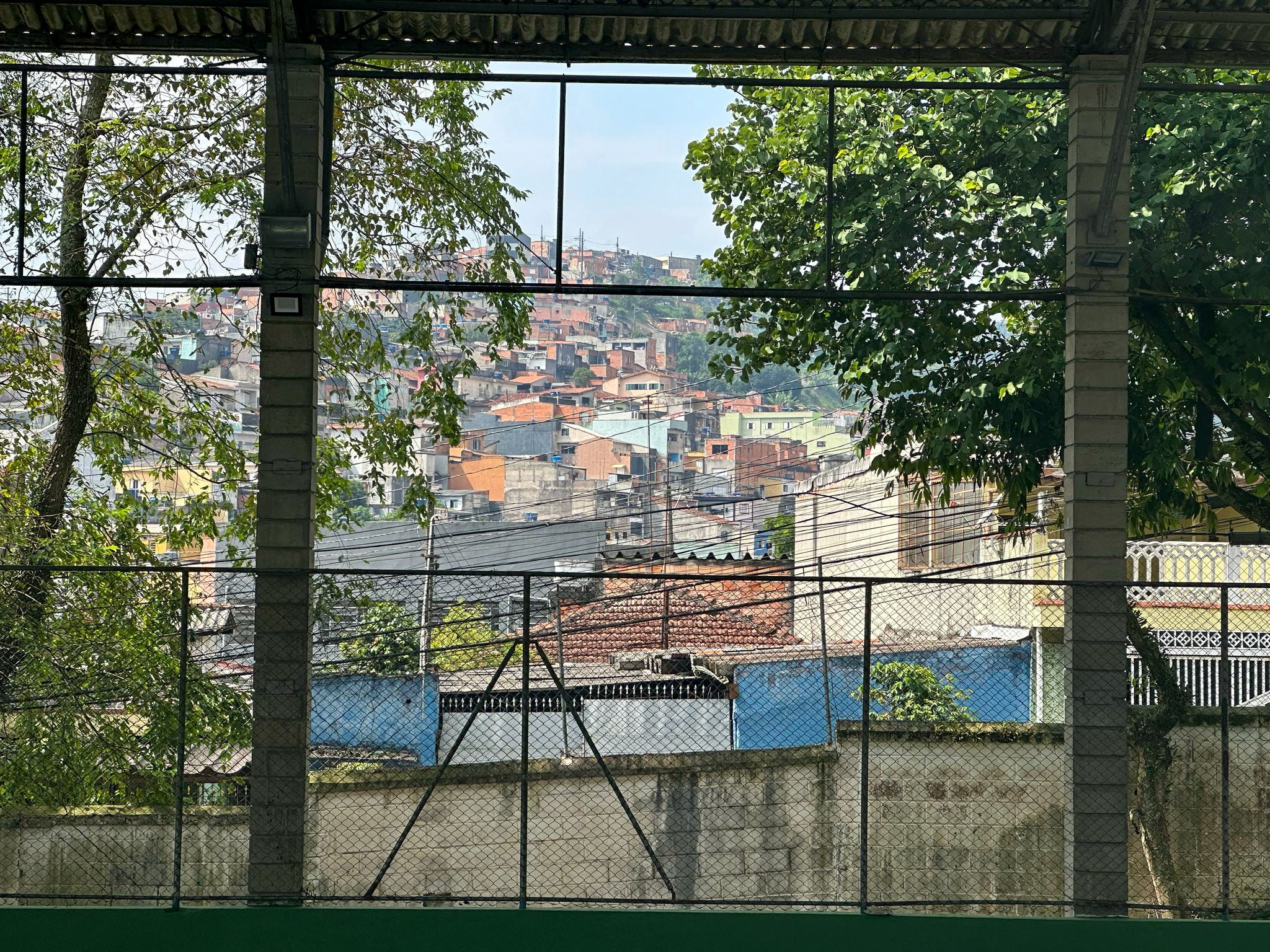
Rio de Janeiro’s slum-dwelling population rose from 7% in 1950 to 22% in 2010. In 2000, 26% of Rio de Janeiro’s residents were migrants. They usually built self-help housing in unserviced favelas, where land tenure was insecure, neighbours were strangers, and everything was unpredictable. Only 7% of Brazilians say most people can be trusted.
During my stay in São Paulo, my hosts warned me not to take my phone as we walked two blocks to the supermarket. Thieves cruise on motorbikes, snatching phones in the hope of accessing online banking. Just last year, a guy was shot on that same street - for his phone. As I realised while being punched in the face: if other people’s welfare is devalued, their bodies are just obstacles, inconveniently attached to something of value.
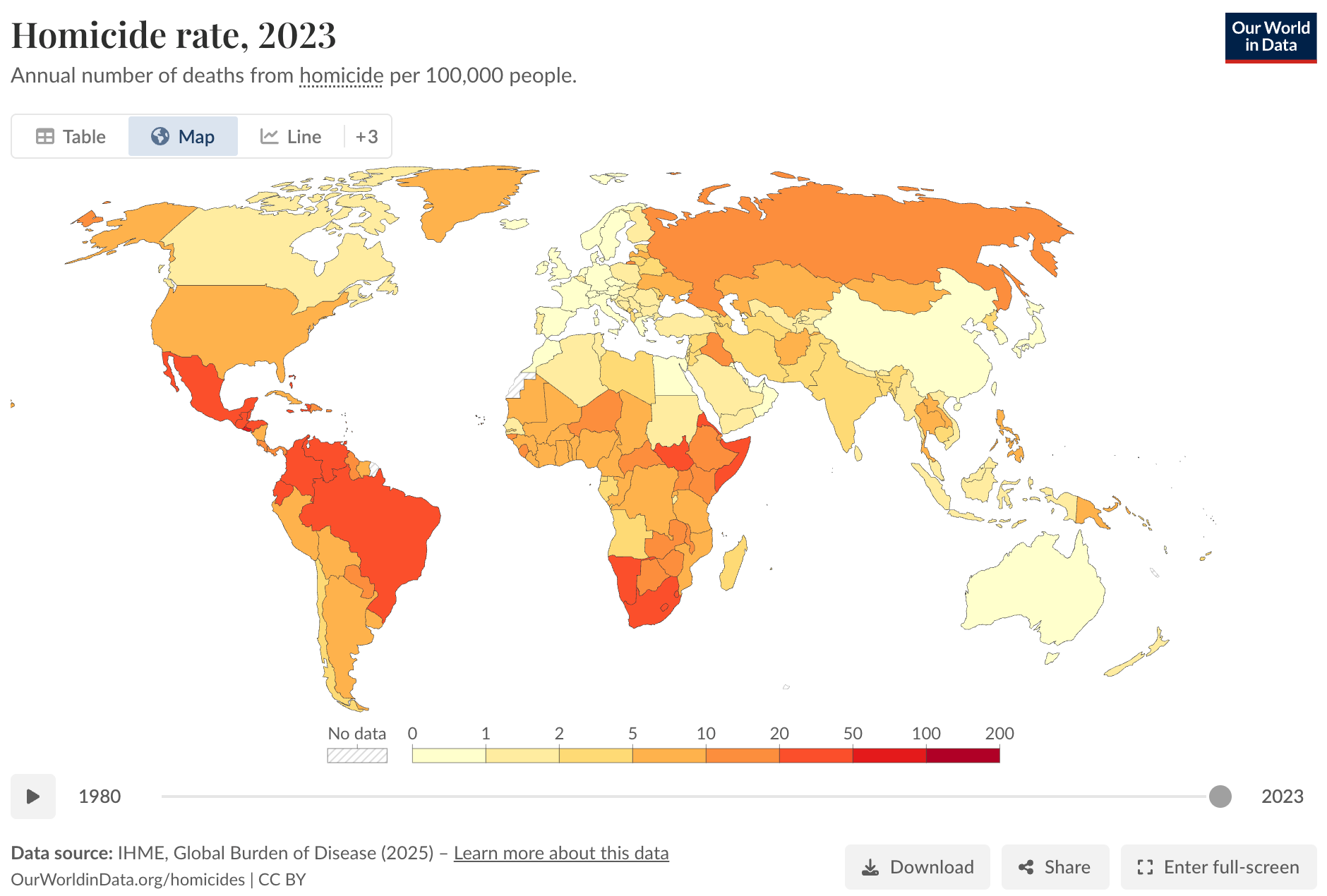
Latin American cities struggle with high crime. Soares and Naritomi argue that this reflects especially high inequality, combined with fewer police, fewer judges and modest incarceration. When a large bulk of the population struggles to find formal employment, while others have substantial wealth, this obviously creates incentives for criminality. Meanwhile, weak and corrupt state institutions fail to provide effective deterrence.
Ed Glaeser adds another layer with his idea of “poor urbanisation”. Developing countries have urbanised at lower levels of wealth, depriving municipalities of tax revenue to provide basic services and public order. This is surely correct. But low income is only part of the problem. Rising incomes do not automatically diminish corruption, bribery or gang warfare. In weak states, growth can coexist with criminality. Elites can enrich their cronies, intimidate opponents, expand illicit markets, and buy impunity. The deeper problem is not just premature urbanisation, but insufficient job-creation in the formal economy and weak states.
Oil booms in Brazil actually amplified violence, amid weak policing. During the 2000s, GDP growth was nearly 100% higher in southeastern Brazil’s oil-producing municipalities. These regions also saw major increases in inequality and violence.
The struggles of informality, the lure of illicit gains, and the cloak of impunity, can all encourage young men to take dangerous risks.


The Machismo Trap
In areas where states are weak, toughness becomes defensively necessary, habitual and even glorified. Young men may project dominance to gain respect, deter attacks and avoid humiliation. Brazilian funk and Mexican reggaeton sometimes glorify retaliation, dominance and revenge. DJ Helinho’s “Kit Salve Da Quebrada” threatens to break arms, bind bodies, and shave heads. In communities where bravado is respected, studious boys may be mocked and maligned. Entire communities may come to prioritise brawn over books.
Biology comes into play. Boys’ and young men’s bodies surge with testosterone, amping up energy, aggression and competitive zeal. If channelled into sport and purposeful work, testosterone can unlock competitive advantage, but without such guardrails, young men may be more enticed by illicit gains. I call this the “Machismo Trap”.
Venancio (now 60) comes from Ceará (northeast Brazil) - where state presence is minimal and Catholic saints’ festivals incorporate indigenous rain rituals. Boys may be taught fearlessness by mounting an ox, while men typically carry knives. Unrestrained, Venancio’s father used to beat the entire family - one time whipping the cattle ropes against his son’s back.
A gay black man from a favela in Sao Paulo narrated his experience of violence - from his father’s beatings to school fights.
“I had be strong to show I was stronger. I wasn’t violent, but I had to be violent. If you do something that affects someone’s masculinity, they’ll start a fight and that will become a murder. Everything goes around masculinity: the man needs to show their strength, their power, they’re reckless, otherwise they’ll treat him as weaker. That’s how things works, you need to learn how to use violence… Everything is about honour”.
A young man from Rio’s City of God [favela] shared that he was previously part of a pick-pocketing child-gang. At age 8, a drug trafficker stubbed a cigarette out on his face. The following year, his neighbour was publicly tortured. Since gang leaders ruled the roost, some youths belted out rap music celebrating dominance. Chatting over lunch, another favela-dweller told me that girls often sought thuggish partners for protecters. Many of his childhood friends are now dead. When I confessed that I had never seen or heard of violence in my home town, they were shocked by this cultural difference. “Not even school fights?”.
Where states fail to protect, citizens turn to extralegal violence, like militias and vigilante lynching.
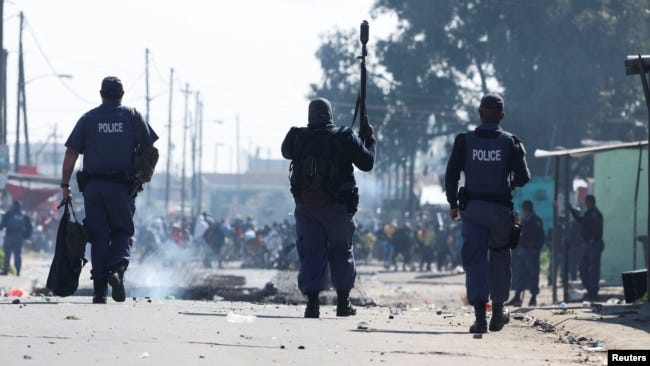
This can breed an escalating cycle - not just between criminal gangs but also with the police. Latin American security forces tend to respond aggressively. In Rio, new recruits are purposefully inducted with brutal training to “toughen them up”, “like pit bulls, crazy to bite people”. Meanwhile, weak oversight sustains impunity. Likewise in South Africa, the police force still use suffocation.
When States Make Violence Risky
When states make punishment more certain and public order more credible, violence often falls. Look at Sweden. After a surge in gang shootings, voters shifted right, the government increased spending on policing, lowered the age of criminal responsibility, and gave police wider search powers and expanded surveillance. As the risk of punishment rose, deadly gun violence declined.
San Francisco has seen a similar shift. As voters backed Proposition E, police gained broader powers over vehicle pursuits and surveillance technology (e.g. drones), with fewer reporting requirements. Crime fell.
The reverse is also true. In Britain, austerity weakened both prevention and deterrence. Between 2010-2019, budget cuts led to widespread closures of both youth centers and police stations, creating two distinct natural experiments. Youth centre closures triggered a surge in teenage crime, while shutting London’s police stations led to spikes in violent crime. Together, these studies nicely demonstrate how youth clubs help channel young energy productively, while effective policing provides a powerful deterrent. When the state retreats, the most disadvantaged neighbourhoods suffer.
When Cities Outrun the State
Economic growth can raise incomes, but only a capable state can enforce urban security. When cities outrun formal job creation and rules-based governance, they get nasty.
Migrants head to cities in search of opportunity, but if they struggle to find waged work and punishment is uncertain, they may be tempted by illicit gains. Criminal gangs prosper from illicit markets, gun down opponents, extract protection rents, and bribe politicians to look away.
Under these conditions, powerful syndicates permeate state institutions - bribing judges, politicians, and law enforcement officials, who then selectively target certain criminal groups while protecting others. In Latin America, Feldmann and Luna suggest that criminal networks enter society’s ‘bloodstream’.
The challenge, especially in societies undergoing rapid demographic change, is to build responsive policing and credible deterrence before criminal governance takes hold and young men come to revere aggression.
Otherwise, the gains from growth are lost to extortion, gunfire and intimidation. Young men are killed in gang wars, girls are assaulted, and entire communities come to prize toughness over trust and cooperation.
I thought this was great, thank you!
I do wonder about a possible confusion. We know that violent crime (all crime, in fact) tends to be committed by a very small number of individuals, as long as the society in question does not revert to more primitive norms as has happened in some of the examples you give.
So was Sweden's success "tougher on crime" per se or more accurately described as "kicking out or imprisoning the few people driving the issue"?
The latter is fully consistent with your observations: in weak states those few people are precisely those whose violence allows them to accumulate enough power to subvert the state!
But it does suggest a potentially more rapid way out than I inferred from your description.
Ironically, it also highlights even more starkly that colonialism was one way to potentially avoid this trap, as it was in German and most English colonies (of course it could also have made it worse as it likely did in Belgium's colonies).
Why are many Islamic states far safer than one might expect given this analysis?