

Quick poll.
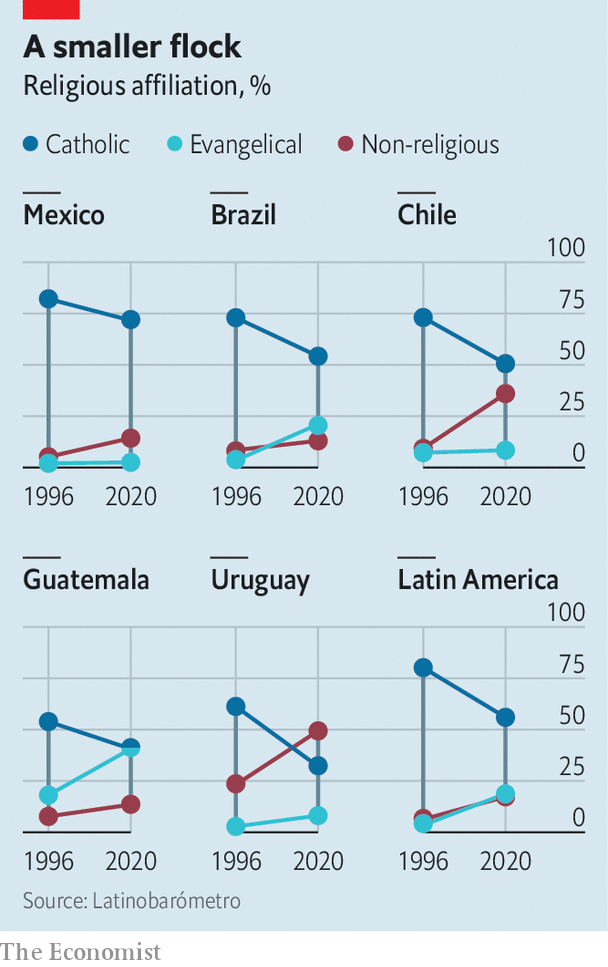
Modernisation Theory proposes that as societies become more affluent, they undergo a fundamental shift in values. Once people’s basic wants are satisfied, they become more secular, scientific and open-minded. Economic development is thought to encourage secularism - as in Latin America.
Louisa Roberts puts this to the test. Combining World Values Surveys and European Values Surveys, she analyses data from 100 countries from 1989 to 2020, examining severalvariables:
'Modern Social Conditions':
GDP per capita
Human Development Index
Average years of schooling
Percentage of urban population
Religiosity:
Importance of God in one's life
Importance of religion in one's life
Frequency of religious service attendance
Self-identification as religious
Using hierarchical models to analyse the data at individual, longitudinal, and cross-national levels, Roberts finds:
Modern Social Conditions do not consistently weaken religiosity
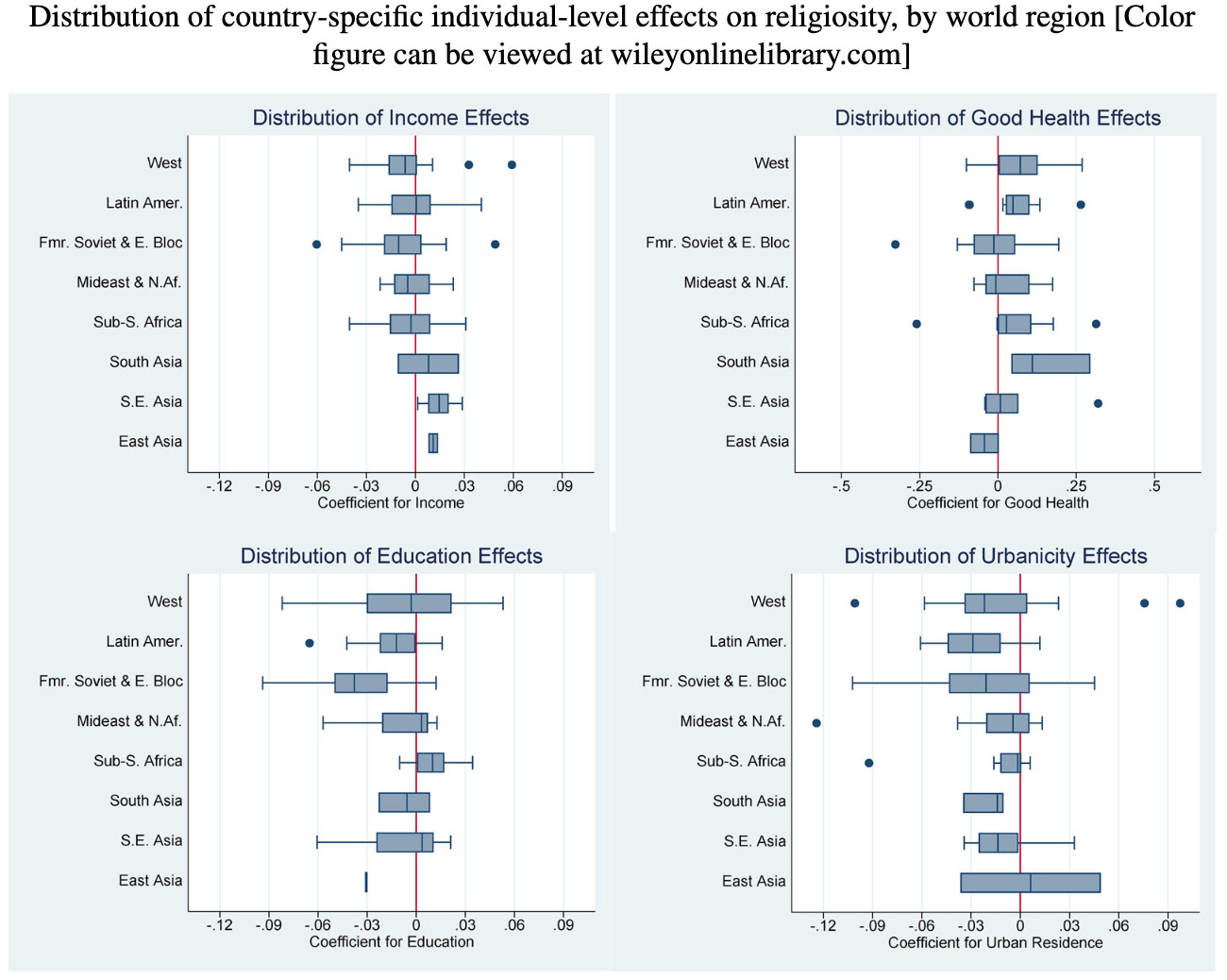
The individual-level effects of income, education, and urban residence on religiosity are negative but miniscule. Even moving from the lowest to the highest level of education or urbanisation predicts only about a 1/10 standard deviation decrease in religiosity.
Curiously, there is significant cross-country variation
In Turkey in 2001, highly educated individuals were more secular. But that pattern does not hold in the rest of the Middle East and North Africa. (Though Roberts only has one wave of data for Turkey. This relationship may not hold for subsequent decades, with the rise of AKP).
Education and religiosity are also negatively correlated in the former USSR, but positively so in Sub-Saharan Africa. For income, education, and health, about half the countries show positive associations with religiosity, while the other half show negative associations.
Modern Social Conditions have improved over the past three decades, but this has not systematically affected religiosity
In Latin America, Southeast Asia, and the West, religiosity has declined, while in the Middle East and North Africa, it remains consistently high.

My Commentary..
How does this fit with the existing literature on Economics & Religion?
Economists Christine Binzel and Jean-Paul Carvalho attribute Egypt’s Islamic Revival to its economic stagnation. As unemployment soared in the 1970s, university graduates struggled to find white-collar work. With their middle-class aspirations frustrated, mosques offered spiritual solace. Clerics equated modernity with a rejection of Islam and declared the economic and military failures of the state to be punishments for aping the West.
Continuing this emphasis on economic failure, Jean-Paul Carvalho, Jared Rubin and Michael Sacks suggest that religious communities may be especially appealing in downtimes since they offer valuable club goods, like social services. Egypt’s Muslim Brotherhood certainly offered valuable help and support.
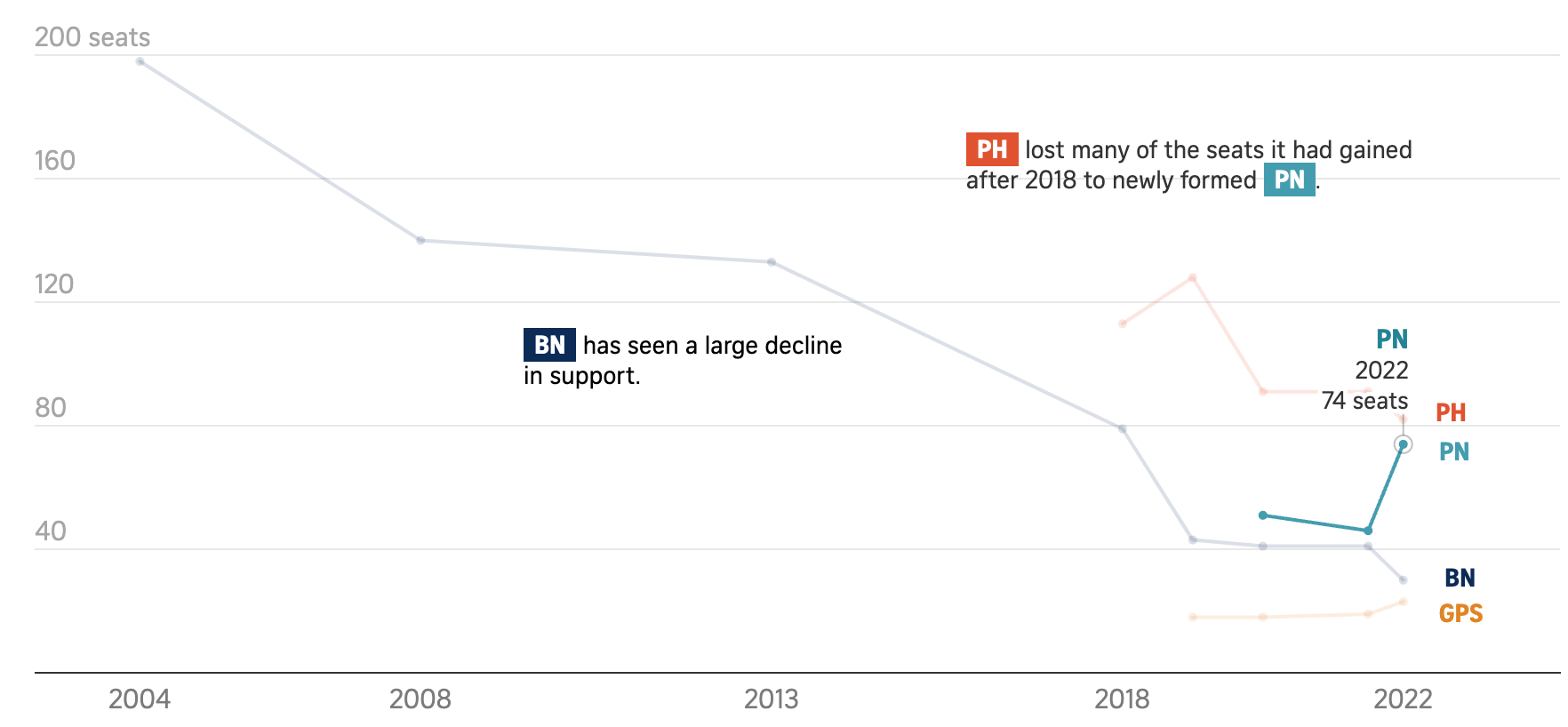
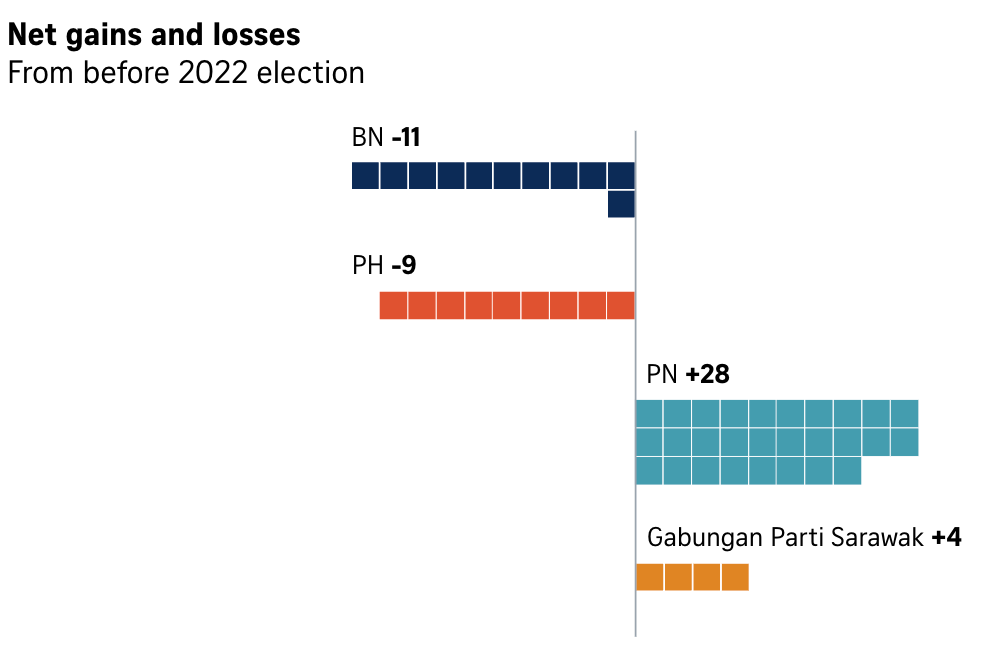
Roberts’ cross-country regressions suggest that income has no consistent effect on religosity. Something else was happening in the Middle East and North Africa. The Islamic revival occurred worldwide, irrespective of wealth levels and growth rates. In wealthy Britain, Muslims also express strong religosity. Malaysia has achieved sustained economic growth, yet 2022 heralded a ‘teal tsunami’, with surging support for PN, the hardline religious right.

The trouble with country case studies (like Egypt’s Islamic Revival) is that they fail to control for underlying cultural idiosyncrasies. As noted by Fukuyama,
“He who only knows one country understands none”
Why is Modernisation Theory Wrong?
Here is my explanation, not in Roberts’ paper.
Culture is not set in stone, it is always deeply contested. To understand regional differences, we need to trace cultural evolution over centuries. So let me very crudely summarise several centuries..
Unlike any other world region, Europe underwent a Secular Enlightenment. Persistent organising by secular political movements secured institutional reforms and weakened ecclesiastical authority.
When Europeans migrated to Latin America at the turn of the 20th century, some travelled with these secular ideas and cultural ties to the Old World. When Latin Americans became wealthier and acquired new technologies, they also chose to pay attention to news, music and movies from the US and Spain. Prior culture shaped ongoing media consumption and cultural exchange.
Middle East and North Africa (MENA) rulers also trialled top-down secularisation. A century ago, the confrontation with European imperialism catalysed major debates. Mullahs and muftis were satirised as backwards, selfish, obstructing scientific progress. Reformists in Turkey, Iran, Tunisia, and Egypt wanted to catch up with the West and spearheaded secularising reforms, often coercively. Egyptian girls wrote into Islamist magazines that veiling was prohibited, while other students lamented bans on zuhr prayers.
By the 1970s, Westernisation was losing lustre. Military defeat by Israel undermined secularism’s credibility - a visible display of failure.
Modernisation also triggered religious and patriarchal backlash. In MENA, where male honour has long been tied to female seclusion, the mixing of young men and women in schools and universities provoked significant anxiety. No, this was not ‘economic anxiety’, it was distinctly patriarchal.
Islamic organisations offered a very appealing alternative: fraternal community, patriarchal status, promises of paradise, and a restored sense of self-worth. This dynamic fuelled a religious revival that emphasised piety and gender segregation. When Arab Barometer asked Kuwaitis about role models, 32% mentioned religious figures. 51% say the country’s laws should be entirely or mostly based on Sharia. When about the meaning of Sharia, over a quarter of MENA respondents said ‘a government that restricts women’s role in the public’.
In Muslim SouthEast Asia, meanwhile, technological improvements in connectivity combined with Arab prestige bias enabled believers to learn from the heartland. This has culminated in both Islamisation and Arabisation.
TLDR
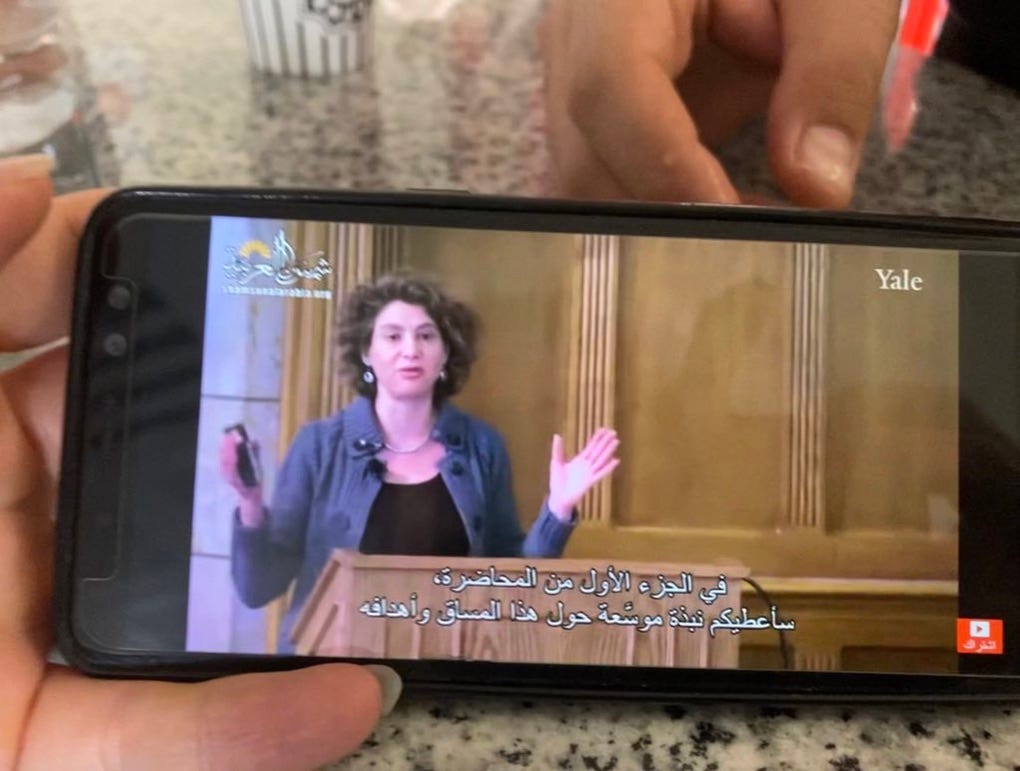
Preferences vary significantly worldwide, and this affects how people use the fruits of modernisation - whether they want to listen to Taylor Swift, Yale Professors, or YouTube imams.
Thank you to Farah Adeed for alerting me to this fascinating paper by Louisa Roberts.

Upcoming essay:
“What’s Limiting the Popularity of Islamic Feminism?”
Related essays
Rocking Our Priors
"Practicing Islam in Egypt" and "Salafism": Podcast with Aaron Rock-Singer
“Islam and Citizenship in Indonesia” Podcast with Robert Hefner


The USA seems to be more religious than Northern Europe. That's based solely on my perceptions as a Brit watching their culture and politics. Any ideas why. Or is it a misconception?
"In Turkey in 2001, highly educated individuals were more secular. But that pattern does not hold in the rest of the Middle East and North Africa."
I would not use Turkey as a secularisation example due to its unique history. When the Ottoman Empire was replaced by the Republic in 1923/24, the extreme secularisation efforts imposed upon it, especially for the urban part, probably led to the 2001 statistic above.