I'm a little cautious about what we should take away from "do I feel safe walking alone at night" survey data, because it isn't that tight of a correlate of actual danger walking home at night. For example in the United states things have gotten a lot safer in terms of crime rate pretty consistently over time (especially in terms of random violence against strangers), but fear of crime, while somewhat responsive, is not so down and especially recently seems to have spiked way more than actual crime rates.
I guess I have a general skepticism of using survey data for "I feel this is sociological thing is the case" for that sociological thing being the case. whether with crime, Inequality, corruption, etc. Public beliefs about it are important and not totally wrong, but are somewhat different from the thing itself.
Said another way, if you asked people do you feel safe walking alone at night, driving on a highway, drinking alcohol, having a non-functioning smoke detector, eating unhealthy foods, I do not think their relative feeling of safety with each would be very well-calibrated with the actual expected loss of quality adjusted life years.
That being said (1) when we see very large difference country to country, I can totally buy it goes along with actual much higher rates of violence. (2) Fear of crime is a real harm in its own right above and beyond actual instance of crime, in fact it may feasibly actually be worse considering the shear amount of effort and resources spent mitigating and avoiding it.
Yes I think the relative differences here are clearly identifying a real phenomenon, even if there are doubtless cases which are confounded by other factors.
But actual crime stats would almost certainly be even more confounded!
This kind of survey could be affected by whether there is any culture of walking in the place in question, not just safety. In much of America, nobody walks home (they pull into a driveway near the front door) and this increases the perception of danger.
Feeling safe walking alone at midnight is among the best metrics.
Often the unsafe areas have low crime rates because the locals know it’s not safe, so don’t test it, and if there is attack usually don’t report it to the enemy police.
Rape reports are also important, but different than harassment.
Sad how little discussed is the reduced safety in S Africa, seemingly because the truth is racist. The reason Paki rapes in Rotherham were not stopped much much sooner.
So, are women in no way partially responsible for what happens to them while drunk or stoned around men? Are men and women equally as effective as executives? Seems like two useful discussions, with potential pros and cons on both sides.
Seems like you are assuming there is a right and wrong way to answer these questions, and anyone disagreeing with your take is wrong, not just factually, but morally.
Ironically in too many western countries, France and the UK being the ones I am most familiar with, we seem to have regressed on that cultural assessment. Australia, NZ, the US, and Switzerland appear to have largely escaped this, happily, so it is clearly not inevitable.
As I understand it, the US does not have an issue with widespread sexual harassment, assault, and rape of women and girls by Muslims from Pakistan, Afghanistan, and sometimes Northern Africa and Syria, that the media and even the police by and large ignore, underplay, and minimise?
https://www.jean-jaures.org/publication/les-francaises-et-le-harcelement-dans-les-lieux-publics/ (this one hides the issue a bit "d’autres facteurs de risque ressortent, en particulier le fait de résider dans une grande agglomération – notamment dans des quartiers défavorisés –, d’avoir un niveau de vie faible ou d’appartenir à une minorité religieuse liée à l’immigration : le taux de victimes d’atteintes ou d’agressions sexuelles étant par exemple systématiquement plus élevée chez les musulmanes.")


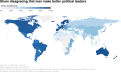
I'm a little cautious about what we should take away from "do I feel safe walking alone at night" survey data, because it isn't that tight of a correlate of actual danger walking home at night. For example in the United states things have gotten a lot safer in terms of crime rate pretty consistently over time (especially in terms of random violence against strangers), but fear of crime, while somewhat responsive, is not so down and especially recently seems to have spiked way more than actual crime rates.
I guess I have a general skepticism of using survey data for "I feel this is sociological thing is the case" for that sociological thing being the case. whether with crime, Inequality, corruption, etc. Public beliefs about it are important and not totally wrong, but are somewhat different from the thing itself.
Said another way, if you asked people do you feel safe walking alone at night, driving on a highway, drinking alcohol, having a non-functioning smoke detector, eating unhealthy foods, I do not think their relative feeling of safety with each would be very well-calibrated with the actual expected loss of quality adjusted life years.
That being said (1) when we see very large difference country to country, I can totally buy it goes along with actual much higher rates of violence. (2) Fear of crime is a real harm in its own right above and beyond actual instance of crime, in fact it may feasibly actually be worse considering the shear amount of effort and resources spent mitigating and avoiding it.
Yes I think the relative differences here are clearly identifying a real phenomenon, even if there are doubtless cases which are confounded by other factors.
But actual crime stats would almost certainly be even more confounded!
Thank you! It has always annoyed me how women, when they won an award, had to endure "celebratory" kissing.
Wait, in what countries is that the norm?!?
Definitely not the case in the US.
All Latin ones, try this recent and especially egregious (and happily very controversial!) example: https://www.abc.net.au/news/2025-02-18/how-kiss-saw-tensions-spanish-womens-football-explode/104920060
This kind of survey could be affected by whether there is any culture of walking in the place in question, not just safety. In much of America, nobody walks home (they pull into a driveway near the front door) and this increases the perception of danger.
Talk about the contrast in women's girl power support and the sudden silence when 250K girls were raped in the UK once the fad died down.
The key to gender equality is economic equality, in other words, not tremendous wealth inequality.
Feeling safe walking alone at midnight is among the best metrics.
Often the unsafe areas have low crime rates because the locals know it’s not safe, so don’t test it, and if there is attack usually don’t report it to the enemy police.
Rape reports are also important, but different than harassment.
Sad how little discussed is the reduced safety in S Africa, seemingly because the truth is racist. The reason Paki rapes in Rotherham were not stopped much much sooner.
Have you seen this harrowing article about sexual and domestic partner violence in Papua New Guinea? Very similar to Haiti https://www.vladsokhin.com/work/crying-meri/
So, are women in no way partially responsible for what happens to them while drunk or stoned around men? Are men and women equally as effective as executives? Seems like two useful discussions, with potential pros and cons on both sides.
Seems like you are assuming there is a right and wrong way to answer these questions, and anyone disagreeing with your take is wrong, not just factually, but morally.
Ironically in too many western countries, France and the UK being the ones I am most familiar with, we seem to have regressed on that cultural assessment. Australia, NZ, the US, and Switzerland appear to have largely escaped this, happily, so it is clearly not inevitable.
The US?!?
As I understand it, the US does not have an issue with widespread sexual harassment, assault, and rape of women and girls by Muslims from Pakistan, Afghanistan, and sometimes Northern Africa and Syria, that the media and even the police by and large ignore, underplay, and minimise?
Eg (left-coded sources only to avoid the obvious accusations of bias): https://en.wikipedia.org/wiki/Rotherham_child_sexual_exploitation_scandal
https://www.jean-jaures.org/publication/les-francaises-et-le-harcelement-dans-les-lieux-publics/ (this one hides the issue a bit "d’autres facteurs de risque ressortent, en particulier le fait de résider dans une grande agglomération – notamment dans des quartiers défavorisés –, d’avoir un niveau de vie faible ou d’appartenir à une minorité religieuse liée à l’immigration : le taux de victimes d’atteintes ou d’agressions sexuelles étant par exemple systématiquement plus élevée chez les musulmanes.")
https://france3-regions.franceinfo.fr/normandie/calvados/jeunes-filles-qui-disparaissent-educateurs-menaces-comment-les-reseaux-criminels-ciblent-les-enfants-places-et-fragilisent-les-services-sociaux-3297876.html