
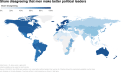

Walk through any university in Cairo or Delhi and you’ll see lecture halls packed with ambitious young women - often outnumbering men. Yet within years of graduation, most withdraw from public life, driven home by honour and harassment.
In societies where men’s status depends on female relatives’ perceived chastity, seclusion is celebrated as virtuous. By contrast, women who venture into public spaces are marked as disreputable - harassment is thus legitimised. If men also run every public institution and turn a blind eye, abuse persists with impunity.
All this has massive externalities: families impose stricter curfews, employers hesitate to hire women for evening shifts, and women themselves abandon opportunities where they may be treated as meat. Only by removing all possible rumours of impropriety can women preserve their reputations.
Drawing on Egyptians’ research and my own interviews, let's explore these negative externalities.

Harassment and Honour Cultures Lock Women Out of Work
“Egyptians are very playful, teasing, we like to crack a lot of jokes”, observed Abdullah (46). “And jokes could be about a woman’s body... saying “you look nice” or “your skirt is too short”. “My friend who is very decent, is a bank manager, he jokes with his assistant about rape... MeToo has not reached Egypt”.
This particular genre of comedy reflects patriarchal dominance. Men run every public institution - from political parties to police stations, from courtrooms to corporate offices. When another Egyptian friend, now teaching in the US, insisted that “No means no”, Abdullah replied “No means try harder”.
Widespread anticipation of harassment creates a major tension in honour cultures like Egypt, where male status depends on female relatives’ perceived chastity. 86% of Egyptian men are so concerned about their reputation that they would, hypothetically, defend it by force. 95% of men say that their honour is affected by their female relatives’ clothing and behaviour.


A man’s failure to ‘protect’ female relatives from harassment opens him to devastating social sanctions. Sara (52) explained,
“There is a word for a guy whose female family members are non-conformist: “dayouth”. The lowest of the low. If your wife is not veiled, your immediately labelled as dayouth. If your sister, or daughter is not veiled, you’re automatically lablled dayouth. So they conform.. I only heard the word “dayouth” from 2011 with the rise of Political Islam”.
This represents a stark reversal from previous generations. In the 1960s and '70s, Sara's grandmother and mother walked about unveiled. But modern religious discourse has reframed women’s public presence as inherently shameful:
“Religious discourse is very demeaning to women: what they should wear, should look, should do”, observed Sara (52) in a separate interview. “As the religion takes over, so the mind-set of people is becoming more abusive toward women… Every single Friday, I hear them saying all these horrendous things about women: “Women should not go out of their houses, and if they do, they want to be harassed”. Even as a teenager, I was thinking “What the hell?”. And over years, it becomes part of the mindset of the men”.
All this has major economic consequences. When male honour depends on female seclusion, and harassment threatens that honour, families overwhelmingly choose seclusion over stigma. The result? Egypt's female labor force participation hovers at just 18% - among the lowest in the world.

Sexual Harassment is Pervasive
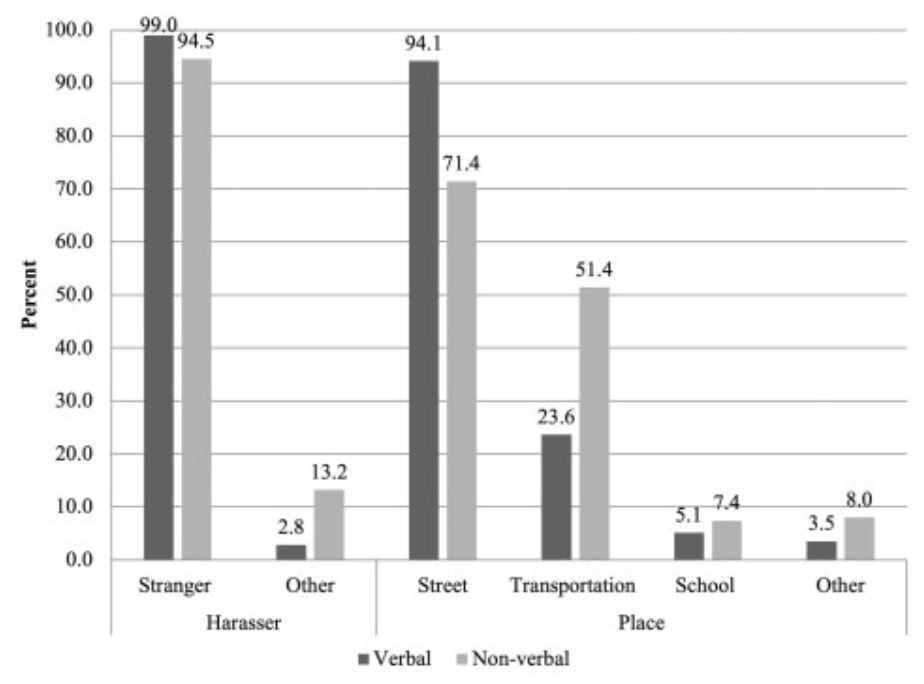
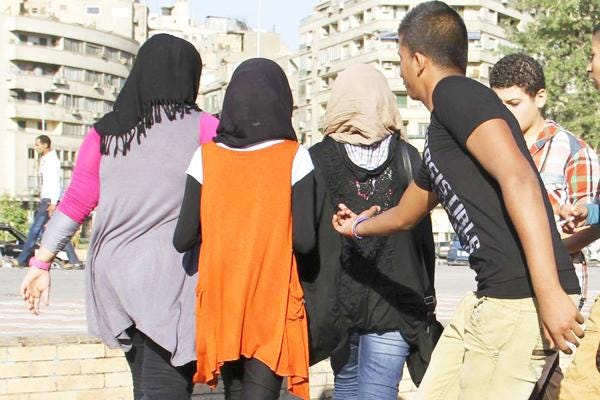
83% of Egyptian surveyed women and 98% of foreign women reported harassment: such as unwanted touching, whistling, hissing, ogling, touching, lewd comments, stalking, and indecent exposure. Nearly half said they faced this daily.
Modest dress offers no protection. 73% of victims were veiled.
The data challenges any notion that this is just a few ‘bad apples’. 62% of male respondents admitted to sexual harassment, cutting across age groups and social classes. Most men said they did this once a day. A quarter said this made them feel more ‘masculine’, while over half blamed the women for dressing indecently.
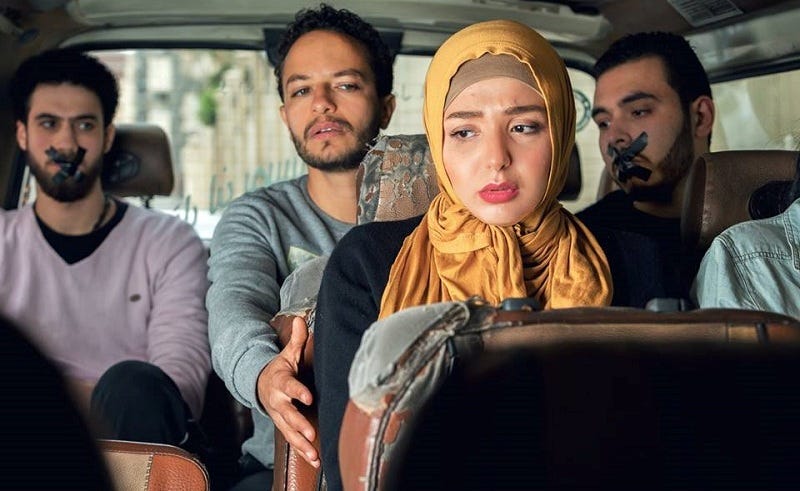
Streets and public transportation are particular hotspots, especially from microbus and taxi drivers. One interviewed woman said that she had to resign from her mid-ranking public sector job because the daily harassment en route to work became unbearable.
Schools also emerged as particular hotspots - young women reported being targeted when leaving school, with boys gathering nearby. As one father in Ard El Liwa’ observed,
“When girls finish their school day, they find boys standing beside the school and harassing them”.
Victims are Blamed
While 88% of Egyptians surveyed had witnessed harassment in public places, only 29% sympathised with the victim and only 0.1% reported trying to help. She is at fault. To quote Egyptians:
“If they harass her, the shame is on the girl. There is something either in her dress or makeup or anything else for sure. She is a bad girl, and certainly it is her fault” (Mother, Ard Al Liwa’)
(Father, Arab Ghoneim)
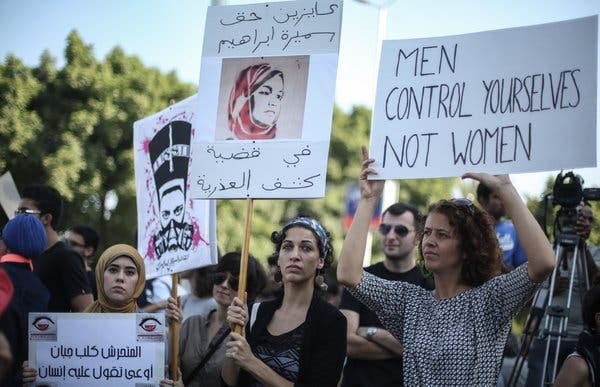
“In all forms of harassment, women are the ones who are blamed. They are even blamed when they react or try to defend themselves.. Women are constantly reminded of lowering their voices, meanwhile, men who are supposed to provide protection, don’t stand up or speak for us” (photographer Marwa Ragheb to Al Arabiya.
Shame and stigma then reinforce a culture of silence. Of Egyptian women who experienced harassment, multiple surveys find that victims almost never report. They fear being blamed, lack trust in the police, or anticipate harassments from officers.
Sexual harassment is widespread, and women are often blamed.

Does Rampant Harassment Suppress Employment?
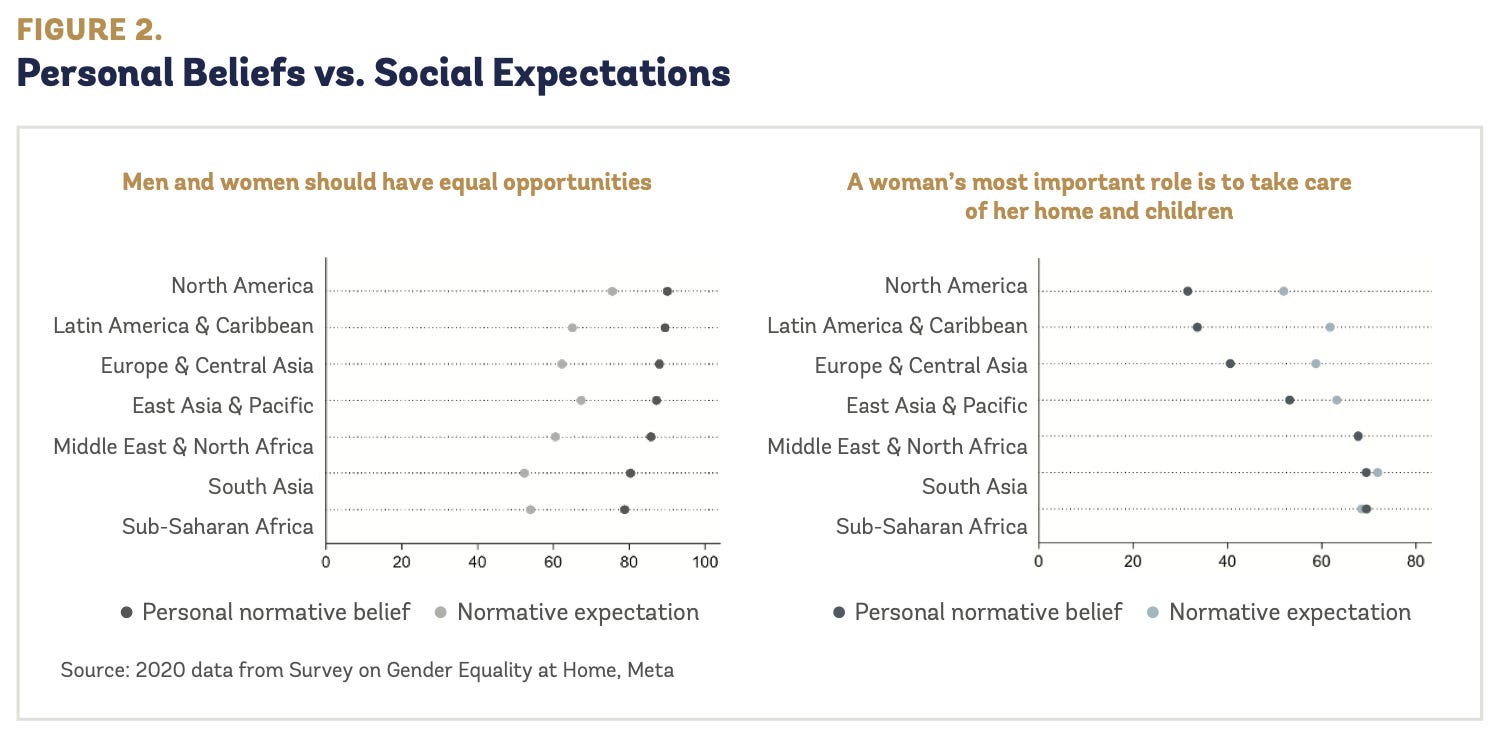
Culture is increasingly recognised as a major determinant of female employment. But there is still scope to fine-tune our analysis. Attitudinal surveys usually focus on one’s own internalised ideologies (“should men have more right to a job?”), while new research examines social expectations (“do your peers think women should work?”). Yet these approaches miss a crucial dynamic in many societies: the intersection of male honour and sexual harassment.
This is a major gap, for even if someone believes in women’s right to work, they might still be wary if they think their wife will be taunted, and their reputation in tatters as a cuckold.
Egyptians expect Rampant Harassment
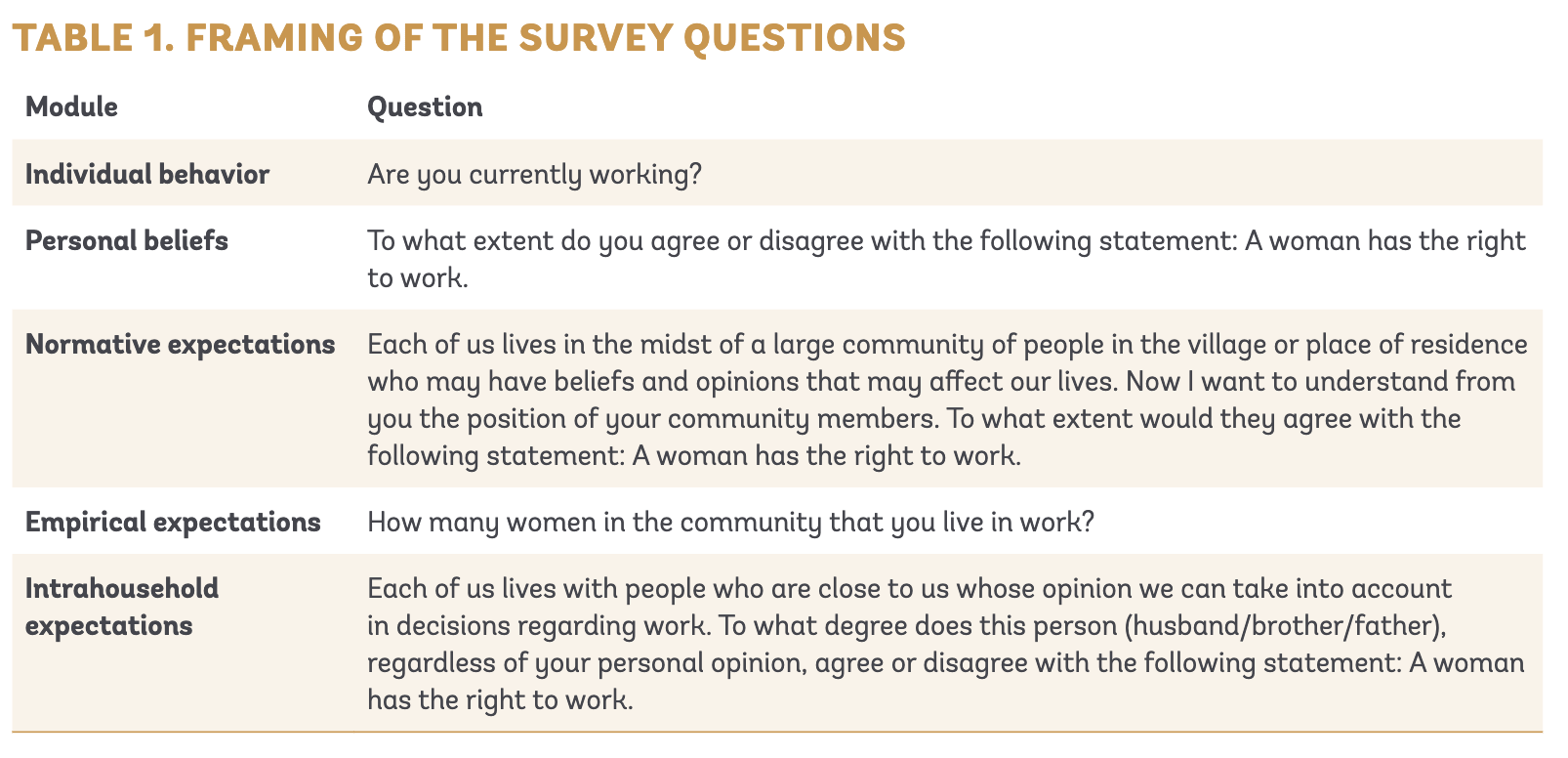
A fantastic new World Bank study by Zeitoun, El Assiouty, Rahman, Osman, and Girgis (2023) explores Egyptians’ expectations about how others behave.
The survey was nationally representative, covering 6,633 respondents across all 27 governorates. It captured urban/rural divides and different education levels, though phone-based sampling slightly over-represented educated urban residents. To minimise social desirability bias, they split respondents between two surveys:
One focused on personal beliefs
One explored “social expectations” - what respondents thought others in their community believed and how they expected others to behave
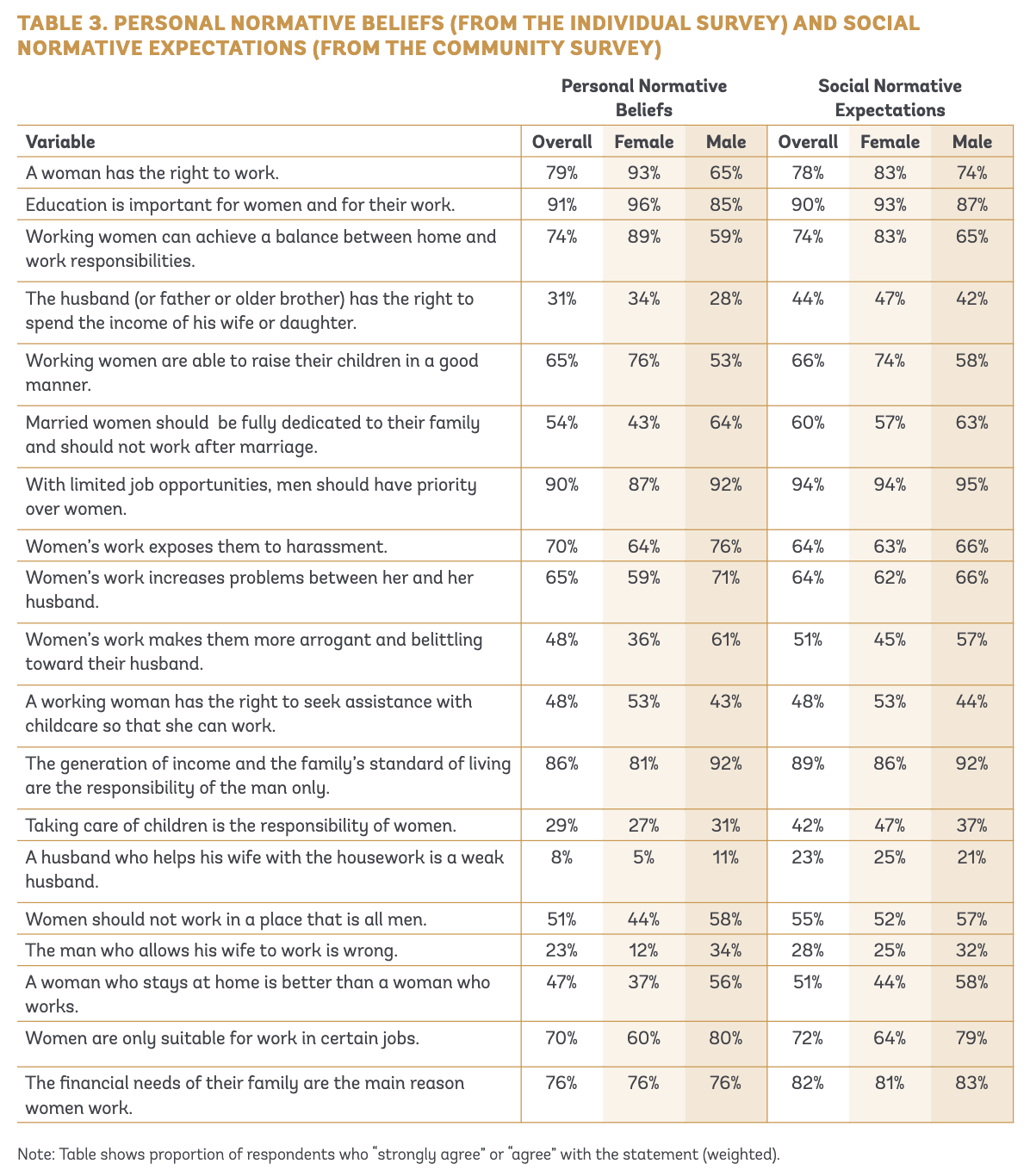
The findings are stark:
60% expect working women to face marital problems
61% think that a working woman will belittle her husband
63% of Egyptian men said that married women should be fully devoted to their family, and not work.
This tracks with work in India, where media reports of sexual assault depress female labour supply.
How do Attitudes vary with Community Expectations?
In my own theory of culture, I suggest that concern for status and social inclusion motivates close attention to peers and successful individuals. Where female employment is high, we should anticipate wider social support. Zeitoun and colleagues test this with hypothetical vignettes.
When presented with an imaginary scenario where most community members accept women working and many women do work, 88% of respondents thought a woman would choose to work. However, when presented with a scenario where the community disapproves and most home at home, only 55% thought she would work. This nicely indicates the importance of social expectations!
Men’s Beliefs are Pivotal
Women’s likelihood of working was strongly associated with their male relatives' beliefs about women’s right to work and expectations about marital problems. Strikingly, women’s own beliefs became less significant once their male counterparts’ views were taken into account. Egyptians reiterated men’s ultimate deciding power:
“Working is not bad (inappropriate) as long as her husband agrees to what she does (works), (who) she deals with at work, work hours. If a man prioritizes his wife to stay home to care for young children and their schooling, then that’s that.”
Over in Mumbai, Jalota and Ho observed precisely the same: women initially accepted jobs, but then spoke to their husbands and said no.
South Asia and MENA share much in common: most people agree and expect others to agree women’s primary role is to stay at home.
The Honour-Income Trade-Off
Even as honour cultures achieve gender parity in education, female employment remains low. Under my theory, “the honour-income trade-off”, female employment will only rise with lower threats to honour or larger pay-offs to income. This could occur through:
Rapid economic growth, generating more well-paid and socially esteemed jobs
Cultural shifts - like secularisation and liberalisation - that reduce anxieties about honour
Institutional reforms, making streets and workplaces safer.
None of these levers are currently in motion.
Arab economies are typically segmented into insiders and outsiders. Insiders benefit from state protection, contracts, subsidies, and licenses. Outsiders remain trapped in precarity. All this suppresses innovation, firm expansion and job growth.
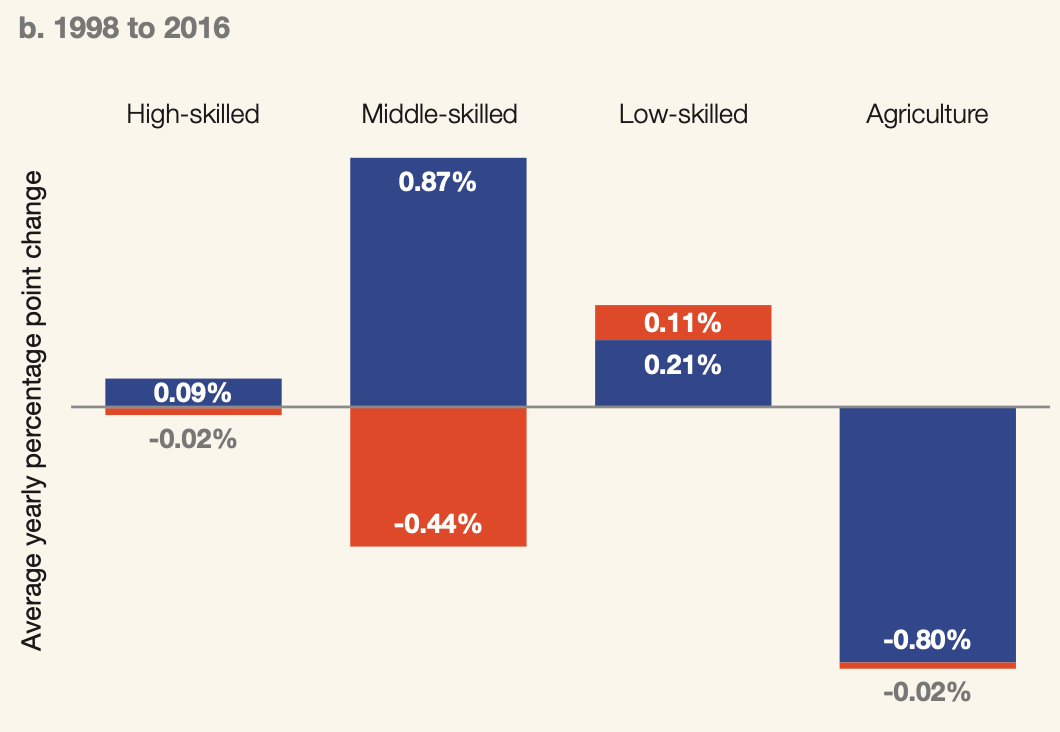
In Egypt specifically, recent private sector middle-skilled job growth has been concentrated in (male-dominated) transportation and construction. Demand for high-skilled jobs is tiny, and the returns to university education have fallen. Thus while female university graduates are more likely to work, they also register high unemployment.
But it’s not just about low demand. Elsewhere in the world, customer service and sales jobs have driven rising female employment, yet in Egypt these are overwhelmingly male. Men may be reluctant for their wives to work in low-paid public-facing roles - at risk of oggling.

Institutionally, Egypt faces major fiscal constraints. ‘Poor urbanisation’ means that municipalities lack resources to provide essential services or rule of law. Poor states simply can’t pump up female employment with public sector expansion. But even if policing was much stricter like UAE, male honour would still hinge on seclusion.
Cultural liberalisation seems difficult. When upward mobility is heavily restricted, young men may turn to status-affirming religion and honour. Egyptian feminists launched a campaign to crowdsource a map of sexual harassment and catalyse public discussions. But this ended with Al-Sisi crack-down on civil society.
Going forwards, I would love to see more research on how to reduce anxieties about honour and harassment, so that Egypt could harness all its female brain power!

Related Essays
Can Big Data reveal how Egypt - repeatedly - become so Patriarchal?
Can Social Media undo Sexism? (on Egypt)
Excellent as usual. Thank you for doing these deep dives, it's a service.