

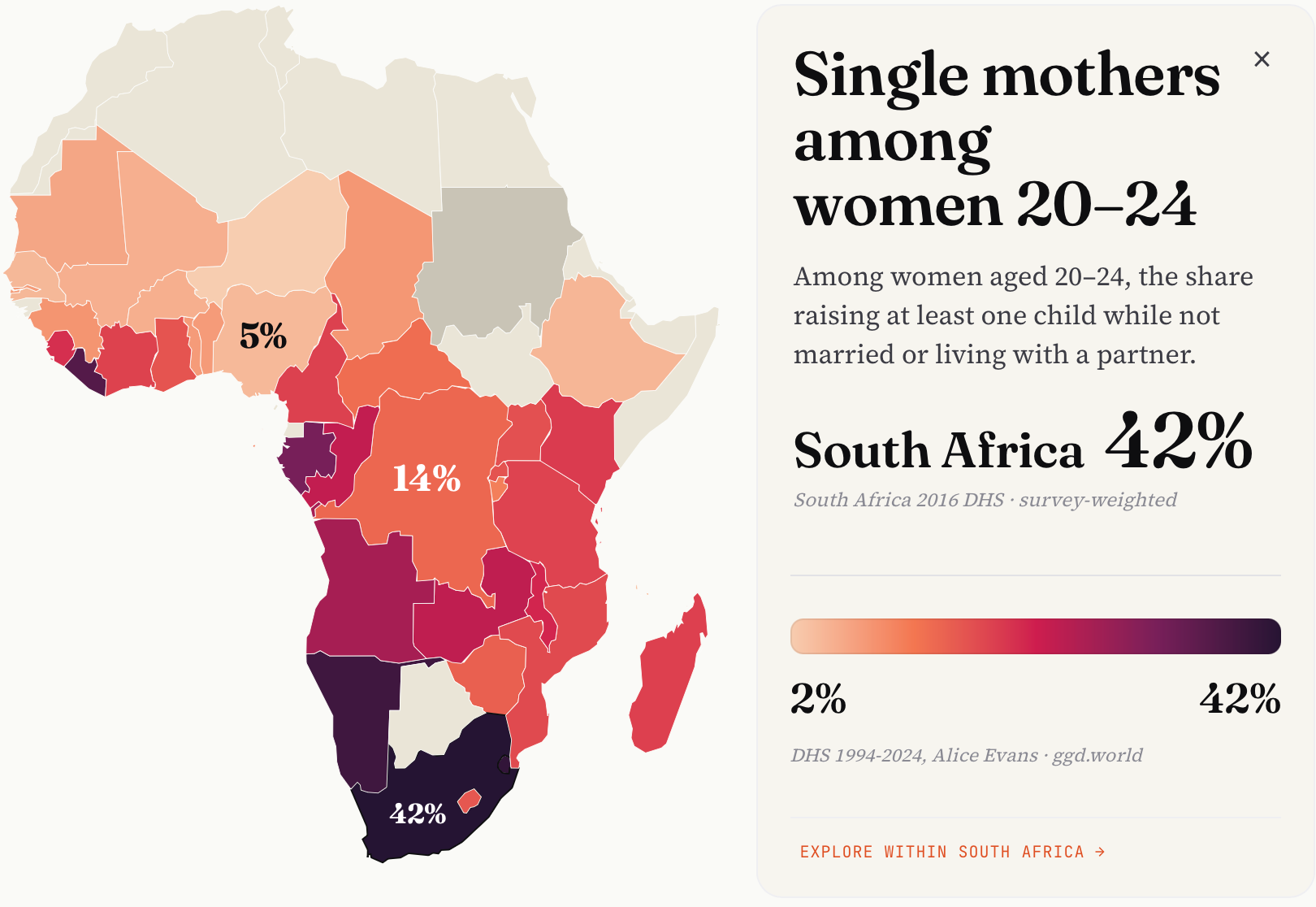
84% of Botswana’s recent births were to single mothers. Southern Africa thus presents a striking paradox, for while it has made major strides towards gender equality, it has very high rates of unintended pregnancies, HIV/AIDS, and single motherhood. In South Africa, 52% of surveyed pregnancies were unintended. 42% of women between the ages of 20-24 are single mothers. Why is this?
I suggest that we consider the market for romantic love. In crude econ talk, men are more likely to provide devotion under two conditions: they want female companionship and women say that the price of intimacy is commitment. When both hold, men compete for female companionship by offering affection, monogamy and long-term support.
If these mechanisms break down, male devotion is under-supplied. If he is not eager for companionship or child-raising, why invest in costly commitments? If women’s bargaining power is weak, they may struggle to insist on devotion or contraceptives.
This essay explores five possible factors affecting the market for romantic love in Southern Africa:
Traditionally, conjugal unions were secondary
Apartheid and migrant labour ruptured families
Inequality raises employed men’s bargaining power
Transactional sex
Poor contraceptives
Risk-taking
These hypotheses are not mutually exclusive. Together, they may help explain why many women struggle to secure men’s love and long-term support.
(1) Traditionally, conjugal unions were secondary
Historically, Sub-Saharan African men gained power through “wealth in people.” Given land abundance, a man could cultivate as many fields as he had wives, concubines, slaves and children. Girls and women were thus economic assets - paid for with bridewealth, captured as slaves, or loaned as pawns, thereafter carrying heavy loads, growing crops, and nursing babies. From the West African Hausa to Southern African Basotho and Zulu, chiefs were often polygynous (Hunter, 38; Murray 1981, 125).
Across many African societies, marriage was not primarily a union of the couple, but rather of two descent-based groups. A man might certainly show affection, woo his beloved, elope and secure her consent (Hunter 38), but they were not necessarily idealised. Instead, many communities put greater weight on kinship, obedience to elders, age-set solidarity, or bridewealth. Echoing such traditions, South African president Zuma referred to a woman’s genitals as “isibaya sikababa wakhe” (her father’s cattle kraal) (Hunter, 2010: 2).
As African Christians spread the gospel, they championed marital consent and monogamy, while condemning bridewealth and polygyny (Hunter, 54). As urban elites headed to Church, read English novels in school, and aspired for modernity, they increasingly embraced ideals of personal freedoms and romantic love.
Recognising this particular cultural inheritance, some scholars argue that many African young people may continue to put greater weight on segmentary lineages (clans) and fertility, rather than necessarily seeking conjugal ties. Who’s to say they should follow the West? Perhaps grandparents and agnatic parenting may provide a satisfactory substitute, and young women are voluntarily choosing to become single mothers?
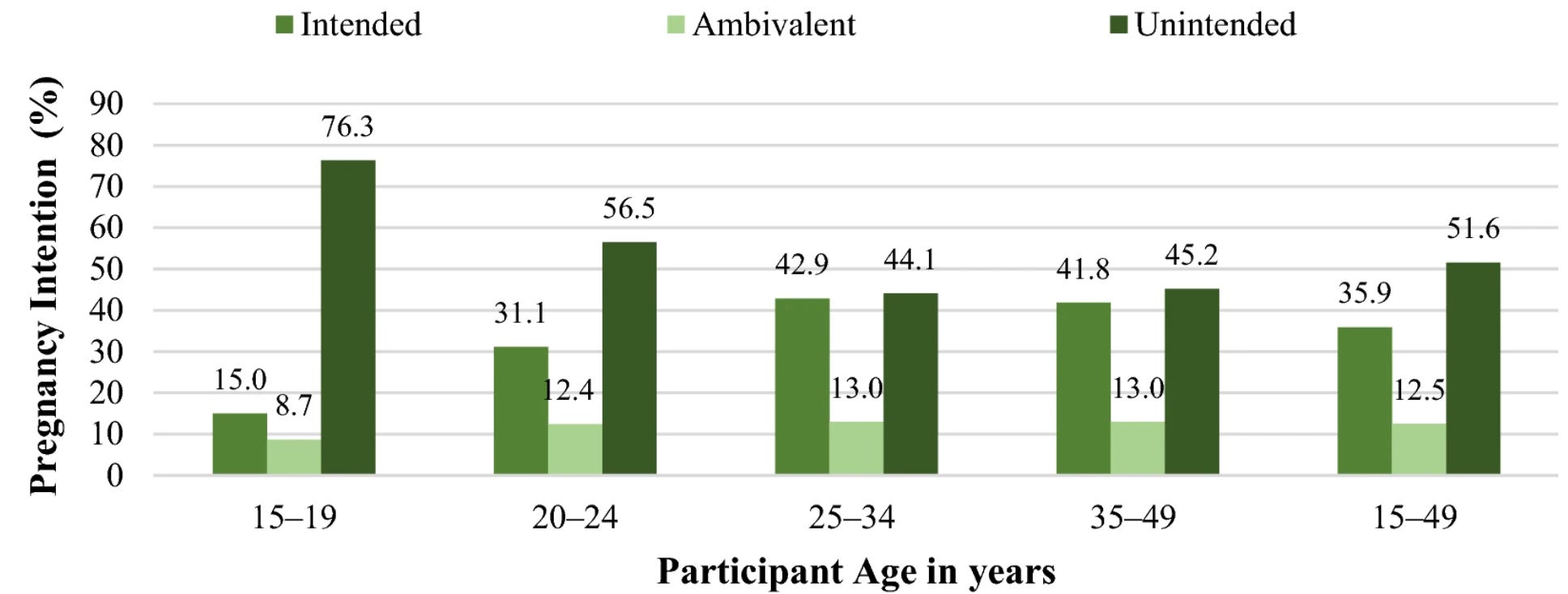
However, this hypothesis does not seem supported by the available data. The 2019 South African National Antenatal HIV Sentinel Survey enrols 36,015 pregnant women across 1589 public health facilities from across South Africa. Over half said their pregnancies were unintended.
Unintended pregnancies were highest among teenage girls (15-19) and singles (76%). 64% of those in relationships but not cohabiting also said it was unintended.
Since these pregnancies were unintentional, it does not seem like teenage girls are really embracing child-bearing or solo parenting as a cultural ideal. Instead we must ask, what’s weakening companionship?
(2) Did Apartheid & Male Migration Weaken Conjugal Ties?
From the early to late 20th century, South Africa’s government spurred men’s labour migration, while obstructing family formation in towns and cities. Men ‘oscillated’. As multiple generations of sons grew up with absent fathers, this may have suppressed their desire for female companionship.
The 1913 Natives Land Act restricted African land ownership to less productive peripheries, while the 1894 poll tax payable only in cash pushed men into wage labour. Rural households became increasingly dependent on wages from male migrants, who gained greater autonomy to pursue their chosen bride (Hunter 44).
Apartheid restricted Africans’ mobility, property ownership and living arrangements. Their place in towns was now contingent on carrying passes. Black photographer Ernest Cole wrote, “It is an extraordinary experience to live as if life were a punishment inflicted because you are Black.. Not a day goes by without a reminder of your guilt, without the disapproval of your condition and without the risk of running into trouble for transgressing laws designed solely to repress you”.
African men thus tended to be away from their homes for long stretches, while women often remained behind with the children. Urban sex ratios were highly skewed: in 1970 there were 201 men in Cape Town for every 100 women.
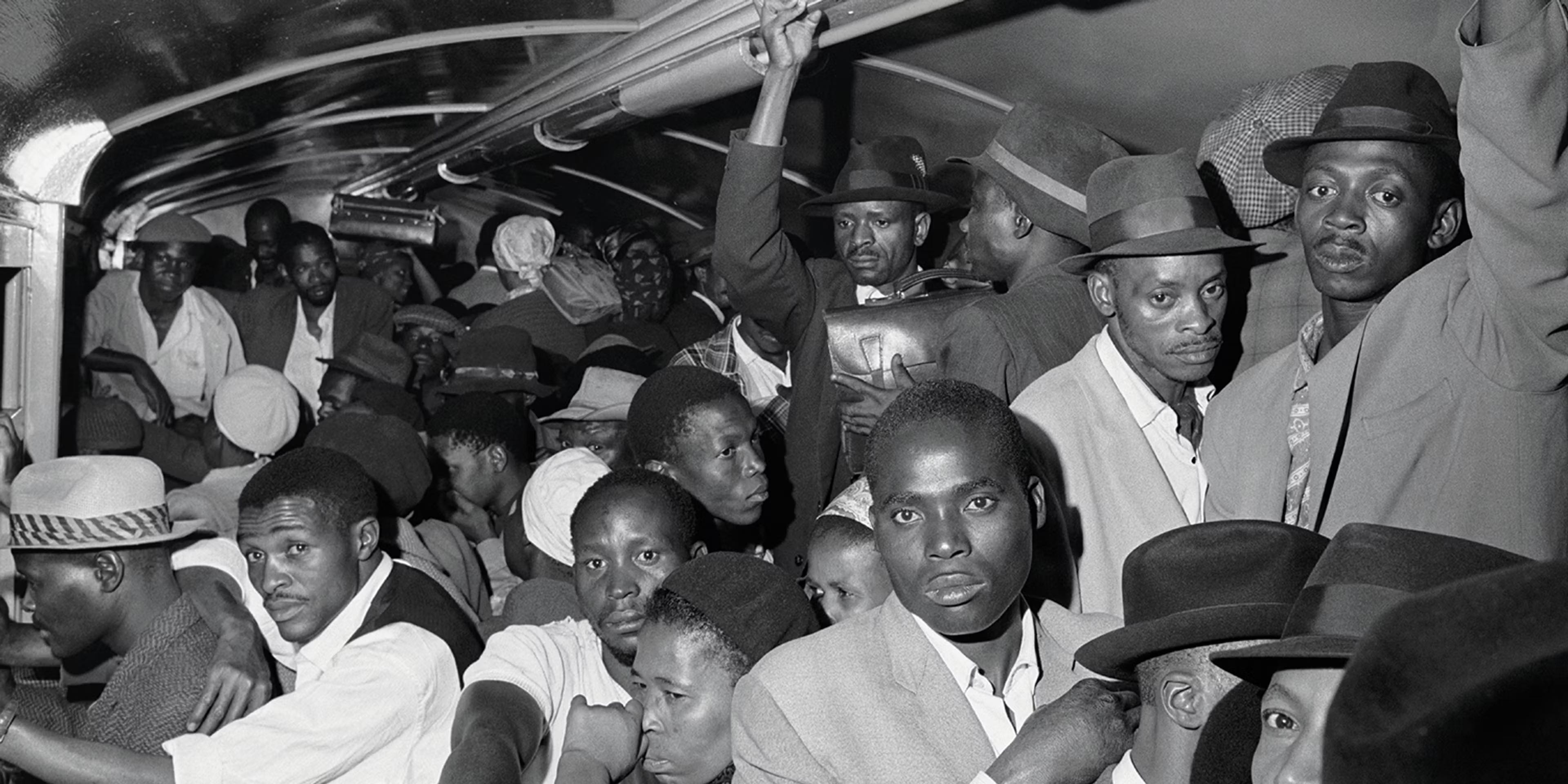
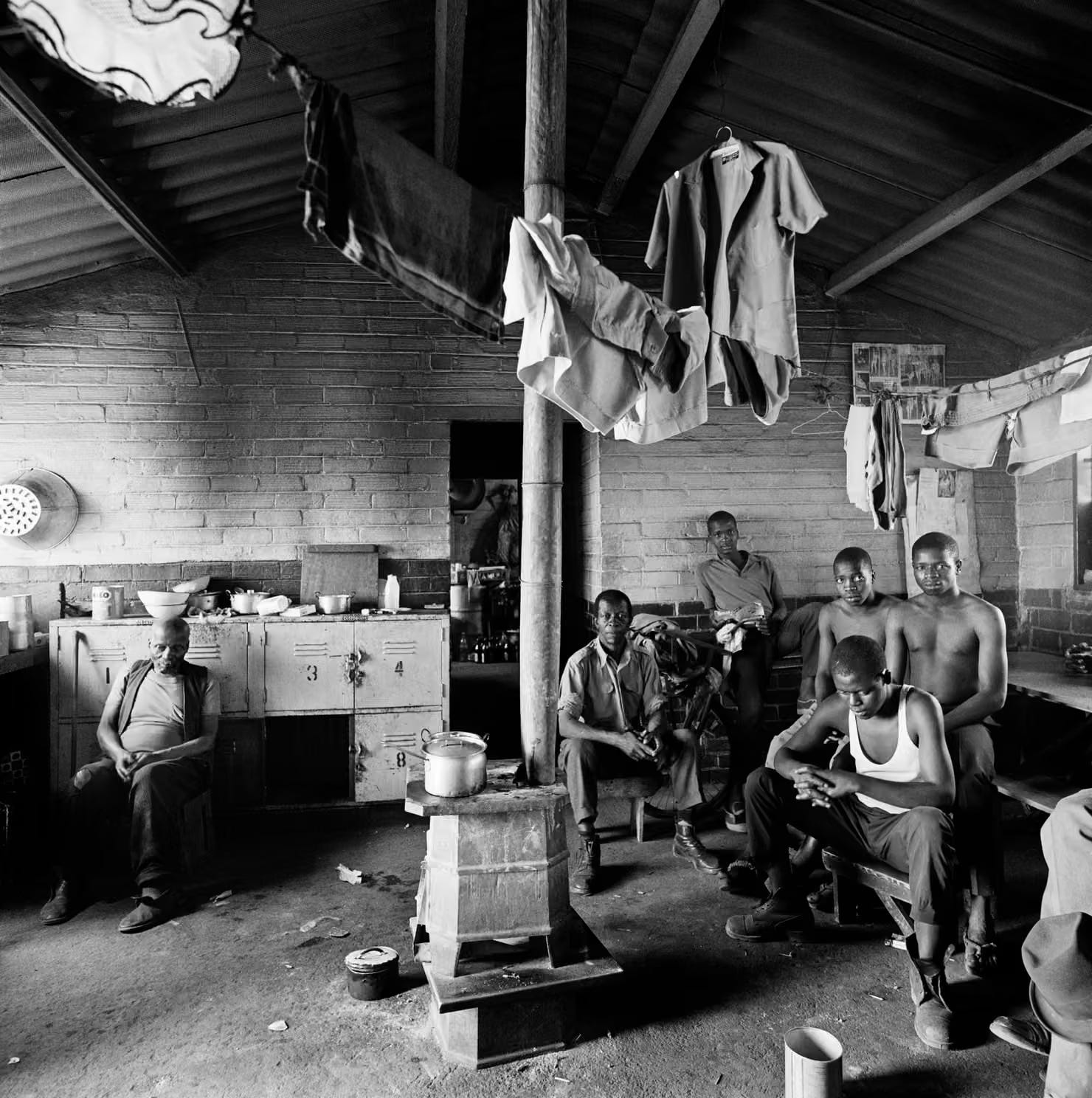
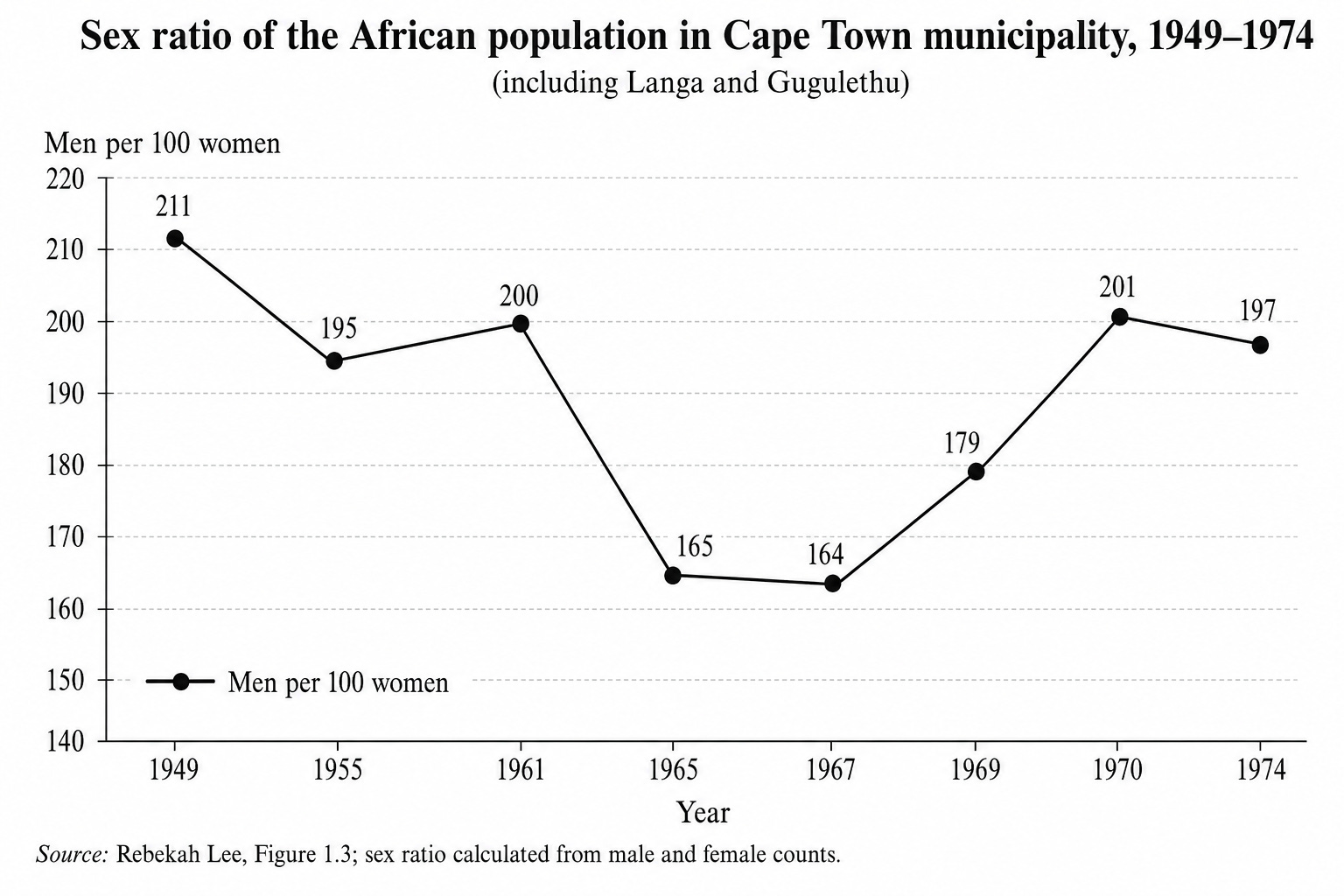
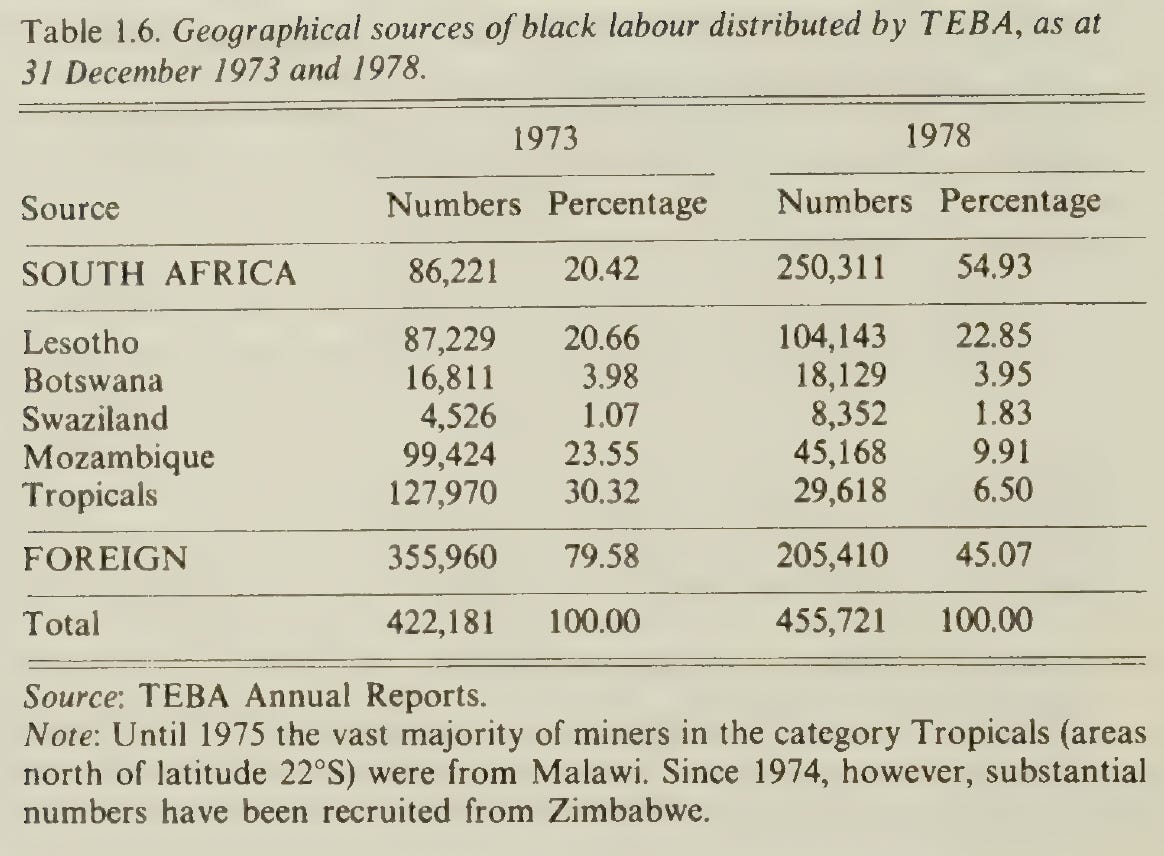
Oscillating Labourers across Southern Africa
By 1973, foreigners comprised 80% of black labour in the South African mining industry. These were mostly young men, working on 10-14 month contracts, returning home and taking up another contract. Typically, they might be abroad for 13-16 years. Yet few could retire on their own savings; instead they would depend on junior kins’ remittances (Murray, 1981: 41)
During apartheid, Basotho miners were not permitted to stay in South Africa beyond the length of their contracts, nor could they bring their families. They stayed in single-sex barracks. The South African Aliens Control Act of 1963 mandated passports, residence and work permits, which made female migration difficult, but the mines were exempt from this legislation.
Back in the 1970s, surveyed wives expressed significant strain and disruption, yet husbands often sought control and would “punish a wife severely if his instructions are not followed”. Since 1990, cross-border migration has dramatically increased.
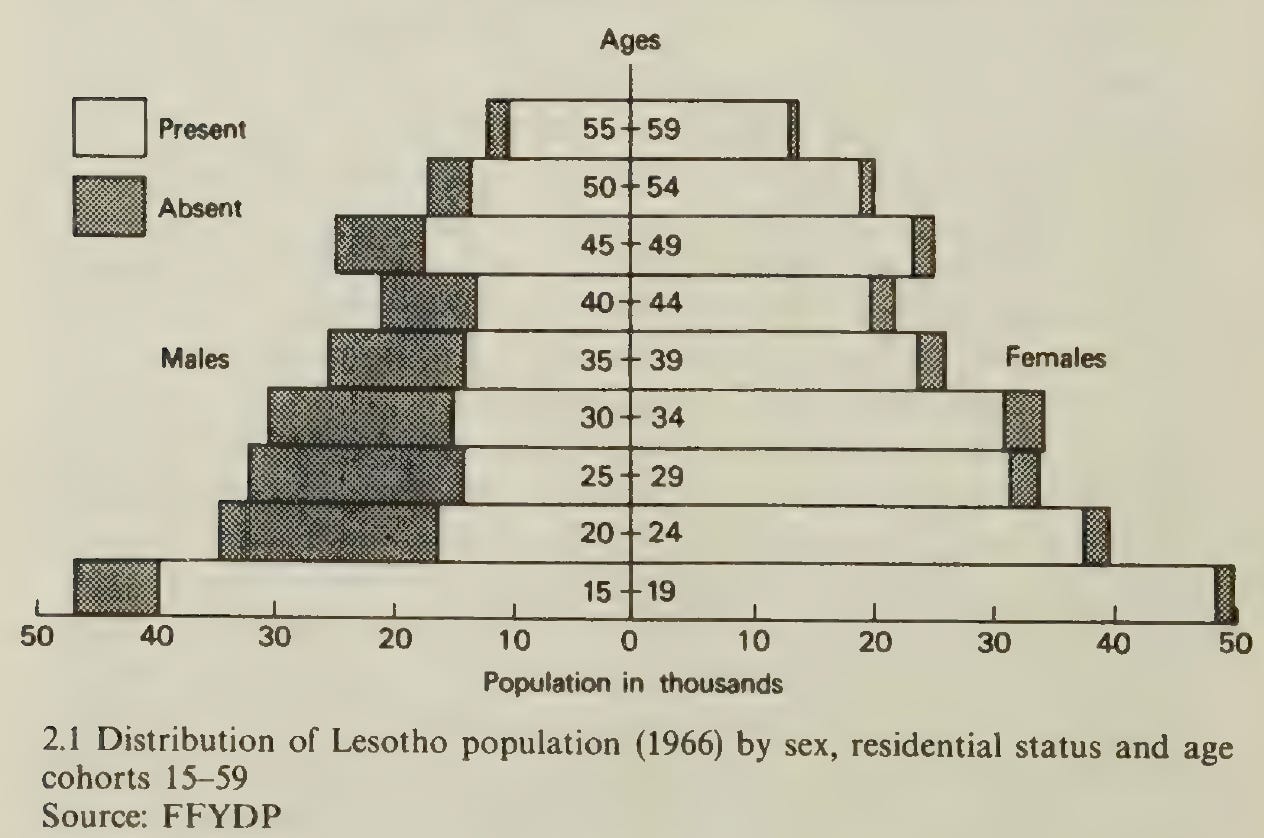
By 1971, 26% of all adult men and 5% of women in Botswana were migrants to South Africa. Mothers increasingly managed alone, often struggling but ultimately becoming more entrepreneurial, and also prioritising their own happiness.
Through life history interviews, Unaludo Sechele finds that absentee husbands did not necessarily prioritise their wives’ welfare. They were absent for long stretches, did not necessarily send remittances, and then returned to be controlling or violent.
“When I got married, my husband was already a labour migrant in South Africa… For 16 years, I was in charge of everything in the yard… the kids were my responsibility... When he first returned home after retirement, the transition was difficult. My husband was a tyrant who ruled with an iron fist... We were better off without him than with him around; he turned out not to be the man I desired” - Mary.
“My husband was recruited to work at the Amandebult mine in 1976… We lived separate lives… at times, he could be away for a year… He never sent remittances, and I lived as if I were unmarried... He exposed his true colours a few months after retirement… He took over the management of the business because he believed that a woman should not handle large sums of money. He was so disrespectful… then he began having extramarital affairs... He took everything I had worked for and left me with an empty house. I’m currently rebuilding myself with the help of my children” - Lotlhe
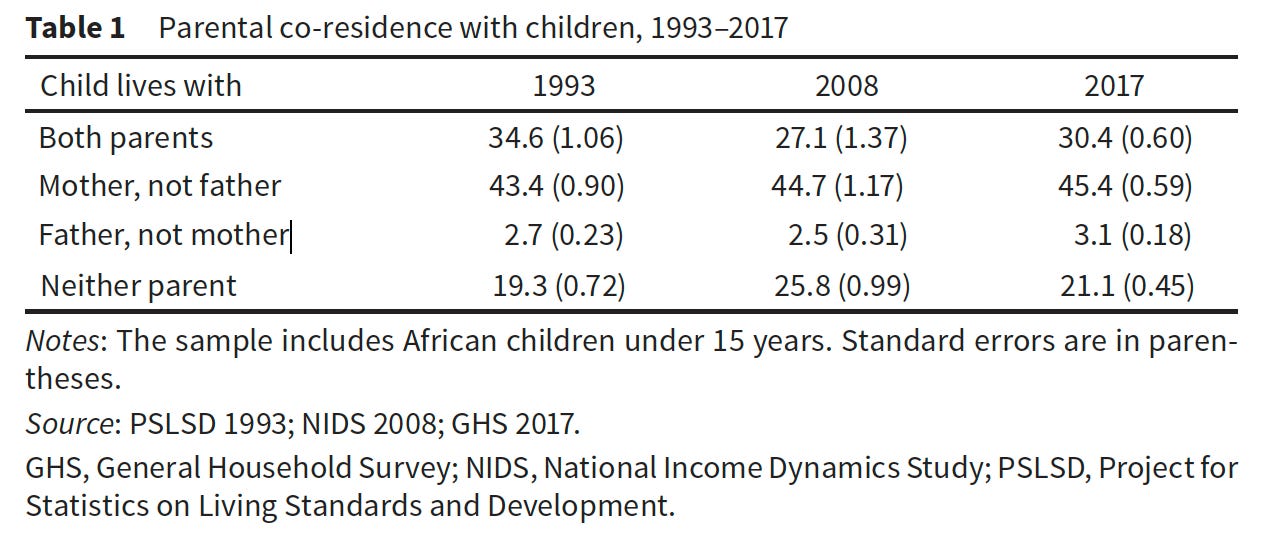
As South African mines drew in male migrants but restricted family formation, it effectively stretched conjugal ties to the point of breaking. In 1993, only 35% of South African children lived with both parents. Sons of single mothers may not necessarily have grown up wanting a conjugal union.
Apartheid may have thus weakened men’s preferences for female companionship. But it does not explain why over half of all South African births are unintended. Why are women embarking on these relationships?
(3) Extreme Inequality
Three economic conditions could suppress the market for romantic love by weakening women’s proclivity to bargain for male devotion, fidelity and contraceptives:
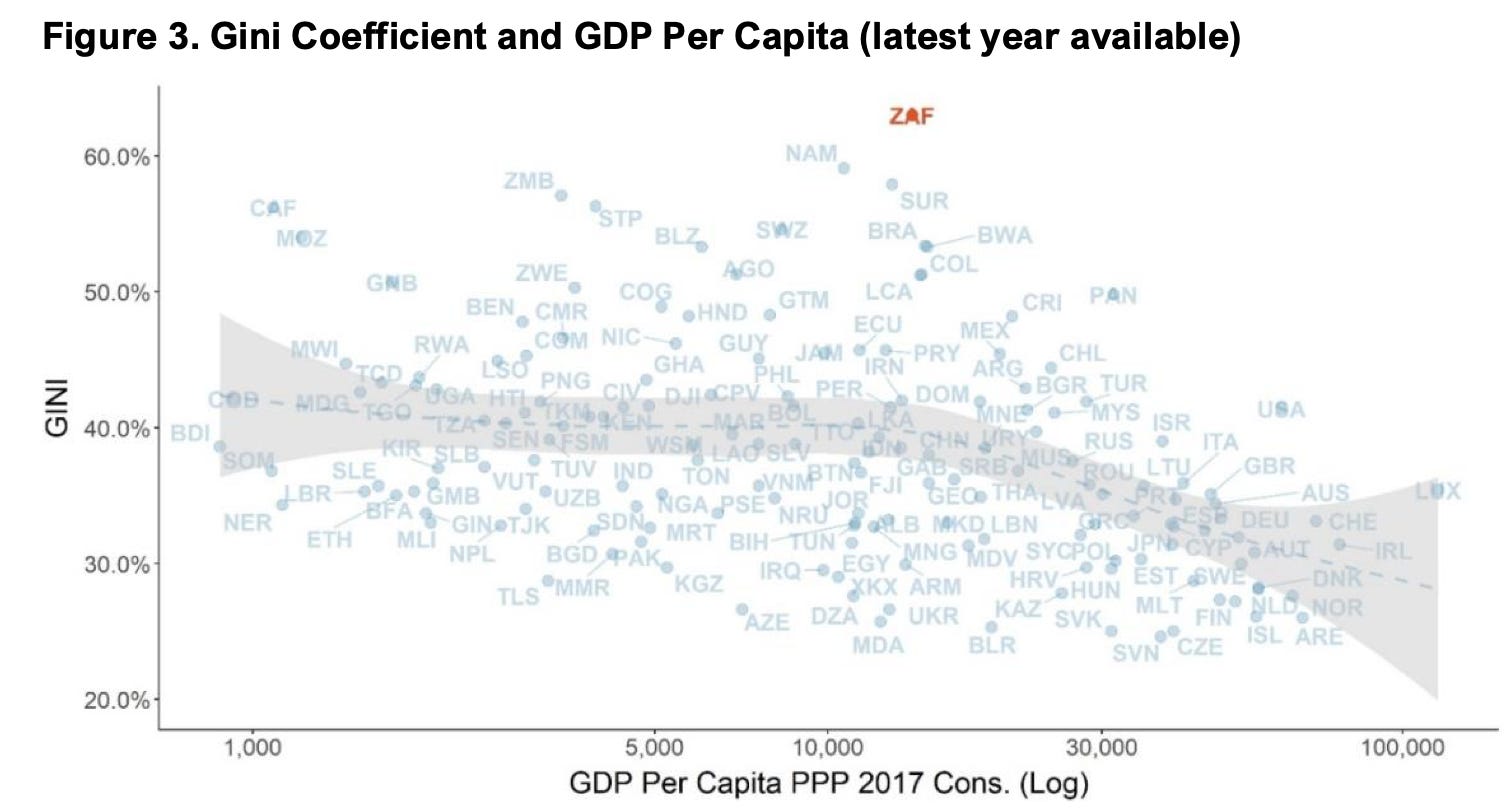
Inequality invariably generates envy, status consciousness and heightened demand for scarce positional goods, so as to signal one’s own status. In highly unequal societies, poorer women may feel acutely behind rich elites and try to gain goods that signal higher status.
Absolute deprivation could also motivate young women to be more materialistic when looking for partners.
High unemployment implies an artificially low sex ratio, as so many men become ineligible. The few men with stable incomes thus exercise tremendous bargaining power in the mating market.
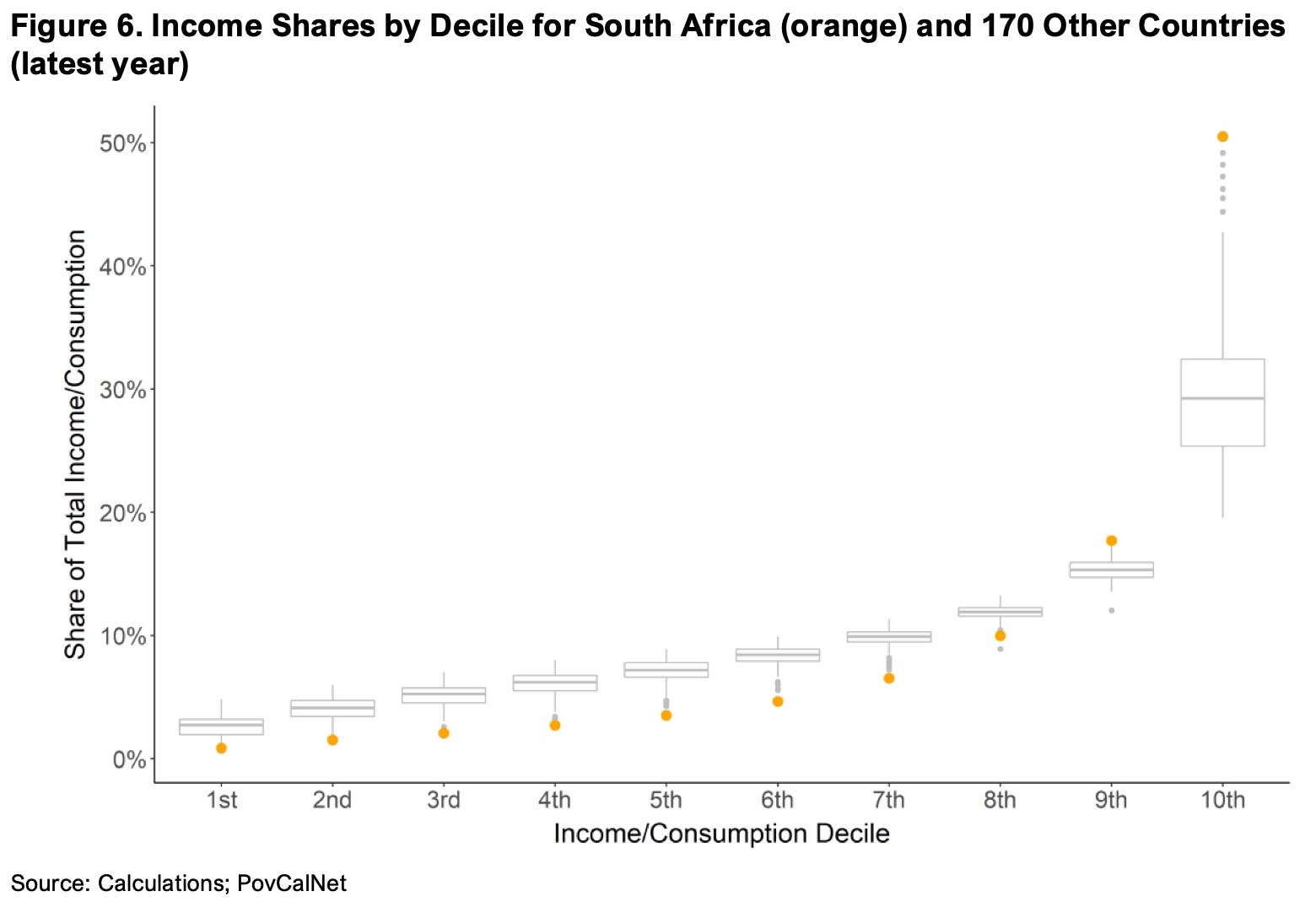
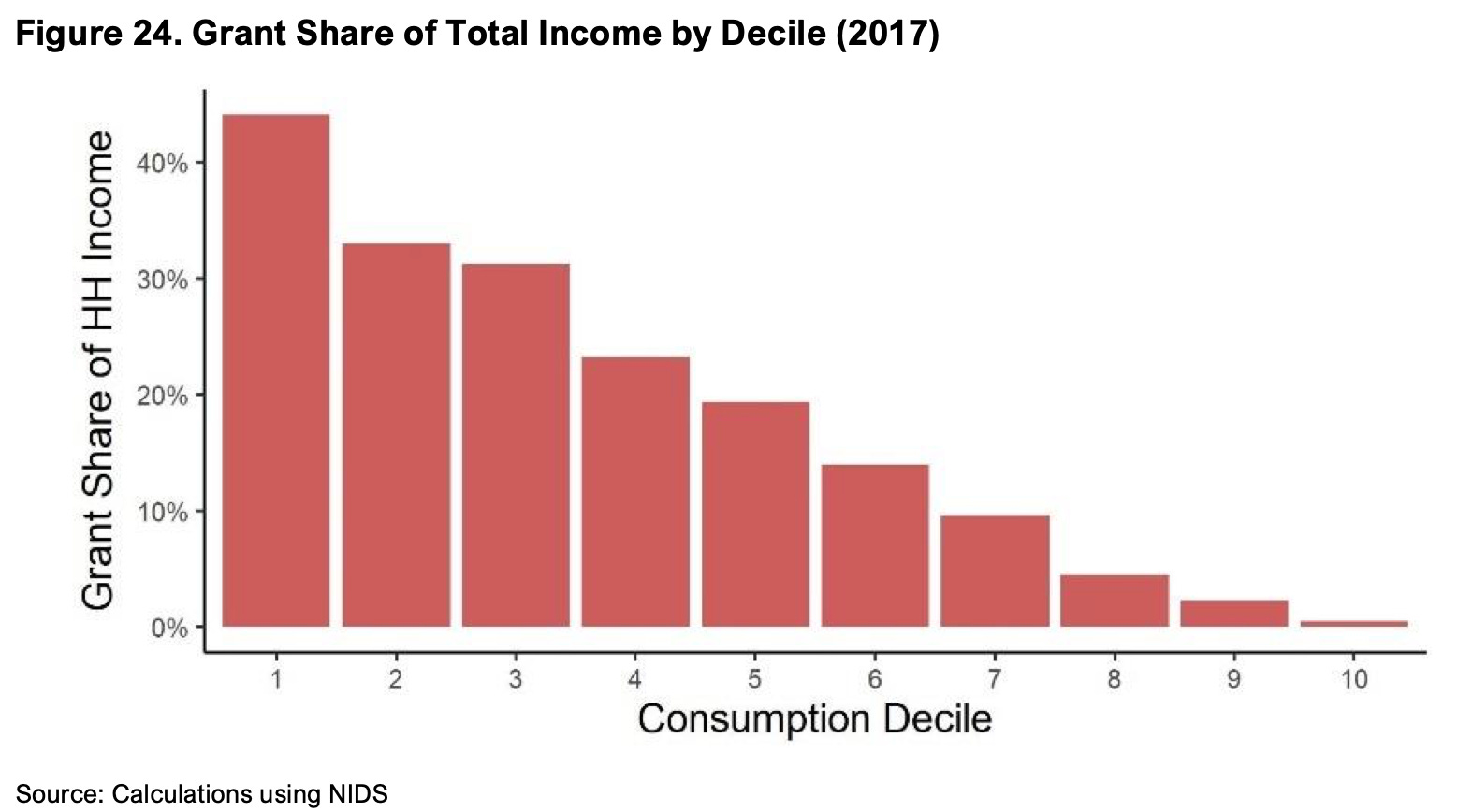
South Africa meets all three conditions. For starters, it is extremely unequal, the bottom 50% earn just 5% of national income. The poorest decile of South Africans are as poor as the poorest decile across low-income Sub-Saharan countries, yet the richest 10% of South Africans are as rich as the richest 10% in Eastern Europe.
South Africa also has an extremely high incidence of absolute poverty. Over 30% of South African households have no working adults, and rely on alternatives like government grants.
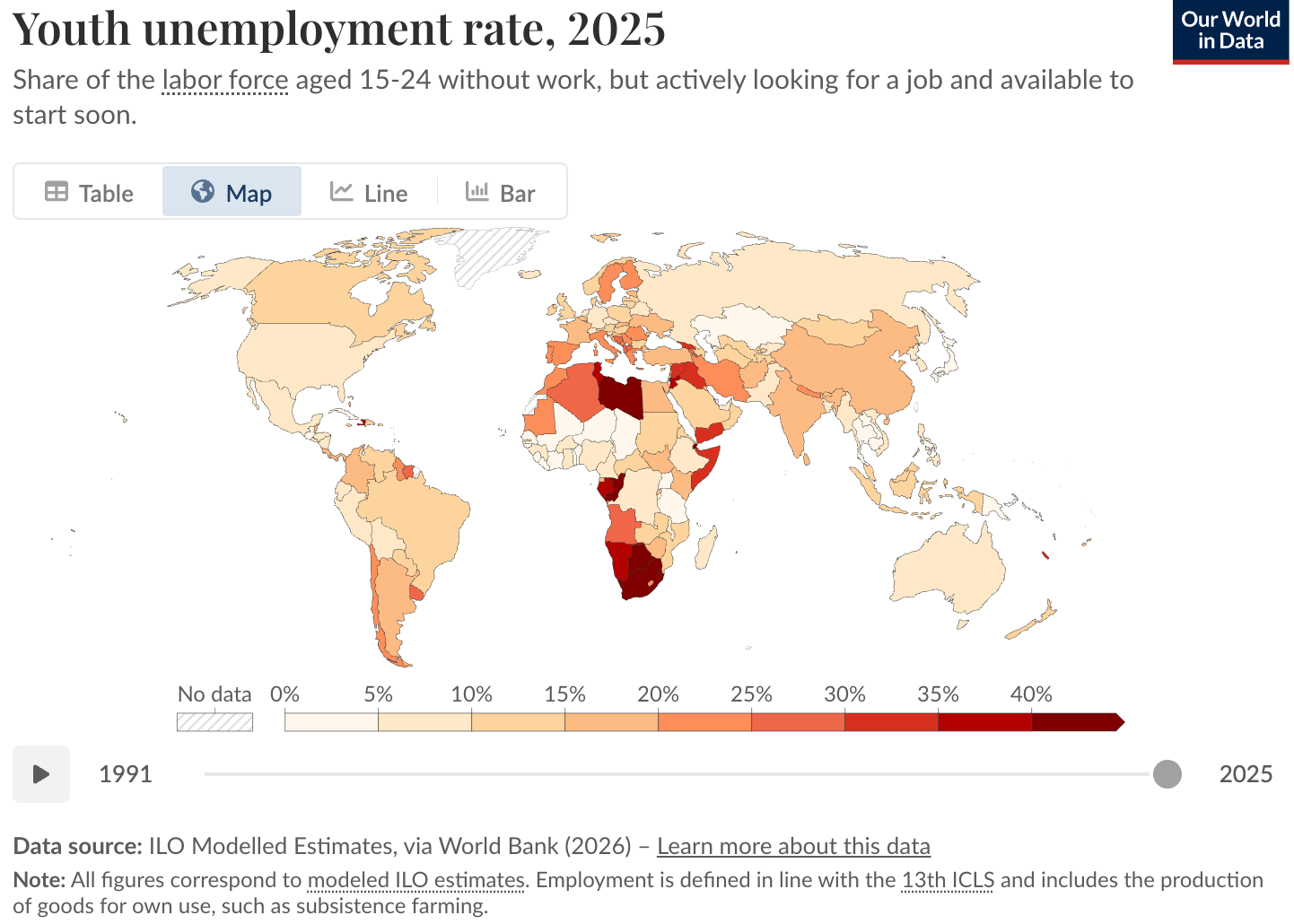
Youth unemployment is high across Southern Africa, this means that the majority of young men may be seen as ineligible (as emphasised by ethnographer Mark Hunter). South Africa is distinct in that it also has an unusually small informal sector, for its income level. Men with formal jobs are scarce and can thus exercise strong bargaining power over poorer girls and young women.

(4) Transactional Sex
Some men embark on short-term relationships, providing gifts and care in the hope of sex. When impoverished girls receive gifts from men, they may struggle to negotiate for devotion, monogamy or condoms.
In South Africa, a ‘taxi boyfriend’ may be highly coveted by other women as he provides free transport, and such competition lowers her capacity to bargain. As a 16 year old explained,
“Those guys, they can beat you anyhow, anywhere, even in front of your family. They don’t care, because they can have so many girls. I was a taxi queen for two months last year. I went everywhere. Then I became afraid of AIDS because I knew he had many girlfriends... Sis, those guys can be trouble”.
A growing literature suggests that transactional sex is widespread. When over 3000 Tanzanian school girls were surveyed, over half said their peers sometimes received money or gifts for having sex with older men, and around 40% said they were often sexually harassed (Berge et al 2026; see also Dean and Wamoyi 2015; Wamoyi et al 2010).
Of 1645 randomly-selected South African men, 60% reported that they participated in transactional sex, generally providing her with gifts of clothes or beauty products. Men often offer girls prestigious consumer goods - like scented beauty products and fashionable clothing. Over a third of surveyed young women in rural Mpumalanga, South Africa, said they spent such transfers on prestige goods, like perfume, hair extensions, expensive underwear, cosmetics, handbags and jewellery. As a young women shared: “Sugar daddies have money and I want their money. So nowadays girls want to make themselves beautiful, look nice and wear nice clothes… Look at me I eat well because I have a relationship with a sugar daddy”.
“AmaBlesser” became a South African smash hit in 2016, as a young male encapsulated the woes of losing love, as his girlfriend cheated on him with his wealthy uncle and became pregnant. With the official video racking up 38 million views, he laments: “Uhambile ama-baby... Uhambe namablesser” (My baby is gone, Blessers took her away).
A Nigerian reader articulated similar dynamics:
“Adult men openly target teenage girls and overwhelm them with money [and] expensive gifts… Most of these girls are sexually abused and brainwashed but people have no sympathy for them because a potbellied man gave them an iPhone and a cheap wig”.
Sexual Harassment & Abuse
If men provide money and expect sex, yet feel little emotional attachment, then intimate relations become risky.
In South Africa, men who have ever engaged in transactional sex are also much more likely to report that they have committed sexual assault. Among surveyed rural young men in Eastern Cape, those who had been physically or sexually violent towards a partner in the past year also reported inconsistent condom use. Meanwhile, women who embarked on transactional sex were more likely to acquire HIV.
If only a few men have jobs, they can exercise considerable bargaining power over impoverished girls and young women. This could include inconsistent condom use, infidelity, or emotional and physical abuse.
“If you are lacking and you are getting pressure from the way your friends are looking, you will definitely find someone to sponsor you (sugar daddy). In the end you get pregnant, because you have no say and you will give in and get what you want” (young woman, urban Zambia)
“[I had sex] because of money. I wanted to buy something and I didn’t have money. In that situation, a man can tell you to sleep with him, especially when you are assured that he will give you something” (young woman, urban Zambia).
“I was not ready for a child but my boyfriend told me that his friends were teasing him about not having children. He wanted me to fall pregnant and give him a child. He said this would prove his manhood and this would secure our relationship”. (Kwa-Zulu Natal)
Even if only a few young women are enticed by small gifts, men may still adopt this general strategy of sexual harassment on the off-chance they’ll get lucky. The downside risks are invariably low when police are overstretched and male predators harass with near impunity. 29% of girls surveyed in Sub-Saharan Africa said that they had experienced physical or sexual violence. In Kwa-Zulu Natal, school boys pressure girls to engage in sexual activity, sometimes touching or publicly humiliating the girls.
“You can just be walking on the corridors during lunch break at school and then a random boy can just touch your bums or breasts; and he will be saying that you have beautiful breasts. We see this happening everyday”. (Simangele)
They [boys] even ask you if you are sexually active, and if you want to have fun with them. They say you would scream nicely. And, if you tell them that you are still young.. they say that when you are fifteen years old, you are old enough, you qualify. They say you are still babies but still they want to kiss you and remove your clothes”. (Thabi)
“Sextortion”
Many poor girls and women are navigating schools, markets, offices and state services where corruption is rife. At each chokepoint, men may abuse their positions of power to extract not just financial payments but also sexual favours - ‘sextortion’.
The 2019 BBC documentary “Sex for Grades” exposed lecturers at the University of Lagos and the University of Ghana pressuring students for sex in exchange for better grades. In Johannesburg and Bogota, male water utility staff demanded sexual favours from women in exchange for water services.
This persists more widely, as a Nigerian woman shared with me,
“Everywhere you go in Nigeria women and girls are being coerced to provide sex in exchange for access to utterly mundane things. It’s not every single person that is doing this but it’s so widespread and common that it is definitely a feature of the life of the average person. ie it is a danger they could reasonably run into quite easily”.
(5) Poor Contraceptives
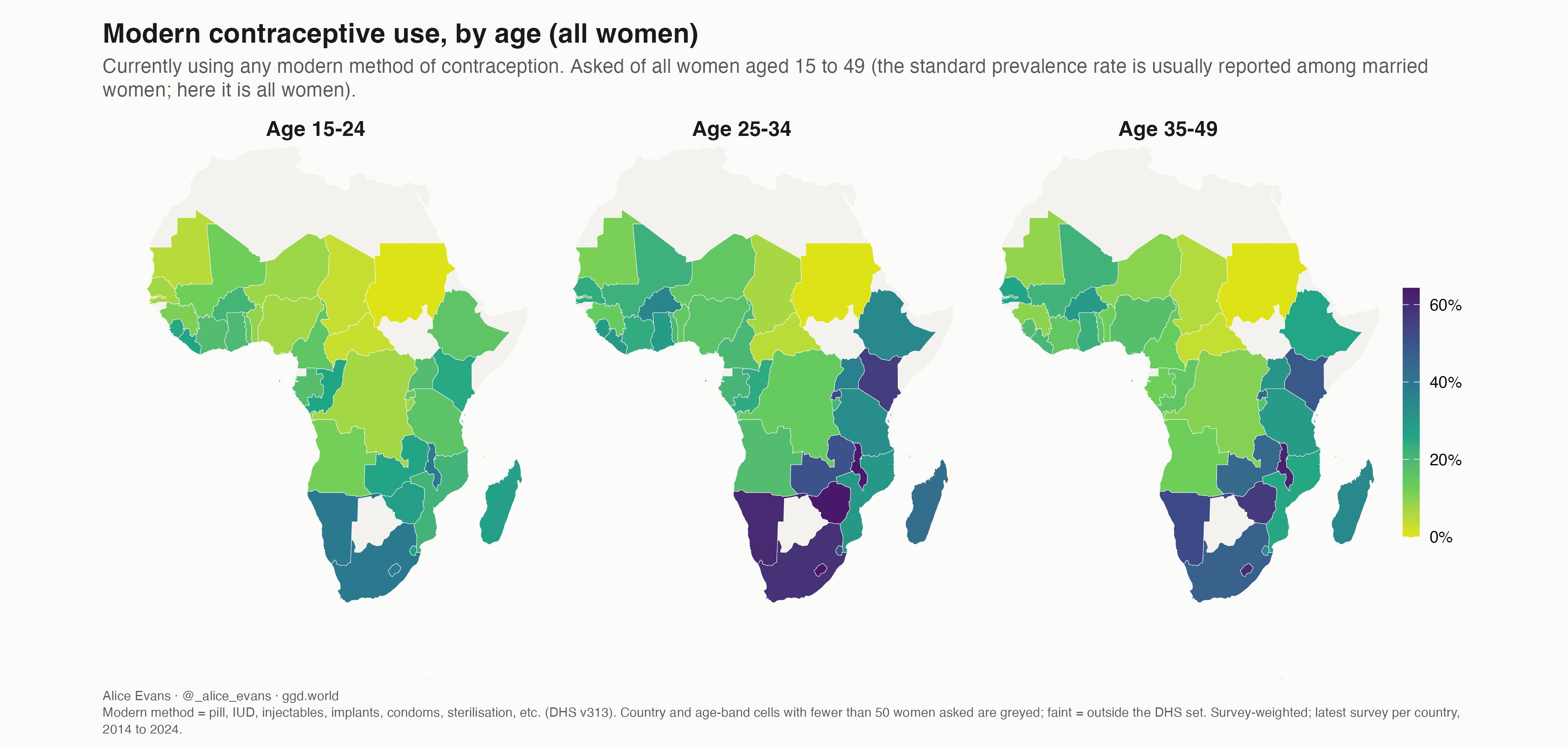
Why don’t sexually active women use contraceptives? While Southern Africa has higher rates of contraceptives than other African countries, as well as high knowledge, there is still a sizeable share of sexually active girls and young women who are not using contraceptives.
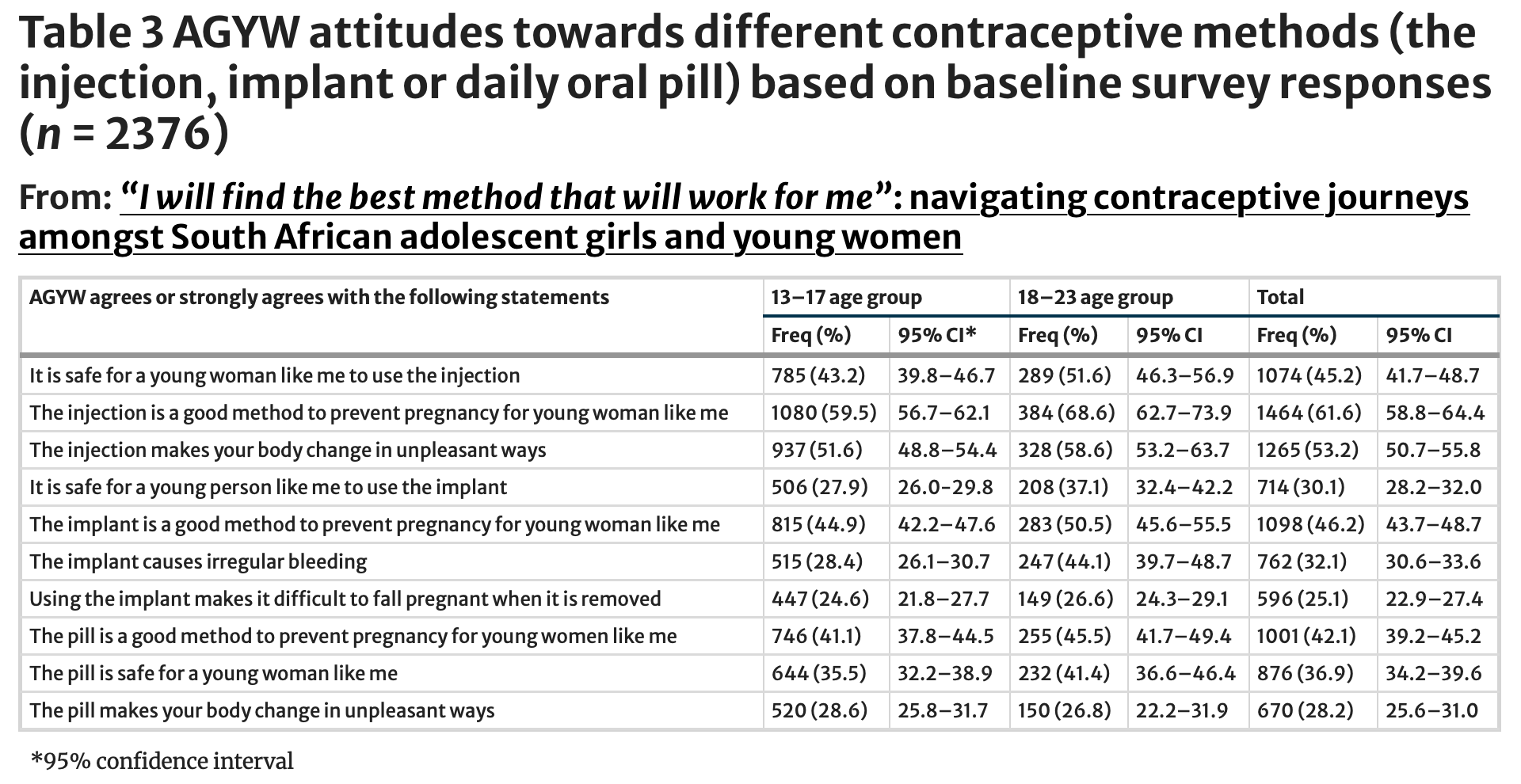
South African clinics often steer women towards injectables, since these are relatively cheap, can be obtained once every two or three months and do not require daily adherence. But interviewed women sometimes express negative side-effects:
“It was not good for my body… I felt dizzy, had terrible headache, menstruated for a long time and lost weight… I lost weight because of losing so much blood… I was bleeding too much”.
Intrauterine devices are an alternative, but in South Africa these are rarely used (1.6% of South African married women). Clinics may be steering women towards injectables (which do not require the same level of training), which are then discontinued due to negative side-effects.
(6) Risk-tolerance
Since sex carries risks - of disease, reputational damage, abandonment, unwanted pregnancy, and the cost of raising a child - women’s conditions for intimacy may partly depend on their tolerance for risk.
Anke Becker and co-authors demonstrate that there is considerably cross-country and within-country heterogeneity in self-reported patience, risk-taking and positive reciprocity. While different surveys yield slightly different results, these regional trends are broadly persistent.
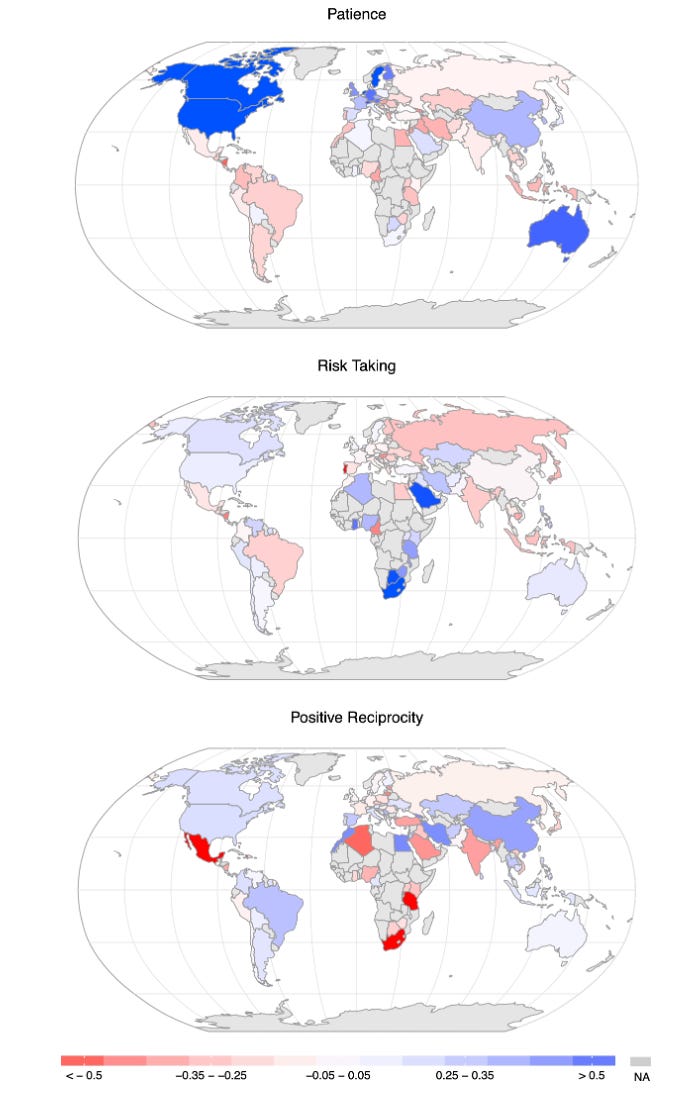
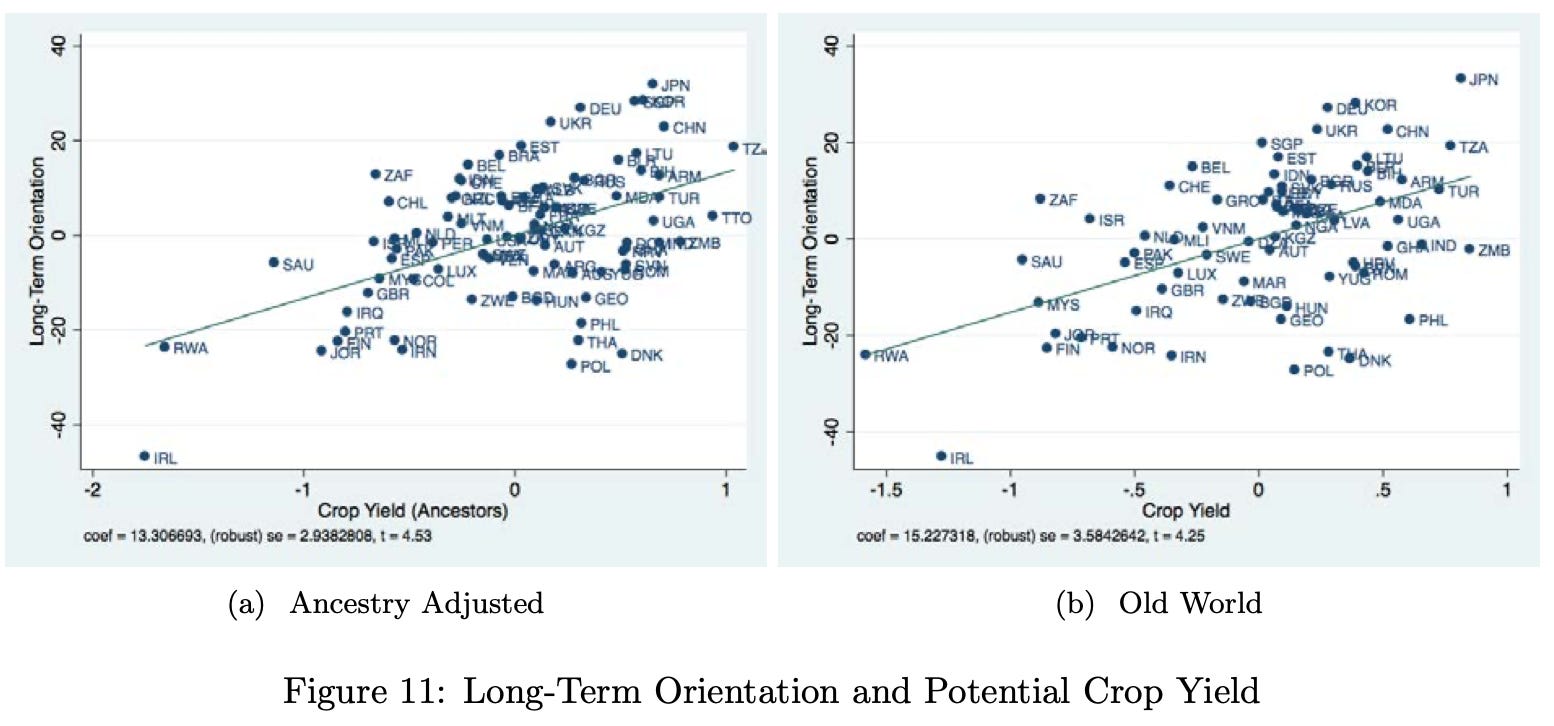
What might explain this heterogeneity in long-termism? Unclear. Oded Galor and Ömer Özak suggest that agriculture may have reinforced a propensity to toil for later harvests. Beyond deep roots, delayed gratification may also be reinforced via cultural persuasion in folklore, religion and literature.
Obviously, risk-tolerance interacts with poverty, inequality and age. If a man with a job offers an impoverished teenage girl gifts and financial support, then she may be more inclined to take risks and not insist on a condom, so as to preserve that relationship.
Why is Male Devotion Under-Supplied?
Puzzled by Southern Africa’s exceptionally high rates of single motherhood, I’ve tried to theorise the market for romantic love. I’ve suggested that men are most likely to provide devotion if they want female companionship and children, while such women credibly insist on commitment. Men then compete with affection, reliability, monogamy and long-term support. But if men do not want female companionship or hands-on fatherhood then their incentives to signal devotion are considerably lower.
In Southern Africa, men with good jobs are scarce and they can bargain for preferred terms, sometimes pressuring poorer teenage girls and young women to have intimate relationships without using contraceptives. Opportunists may even harass girls and young women more widely, knowing that sanctions are weak.
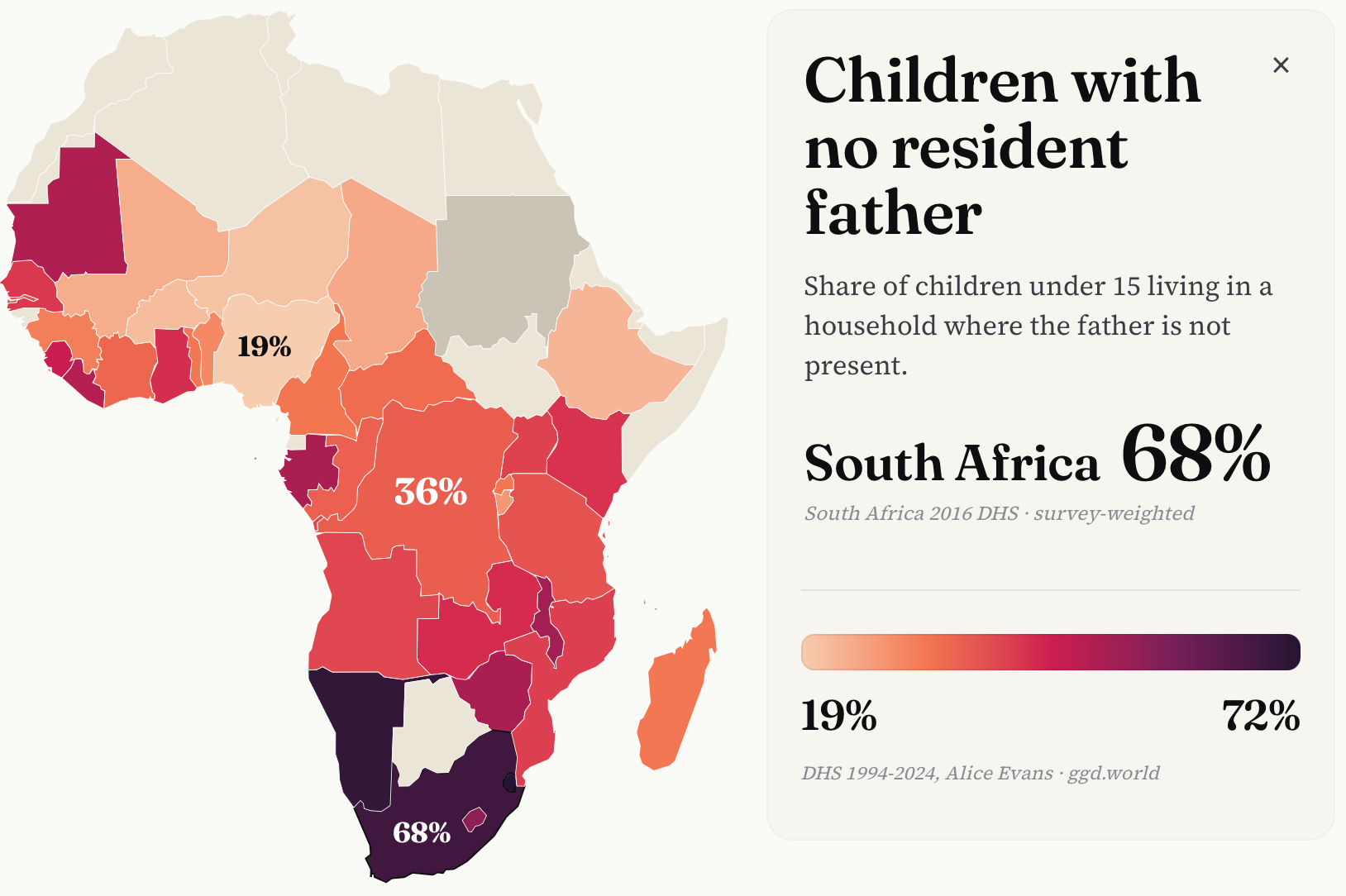
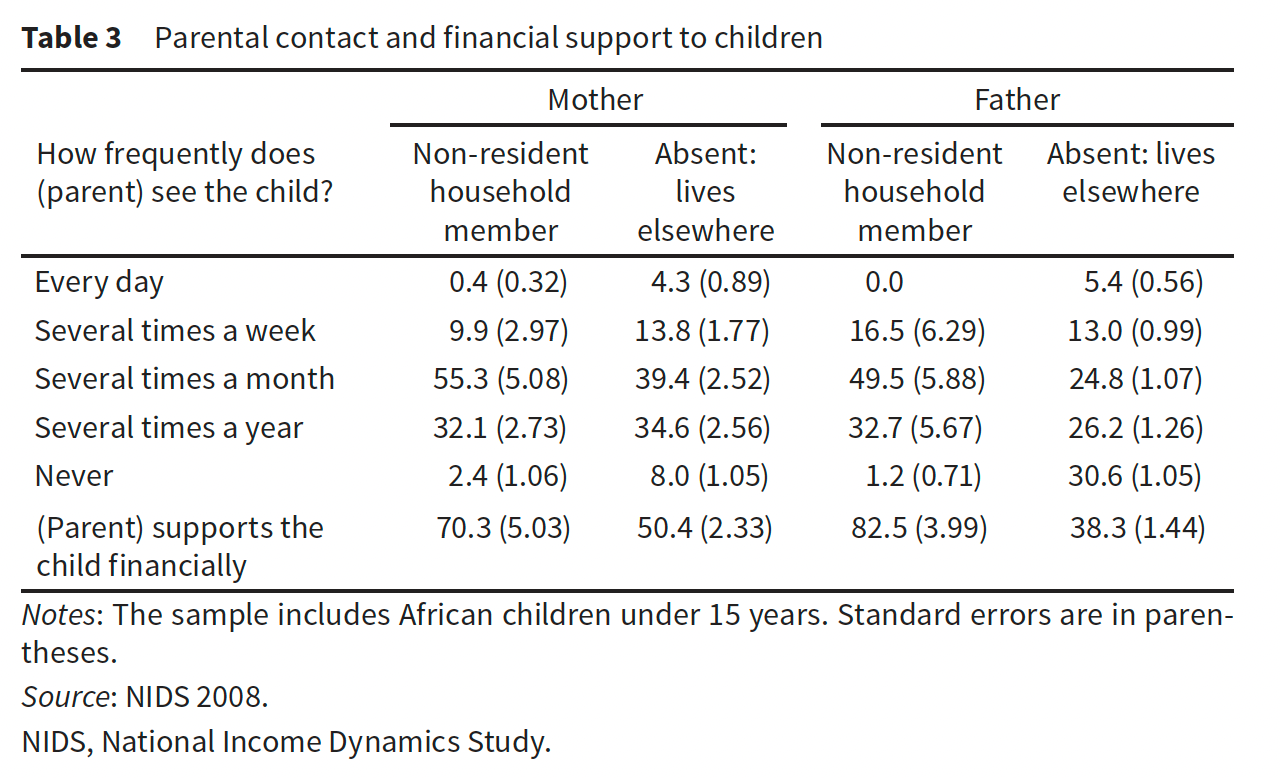
Severe inequality and poverty mean that the market for love is lopsided. Although women may want love and long-term support, men can often obtain sex through lower-cost strategies. Today, only 38% of absent fathers in South Africa support their children financially.
Given these structural constraints, one plausibly effective intervention might be to increase access to safe, effective IUDs, so that Southern African women can truly control their bodies and have the children they want.
I've been thinking about this and...one reason that was left out is that women want children. I have never found the "planned " vs "unplanned" dichotomy very helpful among the moms I care for (overwhelmingly low income) because they're not planning pregnancies the way middle class people do--trying to delay them for education and other prospects.
But women seem to want kids whether or not the men in their communities offer resources, fidelity, kindness, etc. Poor women without many prospects or opportunities may want kids even more, and earlier, because when they look around their communities, they don't see tons of other avenues to a fulfilling life. I'm with you that better contraceptives would help people who want to avoid poorly timed pregnancies, but I don't feel convinced that's what's missing. Women know that pregnancy results from unprotected sex.
Desire for pregnancy occurs on a spectrum. And based on your description, it seems unlikely that if a South African woman waits, some wealthy, devoted man will materialize...
Lead (Pb) poisoning. Most of SSA phased out leaded petrol in 2006. You mention Bogota; due to the massive smuggling of Venezuelan petrol into Colombia, the early phaseout of leaded petrol in Colombia had little effect, as Venezuela only phased out leaded in 2005.
Add to that that most of the SSA population (one exception would be much of Ghana) has heightened uptake of lead per unit intake, and the similarity in dynamics (albeit not scale) of African and US Nigerian slave descendant populations is unsurprising.
The interesting thing will be what happens in the next five years; do the older generations get a notoriety as being sex pests, insincere, et alia? That is what I expect.