
What lead to the Global Islamic Revival? This was one of the most significant political movements of the 20th century, occurring across multiple world regions. The existing literature is rich, but extremely disparate and disconnected, typically focusing on local idiosyncrasies – Egypt’s economic stagnation, Turkey’s religious associations, Iran’s religious authoritarianism, Sahelian state weakness, Pakistani return migration from the Gulf, repression in Uzbekistan, Indonesian’s resistance to secular schooling. But could there be a common cause?
This essay explains how modernisation can amplify religiosity. It is not the full story, but rather one part of the puzzle. It draws on my qualitative interviews with Muslims in Morocco, Turkey, Britain, Canada, the US, India, Uzbekistan, and Malaysia. I am indebted to their astute observations and generosity. Critique is always welcome.
The Prestige-Piety Feedback Loop
All Muslims believe that there is no God but Allah and Muhammad is His Messenger. However, although the Quran is highly prestigious, scriptural knowledge has historically been severely limited. In early 20th century Southeast Asian and African villages without schools or mass media, peasants might identify as Muslim but still venerate ancestral spirits, eat pork or reveal bare skin. Even in the Ottoman Empire, there was plenty of religious syncretism. Only seeing similar neighbours, everyone assumed it was all perfectly legitimate.
A 63-year-old Muslim from rural Punjab (Pakistan) shared that when he was younger, men rarely prayed. They didn't even know how; they could only follow. In his village, Muslim women didn't veil - though they knew that 'respectable women' in cities wore burkas.
The late 20th century brought profound transformations through three key changes:
Technological advances in communication (printing, cassettes, the internet)
Mass schooling
Political liberalisation and greater freedom to practise Islam (in the case of post-Soviet Central Asia and Reformasi Indonesia)
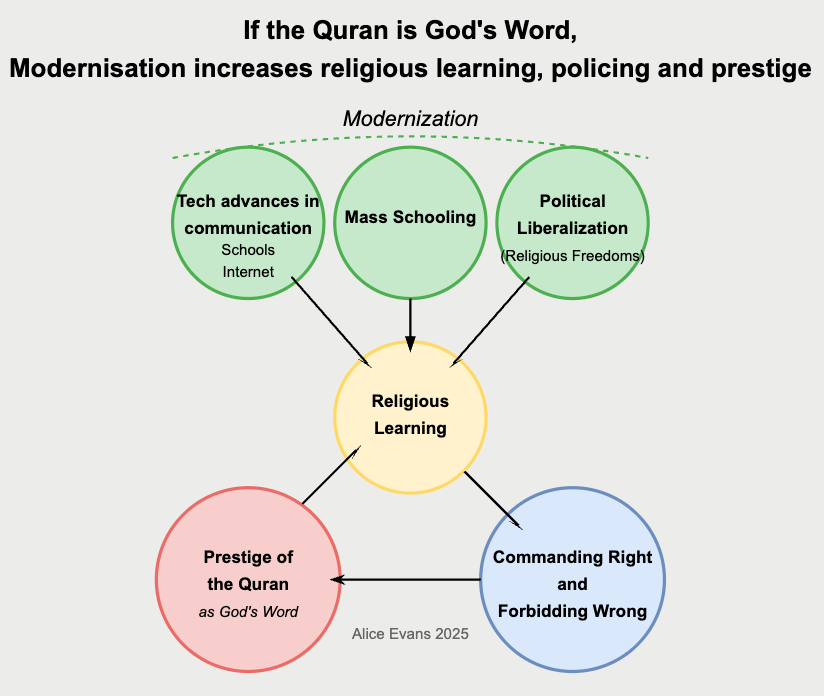
Seizing these opportunities, religious authorities sought to mobilise the masses - calling on them to adopt proper piety, command right and forbid wrong. This generates a powerful feedback loop:
Religious learning: Mass education and communication technologies enable greater religious instruction in jurisprudential Islam (Sharia law).
Social policing: Muslims internalise the obligation to ‘command right and forbid wrong’.
Status competition: Men compete for status by emulating the Prophet (growing beards, becoming breadwinners). Women demonstrate piety through veiling, modesty, and gender segregation.
National politics: Religious publics vote for religious parties, who codify sharia, punish blasphemy, and restrict liberal dissent.
Unlike the Protestant Reformation with its principle of sola scriptura (interpreting the Bible independently), the Islamic world tends to venerate respected authorities and heed their ‘tafsir’ (scholarly commentaries). Due to historic Arab prestige and Saudi funding, many Muslims look to scholars trained at institutions like the Islamic University of Medina and al-Azhar in Egypt, reinforcing strict conservatism. Islamic feminists then struggle to gain legitimacy.
The supply of religious education thus creates its own demand for religious piety. This pattern repeats across diverse Muslim-majority regions. This is merely one mechanism, of course there are many complementary explanations discussed in the broader literature.
Indonesia: Technology and Democratic Freedom Amplified Jurisprudential Islam
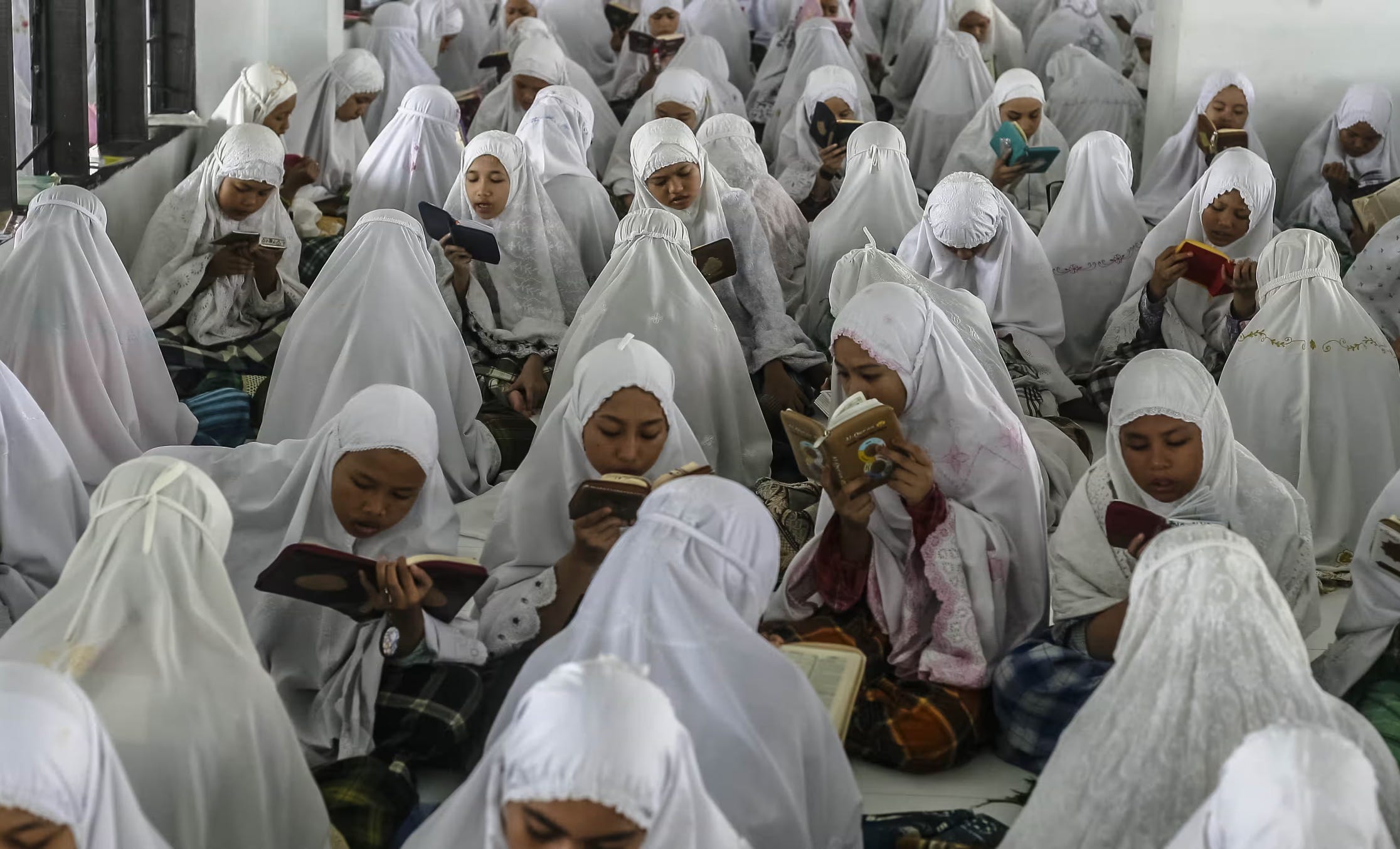
Indonesia, the world's largest Muslim-majority country (276 million people), clearly illustrates this trend. Under President Suharto’s three decades of authoritarianism, Islam was heavily repressed. Hijabs were banned in schools till 1991.
Post-democratisation, Indonesians gained freedom to propagate their faith, communicate online, and receive Saudi funding. Religious entrepreneurs successfully championed jurisprudential Islam, with 20% of Indonesian school children now enrolled in madrasahs.
With rising support for jurisprudential Islam, politicians gain legitimacy by institutionalising sharia, enforcing male guardianship, mandatory hijab and punishments for blasphemy. At least 30 local regulations now restrict activities by religious minorities. 120 local regulations mandate the hijab.
This creates a reinforcing cycle where religosity becomes socially, economically and politically rewarded - as predicted by my model.
Uzbekistan: Revival After Repression
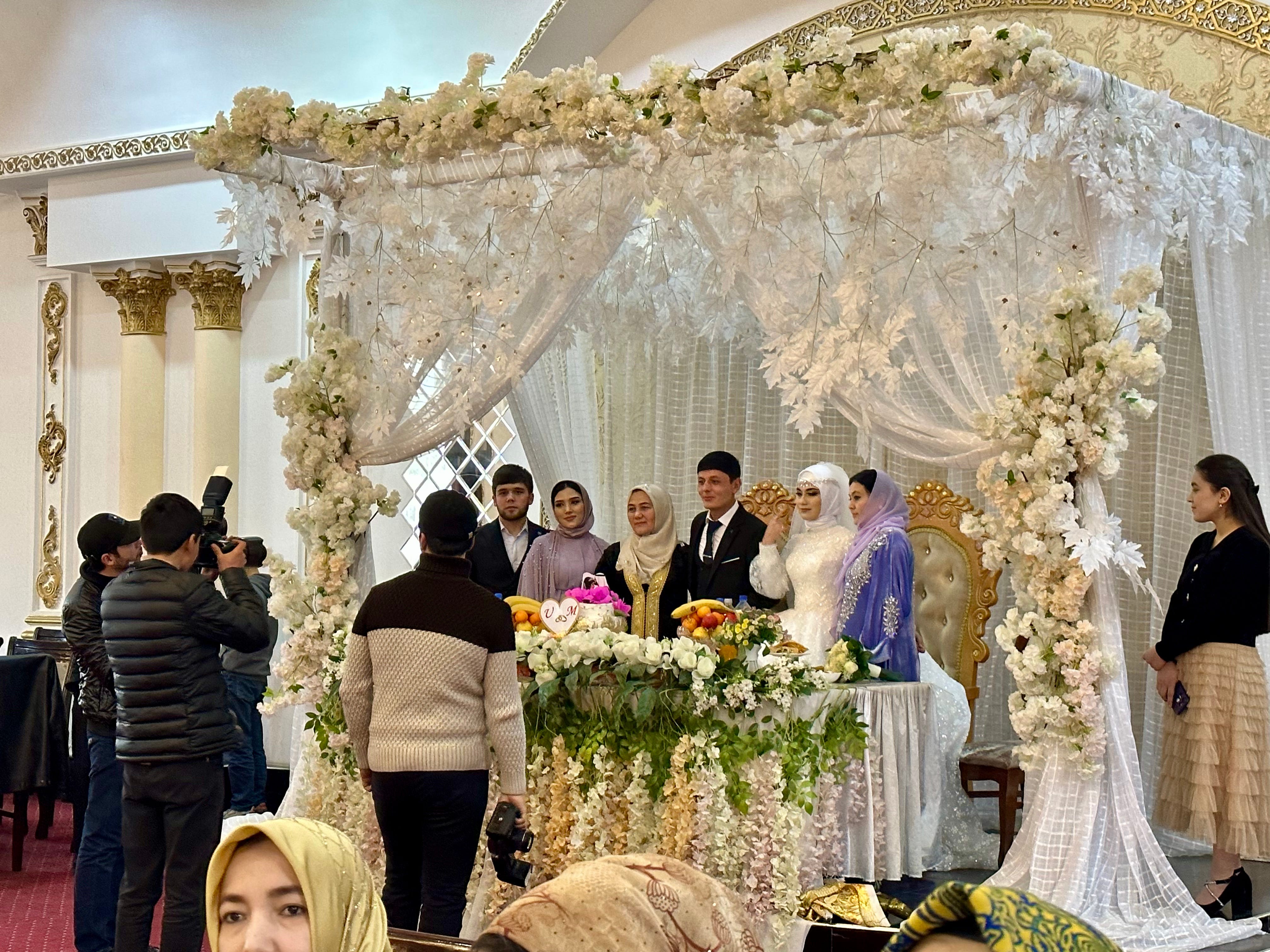
Islam was brutally repressed by the Soviets, but kept alive in private homes. With rising religious freedoms, Uzbeks are increasingly expressing piety and learning about scripture.
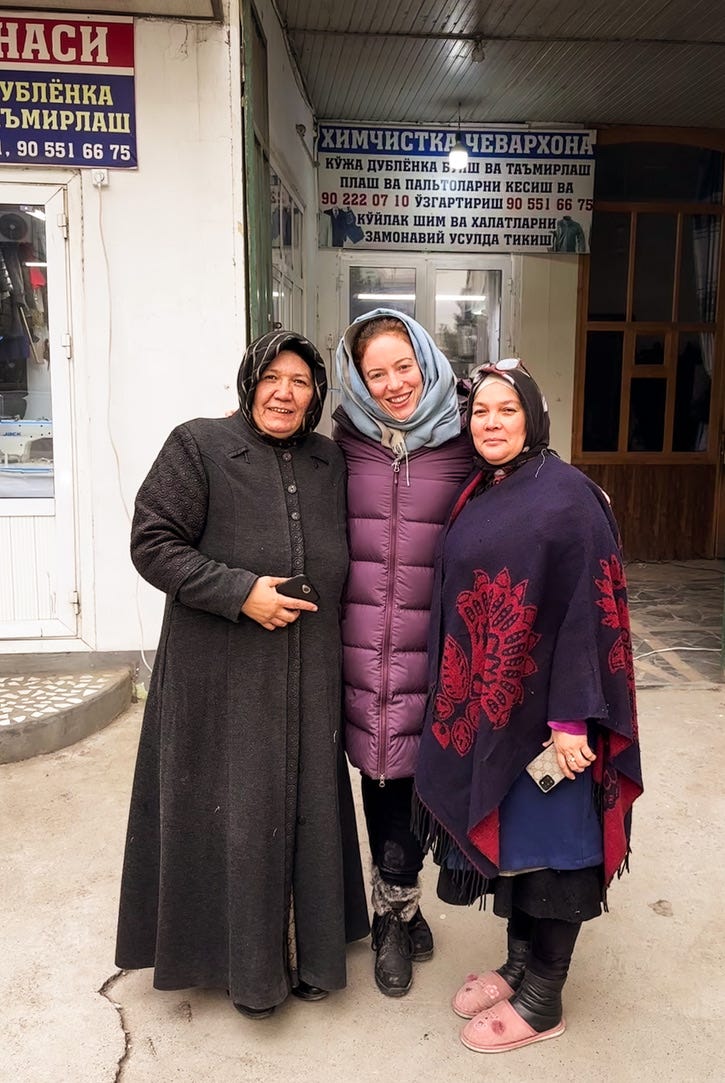
Saudi Arabia is widely seen as 'God's land'. In Uzbekistan, interviewed young men expressed reverence for Arab and Arab-trained imams, with a 'pure Islamic education'. When I asked older Uzbeks which country they'd most like to visit, they usually said Saudi Arabia. Pilgrimage is a religious obligation, returnees are greatly respected. Saudi Arabia can thus export its gender norms. Every single woman I met who had undertaken the Umrah pilgrimage subsequently started veiling.
Two reinforcing mechanisms operate simultaneously:
Fear of divine punishment: Fear of Hell is exceptionally high in Muslim-majority countries. Muslims typically insist that our time on earth is merely temporary, a drop in the ocean. Fleeting material wants thus pale in comparison to the afterlife. And only the truly pious enter paradise. As one ex-Muslim in Fergana valley remarked, “People want to go to heaven, so they turn to imams”.
Social approval: Once behaviour like veiling gain prestige, women adopt to gain status. “Veiling is to show you're a good person. Our people really depend on other people's thoughts towards you, and if you wear hijab they will be assured you're good.. This is the most incentive for the girl, to be seen as a good person by other person,” explained one student from Samarkand.
Popular YouTube imams usually say that women should obey their husbands and stay apart from men. In Uzbekistan, I frequently asked if people discussed or debated interpretations of scripture. Everyone said no.
But once Uzbeks can freely practise and learn about their religion, they gravitate to Saudi-trained respected authorities (who are typically conservative). Adherence is then motivated by fear of hell and concern for social approval - key components of my prestige-piety loop.
Niger
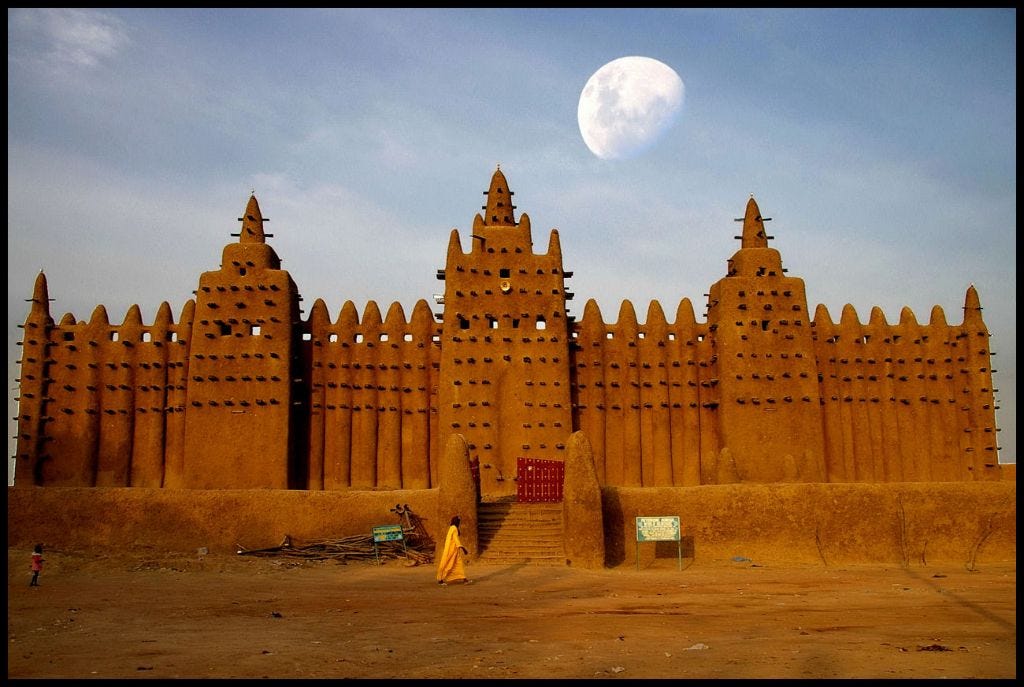
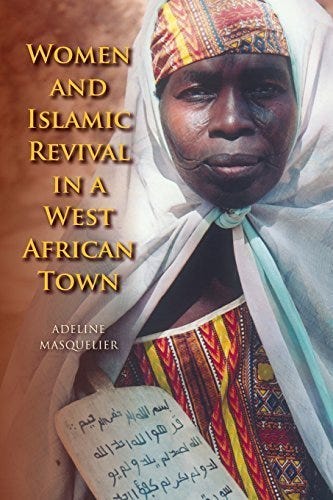
Adeline Masquelier’s tremendous book, “Women and Islamic Revival in a West African Village” draws on qualitative research from the late 1980s to early 2000s. She tracks how rising knowledge of jurisprudential Islam has impacted culture.
In the 1980s, religious knowledge was minimal - women consulted spirit healers, and expressed limited interest in Islam. A decade later, the transformation was dramatic, with increased community focus on proper Islamic conduct. Men strenuously avoided interactions with women.
This transformation created a moral dichotomy between the ‘ignorant past’ and the ‘enlightened present’. The Izala [fundamentalist] movement targeted jahilci (religious ignorance), framing it as a moral failing that required correction through proper Islamic education. As mosque construction proliferated, spirit shrines diminished.
Reformist preachers championed female seclusion, veiling and wifely obedience. One imam explained: “God told us to keep women in their homes”. Men thus gain status by keeping their wives within the confines of the compound.
All this perfectly illustrates my prestige-piety feedback loop model.
MENA and Anatolia
Malika Zeghal's recent book, “The Making of the Modern Muslim State” provides compelling evidence for my model through her analysis of religious education across North Africa and Anatolia.
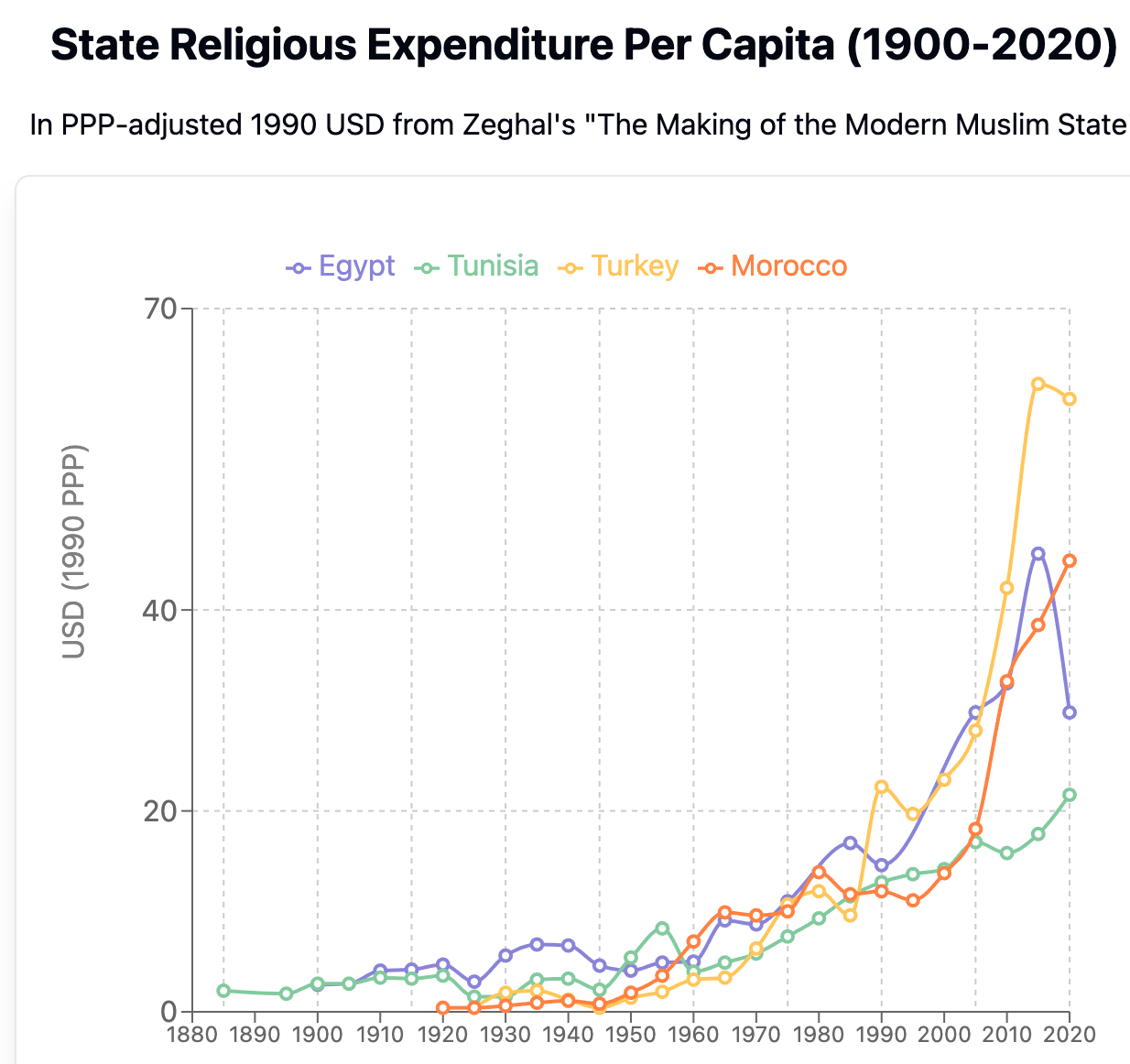
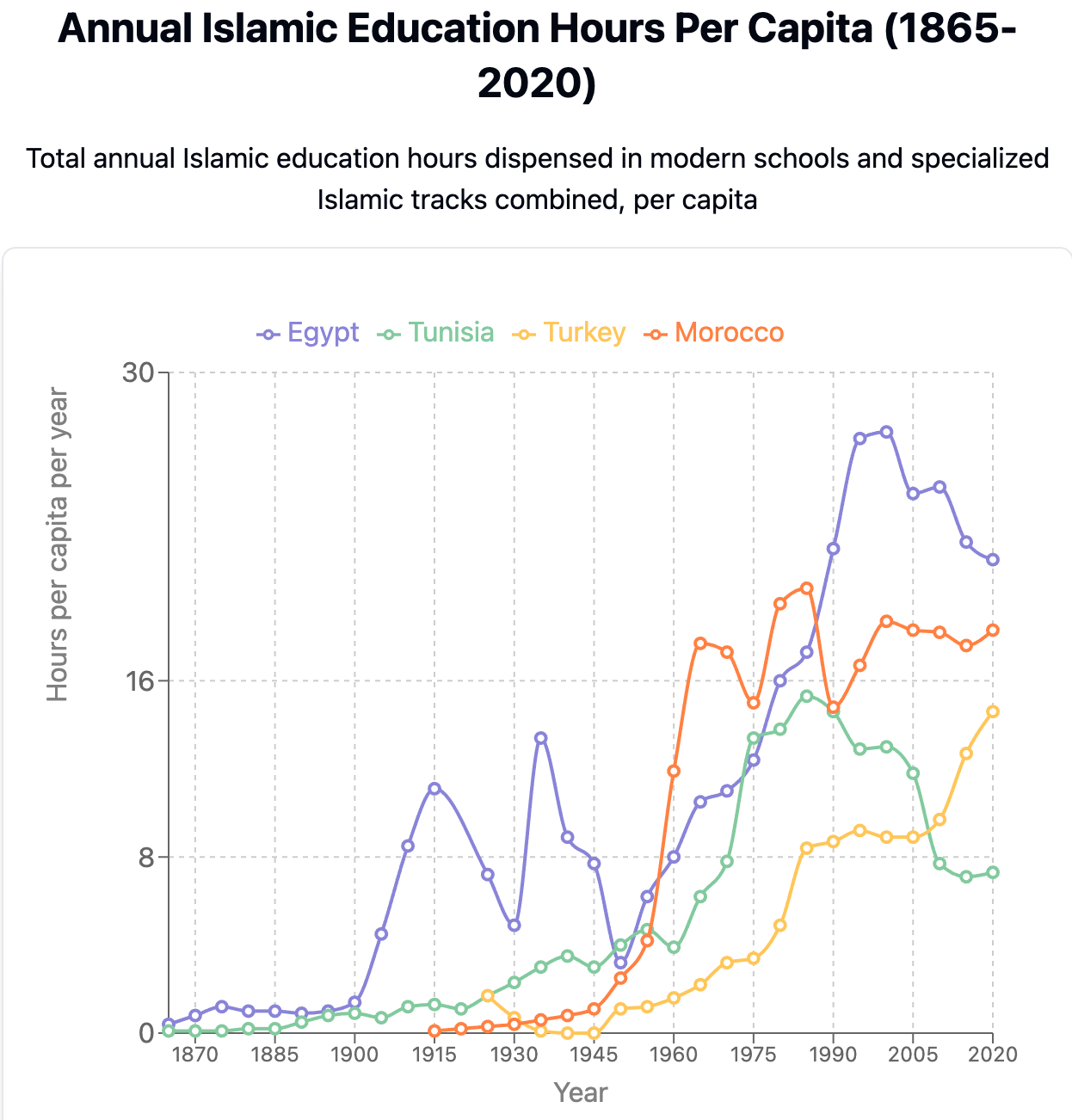
As Muslim polities grew wealthier over the 20th century, they channeled more resources into religious education. In Turkey, per capita state religious expenditure rose from less than $1 in 1950 to over $60 by 2020. Egypt, Tunisia, and Morocco followed similar trajectories, with religious education claiming an increasingly significant portion of state budgets.
Zeghal estimates that Egyptian and Turkish Muslim children born in 2020 will receive approximately 1,000 hours in religious education. This represents a 6-15 fold increase compared to children born a century earlier.
This pattern perfectly aligns with my prestige-piety feedback loop. As modernisation expanded access to education, it simultaneously amplified religious learning. This created a generation more knowledgeable about scripture and Islamic jurisprudence, which in turn reinforced the cultural prestige of religious adherence. The cycle continues as this more religiously educated public supports policies that further strengthen Islamic instruction.
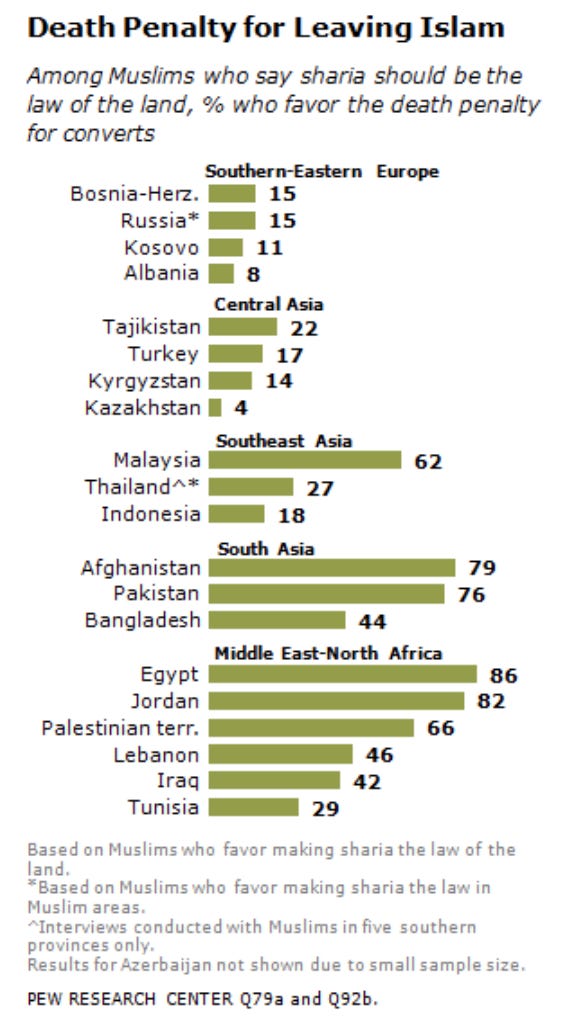
When Arab Barometer asked Kuwaitis about role models, 32% mentioned religious figures. 51% say the country’s laws should be entirely or mostly based on Sharia. When about the meaning of Sharia, over a quarter of MENA respondents said ‘a government that restricts women’s role in public’.
Why Modernisation Theory is Wrong
My model helps explains why Modernisation Theory is wrong, and why there is no consistent relationship between education, wealth and secular-scientific values. What matters is not ‘individual years of education’, but ‘community prestige’.
In societies where the Quran is upheld as God's word, modernisation strengthens religiosity. But in contexts where secular-liberalism holds prestige, the same technological advances produce opposite outcomes.
The Western Contrast: When Secular-Liberalism is Prestigious
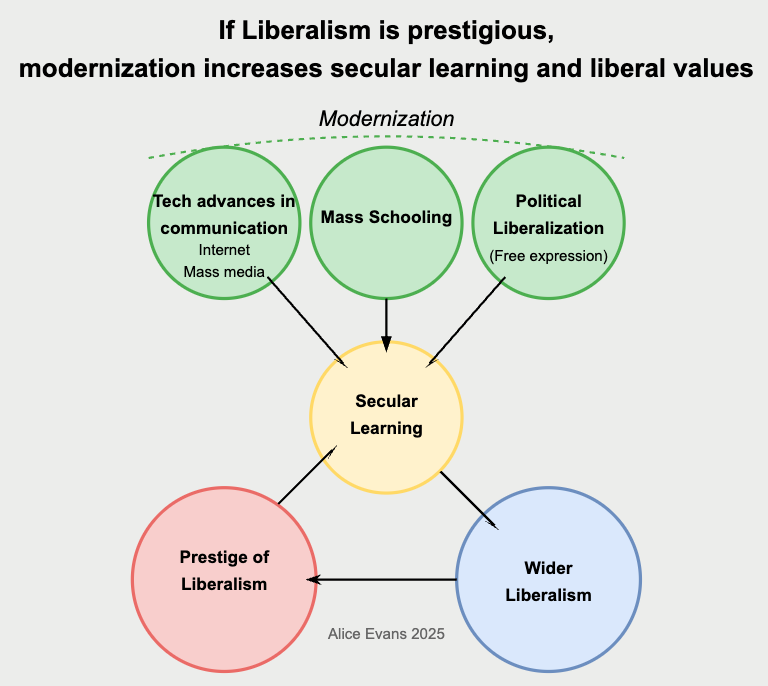
After the Enlightenment, secular-liberal values gained cultural prestige in Europe as well as Latin America. As liberals secured institutional power and ideological persuasion, these ideas became more engrained in school curricula. Schools, print media, and later the internet then became vectors for secular learning. Thus, as more Europeans and Latin Americans went to school and watched television (often imported from the US), they increasingly adopted secular-liberal worldviews.
As my second diagram illustrates, this creates a parallel feedback loop, but with secular learning and liberal values at its core.
Modernisation’s Impact on Culture is mediated by Prestige
When societies modernise through mass education, advanced communication technology and political liberalisation, these forces amplify whichever belief systems already command prestige. As Nigeriens, Uzbeks, Pakistanis and Indonesians learned about the Quran, they increasingly shed 'backward' practices and emulated religious authorities. This has led to a surge in calls for piety, veiling and support for sharia.
In communities where scripture is upheld as God’s word, modernisation amplifies religious learning, social policing, and status competition. This creates a powerful feedback loop that reinforces religious commitment.
While acknowledging global diversity, my model helps explain the paradoxical relationship between modernisation and religious revival across multiple Muslim-majority regions, while also accounting for secularisation in the West.