

Billionaires, bishops, and progressives may seem worlds apart. But when confronted with evidence of sexual abuse, they have often made the same choice: protect the institution rather than the victims. When sex scandals broke, they prioritised a higher cause and rallied around the sanctity of the institution. Billionaires defended their elite networks; the Catholic Church its social and cultural prestige; and British progressives the cause of racial minorities. All three groups demonised accusers and subverted efforts at impartial inquiry. Little children - the most vulnerable members of our society - were dismissed, ostracised, and repeatedly violated.
As Epstein’s emails hit global headlines, many were bewildered by his plethora of allies. So many powerful men - titans of finance, tech, politics, and academia - cultivated his friendship and sought invitations to “wildest nights”. Email chatter is, of course, perfectly legal. The deeper problem is that powerful men socialised with a known pedophile, while escaping any kind of judicial inquiry or reputational damage. Protecting their own, governments seldom pressed too closely. As Julie Brown documents in “Perversion of Justice”:
“In liberal circles, political analysts who studied the case often focused on Epstein’s connection to Donald Trump, while conservatives tried to link the scandal to Bill Clinton”.
Studying sexual abuse worldwide, I see a recurring pattern: where powerful fraternities leverage their institutional power to block accountability, violent predators walk free. Seldom seeing accountability, victims are often reluctant to invest years in stressful, adversarial court trials - only to be dismissed. Instead, they remain silent. I call this a “Despondency Trap”.
To illustrate these dynamics, consider two prominent cases of institutional cover-ups.
The Catholic Church
“It is all slander”, declared Pope Francis, dismissing accusations that Chilean bishops had covered up pedophilia. Senior Cardinals likewise dismissed such “gossip”. For centuries, the Church entrenched its moral supremacy by protecting bishops, forgiving their sins, and quietly moving them between parishes.
In 1970s and 1980s Latin America, the Catholic Church maintained popular prestige by supporting human rights campaigns against the brutal military dictatorships. This legitimacy was preserved and perpetuated by elites who were often educated at Catholic universities and monopolised the means of ideological persuasion.
But this hegemony was subsequently challenged. By 2018, 85% of Chileans were connected to the internet with a smart phone, allowing evidence of abuse to go viral. Priests came to appear hypocritical, as they had presented themselves as righteous while privately abusing minors. Trust in the Church rapidly plummeted.
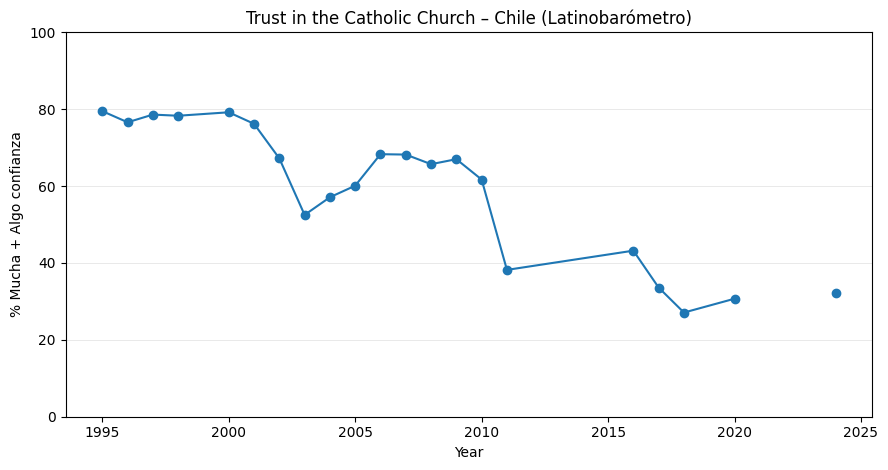
With mounting public pressure, Chile’s National Public Prosecutor opened nationwide criminal investigations, raided dioceses, and subpoenaed cardinals - bringing 229 investigations to trial. For the first time, Chilean law enforcement treated the Church as subject to ordinary criminal investigation. Just like struggles for accountability in Ireland, the Church only lost its chokehold and became accountable when it was knocked off its righteous pedestal.
Globally, the Vatican changed tack on sexual abuse. Rather than suppress dissent, it began to ally with victims. In 2018, the Vatican hosted a conference in which survivors shared how they had been shamed and condemned by Church leaders:
“The first thing they did was to treat me as a liar, turn their backs and tell me that I, and others, were enemies of the church” (Chile).
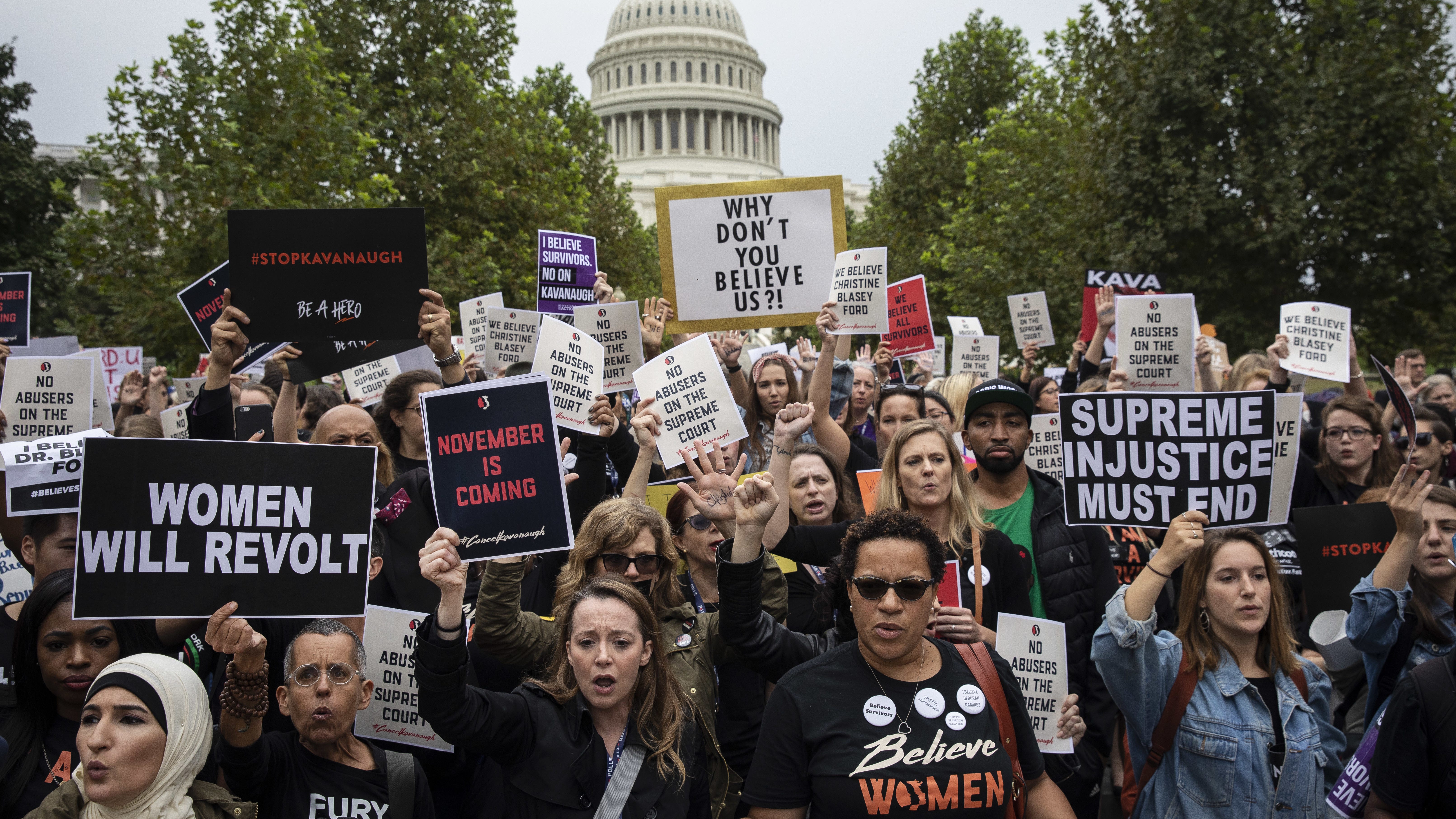
The pattern is clear. Whether it is loyalty to the Church or US political parties, institutions dig in their heels and defend their own. This exact same process of institutional defensiveness currently looms over quests for justice in my homeland.
Britain’s Grooming Gangs
In Britain, thousands of girls have been sexually abused by organised groups of men. Across towns and cities of England, vulnerable girls were showered with gifts and affection, isolated from their friends and family, then plied with drink and drugs, bullied, raped, and trafficked as part of large criminal networks. Yet when victims, journalists and researchers sought help or pressed charges, they were dismissed and derided.
In Rotherham, journalist Andrew Norfolk chronicled widespread child sexual exploitation. In response the local government sought an injunction, asking the police to launch a criminal inquiry into the leak! Despite 256 separate allegations by 50 complainants, no officer lost their job. Thanks to the absence of accountability, the violence persisted – within 15 years, an estimated 1,400 children were sexually exploited.
Abuse persists. In one northern city, a British Pakistani politician told me how she had uncovered evidence of senior men in her community grooming a young boy, she reported it to fellow representatives, and instead of investigating abuse, she lost her appointment, received violent threats, and her house was burgled - with thieves only taking her computer.
In Baroness Casey’s National Audit on Group-based Child Sexual Exploitation and Abuse (CSE) (2025), she reveals repeated failures of policing, social services, local councils, and political leadership. Statutory agencies chronically neglected credible evidence of organised child sexual exploitation. Police and local governments:
Minimised or denied the scale of abuse;
Dismissed victims, treating them as wilfully complicit;
Suppressed internal reports and whistleblowers;
Failed to record basic offender characteristics, including ethnicity;
Cited fear of community tensions and accusations of racism as reasons for inaction; while
Resisting external scrutiny by obstructing public access to data.
Absent a full inquiry, the true scale of abuse remains unknown. Where suspect ethnicity has been recorded, such as in Greater Manchester, South Asians are over-represented relative to their share in the local population. But for the vast majority of cases, the police simply do not report ethnicity.
Progressives thus face a difficult bind. On the one hand, they share a commitment to women and girls’ safety. On the other, there are genuine fears that scrutiny could inflame community tensions or bolster support for the far right.
Just last year, Prime Minister Keir Starmer dismissed calls for a grooming gang inquiry as jumping on a “far-right bandwagon”. Victims’ quest for justice were illegitimate because of the identity of those accused. London mayor Sadiq Khan likewise rejected requests for extra funding as “playing party politics”. When Labour Minister Mike Tapp called for an inquiry into the link between ethnicity, religion and rape, leftists condemned it as racist.
Fearing such accusations and ostracism, many have self-censored. Casey’s Audit emphasises,
“We found many examples of organisations avoiding the topic altogether for fear of appearing racist”.
Grooming gang survivors have often expressed deep disappointment with government inaction. Fiona Goddard resigned from the victim liaison panel, saying “the secretive conduct and conditions imposed on survivors has led to a toxic, fearful environment, and there is a high risk of people feeling silenced all over again”. Ellie-Ann Reynolds also resigned in dismay that the inquiry’s broader remit would “downplay the racial and religious motivations behind our abuse.”
How Can We Prevent Abuse in the 21st Century?
When governing regimes feel threatened by accusations of abuse, they tend to crack down on dissent to maintain legitimacy. Victims are pressured into silence - purportedly for the sake of the greater good. Over and over, they prioritise institutional self-presentation. Just as Chilean Catholics and US political parties protected their own, Western progressives have been reluctant to discuss, let alone investigate, crimes that implicate ethnic minorities. Even after two decades of grooming gangs, British sociologists, criminologists and mainstream media remain weirdly silent.
This strategy is short-sighted. Institutions that are supposed to serve the general public forfeit legitimacy if they show favouritism, while others feel unheard. As Acemoglu and colleagues demonstrate, “successful democracies breed their own support”. Governing regimes only sustain support when they deliver growth, services and safety for the broad majority. Extending this logic, political parties may expect electoral defeat if they fail to uphold accountability and public safety.
The real threat is not scrutiny, but impunity.
Institutional self-protection is such a scourge of the world. It's also really hard to prevent, almost like the ultimate maturity test of a society, which we're mostly failing. Thank for pointing out once again that it's the same thing, whether it's immigrants, bishops or the mega-rich doing it.
I can’t believe you actually covered grooming gangs. Hope you don’t get canceled