


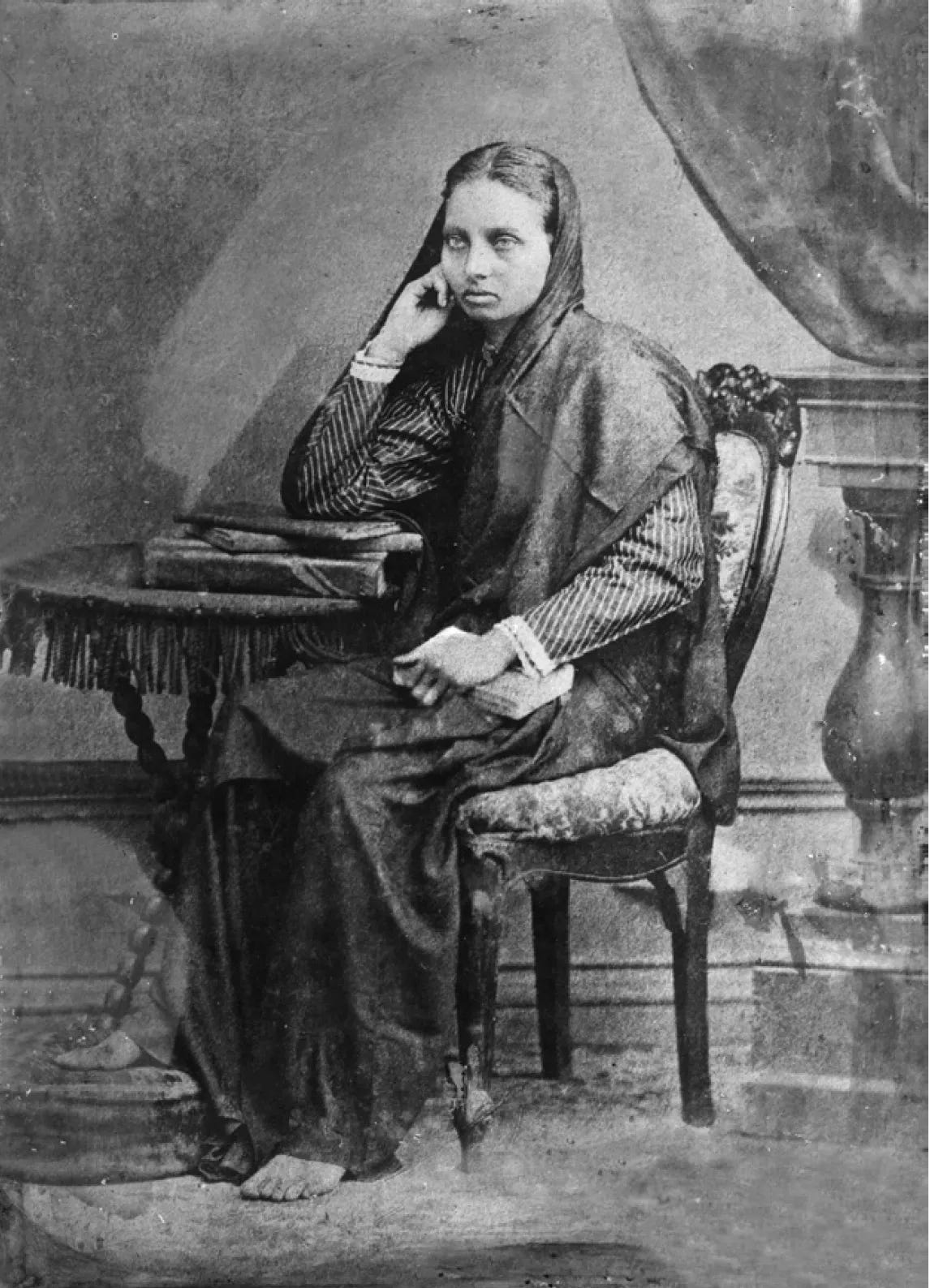
Pandita Ramabai’s father (a Brahmin Pandit) did something unusual: notwithstanding threats of excommunication, he taught her the sacred language of Sanskrit, forbidden to women and lower castes. Studying, she learnt that “popular preachers.. and orthodox high-caste men were agreed that women high and low caste were bad, very bad, worse than demons”. As a wife, she must worship her husband “with whole-hearted devotion as the only god”.
Age 23, Pandita had already seen her family die from famine and starvation, and her husband die from cholera. Scraping together funds, she launched an organization for female education, and thereafter travelled to England for studies, converted to Christianity, travelled across the US, then returned to champion female education in Maharashtra. Uniquely, she wrote books on patriarchy in both the US and India (published in 1887 and 1889), highlighting India’s particular conjunction of sexist religion, caste policing and colonialism.
Her works are extremely insightful and prescient, providing astute analyses of why India has achieved greater gender equality in some areas, but not others.
“High Caste Hindu Woman”
In 1887, Pandita published “High-Caste Hindu Woman”, which sold 9,000 copies internationally within a year. I recommend this book, perhaps more than any other, for its astute analysis of 19th century Indian patriarchy - emphasising wide acceptance of patriarchal religion, caste policing, and the colonial alliance.
The Caste System
High-caste families tended to arrange their daughters marriage while she was still young, not knowing the groom, and thereafter she was often kept in seclusion. The “child bride is brought to be for ever confined.. breaking the young bride’s spirits is an essential part of this abode. She must never talk or laugh loudly, must never speak before or to the father.. unless commanded to do so” (Ramabai 1987, 24).
Since “marriage is conducted without consent of either party”, the husband may not necessarily care for his wife, or value her welfare: “I have several times seen young wives shamefully beaten by brutal young husbands who cherished no natural love for them”.
In the rare cases of a happy couple, she attributes this to their being in love (Ramabai 1987, 26). But such love marriages are discouraged by the caste system, since marrying outside the caste system is sternly punished.
She further emphasises that women are locked in seclusion, dependence and ignorance:
“High-caste women, unless their families are actually destitute of means to keep them, are shut up within the four walls of their house” (Ramabai 1887, 56).
Religious blessings
“I can say honestly and truthfully, that I have never read any sacred book in Sanscrit literature without meeting this kind of hateful sentiment about women”, adds Pandita. It repeatedly praises a wife who worships her husband:
“Though destitute of virtue, or seeking pleasure elsewhere, or devoid of good qualities, yet a husband must be constantly worshipped as a god by a faithful wife.”
“If a wife obeys her husband, she will for that reason alone be exalted in heaven.” (Manu v 164-166, cited in Ramabai 1887, 33)
Apparently, some believed that if a high-caste woman holds a pen, her husband will die (Ramabai 1887, 57).
Several years earlier, Tarabai Shinde published a book, Stri Purush Tulana, mocking men who justified their superiority by reference to the Shastras, asking “if the husband is really to be like a god to his wife, then shouldn’t he behave like one?”
The Manu (religious text) also encourages son preference, stating that families only gain blessings for sons. Pandita details that mothers of sons are better treated, while brothers treat their sisters as inferior, and fathers of daughters are pitied (Ramabai 1987, 26). Pandita notes that the 1870 Census records five million missing women. Allegedly in Umritza, 300 children were all stolen by wolves - all girls (Ramabai 1887, 15).
Religion too encouraged ostracism of widows:
“Widowhood is regarded as the punishment for a horrible crime.. in her former existence, such as disobedience and disloyalty to the husband”.
Pandita states that the greatest “abuse and hatred of the community” falls upon the child widow. A widow is only permitted to wear a single coarse garment, eat only one meal a day, and never partake in family feasts. In the Deccan, Brahman widows’ heads are shaved every fortnight, as emulated by some low castes. For her husband’s death, she is cursed.
Parents may sympathise, but stay quiet “lest she bring disgrace upon their family”
Priests also promised women that if they committed sati, they would “attain the highest bliss in heaven” (Ramabai 1887, 39, 42-47).
Widowhood was no small matter. Citing the 1881 census, Pandita notes that there were 78,976 widows under the age of nine, and a total of 669,100 under the age of 19 (Ramabai 1887, 61).
The Colonial-Patriarchal Alliance
Pandita thus blames the caste system for arranged marriages and abuse, and blames Hindu scripture for son preference and widow oppression. These were further cemented by the colonial-patriarchal alliance.
One of her relatives had recently been betrothed in childhood, but the man had grown up to become a “dunce” while she was “accomplished”. He wished to marry her, then collected funds from conservatives and sued in the British Court of Justice, which concluded in his favour, forcing her to marry.
In another legal case, a well-educated woman called Rakhmabai argued that she should not be forced to live with a man against her will. The presiding Justice Pinhey agreed, but “the conservative party all over India rose as one man and girded their loins to denounce the helpless woman.. threatening the British Government with public displeasure”. Thanks to crowd-funding, the groom appealed, and the court ordered Rakhmabai to marry.
Sati is another example. Pandita notes that “Christian missionaries petitioned the Government to abolish this inhuman custom [sati], but they were told that the social and religious customs of the people constituted no part of the business of the Government, and that their rule in India might be endangered by such interference” (Ramabai 1887, 42-44).
Indeed, after the uprising of 1857, the British colonial government pledged that it would not interfere in India’s cultural and religious matters. Pandita’s conclusion is thus precisely the same as my own:
British colonial authorities had forged an “agreement.. with the male population of India”. If England were to protect “a helpless woman against the powers and principalities of ancient institutions, Mammon would surely be displeased and British profit and rule in India might be endangered…
Success [was] at the sacrifice of the rights and the comfort of over one hundred million women” (Ramabai 1887, 37).
In 1900, Kanpur witnessed a five-day riot after medical authorities removed a Bania widow diagnosed with plague - a violation of purdah. As Charu Gupta explains, this was a violation of purdah. To placate massive social unrest, the colonial government stepped back, making exemptions for ‘respectable’ women.
“The Peoples of the United States”
In 1989, Pandita returned home to Mahahrashtra and published “The Peoples of the United States”. This is another excellent social scientific study, diagnosing patriarchy as unquestioned extraction, gender hierarchy, belief in women’s inferiority, sustained by the absence of women’s mobilization:
“The harm done by the slavery of women is generally not noticed.. Most people think that women are living not in slavery, but in a state natural to them. The belief that women are not oppressed, and that their condition need not be any different from the present one, is so deeply entrenched in everybody’s mind that it is impossible for anybody to even imagine how wretched their condition really is. What is worse, even women themselves believe that their condition is as it should be” (Ramabai 1889, 168).
In the past, “women would just sit at home… nobody even imagined that women were capable of doing anything more important than this”. Yet on both sides of the Atlantic, women started mobilising for female education, employment and suffrage. Despite being “ridiculed”, “denounced and ostracized” (199), they continued.
[Now] women have realized the tremendous advantages of collective effort... [They] are equal partners with men in undertaking good works for national progress in the United States” (Ramabai 1889, 194)
Pandita was struck that women’s campaigns for education and employment had secured concerted gains. Prominent newspapers feature women journalists, writing on social, educational and legal reform. Women have also established their own newspapers, medical colleges, hospitals, legal clubs and societies. Past superstitions and ignorance had been overcome by women’s campaigns and demonstrable competence. In the US, she notes, 165 women are registered preachers. Laws were another matter, some states remained deeply patriarchal, and suffrage was still denied. Yet Pandita had every reason for optimism.
Her view was that when women mobilize, they can quickly secure massive gains.
Social Reform in India
Returning to Maharashtra, Pandita joined other social reformers.
The proposed Age of Consent Bill would raise the limit for sexual intercourse from 10 to 12. Orthodox Brahmins said that this would violate the shastric injunction to consummate marriage within 16 days of the bride reaching puberty, if that occurred before she was 12. The husband would then face the choice of hell or jail (Kosambi 2016, 183).
Conservatives hit back, accusing reformists of “perverting the Shastras”. Tilak, a prominent Indian nationalist, argued, ‘the reformers are bent upon bringing women out of the house to which the Hindu lawgivers had confined her to” (cited in Rao 2008).
A ten year old girl, Phulmoni, died in 1889, during intercourse with her 30 year old husband. Reformists called it “rape murder of a child-wife”. Tilak was dismissive, saying it was unintentional and that “the law of rape did not apply between husband and wife” (Rao 2016, 169). He was sentenced to jail for one year.
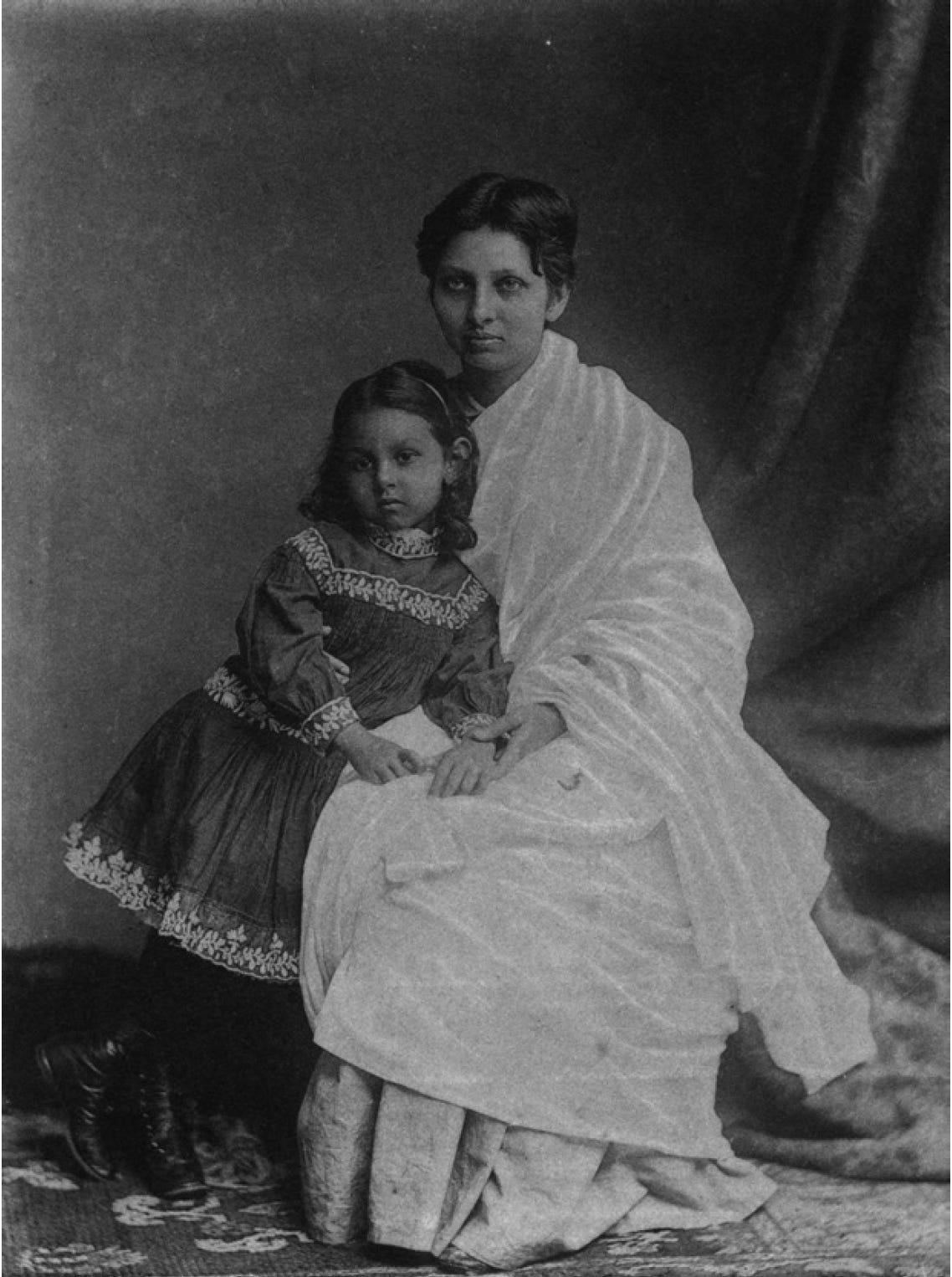
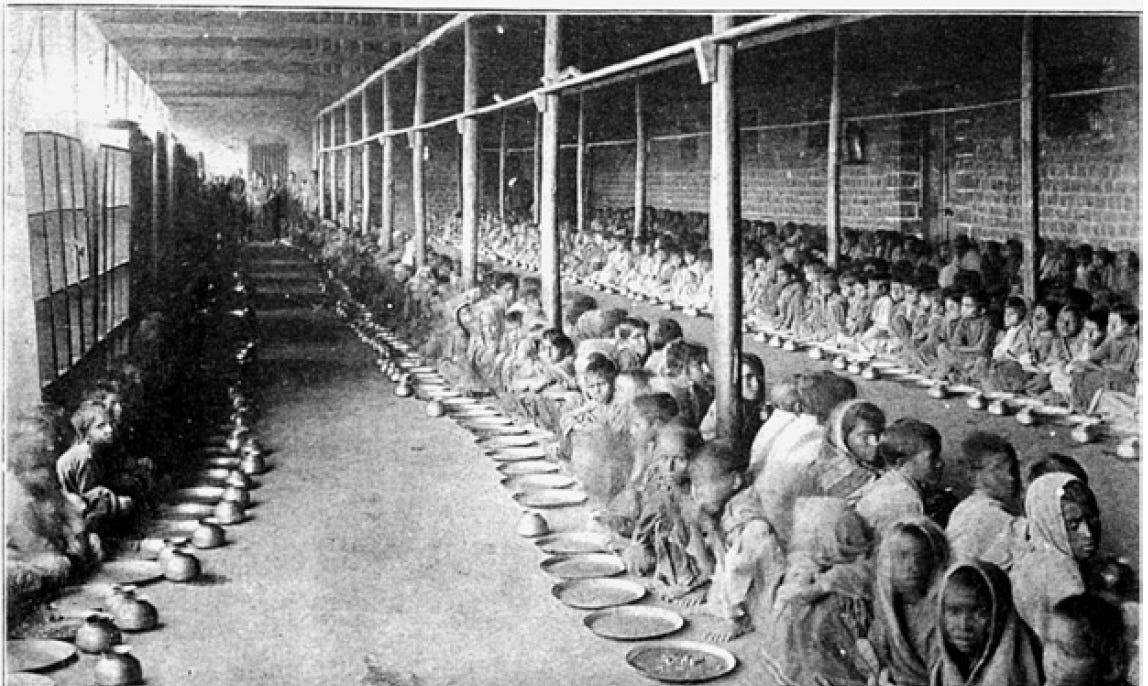
Pandita also opened a school for upper caste women, chiefly widows. As we recall from her writing, 1881 Census recorded 78, 976 widows under the age of nine, 207,388 under 14. Resolute, she persisted in rescuing girls from plague, famine, and widowhood - providing food and training so they could be self-sufficient.
Visiting Vrindavan and Mathura, Pandita saw thousands of Hindu widows living in temples, abandoned by their families, often forced by priests into prostitution. But when she expressed critique, Kesari (a Marathi newspaper) retaliated in backlash, launching a character assassination, damning her conversion to Christianity:
“Pandita Ramabai’s screams (in her own defence) are like the barking of a rabid dog” (quoted in Kosambi 2016, 197).
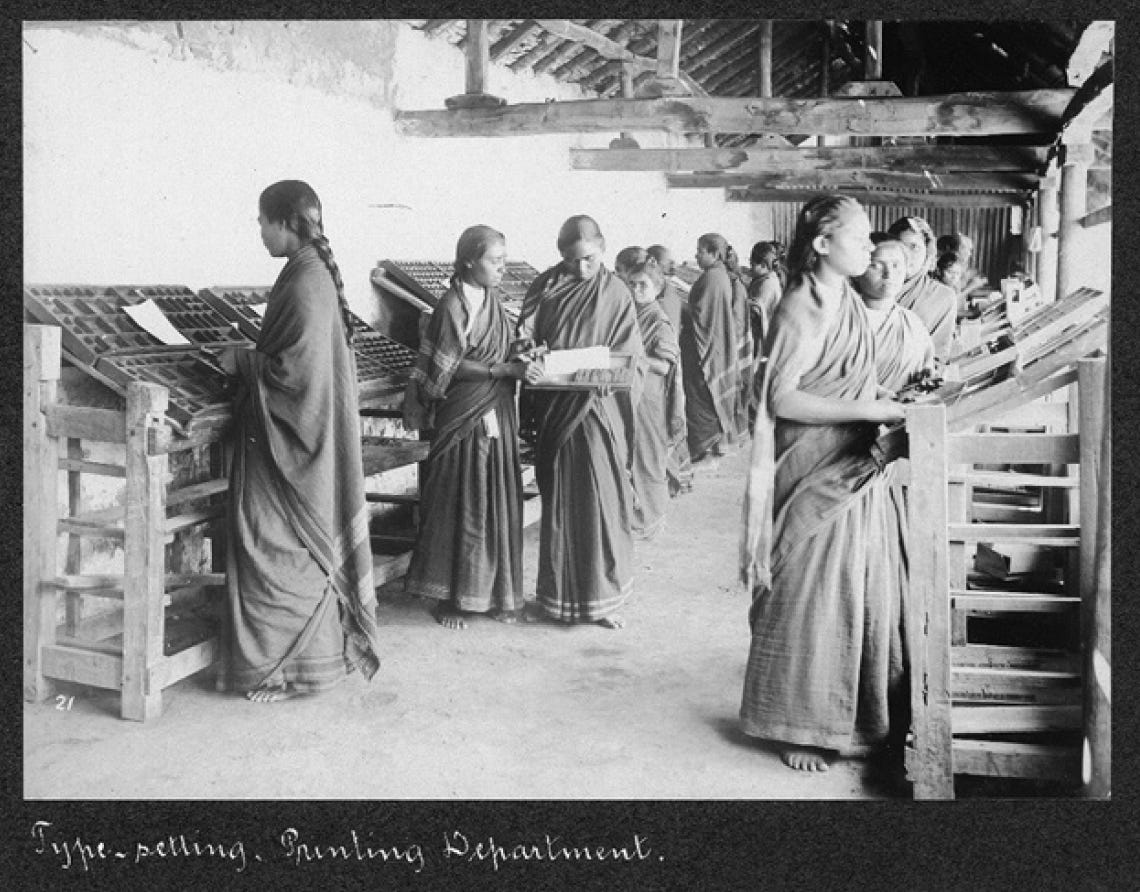
Despite these attacks, Pandita kept fundraising and organizing more schools - training girls how to weave saris, run a flour mill, oil-press, laundry and printing press. But as her biographer notes, all this “was to remain marginal to the mainstream society of India” (Kosambi 2016, 252)
India in 2026
A century on, India can rightly boast significant progress: purdah has declined, the age of marriage has risen, young women are now more likely than men to attend university, and widows are not ostracized. All these can be understood as offshoots of India’s modernization and successful feminist activism. With rising male education, families increasingly seek educated brides to raise their grandchildren. Young women are increasingly stepping out into the world.
However, as long as Indians continue to uphold caste endogamy and strict ideas of duty, many of Pandita’s observations of caste remain prescient. If couples barely meet before marriage, the husband may not necessarily love his wife, nor feel compassion for her wants and welfare. Even if she is sad, distressed, beaten or bullied, condemnation of divorce means she cannot credibly threaten exit.
……
Pandita Ramabai is truly inspirational, a pioneering social scientist of patriarchy in late 19th century India, speaking out despite fierce opposition, travelling afar, and deploying comparative analysis to identify how to improve women’s lives.
