


Professor Robert Hefner has a tremendous new book, “Islam and Citizenship in Indonesia: Democracy and the Quest for an Inclusive Public Ethics”. It’s one of my favourite books of the year, drawing on thirty years of ethnographic research. Today, he joins “Rocking Our Priors”.
We discuss:
Indonesia’s religious history
Why have Hinduism and Buddhism have largely faded in Indonesia?
Why were madrasas were rare until the 19th century?
What explains the rise in normative Islam?
I asked Bob about the comparative importance of
Economic development and technological advances;
Backlash against secular schooling,
Criminality and demand for moral order,
Saudi funding, and
Egypt’s Muslim Brotherhood.
SPOILER: Hefner downplays the influence of Saudi Arabia. Instead, he suggests that that economic development, communications and mass education have enabled Indonesian Muslims to learn more about their faith. This sharply contrasts with Modernisation Theory, that economic development catalyses secular-scientific values.
Has Indonesia become more patriarchal?
The episode is 2.5 hours long:
Watch on YouTube
Read the full transcript, below.

Transcript
This transcript was produced by Riverside studio. There may be some errors in proper names and Indonesian languages. Corrections are welcome
Introduction
Alice (00:03.182)
Professor Robert Hefner has a tremendous new book, Islam and Citizenship in Indonesia, Democracy and the Quest for an Inclusive Public Ethics. It's absolutely tremendous, one of my favorite books of the year, drawing on over 30 years of ethnographic research across the country. And today I'm delighted that he joins Rocking our Prize. Welcome.
Robert Hefner (00:28.469)
Thank you very much. It's a great honor to join you. I'm a great fan of your podcasts.
Alice (00:34.764)
Okay, so in this podcast we'll discuss Indonesia's religious history, its cultural diversity, the growth in Islamic piety, why this is happening and what this means for gender equality.
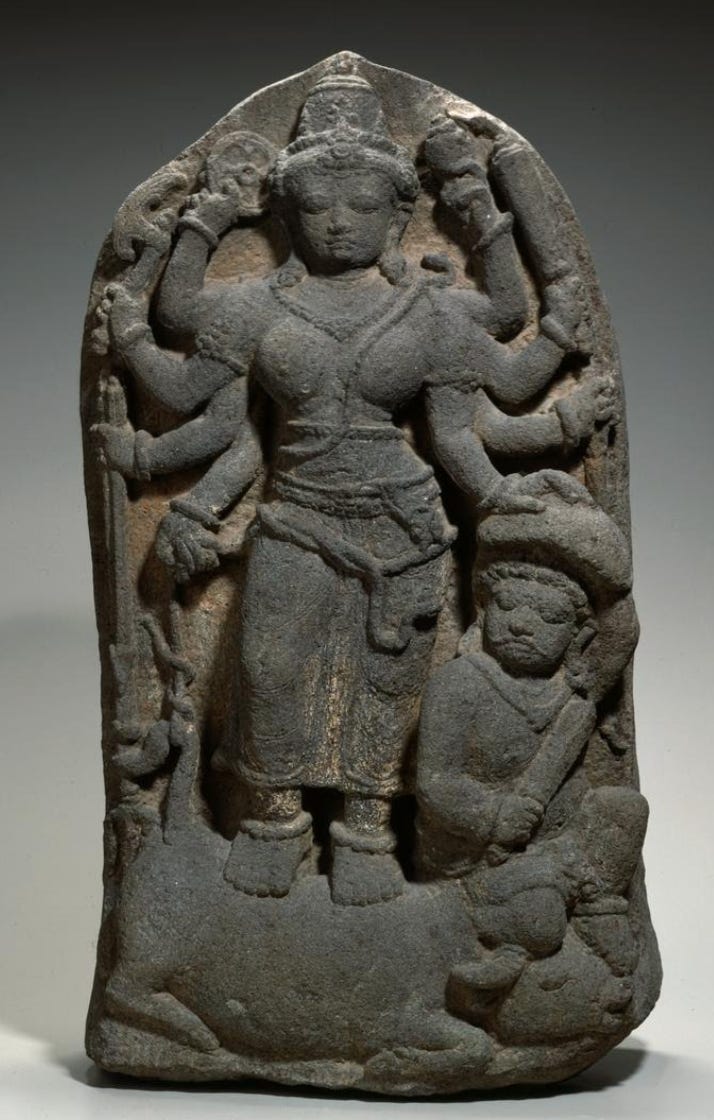
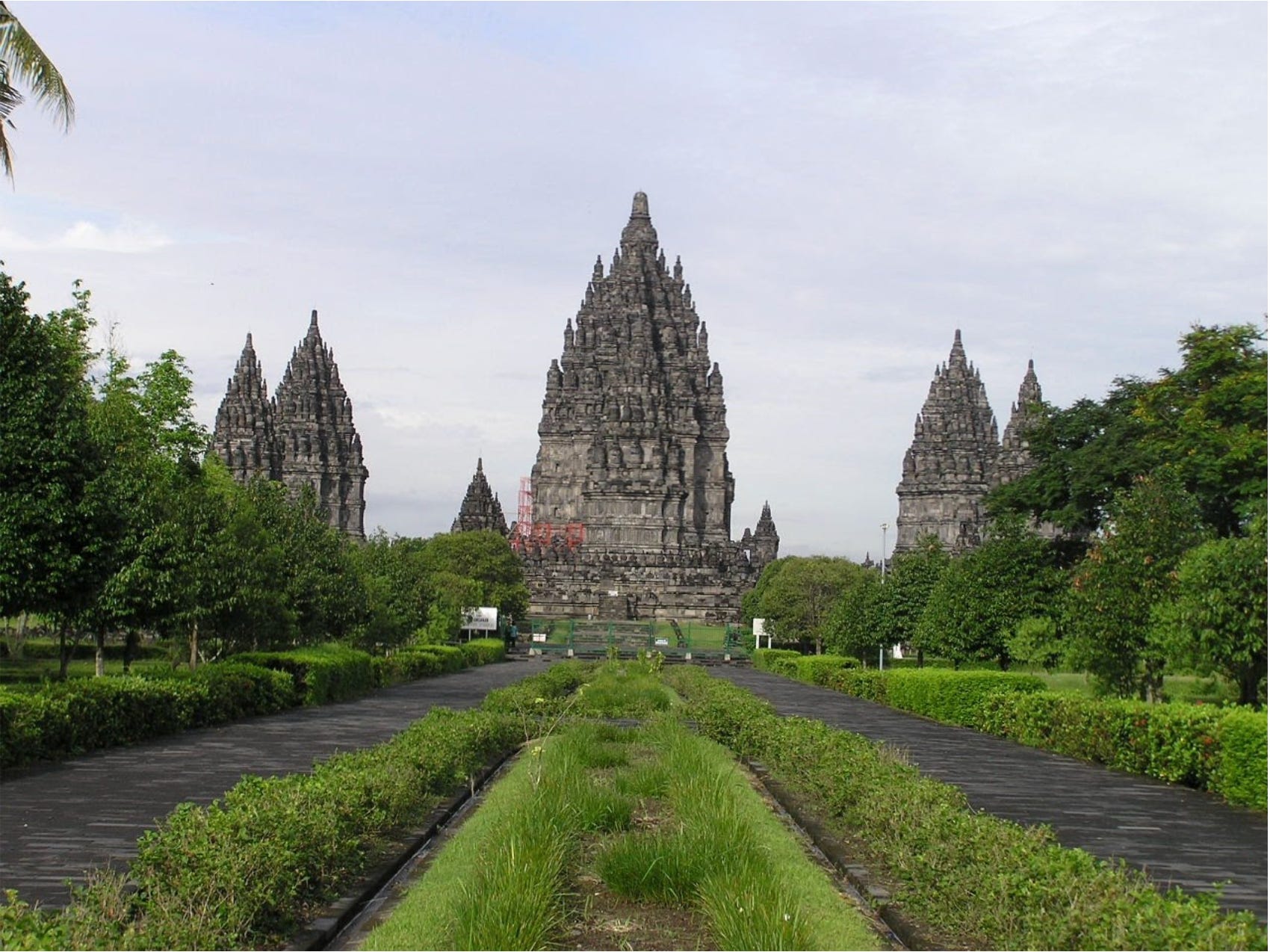
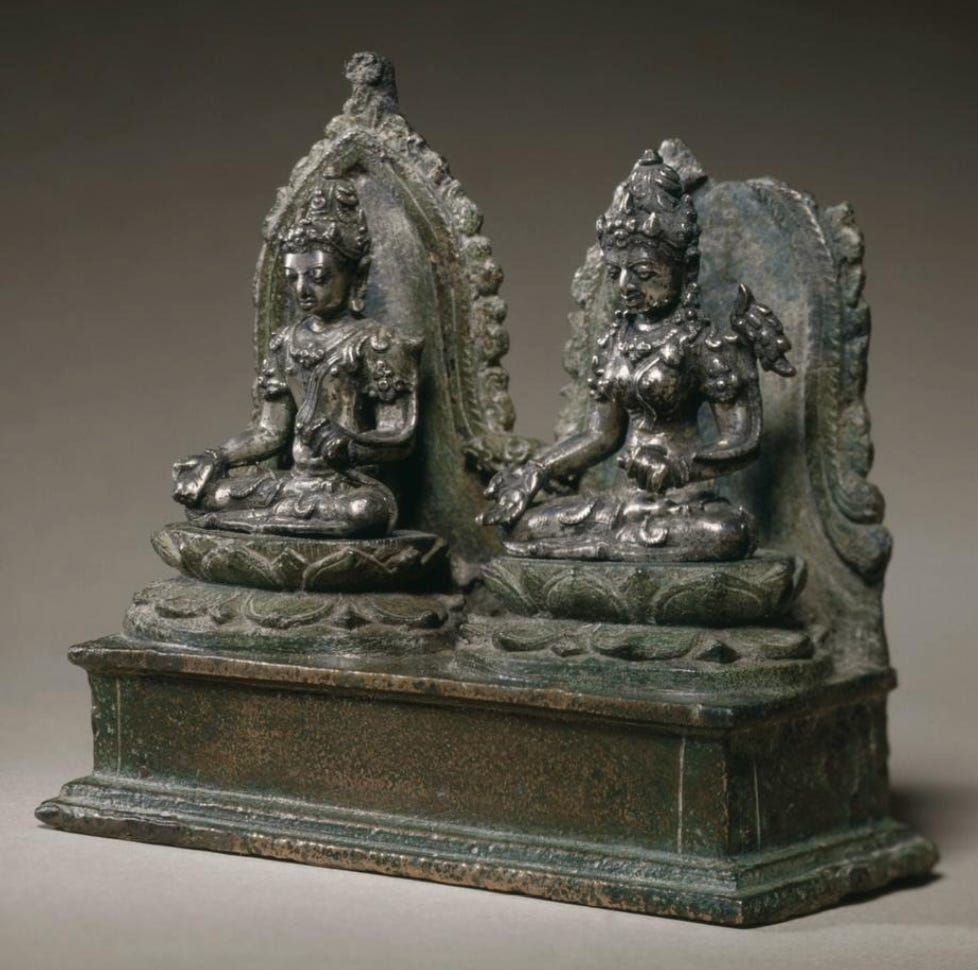
Why do you think Hinduism and Buddhism have largely faded in Indonesia?
Robert Hefner (00:56.372)
Well, as you rightly note, Hinduism and Buddhism had arrived in Southeast Asia in general and the archipelago in particular centuries earlier, but did go into significant decline in the 14th and 15th century.
There were two primary causes. The first had to do with the rise of maritime trade across the entire Indian Ocean from East Africa and of course India and Arabia to South China and Southeast Asia. And that trade was overwhelmingly dominated by Muslim traders all across the region. The second influence though had more to do with big.
Alice (01:35.146)
Do you think there was an influx of Muslim merchants or was beneficial to convert to Islam to benefit from those trade networks?
Robert Hefner (01:48.371)
very much the latter. There's very little evidence of massive influx of immigrants from South Asia, from Arabia. There were a few, but very few. The primary impetus for conversion came from local rulers and local merchants.
Alice (02:05.031)
May I just pick up on that because it's so interesting to compare with South Asia where there was a lot of trade in the Indian Ocean, you know, with Muslim traders going to Mecca, but many Hindus maintained their Hindu identity. They just traded with the Muslim merchants. Why do you think Hinduism was much more persistent in South Asia compared to Southeast Asia? Were the caste panchayats less likely to police people who leave? You know, I just wonder, it seems interesting that, you know, the two regions seem different in that respect.
Robert Hefner (02:35.699)
It was a different kind of Hinduism. Hinduism, obviously, even in South Asia, in the Indian subcontinent, can take many different forms. And it certainly did 1 ,000 or 2 ,000 years ago. But in Southeast Asia and in the Indonesian archipelago in particular, it never much developed a key feature of Hinduism in India, that is a caste system. There were little bits and pieces of it. And if you go to the one... area of Indonesia that is still largely Hindu, namely Bali. They have bits and pieces of a caste system and they've kind of upped it a little bit more as they've gone global. But historically the caste system was not developed and was not all the kinds of marriage and other kind of social ingredients that go along with Hinduism didn't much develop. So it really was a Hinduism that built more on indigenous spirituality.
Alice (03:32.643)
So, sorry, in Bali do they have caste panchayats?
Robert Hefner (03:36.018)
Yes, they do, but again on a very, very limited, very, very limited degree and even in Bali, modern movements of Hindu reform generally put aside even what limited caste structures were in place there.
Alice (03:54.403)
So maybe it's more like an individual faith, but without the sort of community policing that was necessary for the long distance trusted networks in South Asia.
Robert Hefner (04:04.722)
It was very much spiritual, but it was spiritual in community. And I think a characteristic of Indonesian sociability, a lot to mention, religiosity, is people take great pleasure in doing things together. Indonesia is a very social place and religion takes a very social form, even if, as I think is the case in much of Indonesia, particularly Java today, but in Bali also great emphasis is placed on the personal and one's personal engagement with spirituality.
Alice (04:38.802)
with you. Okay now I cut you off, you're going to go into the second half of the decline
Robert Hefner (04:43.953)
Well, the other influence had to do with big power politics in the South China Sea. And in 1405, we saw the rise of Zheng He, Z -H -E -N -G -H -E, the great Hui, that is Muslim Chinese admirable who sailed across the South China Seas and went all the way over to Africa. And his presence in the Indonesian archipelago, wasn't just Pacific in the literal sense of that term. It also involved attacks on the Hindu Buddhist kingdom of Majapai, the last of Indonesia's truly great, large Hindu Buddhist empires. He helped to dismantle that and stimulated in turn a kind of opening across the archipelago to Muslims who didn't again come as conquerors but who came as traders.
And for a variety of reasons, Islam appealed to all, Islamic spirituality, remember it's a very, it's a Sufi inflected Islam, appealed to local people, particularly in this time of great social change.
Alice (05:50.172)
Why was Sufism such a hit?
Now I want to ask you the same question I asked Michael Cook. So it strikes me that Sufism was especially successful, globally popular. And I want to know, is that because most of the merchants were Sufis or was it that the Sufi variant was especially popular or that worked with religious syncretism?
Robert Hefner (06:11.344)
Sufism was a hit because, and I think Muslim Sufis today say this in Indonesian, I think they're historically correct, it was a hit because it resonated with indigenous varieties of spirituality, which again, put great emphasis on that personal engagement within a kind of communal participation, personal engagement, and a downplaying of the more formalistic, and in the case of Islam, the more jurisprudential or legalistic aspects of this religion. And that remained the case, that would remain the case, that emphasis on spirituality as opposed to legal formalism would remain a primary characteristic of Indonesian religiosity, if I can speak generally, to this day.
Alice (07:00.249)
Why do you think madrasas were relatively rare until the 19th century in Indonesia?
Robert Hefner (07:07.856)
Well, it had to do with the way in which Islam spread. It spread by way of merchants and these cross -communal, cross -ethnic contacts. It was multi -ethnic. There were many Chinese Muslims who were involved in the dissemination of Islam across Indonesia. So conquest, and if you will, if I can borrow a phrase from my friend, the San Diego -based political scientist, Ahmed Kuru, he talks about the Ulama State Alliance as being a kind of key characteristic of Middle Eastern Islam. And that was much less the case here. It wasn't the state per se, the state had a role.
But it really was more of a grassroots movement, a grassroots shift in the center of gravity of spirituality. Yes, states then, and occasionally became major promoters of Islam, but even then they did not typically promote a scripturalist, legalistic, jurisprudentially oriented religiosity. So again, in that regard, Indonesia looks very different from what we see in South Asia, Arabia or even Egypt, Syria and Iraq.
Alice (08:27.508)
I just want to explore that. Do you think that the lack of the dearth of madrasas was a supply side issue that perhaps the rulers didn't see any benefit in them because it enabled them to maintain spiritual supernatural authority in themselves? The Rajas centric idea? Or was it more of a demand side thing that people were very happy with their communal, Sufiistic syncretism and they saw no need for the madrasas? Which one was it?
Robert Hefner (08:53.713)
I think it was both. If one looks at the legacy of what we might call imperial, the court -based Islam, court -based Islam to this day, where it survives, there aren't that many Islamic courts still operating, classical Islamic courts operating in the archipelago, but in those areas where they have survived, particularly on Java, Yogyakarta, and Solo, the variety of Islam that is favored there is again a very sophisticated spiritual variety with of course a little bit more emphasis on study and jurisprudence but nothing like what one sees in so many other parts of the Muslim majority world. So yes it did have to do with the nature of the state's interest and what the style of Islam that Muslim rulers preferred but it also had to do with a society, societally based demand which again gave strong preference to this deeply personal spirituality as opposed to a kind of formalistic, law -oriented profession of the faith.
Alice (09:58.928)
What do you think gender relations were like in Indonesia before the 20th century?
Robert Hefner (10:09.52)
We know a good deal, actually. There's a remarkable body of literature that's been created over the last two generations, actually, primarily by women, but not exclusively women. Indonesian as well as Western. Barbara Andaya, a friend of mine at the University of Hawaii, has done some really excellent work on this, but so have a number of people in Indonesia.
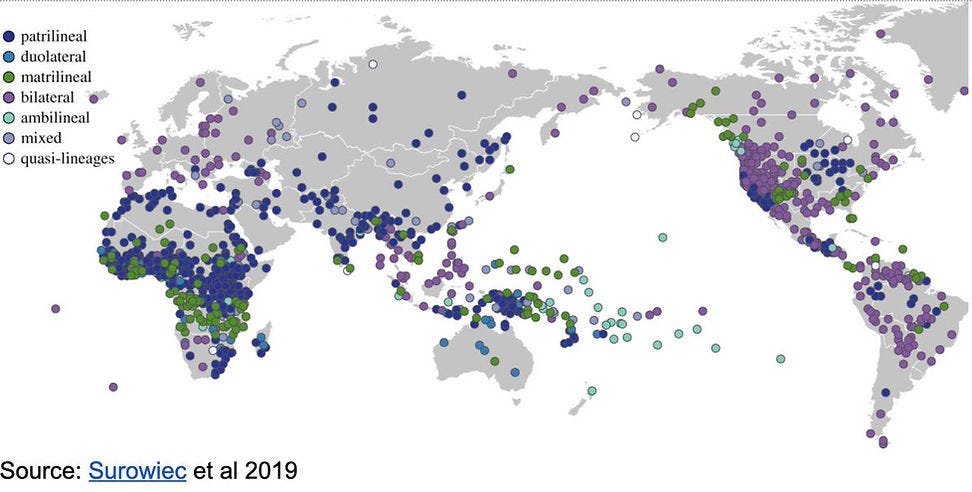
So we know a lot and there are a couple of things. First, a key ingredient before one even talks about Islam, one has to talk about what kind of kinship system, family system do you have. Again, one doesn't want to get too technical here, but Indonesia, with a few exceptions, doesn't have these large lineages and typically patrilineages that is male dominated, male organized, and very much honor based extended kinship systems that you find across most of South Asia and of course in an even more forceful form in the Arab Middle East. And these kinds of kinship systems that you have, these extended patrilineages, again put a great emphasis on male honor and a key ingredient in male honor has to do with the control of women and women's sexuality through arranged marriages and things like that.
Alice (11:25.037)
Do you have a theory about why Southeast Asia was primarily bilateral kinship?
Robert Hefner (11:28.689)
Yes, again, I think we can say with confidence the other area of the world where we have bilateral kinship widespread is of course Western Europe. There are some lineage -based remnants, certainly in Roman times. It was not a cognatic nuclear family focus system. It was an honor -based patrilineage. But Europe and Southeast Asia in general, particularly the Indonesian archipelago, developed these more flexible less male -dominated kinship systems, primarily because they were very mobile societies. Indonesia's a place of 17 ,000 islands, and it's had wave after wave of migrants, both local migration, but also from the mainland. And the mobility of the population, if you will, doesn't favor the emergence of these well -established, locally grounded, huge and female controlling patrilineages or lineages of any type. Again, there are some exceptions. Ironically, Hindu Bali has patrilineages, but again, in a very, very abbreviated form. Throughout most of Indonesia, you have a kind of kinship system like that, which we see in Europe. And in fact, even more than was the case in historic Europe, it was a kinship system that gave women pride of place in the household and in public life in the marketplace. So women's prom... Yes. Yes, please.
Alice (12:53.96)
I'm not convinced by the mobility hypothesis.
Arab desert nomads were hypermobile and patrilineal and the Kazakh nomads on the steppe were supermobile, but, but obviously patrilineal. My hypothesis actually for Southeast Asia is that
Robert Hefner (12:57.296)
Yes.
Alice (13:15.559)
Before the 19th, 20th century, I understand that land was not incredibly valuable, except in some parts of Java, for example. And I think where land is not that valuable, globally, where land has low value, we rarely see these patrilineal kinship. Like another example is the Andes bilateral kinship traced down both the male and the female line. And that tends to go hand in hand with land not being that important. But it's difficult to know why people do stuff.
But the mobility one I'm not convinced by.
Robert Hefner (13:46.993)
But it's not just mobility in the kind of literal sense. It's the sense of societies that don't, if you will, are where the bulk of the population isn't settled in place and isn't organized into tribal units. Indonesia is not a tribal society. Arabia and much of the Middle East, particularly the desert areas, one has to join forces. And indeed you have these very, very powerful mobile horse armies, you didn't have those in island Southeast Asia. Instead you had the key strategy of rulers was to keep in place wet rice farmers and use them to recruit your armies. But you didn't see the development of these huge mobile militaries that you see, which were so critical in Central Asia and of course the Arab Middle East. So.
Alice (14:43.363)
We know that women were very active in, so we know there was bilateral kinship, women were active in agriculture, women were active in trade. Now what about status? So I think there are two interesting ways we can might try to understand status. One is, well, women, could women become spiritual supernatural authorities? Did their words carry weight? Did people look to them as people who, you know, could interpret and communicate with the divine?
Robert Hefner (15:11.249)
This is an issue on which scholars of Islam and scholars of gender in Indonesia have devoted a lot of time in recent years, and there's been a kind of rethink. The general assumption was that women, and I think it is true, women did exercise significant religious authority, but they exercised more religious authority in those areas of spiritual and religious life that had not yet, if you will, adjusted to what was... eventually an international standard, particularly with regard to Islam. The same is true, incidentally, in Buddhist Thailand, where Buddhism became more, if you will, recognizably transnational, like Buddhism in other parts of the world. It became a little bit more patriarchal. The process was much less developed, much less extreme and much less favorable, unfavorable to women, I think, in Southeast Asia.
First of all, because women did women in positions of religious authority and spiritual authority continue right up to modern times. Again, one might say, well, where? They acted as cures and healers. And very importantly, one might not think of this as important if you grew up in a society with hospitals. But every birth was accompanied by women spiritual specialists, not a man. There were a few men here and there, particularly in the Aceh and a couple of other outlying areas. But... the bulk of medical procedures for women was done by women, women curers, and they exercised the spiritual, very, very clear spiritual success.
The first madrassas, when they finally are established and become widespread in the 19th and 20th century, are male affairs. But whereas in many parts of the Muslim world, I mentioned in particular South Asia, India, you would have to wait until after the second world war to get women moving in large numbers into Islamic education. Women are demanding to be given a place in Islamic learning from the beginning of the 20th century, particularly beginning with ‘modernist’ religious organizations like the Muhammadiyah, but eventually spreading to these huge mass Muslim organizations, in particular the Nahlatul Lama.
Alice (18:02.745)
You mentioned women being, there is spiritual guidance during giving birth. I don't know if I necessarily see that as an example of status. Throughout history, women have played an important role as midwives. But for me, the question is more like, if there is a community or family festival, if they're, if they're going to a spring or a rock and they're doing a ritual is it a man or a woman who's leading that ritual if their pain respects the ancestral spirits is it a man or a woman who leads that you know for example in korea and china historically you know it would only be men going to the ancestor cults or something so i think i don't know if i see the the midwife the spiritual healing i think you know most across the world you know modern medicine and as you rightly say childbirth was incredibly risky, incredibly stressful, incredibly dangerous, you know, you might hemorrhage to death. And so you don't, so there was always some sort of cult of, you know, some kind of divine thinking that it's all going to be okay. So I don't know, I really want to know is were women leading men spiritually? That to me would be a better indicator of status.
Robert Hefner (19:18.897)
With regard to ritual offerings, I mean, you've raised an important point. So within the Indonesia, prior to the coming of Islamic reform, a more purified understanding of what counts as Islam in the 19th century, there were widespread offering ceremonies, offering cults, and women did play an important role in these. Whether it was as high status as their male counterparts or not, they were typically there. And often the pattern was, it would be a husband -wife team of ritual specialists who would be presenting offering to the ancestors.
Particularly, again, your use of the term ancestral veneration, there is where there was a kind of gender parity, which was not expressed in terms of an etiology or explicit norm of gender equality like that which we associate with modern gender equality, but which typically had to do with the emphasis on the importance of dualities, male -females dualities, and you had to have both women, wives, mothers, daughters had to be there in the picture playing an active ritual role, and that we do see. And in those areas of Indonesia, which retain, if you will, that kind of ancestral religion, and there aren't many, but they're still there to some degree. You still see typically this pairing of male and female in a kind of parity that is understood as a phrase that I have used for this is a generative duality. You need both to create life, to create the world, to create the cosmos.
Alice (21:00.721)
Yeah, it's exactly the same in many indigenous American cultures, the idea that gender complementarity. And I really appreciate your point about Indonesia being a pioneer in terms of female women going to madrasas, which of course was so different from much of the Middle East and North Africa.
What about sexual freedom?
So, you know, Southeast Asia, as you write in your book, as you know, distinct for this, you know, queer pluralism, especially in places like Thailand or the Philippines. So before the arrival of Islam,
Do we think that Indonesia would have been as queer -friendly as contemporary Thailand?
Robert Hefner (21:36.655)
It would have been, I think, very similar to what we see in the Philippines. Perhaps not as dramatically queer -friendly as Thailand, yes. But the Philippines of the 18th and 19th century had a good deal of gender plurality. And that was also the case in Indonesia. But there's no question that the arrival of the more officialized varieties of the world religions, and that would include in the case of Eastern Indonesia, Christianity. In the 18th and 19th and 20th century, as kind of a more officialized Christianity and then a more formal reform -minded and scriptural Islam arrives, there is a kind of downplaying of the idea that yes, there can be three or four genders, and that was...
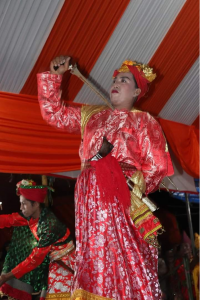
That was a concept that was very widespread. It still exists. It's still there and I think you have noted among the Bisu in Sulawesi, people who are otherwise considered rather pious Muslims acknowledge the reality of the third and fourth sex. But the third and fourth sex pattern, which used to be very common across Indonesia, has declined. And it's declined largely as a result of the arrival of both Christian and Muslim reformists.
Alice (22:51.788)
What do you think were the most important kinds of civic associations in pre -colonial times?
Robert Hefner (23:07.855)
Well, I would reserve the term civic association for a modern style of organization that really becomes common in the late 19th and early 20th century. With formal registration, you're not simply born into it because you're a resident of the community, but you actually join because you feel some kind of affinity for the practices or beliefs that are associated with that association. That's, I think, modern Indonesia.
Alice (23:16.268)
Okay.
Robert Hefner (23:34.351)
Prior to that time, you didn't have civic associations as much, I think, as you had two things. You had territorial organizations with their strong emphasis on a kind of spirit of togetherness, very, very Indonesian. There's a term, Gotong Royong, that's often cited. And that's not just empty slogans. That was something that was part of Indonesian culture.
But trans regionally, there were these networks of discipleship between different kinds of spiritual masters and their followers. And these were more flexible and more dispersed, but very, very important. They played an important role in the dissemination of Islam, but they also, it should be emphasized, played an important role in the sustenance and survival of what, from an Orthodox, Muslim, or Christian perspective, would be regarded as somewhat heterodox spiritualities, again the kind of personal spirituality of deep involvement that still has survived, still survives to this day in Indonesia.
Alice (24:44.359)
I think one of the really distinctive things about Indonesia today is that women are so active with their own associations, whether they're Muslim feminists or something else. In the Gulf of Guinea, in Sub -Saharan Africa, there were lots of women's networks, like women might run the markets, women might organise trade, women might... There's this great book by Nuando Ochebe called Female Monarchs and Merchant Queens and it's all about like these women ganging together and if a man dared to intimidate a woman then all these women would get together and like bully him out of it and there's this line from the Cameroon you know a man would not even dare steal a chicken egg from her coop because these women were ganging up together.
Is there any evidence of a proto-feminist organization?
Robert Hefner (25:29.137)
Well, marketplaces in most of Indonesia, Muslim as well as non -Muslim, tended to be dominated by women, particularly local markets. As soon as you had to travel three or four days and engage in long distance trade, women might be involved, but you typically had to have a male kind of leading the group for all manner of reason, primarily having to do with protection and the threat of violence.
But local marketplaces were, and to a significant degree still are, places of great women's presence. And you cite the example of West Africa, sort of people being, men feeling intimidated. I don't think things are quite so charged in Indonesia, but they're not entirely different.
The way things, what one hears often said about marketplaces in Indonesia is that a lot of men don't like to go into the marketplace because it's so female and they feel by having to engage in this kind of direct barter and banter that the marketplace enjoins, their status and their dignity as men will be devalued. So they in some ways defer to women, and to the marketplace as a women's space. It's very, very interesting. And again, it's changed a little bit today. Of course, you have supermarkets, and there's no such gender, gendering with female prominence in your average supermarket as there was in your traditional down the street little marketplace.
Alice (27:09.441)
Okay, now let's fast forward to the 20th century.
Now back in the 1960s, tens of millions of Indonesians identified as Muslim, but practiced it in very diverse ways. Can you share some examples with us?
Robert Hefner (27:21.746)
Yes, there were several streams. One was the Sufi stream that I mentioned earlier. And the Sufi stream, Sufism in many parts of the world takes many forms. In some societies, and this would include some varieties of Sufism in Indonesia, it's fairly orthodox and Islamic law minded. There's a group called the Nakhshbandis who are found across Turkey and areas of Central Asia. Well, they're very, they're prominent in Indonesia as well, and they tend to be careful about not violating Islamic law. But there were other currents of Sufism in Indonesia and to this day, which are a little bit less Sharia minded and jurisprudence minded, and which tolerate and in fact encourage a kind of spirituality that I think we'd have to say has deep roots in Indonesian society and history.
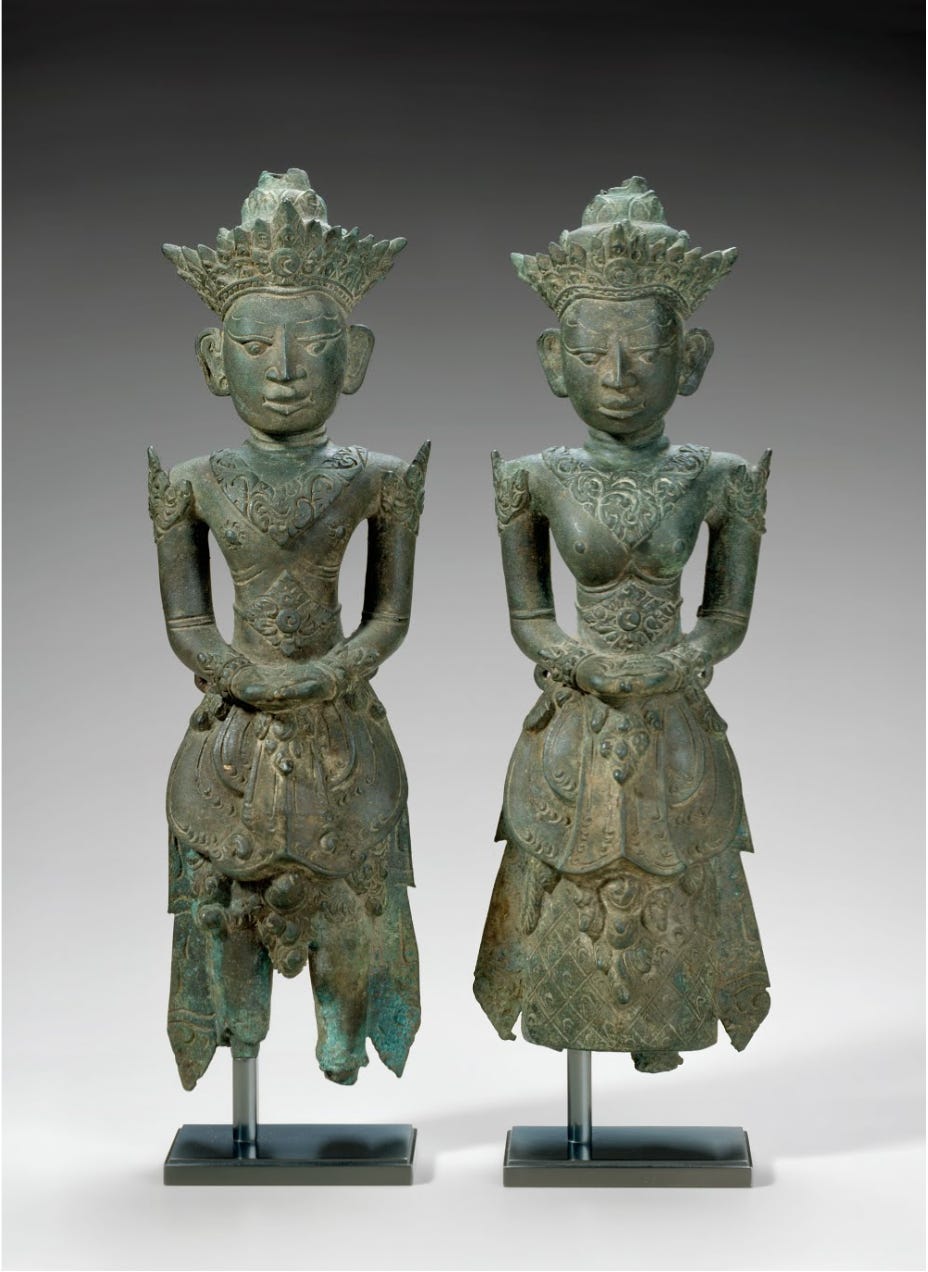
And what are some of its characteristics? Well, one of them has to do with that emphasis on male -female parity or the necessity of duality and the generative creativity that lies at the very heart of life and indeed at the very heart of one's experience of the divine, a kind of divine that is one, but at the same time, male and female and gendered. So that was a key of traditional spirituality. And you saw it also as we were talking earlier about offerings, the way in which women were active in the preparation of offerings. And when you presented offerings, you presented them not to male spirits, but to male and female ancestral spirits. Typically, in fact, I worked in an area of Java where these types of prayers were still used, these types of offerings were still presented, and literally the ancestors would be addressed as father, mother, father, mother, never, father, father, mother, father, mother. So a very kind of dualistic and I would say women friendly spirituality.
Alice (29:29.783)
That's so different from say East Asia, or Confucian East Asia, where it was always recognizing the male ancestors. And there's been some amazing work in art history, for example, in Rajasthan, where, you know, they show family trees or family portraits, but it would only include the male line. I recently went to the Timurids Museum in Uzbekistan, and they show like Timurids family tree and it only mentions men. You know, women are totally, you know, women have no influence in these family trees. So that's super interesting. Thank you.
Clifford Geertz wrote about this tension between the ‘Abanggan’ and the ‘Santri’ Muslims. Can you explain what that tension is for people who are new to Indonesia?
Robert Hefner (30:09.458)
Well, Clifford Geertz, who was a teacher and friend of mine, worked in Java and Indonesia in the 1950s, first in Java for two years and then in Bali. But his work in Java focused on the varieties of Islam that were professed in Java. And he identified, I think, correctly for the time, he identified the Abangan, which literally means red. But it's red not in the sense of communist, but red as people of the earth, common people.
He identified the common profession of Islam and the more prevalent one as one that incorporated a variety of some of the spiritualities we've been talking about, some of the emphasis on generative dualities, male, female, complementarity, as well as offerings to ancestors and offerings to territorial spirits. That was, he said, and I think he was correct, in Java at the very least, but also some other areas of Indonesia, Lombok, parts of Sumatra, parts of Sulawesi. That was the predominant way in which Islam was professed.
But at least from the middle of the 19th century on and in the aftermath of the Second World War during the independence period, you see the ascendance of a more reform -minded, often called scripturalist Islam. But we should be a little careful here. It wasn't really Arabian in spirit. It still retained many of the characteristics, many of the emphases of Indonesia's classical spirituality, including emphasizing accommodating women to, I think, a greater degree than we see in some parts of the Middle East. So in any case, there was this educated, more madrasa -oriented, more bookish -minded Islam that comes along.
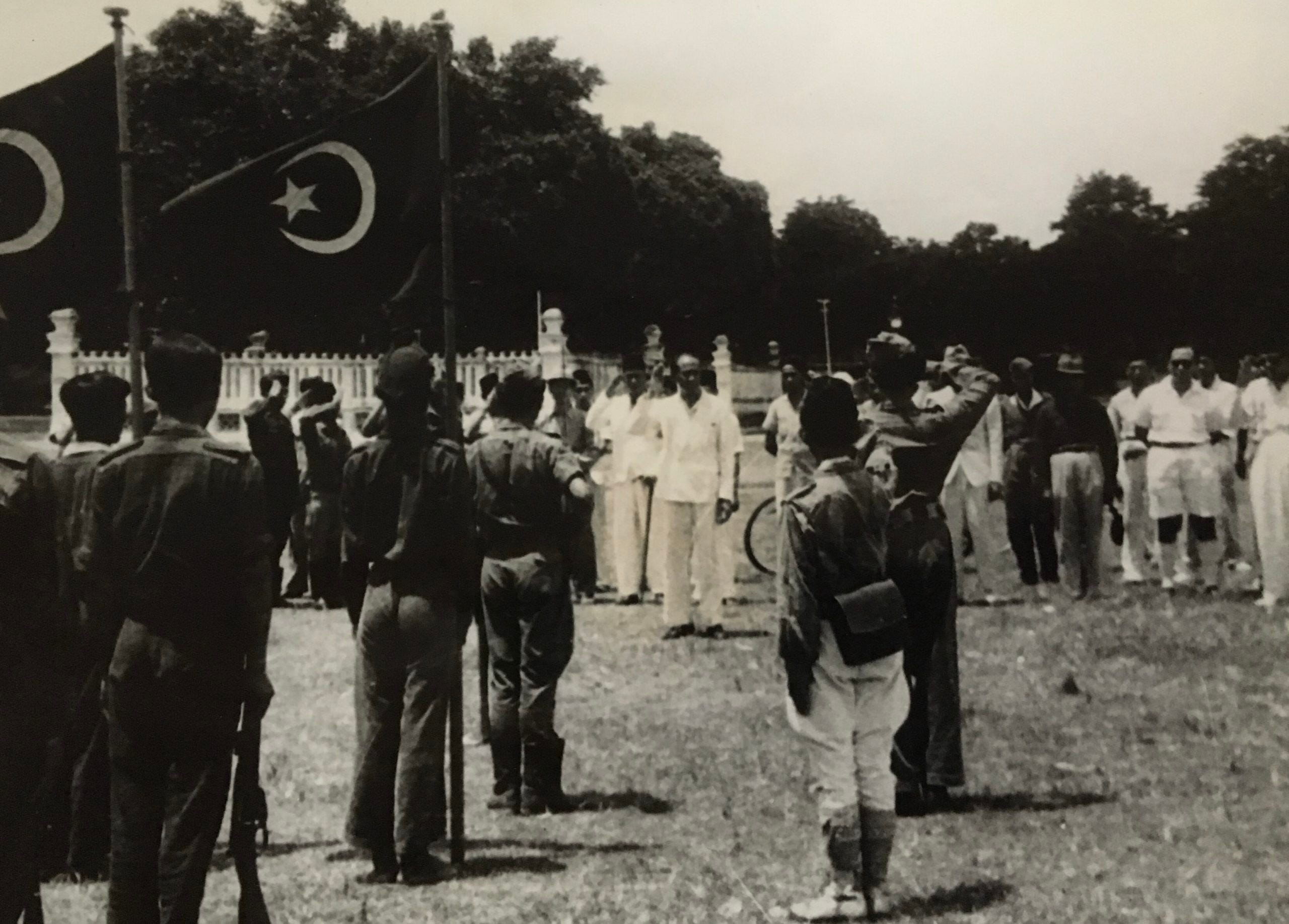
And it's first very much a minority affair. Some people have said, perhaps as few as 8 % of the population of Java was sentry in the early 1950s, 1940s, 1950s. However, by the time we get to the 1960s, it's as a result of political competition and jockeying within the nation, within the nation state format and modern education, the gradual arrival of education. Those numbers go up. It's still minority, but by the time again, we transition into what's called the new order, 65 -66, the rise of a military dominated government, but also a society that's undergoing really rapid economic change and educational expansion. You begin to see more and more people pull away from what they have now come to regard as a more rural, backward profession of Islam and adopting a more of the text, scriptural Islam. But again, while still retaining in terms of women's participation and things like that some distinctive Indonesian characteristics. It's not just following an Arabian model. Indeed, it's not at all.
Alice (33:08.653)
Given that the Abangans were historically the majority, do you think it was inevitable that they would assimilate to be more like the santri?
Robert Hefner (33:18.129)
I think it was inevitable that they were going to change. Yes, were they going to become like the Sanctuary in part, but they were also going to change the Sanctuary. The influx of large numbers of people who had an abangan a kind of this kind of spirituality that we've been talking about the movement of them into schools, a more studied profession of Islam and therefore a more scripturally oriented, with the emphasis on the Quran and the Sunnah, the Hadith, the traditions of the Prophet. As you move into that direction, you move into that profession of Islam, yes, you change, but you also, as your numbers, as that same population moves and becomes part of the Sanctuary community, the Sanctuary community itself changes.
So one example is we see in politics, I don't perhaps want to make too much of this, but in the 1950s, 1960s, there was this huge period of... competition between the Communist Party, Indonesia had the largest Communist Party in the non -communist world, between the huge Communist Party and then Muslim parties.
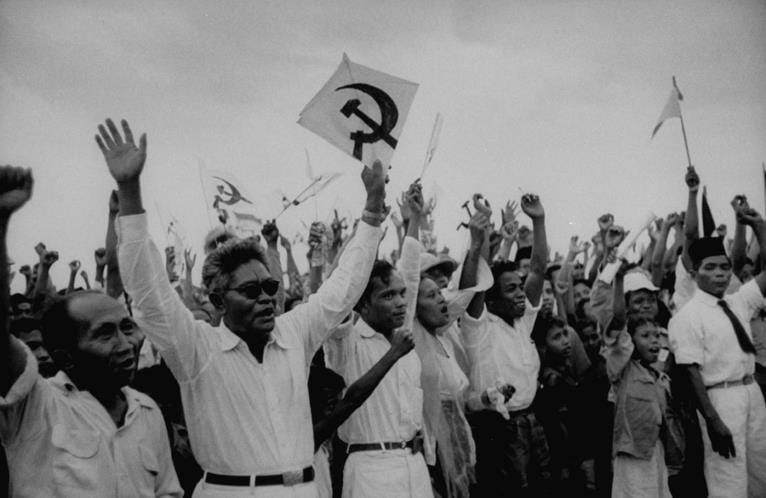
Then you have the calamitous events of 1965 -66, the Communist Party is destroyed and everybody thinks, eh, the country is going to go in a rightward direction and Islam is going to be very... very conservative and repressive and on the contrary we get to the 1970s Muslims are suddenly in the a segment of them but a large segment of them are in the forefront of the movement to return Indonesia to a proper democratic form of government and this rather than declining with heightened levels of Islamic observance it actually expands under the influence of the leadership in particular of the country's largest mass -mism organization, Nachadatul Llama and its gifted, charismatic leader, Abdurahman Wahid, a friend of mine, who passed away in 2009, but he was a great man and a great Muslim of deep, deep Sufi spirituality.

Alice (35:29.734)
There was also a parallel trend of this rise of religious violence and exclusivist Islamism. Would you have predicted that from the 1970s?
Robert Hefner (36:00.18)
We had seen it before. So the history of Islam is, and Islamization, if we can use that phrase, is not a linear one. In certain times in certain places, for example in Aceh, in Sumatra in the northern tip of Sumatra, one has seen periods of protracted violence in the name of campaigns to implement a more... a more studied and orthodox, put that in quotes, profession of Islam. Typically, or the Padri movement early on, also in Sumatra, Northern Sumatra in particular. So very strong example, clear example of that.
But what's so remarkable about Indonesia, one has these periods of both civic strife, political strife generally, and religious strife. But Indonesia, has a tendency to return to some kind of foundational norm. Changed, changed, not exactly like what it was, but retaining elements of that more expansive, if I can use this term, more generous spirituality that I think is still very, very powerful across the country. And in some ways, today, again, under the leadership of a number of Muslim mass organizations, not to Ulama, but also the Muhammadiyya, the... smaller but still 25 to 30 million strong organization. Both of these organizations have embraced a very very pluralist understanding of Islam and a pluralist understanding of citizenship and democracy. So they are a key to Indonesia having achieved the democratic transition that it has since 1998 -99.
Alice (37:53.729)
Yeah, and that's a key point that you make in the book that there has been this rise in public piety, but it's not like, for example, Pakistan. It's only a very tiny minority that call for state -enforced sharia, for example. It's only a tiny minority that are, you know, more violent. So it's nothing like Pakistan. And you argue that actually this rise in public piety is more often expressed in terms of gender.
So now what I'd like to do is go through some different hypotheses that might explain that rise in piety, economic development, technology, criminality, backlash against secular schooling, democratic freedoms.
Did economic development lead to normative Islam?
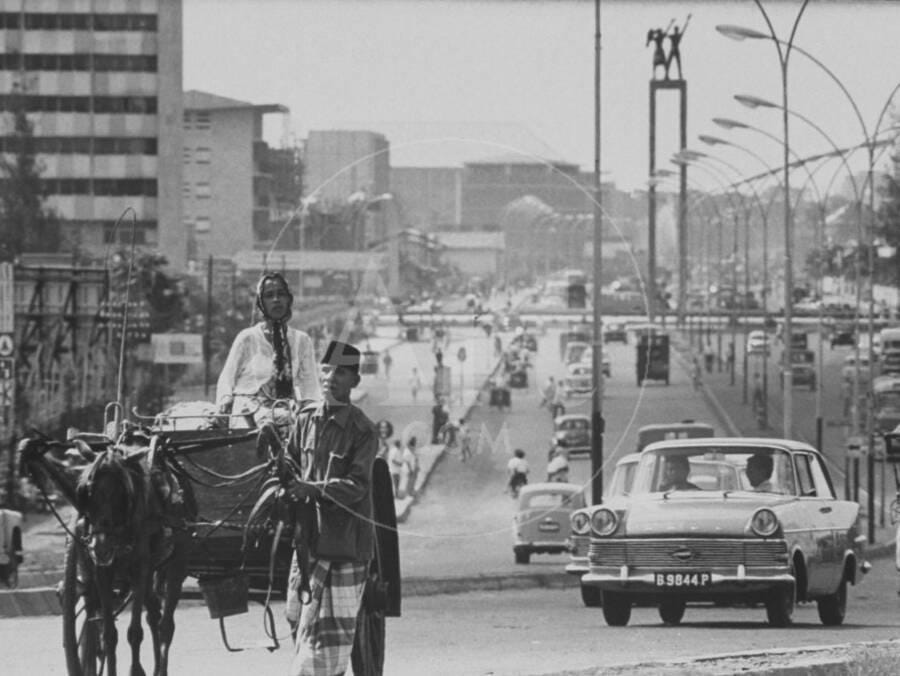
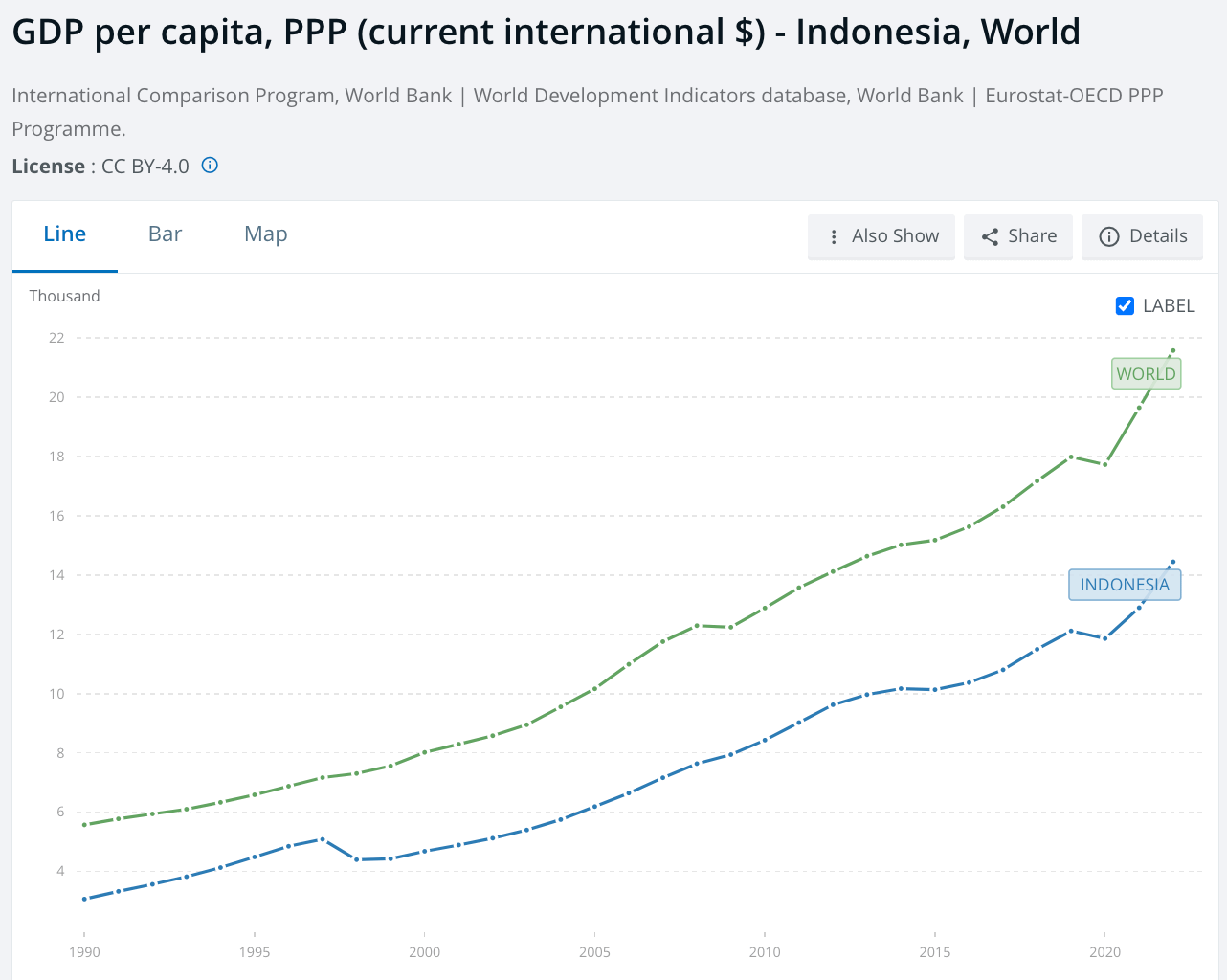
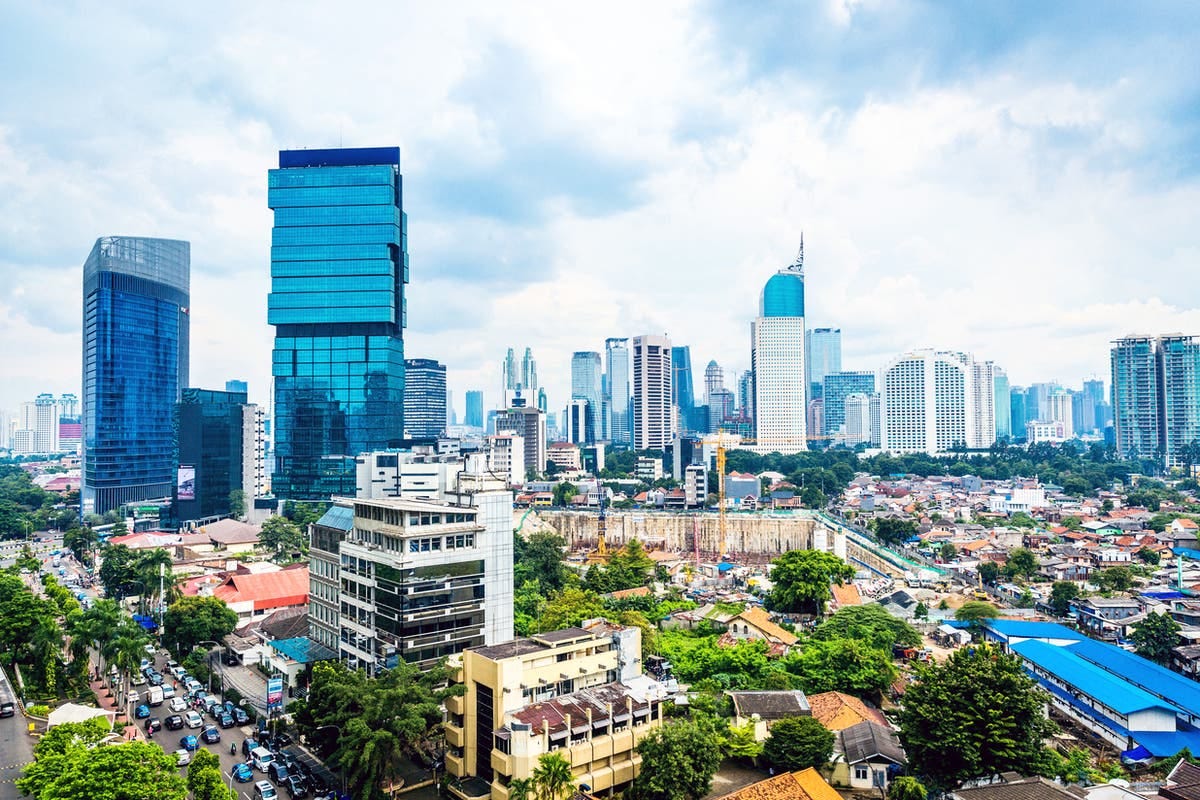
Madrasas were pretty rare historically. To what extent do you think that the rise of mass printing, communications, improved transport, and the advent of mass education in Islamic jurisprudence has caused this cultural shift? Is it just an inevitable result of economic development? Back when people were poor and lived in their villages, they didn't really know what true Islam is. Now they can discover and they want to learn and they can because they've got the tools to?
Robert Hefner (39:07.347)
Printing, mass media, and mass education exactly as you say were critical. They helped to bring about a basic change in the way in which Indonesians, Muslim Indonesians in particular, understood their religion. They led to a shift, but again not entirely linear, a shift towards heightened emphasis on conforming to scripture, Quran and Sunnah.
But again, it's complicated because one of the things that happens when one becomes more scriptural minded and more educated is that one begins to understand that there are also extensive commentaries. It isn't just Quran and Sunnah. It's these 15th and 16th and 17th century commentaries on the nature of God, the nature of the divine.
And in Indonesia, a major feature of even the literate Islamic corpus is tasawwuf, which is just literally spirituality, mysticism, Sufism, and where there are currents within this new variety of late 19th and 20th century Islam that reject Sufism, but the central stream does not. And it survives to a degree that I think stands in striking contrast with at least some other parts of the Muslim world, particularly the Arab Middle East, although Sufism's not entirely doing all that bad there. Certainly in places like Syria and Iraq, it's alive and well. But it survives as the central current in Indonesia and remains so to this day. Reconstituted in a way so as to sort of give the nod to text and scripture, but also recognizing that text and scripture can be read in a superficial, exclusive, piecemeal way, and then it can be read in terms of this comprehensive spirituality that the best among Indonesia's Muslim spiritualists emphasize.
Alice (41:12.98)
One thing I find in Indonesia especially fascinating, especially if you think about Ronald Inglehart's work on modernisation theory, they argued that with economic development then all countries will embrace secular scientific values but that's going to be mediated by your starting point. So Islamic countries tend to be a bit more conservative but we're all going in the same direction. And to me, looking at Indonesia, where if you look at world value surveys, lots of people say a really important thing for my children is that they're religious.
To me, Indonesia seems to cast some cold water on that theory.
Robert Hefner (41:48.272)
Well, I know Ron Inglehart and actually participated in discussions with him and the discussion I had with him in Belgium, Antwerp, Belgium, at a summer program back in 2015. We talked about this and he said, no, I agree with you now, Bob.
So I think he's recognized that things can be a little bit more complicated and that modernization, mass education and economic development can result in heightened concern for spirituality and religiosity, although he would right away emphasize the form that that takes will be different from what it would have taken in a pre -modern time, but I agree with him on that. So it's a matter of detail, the devil's in the detail, so to speak, if I can use an inappropriate metaphor, but I think he and I agree with the broad thrust of his revised understanding of modernization.
Alice (42:48.083)
That's very interesting because he had a book I believe that came out in 2019 or 2021 called Cultural Evolution and I don't think he makes that argument explicit in the books that I've read post this.
Robert Hefner (42:59.281)
I'm sure you're right. I actually haven't read the 2021 book. And I may be relying too much on the discussion that I had with him. We were together for two weeks every day, day after day, you know, in a context where you're dealing with scholars, you know, advanced grads and then junior faculty who were trying to think about religion and politics. So I may have gotten a kind of just a two -segmental perception.
Alice (43:25.294)
I'm so fascinated in Indonesia because it makes me rethink what happened in the West. Lots of people, if they're just, if you're just an Americanist, for example, and you just focus on the American trajectory, then you think, with economic development, salary, jobs, urbanization, people inevitably go down this route. But why I love comparativism so much is you can think, well, actually Indonesia and Malaysia have also gone down those routes and Malaysia even more so. So it can't just be economic development that drove America's secularization process. So I'm a big fan of it for those comparative reasons.
Did secular schooling trigger Islamic backlash?
Your colleague Ben Marx has a co -authored paper arguing that Suharto's imposition of secular schooling created a threat. and triggered an Islamic backlash and increased demand from addresses, which then fostered religiosity and support for leaders promising stricter stipulations in law and institutions. How does that quantitative analysis square with your observations on the ground?


Robert Hefner (45:08.915)
I think it's it's not sufficiently attuned to the complexities of the so hard to hear so hard to comes to power in the aftermath of the field leftist who this night of september thirtieth nineteen sixty five he's part of the military dominated coalition but has behind him i might also i might add not just muslim mass organizations but catholics and protestants catholics nine percent of the popular at six percent of the population of indonesia played a particularly prominent role in that coalition. But from the start, Suharto emphasized the importance of religiosity. He saw it in a rather simplistic and instrumental way as an antidote to communism.
So he and his Ministry of Education, very early on, begins about 1967 -68 mandatory religious education. At first it moves slowly because you don't have enough teachers to staff every unit to put in every school across Indonesia. But that was the plan. And slowly but surely, and certainly by the mid 70s, it's taken shape. Slowly but surely, virtually every school in Indonesia is implementing programs of mandatory religious education for two hours a week for all students from kindergarten to college and including college. Today it's three hours.
So Suharto was actually a supporter of Islamic education as long as it was under state control. What he was less happy about was the efforts of groups like the Muhammadiyya with its 25 to 30 million and then Nātatūl -Ulamā with 60 to 70 or 80, depending on how, 80 million followers, depending on how you count them, you come up with a different figure. He was less happy about the legacy of civic independence and educational independence that they demonstrated. Now they were very, those organizations were committed early on from the first decades of the 20th century to incorporating modern secular education into the religious curriculum, but they also wanted to maintain their independence.
So there was a struggle during the first years of the Suharto era between his vision of what Islamic education should be and that of these two huge Muslim Bihamut, the Muhammadiyah and Naat -e -Tul -Lama. Most interestingly, and I was there, this is where I sort of come of age, in the late 1970s and 1980s there's another equally important change taking place in Islamic education and that is that you're not just embracing a secular curriculum in addition to your religious courses, but a significant portion of Muslim educators are rallying to the idea that Islam is compatible with and indeed requires democracy and some new variety of inclusive citizenship. It's not everyone at first, but by the time you get to the 1990s, When you begin to see this huge democracy movement taking shape across Indonesia, Muslims are in the foreground and Muslim educators, the majority of them are saying, yep, that's right. Democracy is what, that's the best form of government for a Muslim majority society today. Don't talk about a caliphate. No, it's democracy. So there's a huge transformation in the ranks of Islamic educators themselves. And one that again,
Robert Hefner (48:50.93)
President Zuhardt was not entirely happy to see.
Alice (48:56.318)
So I want to just pick up on three points there. So first of all, you're saying, well, it's not really plausible that secular schooling triggered a backlash because religious education was so fundamental. They were doing two hours a week. Now I have a second question. In Nancy Smith Hefner's 2019 book, she suggests that that mandatory religious education was very a core part of the rise in public party.
But just stepping back from our conversation, I grew up in Kent in England. And we had to do religious education at school, but we sort of, you know, we just saw it as little stories. You know, the fact that we had those classes, it didn't turn me into a zealot. And I just wonder that, you know, sometimes, you know, I went to classes on maths and biology, but I didn't get that excited about maths and biology. So I wonder if the classes explain demand.
Robert Hefner (49:56.723)
It isn't just education. It's a great question and I agree totally with the premise of your question. You're right. But there are other things in addition to the educational reform, some of which had to do with, if you will, a fundamental transformation, a basic transformation in what Nancy Smith after called sociabilities and intimacies. So sociabilities, just those areas of life, not formal politics, but just how you greet, how you interact, how you say hello. And Nancy and I both witnessed this huge transformation. You go, you shift away from just saying, you know, good morning in the kind of Indonesian way that does not have any religious associations to beginning in the late eighties, but particularly in the 1990s, Islamic readings tend to be used. And of course for the Christian minority, as well as as much smaller Buddhist and Hindu minorities.
This is not entirely welcomed, but they're going to accommodate it. But Islamic greetings and indeed Islamic styles of dress and again more generally sociability, just how you carry yourself in public begins to show particularly for women, but not exclusively, but particularly for women. Women bear the greatest responsibility for expressing, signifying and indeed performing this... the new Islamic religiosity.
Alice (51:27.289)
Why do you think that public piety is so often expressed in Indonesia in terms of gender?
Robert Hefner (51:33.074)
Well, it is in much of the Muslim world, of course, but it is particularly striking that this is the case in Indonesia because as we were saying earlier, this is a place where women had a pretty good deal and were very active publicly. They're there on the marketplaces ready to talk down any mail. There's two assertive with them. They still are, I would add, but I think there are two things. One is that transnationally,
this transformation of women's sociability and dress is a key characteristic of modern varieties of Islamic pietistic reform. One just has to recognize that. And secondly, to explain why that becomes influence, Indonesians in the 1990s and 2000s become much more aware, they travel much more.
And there are also, there's new media coming in. There's the internet comes in in the late 90s, but really becomes a significant transformative force in the early 2000s. And everybody is going to sites from the Middle East. There's a significant, not a majority, but there's 10, 15 % of the Indonesian Muslim population. It was pretty good in Arabic. And you think, well, that's still only 10 to 15%. But they're a conduit through which new... ideas and kind of summaries of what somebody said on this Arabic language site. They convey it to their own internet sites and as you perhaps know Indonesia is one of the most, it's the third or fourth most networked, internet networked country in the world. So everybody follows what's going on and these conduits, these people who you know go into the Arab language and or we should want to say as well into you know, kind of Western democratic arguments about this and that. These conduits provide the general Muslim public with a much keener sense of what Islam looks like in other parts of the world and large numbers. I wouldn't say the majority, but it's much larger plurality of Muslims. That's the style to which, a style to which they aspire. They're not repudiating. Most are not repudiating their own Indonesian -ness.
Even among very conservative Indonesian pietists, there tends to be a kind of Indonesian sensibility still there. But there has changes have occurred.
Alice (54:06.317)
Prestige bias and Saudi Arabia
I think what you say about aspirations is so important and then connecting to the earlier work on economic development to cultural change. You know, when I look around the world, I think that a lot of cultural change is driven by prestige bias. So for example, when I interview people from Latin America, Brazilians, Argentinians, Mexicans, they opt because so many of them want to migrate to the US. They often see things from the US as like glittering, right? That's fancy. So if you see a place as glittering, as fancy as prestige buyers, then you consume that sort of media, you aspire to that kind of lifestyle. When I was in Mexico, I went to this women's book group in Puebla, and after the discussion, Virginia Woolf's book, they were all talking about their favorite show on Netflix, the Marvelous Ms. Maisel.
And whereas I think if you're, for example, in a Muslim country and you're looking up to Saudi Arabia, then that can have prestige bias. And there are lots of studies, for example, on return migrants to Bangladesh or to Pakistan, how they start using Arabic language or Arabic greetings. So if your prestige bias is towards, and as I was saying, I was in Uzbekistan recently, and I would often ask people, if you could go anywhere in the world, where would you like to go? And many people, especially in the more religious Fergana Valley, would often say to me, I'd like to go to Mecca, right? I'd like to do the Hajj.
I think there are two elements here, and you can say where I'm wrong. One is the prestige bias of Saudi Arabia. And then a second aspect is that prestige within Indonesia, within Indonesia, and I think particularly marriage markets. So for example, and correct me if I'm wrong, because I've never been to Indonesia, but in Uzbekistan, you know, men might say, you know, I want a veiled, hijabi, obedient, respectful wife.
And so women can advance their position in the marriage market by signaling all those things. So once something becomes recognized as prestigious in Indonesia, once men want that kind of thing, then women can cater to that demand. But I wonder what you think?

Robert Hefner (56:10.902)
There's a lot in that question. Let me just begin with the Saudi influence. So one of the paradoxes of the Saudi connection is that, first of all, Saudi Arabia is a premier destination, both for Hajj and for study. So lots of the Indonesian Muslims from relatively well off and or just accomplished, educationally accomplished people, they get a scholarship. They're poor, but get a scholarship to Saudi Arabia.
But interestingly, I've interviewed thousands of returned pilgrims and returned students. And I would say a large plurality, even perhaps a majority, come back from Saudi Arabia and they say, you know, we were subject to racial discrimination. They come back with a keen awareness of the promise, Islam's central promise, of kind of universal fraternity and sorority that it isn't realized in practice often.
And I don't want to criticize, I mean Saudi Arabia is a complicated place. And there are other status distinctions going up there too. But a lot of Saudi educated Muslims come back and they say, no, I'm proud of Indonesia. Indonesia is the largest Muslim majority country in the world. So there's a kind of complex ambivalence even to the relationship with Saudi Arabia.
Alice (57:36.646)
But wait, I want to clarify that because I mean, the discrimination against migrant workers and against any kind of migrant is well documented in the whole of the Arabian Peninsula. And so we should certainly especially, there's a wonderful book on Indonesian and Saudi educational networks by by Sumanto Al Qurtuby, very nice book. But that said, even if people are proud of Indonesia, did you get the sense of people assimilating and adopting more Arabic ideas? So for example, to give another Uzbek example, I interviewed one woman whose husband had been asking her for 14 years to wear the hijab. And then she does the Hajj and after coming back she starts wearing it because now she understands what proper Islam requires.
Robert Hefner (58:19.126)
Well, if we take as our index of religiosity the adoption of the hijab, there's been a great transformation arguably on par and perhaps even greater than what you see in Central Asia and other part of the Muslim world where most the majority of people, historic women historically did not hijab but large numbers to do. Today, according to my wife's studies, we've gone from about an adoption of about 20 % of women wearing hijab in the 1970s and 1980s to about 80 to 85 % of Muslim women wearing a hijab of varying styles. Most don't wear a very austere hijab. It's a rather attractive hijab, but it is a change. So there's that.

But the one thing I wanted to say is just going back briefly to people who've spent time in Arabia. The other big change that's taken place is there's a much, there's greater confidence among Indonesians today and particularly seen in organizations like Nadatulama with its new leadership, Yahya Kholil Stakhoff is the leader and he openly in print,
And in the presence of Saudi delegates, I was at a Bali R20, Religion 20 conference just prior to the G20 two years ago, in the presence of Saudi delegates, who are his friends? He criticizes the Saudis for being exclusivist. He criticizes the Saudis for seeking to impose, and he uses the term Wahhabi. Wahhabi for Saudis is typically a very offensive term. Most don't like it.
He uses the term in the presence of Saudis at the International Conference on Religion. So the Indonesians, even those associated with the largest Muslim mass organization, not just in Indonesia, but in the world, that is, Nathatul Llama, they have a new confidence to say, you know what, we don't have to be culturally. So they distinguish between Ibadah, which is actual devotion, pietistic worship, and then adab, or culture, and they're much more confident and much happier today to say, no, no, no, no, we're not going to adopt Arabian culture. So it's a big change.
Alice (01:00:43.294)
Criminality and the demand for moral order
So you wrote that most of the hardline Islamist vigilante groups after Suharto arose in urban or peri -urban settlements that had experienced massive economic hardship after the Asian financial crisis, an upsurge in crime and weak rule of law. And you say these anxious residents wanted moral order and the militias. invoked the Quranic principle to command right and forbid wrong.
And immediately when I was reading that in your book I thought of Robin Dunbar work and Ara Norenzayan's work about the evolution of religion and they argue that as settlements, as cities expanded, people wanted a sense of religion or religion helped to build social cohesion. And so I wonder, you know, is this a part of poor urbanization where there's weak rule of law, then religion can substitute for the state by making people fear divine punishment.
Robert Hefner (01:01:43.83)
I would say actually it is both, but the primary driver is perhaps less the threat of disorder and criminality with urbanization as it is just the sense of generational change.
When I used to work in Indonesia when I was doing my graduate dissertation work, I was a child of not so much the 60s but the early 1970s. But I had watched the 60s as a very, very young kid. And I had the impression that even though there wasn't the hippie and hipster and lefty thing that there was in the United States, I had a sense that there was a kind of generational change taking place in Indonesia that was every bit as great as what has happened a few years prior to my youth. And I think that in retrospect, I think that that is the case, but it was expressed not in, if you will, an American liberalization, above all, a kind of individualization, do your thing, and I don't mean to make fun of that, American culture and the culture of individualism is pretty complicated. It takes many forms.
But still, it did not, the new, the generational shift was not individualistic in the sense of do your own thing. It was really, it put heightened emphasis on individual responsibility. You have to take responsibility for religion. You have to choose. You have to study on your own. You can't just, you know, blindly follow what your parents did. So there is this kind of activity to it. But it ends up in effect inculcating or convincing most people that you have to live your life in conformity to Islamic norms and that the centrality of, again I don't mean to use too klutzy of a term, but the centrality of that idea of normativity. There is a way. Even though Indonesians disagree on precisely, well how should it be interpreted? There are feminist Muslims who say no no no no. There's a lot of feminist Muslims in Indonesia who say no no no.
On this gender thing, you know what the Salafis are saying? Forget it. We're not going to do it. It's not Indonesian. So there's great disagreements, but there's a great and there's a much greater sense of agreement on the idea that one should, a central part of one's life is getting things right with regard to some variety of Islamic normativity.
Alice (01:04:30.031)
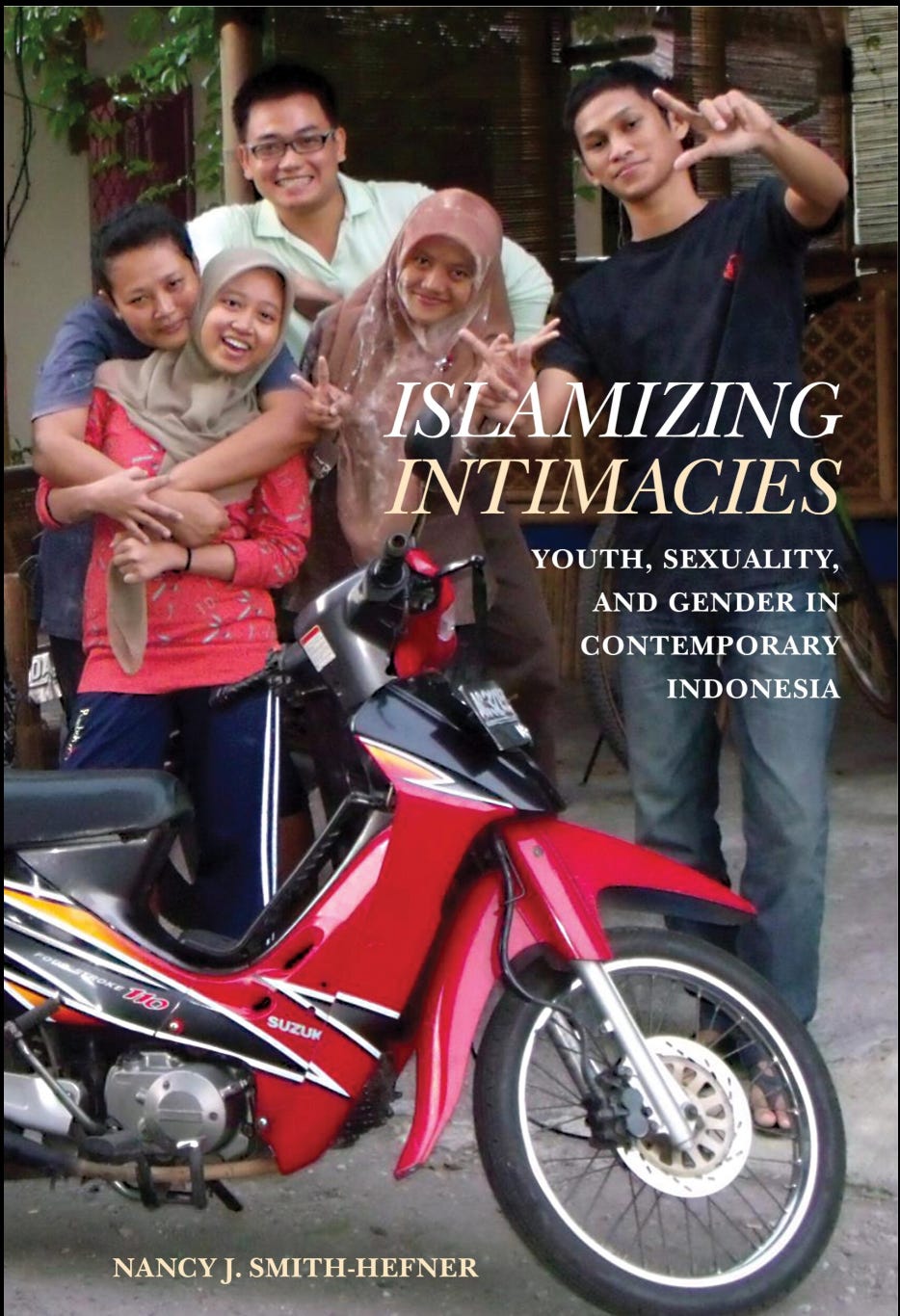
I think that's such a crucial point. And Nancy Smith-Hefner has a number of fantastic interviews on precisely that point. So in her 2019 book, which you know better than me, but she has all these examples of young university students criticizing their parents. They're saying, you know, my parents weren't properly Muslim, but this is how it should be done. And there's this one fantastic example where this young woman says, well, my mother likes to offer the rice porridge. And if she tells me to do the rice porridge offering, I'll do it, but then I'll eat it.
Robert Hefner (01:04:38.711)
Ha ha ha.
Alice (01:04:59.247)
And I think this is so fascinating because whereas people might lump a bunch of cultural things together and they might say, well, you know, respecting your elders or religion or obeying your parents, those are all traditional cultural things and they move along together, you know, as people become more secular and scientific.
Actually what we're seeing in Indonesia and here's another point from Nancy Smith-Hefner’s book, is she talks about how people use, Indonesian Java, Javanese terms to talk about family obligations, but then Arabic terms to talk about the ideal marriage partner and then English terms to talk about like individual self actualization. And I think, I think that's so fascinating because together it's showing that people can be criticizing the older generation and exactly as you say, it's expressing that independence. So just as the 1970s and 1960s counter cultural movement of young people being independent and wanting to embrace dating.
actually in Indonesia as you and she also write that actually see an Islamic movement against dating but again this is exactly young people's independence against their parents. So yeah I really really appreciate that and I learned a lot from both of you there.
Robert Hefner (01:06:10.743)
That's right. And that is very much the kind of complex interplay of aspirations and ideals, as you described it, is very much what makes Indonesia and Indonesian Islam so fascinating today. Just one final point. You brought up the point, the language and discourse of self -actualization, be yourself. Even as this country has been swept by a kind of pietistic surge, characteristic of that surge for some people, particularly those educated middle -class people and particularly women, is you want to also realize your full personal potential. And that potential isn't just defined in terms of, if you will, a set number of religious commandments.
It also has to do with becoming educated, becoming a professional. Women graduate from universities in Indonesia at rates higher than their male counterparts. They're better educated. This is true in many countries. It's also true in Saudi Arabia, incidentally. But it's particularly striking in Indonesia, because whereas in Saudi Arabia, most of those women end up just going back to the home, not getting public employment. In Indonesia, a woman gets educated, and most women say, no, I'm going to have a job. I'm going to have a profession, as well as having children and a family.
Alice (01:07:39.465)
Does the rise in public piety reflect men’s economic struggles?
One theory that's been especially prominent in the literature in both Pakistan and Egypt is about economically struggling men. So a lot of work here in Egypt talks about in the 1970s, the rise of unemployment, men go to university, but they can't get a white collar job.
And so here is the Muslim Brotherhood offers them a sense of dignity, a sense of status, you know, and in Pakistan men might prove their moral worth by doing God's work in anti blasphemy politics. And I wonder to what extent do you think religion is catering to those men that can't achieve, that are struggling to achieve sort of secular levels of status and dignity?
Robert Hefner (01:08:28.438)
It's very much there, although I perhaps wouldn't see it as entirely, or quite so directly, compensatory, as some people have argued. But I began my research, of course, as a doctoral dissertation student watching the early phases of this new phase of Islamization in rural settings where most people were very poor, in East Java, way up in the mountains.
in areas where historically most people didn't know how to pray, they didn't know any Arabic, they didn't know the shahadah, the profession of the faith, they self -identified as Muslim but they never went to mosque. And all this was changing and one of the most striking memories I had again and again and again was the simple poor farmers coming back from the fields, their hands dirty, taking 20 minutes to wash, clean, put on a new...
of clothes and pray. And yes, I did see it, perhaps not in any literal sense as compensatory, but it was an assertion of dignity and pride. They were very proud to be part of what they saw as something thoroughly modern, but also something that added distinction in a kind of bourgeois sense, a sociological sense, added distinction, but a distinction that was very, very religiously charged.
That was a critical part. That is a very, that dignity enhancing element of religiosity is very much there among poor people. It's there among wealthy people as well, but if you're poor and have nothing else, you're poor, relatively uneducated, and have nothing else to which you can point, the fact that you know how to pray and that you're there in the evening in the mosque saying those prayers, that counts for much.
Alice (01:10:23.485)
Did democratisation enable religious contestation?
So as you were saying earlier, during Suharto's period in the New Order, he did allow religion into the schools, but he also separately repressed Muslim parties, a Muslim, although the religious organising was allowed as long as it wasn't political. And I wonder to what extent, if you couldn't actively campaign as a Muslim party, whether that suppress religiosity and the politicization of religiosity. So to what extent do you think the Islamic resurgence is a product of democratization and greater freedoms that people can campaign and say, this is really important? Or for example, protesting the Christian governor Ahok, for example, that's a product of democracy.
Robert Hefner (01:11:09.942)
Well, democracy, particularly the return to formal electoral democracy in 1988 -99, has definitely inflected some aspects of public religiosity. But as you noted, the resurgence actually begins prior to the democracy movement of the 1990s, late 1980s and early 1990s. It really begins in the early 1980s, and it's just the difference of several years. But one could also see that its drivers, its milieus, were more varied. They weren't mostly political.
For some people they were, but they were primarily, for most people, had to do with detraditionalization, the movement out of the village, the desire to be modern, and to be modern in a way that, again, as we've emphasized, gave you a certain measure of very, very palpable dignity, even if you were poor, even if you weren't well -off. So that was a driver. Yes.
Alice (01:12:13.148)
Okay, another thing we've seen in the Reformasi period is the Catholic -Muslim violence. Which parts of Indonesia have the most inter -religious harmony and why do you think that is?
Robert Hefner (01:12:24.15)
Well, let me just back that up a bit. The greatest violence was primarily between Protestants and Muslims in the Maluku islands, the Moluccas as we call them, Ambon. There were Catholics, but interestingly I've actually was part of a project that went to those areas just in the immediate aftermath of the violence in the early 2000s. And the primary violence was between Protestant and Muslim youth groups. The mass organizations couldn't get either of their respective youth communities under control. There was a kind of freewheeling independence and people were saying, hey, it's a democratic era, you can't tell us, even those of you who are in the leadership of our respective communities can't tell us what to do. So things got out of control, but interestingly, I've gone back repeatedly, most recently in 2016, and they are under control. Muslim -Christian relations in the Malukis in Ambon are actually quite good. It is really a remarkable story. Now back to where was your other question, which is a great question, where were some of the areas, the bastions of tolerance for which Indonesia has long been famous, even though the tradition of tolerance is not by any means uniform across all of the archipelago. One of its centers is no doubt central in East Java and particularly central Java.
This is the area where that, if you will, that spirituality about which we are talking has survived and thrived even as people have become more Muslim and more pious in their religious observance. It's still there. That doesn't mean everybody, some of the most radical groups of the early 2000s, such as the Laskar Jihad or the Jihad paramilitary, a group that I studied.
Robert Hefner (01:14:21.909)
Some of them originated there too, but there were always outliers with regard to main local society and much many of the people in their leadership actually came from areas of Eastern Indonesia where there had been earlier religious conflict such as Lombok and again Sulawesi or the Malukkas. So often they were non -Javanese in leadership, but any rate Java is one of those areas which I think, we can say it's not just the practice of tolerances there. There's also a kind of a discourse or a language of tolerance that saturates everyday sociabilities, if we can use that phrase again.
It's changed because people have become much more pious, but it hasn't changed entirely. And the piety itself reflects, again, this kind of Javanese tradition of tolerance and plurality. That's the real key. The Javanese, and to some degree it's found in other parts of Indonesia, this recognition that not everybody can be the same. You can be Muslim, but you will be different. You just go to a different island, you immediately encounter Muslims speaking different languages, but it isn't just languages. It's dress, it's marital customs, it's do you date or do you not date? How do you arrange marriages or do you not arrange marriages?
There's all of this variety and anybody, any Muslim, who travels around Indonesia becomes keenly aware of that. And if you want to impose a kind of uniform, unitary, this is Islam, profession of Islam, you quickly realize you're going against a deeply rooted current of plurality that is the best, I think, of Indonesian society.
Alice (01:16:11.499)
And what do you think explains Java's distinctiveness?
I mean, two hypotheses come to mind. As I recall from the sort of 1950s data, is that area was already the most pluralistic back then. And I wonder whether this because Java was the sort of heartland of trade that you would have had so many different people coming in that you just become accustomed to diversity. Over the road from you, Ben Anke, he's got a paper arguing that where there was more trade, you see a more universalistic morality.
You become, you build all these diverse ties and you sort of get used to all the weird ones. You know, that we're all weird, right?
Robert Hefner (01:16:47.668)
Well, we associate trade, yes, with the north coast of Java, but the real centers of trade from the 15th to the 18th century and the arrival of European colonialism, the real centers of trade, and they are flourishing, lie more on Sumatra, the coast of Sumatra, not far from what is today Singapore, Malacca and then Aceh on the north. These are areas, and these are areas that adopt a relatively more puritanical profession of Islam, although we shouldn't exaggerate that. You go to Aceh and you still see women's religiosity in a very Indonesian way. It's Muslim and it's Indonesian. So it's not quite, but there are definitely, certainly with regard to politics, there are... religious parties in places like Aceh that are much, much more socially and politically conserved. And some of them were hesitant about this return to democracy. Whereas in a place like Java, but also in most of Sulawesi, people celebrated the return to democracy. And in part because they have a longer tradition of accepting the idea that society itself is plural and you just being Indonesian is recognizing that. And learning to live with it.


Alice (01:18:08.517)
Islamic study circles
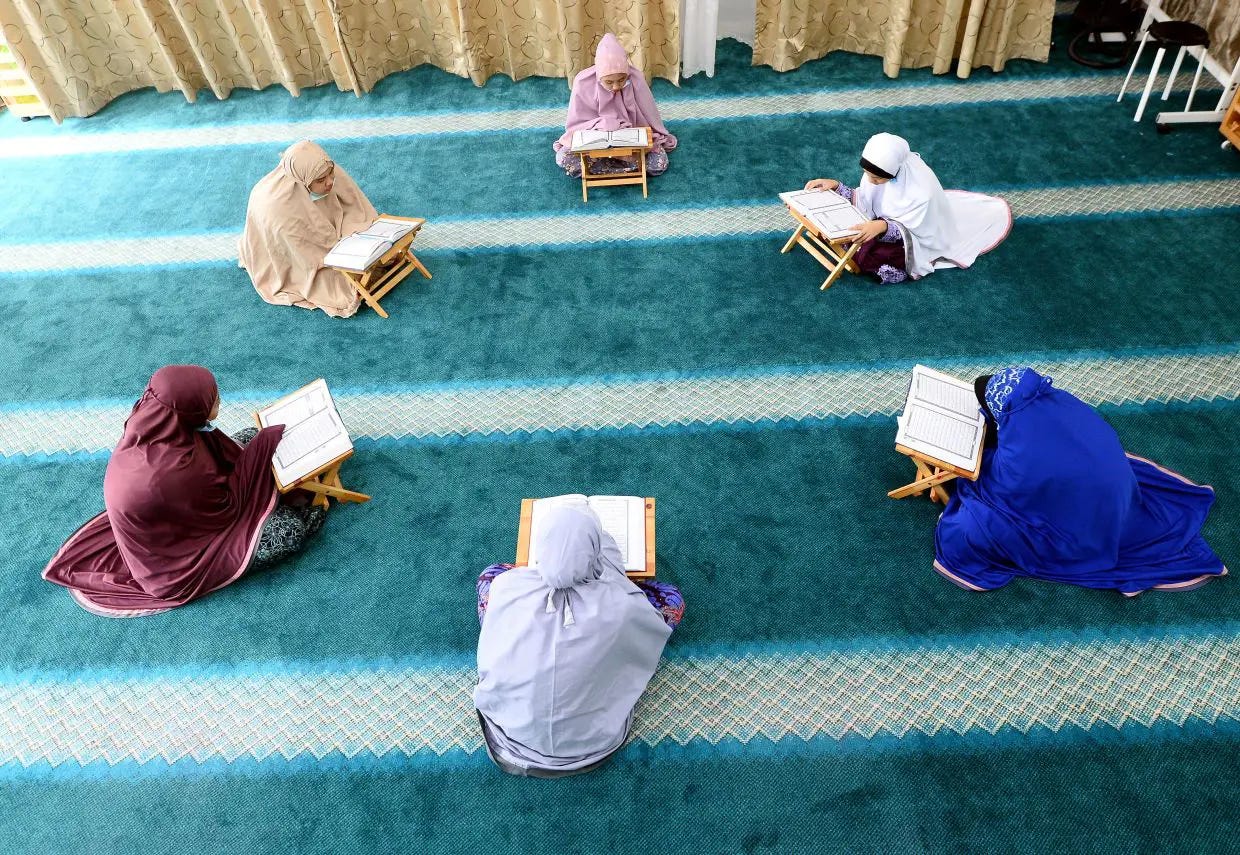
Now I want to talk about Islamic study circles. And you write that these have absolutely flourished, especially among women, and the National Association of Islamic Study Circles has 14 million members. And again, this reminds me of Robin Dunbar's work where he talks about that any ritual sort of synchronized communal activity can promote social bonding. And when I interview Muslims from Egypt, for example, often they tell me, that it's so nice and therapeutic to go to the mosque or to do their namaz because it's so healing, it's calming and I was wondering what do people tell you that they enjoy so much about these study circles?
Robert Hefner (01:18:49.427)
The first thing that they will typically cite, and my wife Nancy Smith Hefner again, with women, this was a question she asked everybody, and she recorded more than 500, she interviewed more than 1 ,000 people, she recorded and transcribed more than 500 typically two to three hour interviews, so she's got a lot of things on tape and in print. And one of the things that she will emphasize, the first thing that they say they enjoy is they came to understand Islam. Well, that's primarily a normative statement, but it does reflect a sense of something that was valued, but equally importantly, and in some ways I think sociologically and psychologically as important were the variables you referred to among the Goalists, that is socializing. It's not just in the mosque.
Women's study circles often take places in homes. And you've got tea. You've got some sweets. It's a major, it's a new form of socializing. You might have just come from the countryside, moved to the city. You don't know anybody, but you join one of these study circles and as a woman, you know, otherwise, you know, you're, you might be a little bit nervous about just sort of heading out into the street. You don't, you go to a neighbor, you meet other neighbors and very quickly, you know, literally, you know, a hundred, 200 people, and you become close to several in that group, it's a major source of social enjoyment. And that function is there in this new, more urbanized, more educated Indonesia. So that is key.
Alice (01:20:30.495)
You know, it was so nice when I was, I stayed in Tashkent before touring around Uzbekistan and the family that I stayed with, they would all study Arabic together. They had an L -shaped sofa and the entire family would be studying their Arabic and reading. It was a very, it was a very loving family bonding activity that everyone was studying, you know, because under Soviets and totalitarianism, dictatorships, Arabic, you know, everything was banned. But now people, you know, some families are really trying to learn as much as they can. And it was.
Such, you know, rather than, you know, people staring at the TV, this was a very loving thing that everyone was using all their spare leisure time to learn Arabic.
Saudi funding
Suppose Saudi Arabia never had oil and had not funded any mosques or the scholarships you mentioned earlier in Indonesia. Do you think Indonesia would be any different today?


Robert Hefner (01:21:29.714)
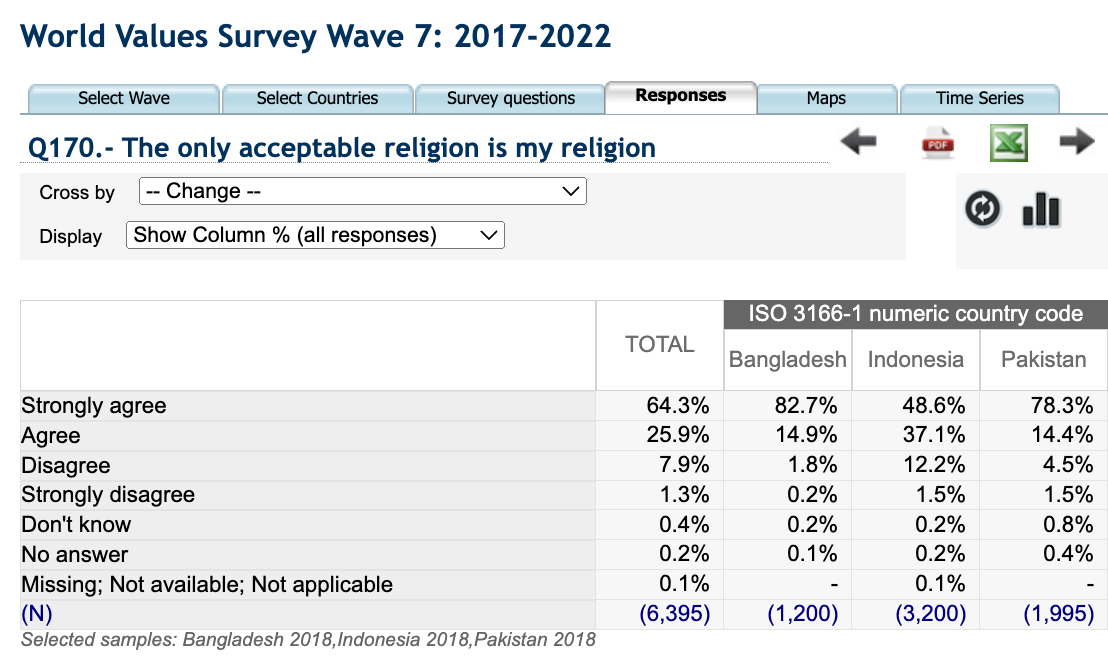
It would be different, but it wouldn't be greatly different. And I think I start with a comparison. People used to compare Indonesia with Bangladesh in the 1960s. Comparable levels of poverty, lack of development, a strong traditionalismist presence with major kind of Sufi influences. So there was a sense that Bangladesh looked a lot like Indonesia, particularly Java.
Today nobody says that. Today Bangladesh looks like a place that, you know, it's doing okay and among Muslim democracies, I would say, you know, it's functioning even though it's somewhat degenerated a little bit in recent years as a result of infighting among political elites. But on the religious front, it's still quite different. It's very different.
The primary Muslim mass organizations in Indonesia today are the ones, not the Tula Muhammadiyah, ardent supporters of inclusive citizenship, of democracy, and of inter -religious tolerance. So Saudi Arabia's influence in Bangladesh and Pakistan, both of those countries, is much more visible, much more palpable. You have Salafists, you know, Wahhabi, if you will.
Salafist organizations in both countries that exercise much greater influence than their counterparts in Indonesia. There is a Salafi movement in Indonesia and it depends on how you measure it, what you associate it with, but strict Salafis are really probably 7 to 10 percent, maybe 12 percent of the population and that's it and then, you know, kind of moderate Salafis. And I think it is important to make that distinction because some Salafis, many Salafis are themselves changing. Saudi Arabia is changing. I could talk about that in my conversation with Mohammed Al -Isa, the head of the Muslim World League two years ago, but if we wanted to go there. But it's so the Salafi, the Salafis in this kind of more general sense is perhaps inclusive of the 7 to 10 is about 20 percent. Otherwise, you know, your 80 percent of the population is Muslim. They're much more self -conscious about Islamic piety and proper observance, but they're also committed to these Indonesian varieties of sociability, including those of a gendered nature. So socially speaking, the milieu remains quite different. So the Saudi influences there? But it's nowhere comparable to what the influence that we see in not just Bangladesh and Pakistan, but now large parts of East Africa and West Africa and Nigeria.
Alice (01:24:24.035)
Yes. Okay, but wait, I wanted to say something interesting because you are making a comparative claim saying that Indonesia is different from Bangladesh, which I totally accept. But I guess my question is more like, of the rise in Islamic piety, what percentage of that do we think is due to Saudi funding or Saudi prestige bias? So for example, the rise of the headscarf, that's one interpretation of the Quran and Hadith. You know, do we think that would have become so common if Saudi Arabia had been so poor. It had been poor?
Robert Hefner (01:24:56.146)
I think it was again, Muslim Indonesians tapping into those new networks of international travel, migration, including on the part of some Indonesians, migration for work in the Gulf and Saudi Arabia, although that's much less of an influence than it is for, for example, Filipino Muslims who were disproportionately represented in the Gulf and really have been transformed by their contact with Saudi and Gulf variety professions of Islamic observance. Indonesians, as I said earlier, have had a more complicated and new
Yes, I think it's the Padri Reformers that you referred to, P -A -D -R -I, back in the 19th century, drew directly on a Wahhabi influence. But I think if we move forward, even though perhaps in the late 19th century Dutch scholars, many Dutch colonial officials, were nervously concerned that there was going to be Wahhabization of Indonesian Islam, I think there's been, on one hand, a greater concern with proper religious observance, but a greater confidence that that should be distinguished in many regards from a Wahhabi Salafi profession of Islam. And if anything, since the first years of the New Democratic era, after 1998 -99, at the beginning there's this big, big organized Salafi push, and today it's petered out.
Because why? Yes, because of Anu and Muhammadiyah saying, no, that's not a more proper profession of Islam. Our profession of Islam is Islam. Thank you very much.
Alice (01:26:44.269)
I'm totally with you, so I guess we should clarify a couple of different strands to it. One is whether Saudi funding and inspiration and prestige bias has led to what you call an exclusivist fanatical Islam and you're saying no, Indonesian Muslims are very committed to a democracy. I understand that. I guess a separate part of it is in your book, you talk about the rise of public party and so for example, there might be youth groups where men and women where they believe that men and women should not shake hands or a man should not a man and a woman should not get on the same motorbike or they should not look directly at each other one should lower one's gaze or one should dress modestly. So that's separate from the exclusivist Islam to what extent do you think those sort of gender components in public piety stem from one people just learning about Islam as a result of economic development, technology and communications versus Saudi backing for that particular strand.
Robert Hefner (01:27:43.216)
I think it's the first. There is Saudi backing for some things, but the influence has been muted, as you heard me say. In the late 19th century, it was very strong. Much Islamic reform really had a Wahhabi Salafi stamp to it. That's no longer the case today. There are Salafis, as we said, but now there's a greater confidence that none of you can be reformed, and proper in your profession of Islam. And it doesn't mean you have to dress or interact socially with, you know, in a Saudi manner. Although, again, Saudi Arabia, that was one, I mentioned this a moment ago, Saudi Arabia itself has decided, and I'm referring here in particular to Muhammad Al -Isa, with whom I had that conversation, the head of the Muslim World League, I had a conversation with him in Bali at the R -20, before the G -20 meetings.
And it's clear to me, and he more or less said this directly, that they have learned from Indonesia. And when you talked with the leadership of Nandatulama, particularly Yahya Kholiustakoff, the current executive director of NU, whom I know well, I regard as a friend, I respect him enormously, he is quite confident that the influence now is from Indonesia back to
Still a lot, not a lot, but back to Saudi Arabia. The Saudis are studying Islamic education. They're studying the ways in which one accommodates culture. Saudis now have movie theaters and things and they look at Indonesia and they say, the Indonesians have all these sort of diverse cultural activities. They tolerate all these different ethnic traditions.
Maybe there is something we should learn because as we go global, this is the plural world that we encounter as well. And that more or less is what Muhammad Al -Issa said to me in that conversation, the one and a half, almost two hour conversation I had with him. We were supposed to just talk for five minutes and we just sort of... I was so intrigued and he was so generous that we ended up just speaking for the better part of two hours.
Alice (01:30:07.655)
Egypt’s Muslim Brotherhood
So one thing I found really interesting in your book is, and I'm going to screw up the pronunciation so I want you to correct me, Indonesia's Tarbiyah movement for character development. And I find it very interesting that you were saying that even when it was funded by Saudi Arabia, it was initially not so radical.
But when there was an influx of return graduates from Egypt who'd been inspired by the Muslim Brotherhood, they more strongly embraced ideas of gender segregation and they encouraged these small learning circles and support groups to cultivate ethical character. And so I'm wondering how important do you think the influence was for the Muslim Brotherhood and those ideas?
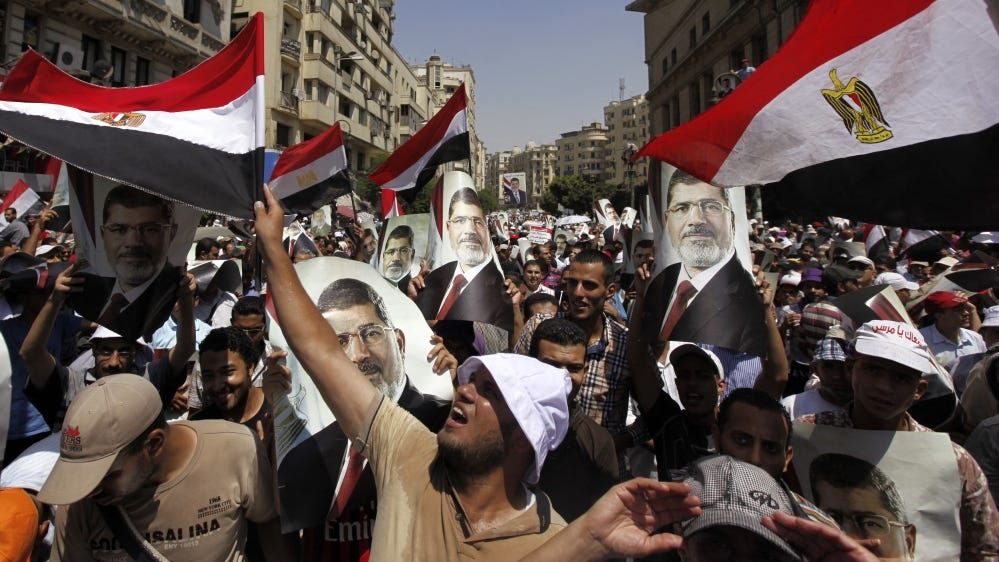
Robert Hefner (01:30:54.064)
The Muslim Brotherhood had its moments. There is a Muslim Brotherhood, formal Muslim Brotherhood organization in Indonesia, but it's never gotten very big. It's primarily urban and on a few campuses and that's it. And the reason it hasn't grown greatly, two reasons. First, it did profess or promote a kind of Muslim Brotherhood style of politics which...
Remember they so they arrive on the scene in the late 1980s 1990s. Sorry, they're there in small numbers before but they become in big numbers late 90s early 2000s and they think now with this democratic Indonesia our numbers are just going to explode and they don't and They it isn't just because there's a lack of consonants resonance. It's also because there's pushback from again those pre -existing dominant
Muslim majority organizations, the largest Muslim mass organizations in the world are in Indonesia. Not the two Ulam at the top, Muhammadiyah number two. And they said, wait a minute, wait a minute, we have been doing quite well. We're not bad Muslims. And we also think this is new democratic system that we supported and helped to introduce that that is entirely compatible with Islam. Thank you, don't come and tell us that we have to implement Sharia law.
Now there are within both of those organizations there's a minority who would say, no, we should have more Sharia law. Nobody believes Sharia law. And all major Muslims and scholars in Indonesia understand Sharia law is not a blueprint. It has bits and pieces, where it's very very detailed, areas where it says nothing and it says very little about the actual form of government other than that the ruler should be pious, proper Muslim, and affirm Islamic norms. But so when these Muslim Brotherhood folks come along and say we need to implement Islamic law and yes women should dress like this and the meeting should be segregated, gender segregated.
Robert Hefner (01:33:06.896)
Again, it took a while, it took a few years after the transition to democracy, but eventually both representatives from both of these organizations said, wait a minute, wait a minute, you're just people who, you know, you come from Java or Sumatra, most of you come from poorly educated, you weren't educated religiously until you went to the Middle East. Excuse me, we are Muslims, we have a good tradition of Islamic education.
Our gender relations are just fine, thank you. You don't need to tell us what to do and you have no right to think that we are some help. You're lesser. Thank you, but no thanks. So it's really... And that sentiment has not diminished if you read some of the statements and they're available online on humanitarian Islam. That's their phrase. From Nadat to Ulama. One can look it up online and see some of their declarations. They begin in 2000.
They're all online and they're in English as well as Arabic and sometimes Indonesian, but their preferred international mode of communication is English. If you read them, they're really, really astonishing. They call openly for the reform of Islamic jurisprudence, Islamic ethics, so as to make it compatible with democracy, plurality, and inclusive citizenship. They emphasize again and again, I'll stop here, but it is critical tthat there must be no discrimination against fellow citizens on the basis of religion. None whatsoever. They say it loud and clearly again and again. That doesn't mean everybody in Indonesia abides by it. But these are the two largest organizations, and not the TULEM in particular, the largest Muslim organization in the world. There really is nothing comparable like it in terms of its boldness, its call for totalizing reform of Islamic social and political ethics.
Alice (01:35:06.933)
Thank you, thank you. So I just want to push back on this a little bit. So for example, if we look at legislation, I think there are 120 local hijab mandates. There's also been the reform of the criminal code, criminalizing blasphemy. Also the criminalization of sex outside marriage, which of course makes gay sex illegal. So those aspects do look strict.

Robert Hefner (01:35:30.992)
Yes. Yes, and the first thing one would have to say is those are... almost all of those legislative reforms they date from the early 2000s onward up to even quite recently, the great majority of them were promoted by people associated with the former party of the former ruling government of the Suharto government, that is the Golkar party. So they were promoted by a party which has historically been secular nationalist and that in this new more open political environment and in Indonesia, which again has experience to pronounce religious resurgence, this Golkar secular nationalist party, which has many bright people, I would say, and many genuine and sincere people associated with it, but its key concern with this support and in most instances the introduction of this legislation was to burnish its Islamic credentials so as to be able to compete with its rivals, particularly those who might be associated with the Naat -e -Tul -Lama or Muhammadiyah. So, and that's the first thing. The second thing is that although they have not diminished entirely, the crafting of such that legislation has almost come to a total halt. And this is one of the interesting things about how religious politics in Indonesia works.
People within the Muslim community don't typically want to get up and say, you know, you're an infidel or you're a bad Muslim, if they disagree. They're very cautious. So what has happened is there's been pushback above all from the Muhammadiyya and the Atatul Lama and of those two above all from the larger, the two Lata, the two Lama. And they have told legislators, you know, please don't do this. We know what you're doing.
Robert Hefner (01:37:35.279)
You know, we know you're instrumentalizing religious legislation so that you can court support in the Muslim community. If you now shifting my voice here, if one looks again at those documents at the humanitarian Islam site, official declarations from Manu and its youth organization, which is known as Ansor, you can trace them from 2012 to today at the humanitarian Islam site. You can see when they refer to the instrumentalization of Islam, they're talking not just about Islamists like ISIS, although they despise them and do regularly, particularly in 2015 -2016, regularly denounce them, but they're also referring to people who were formerly secular nationalists who were trying to clothe themselves in the garb of piety so as to win votes. And they're saying, don't do this. When they say don't instrumentalize religion, they're also talking about these legislatures who come from secular nationalist background and who have promoted this legislation. And the end result is, since about 2014, 2015, the pace of this legislation, the crafting of this legislation has come to a near total halt. Now that said, you're right.
Alice (01:38:57.48)
But when was the criminalization of blasphemy and the criminalization of sex outside marriage?
Robert Hefner (01:39:00.974)
Well, it's around this time. It's towards the end of this period and it's the new criminal law code. So yes, so the criminal law code, which I think is 2018 -2019 has statutes that very definitely criminalize sex outside of marriage and the gay community, the LGBTQ community in Indonesia, which isn't large, and which is on the defensive today, probably a little more on the defensive than it was 20 years ago in the early years of democratic reform. The LGBTQ community does feel that this legislation was a setback and I think they're right. I think they're right. I think the sort of the one great challenge or perhaps greatest difference between Muslim Democrats and democracy in general in Indonesia and its counterpart in Western Europe and the United States has to do with LGBTQ issues.
And a final sentence here. One, for part of the reason is that this is, there is this difference, is that there has been pushback in even mainstream Muslim and to some degree Christian circles in Indonesia, feeling that the West is really trying to escalate its pressure on, you know, non -Western societies. Now, I don't agree with that, but I do understand that on the LGBTQ issues, Indonesians, this is an area where Indonesian culture, notwithstanding the history of, you know, three or four sexes and all that, but in terms of gay LGBTQ sex and when I talk with Muslims and Christians, they will say this, LGBTQ, that's fine, as long as you're not promoting LGBTQ sex. So there's a kind of broader acceptance of the idea of gender plurality, but there is not a broad acceptance of the idea of sex outside of marriage and sexual promiscuity. On there, if anything, there's been a kind of something of a conservative term since the nineteen seventies and nineteen eighties when i can recall a lot of indonesian youth including muslim and christian youth engaged in pre -marital sex my sense that i think it's that sees my wife as well is that that the incidence of sex before marriage it's still there but it's gone down rather significant
Alice (01:41:46.114)
Okay, so this is great. So I want to pick up on another thing in the book that you said that some politicians, maybe when they're facing corruption charges, might brandish these sorts of religiosities to make themselves sound morally pure. And I thought that was a very interesting argument.
Do you think these hijab mandates are popular? Do you think people see it as, well, yes, that's a good politician, they've done the right thing?
Robert Hefner (01:42:21.967)
We have pretty good polling information on this. And I did a survey, as you know, in the mid -2000s of a thousand ordinary Muslims and then a thousand Muslim educators. And the idea of hijab legislation gets the support of about half of them in both polls. So a lot of people, which is to say a significant number of people, think the mandates are fine.
Most Indonesians, when you, I followed up these 1 ,000 per two, 1 ,000 person surveys, you know, with year after year after year of going around and just talking with people and observing conferences. And it's very clear to me that people don't want any kind of strict penalty for people who defy the legislation or who want to do something else. Although this is one of those things that's in motion. I think we're in right now in a moment where,
there's a little bit more disaffection with this legislation and even stronger disaffection with the idea that you would punish, for example, women who don't wear hijab. But the legislation has not, in most instances, been reversed. And I think the coalition that supports it, both conservative, secular, and nationalist trying to burnish their credentials, and then that wing of the mainstream community who just thinks morals legislation is nothing wrong with it and they you know, they're a significant number So why get rid of it? They may not think it's a critical issue, but they think well, why get rid of it? Even if women doesn't wear a hijab, it's good to have the legislation there because people are reminded that's our norms. So it is complicated.
Alice (01:44:09.788)
Another thing I really appreciated in the book is you said that even suppose you survey people and you ask them, do you want Shariah law? And lots of them say, yes. You say, well, actually you need to look at revealed preferences when they, when there's a trade -off between economic development and job creation, people vote for those kinds of politicians. And I think that's such a great reminder to the many political scientists who are, or psychologists who would say, well, you know, we're just looking at this one answer and they say, yes. So I really appreciated.
Robert Hefner (01:44:35.596)
That's right, and parties that made the implementation of this rather formalistic understanding of Sharia law, their key platform, or their central platform, have not done well. Period. End story. They have not done well. And the parties that have been associated, whether directly or indirectly, with groups like the Natat -ul -Lama, they've not made sharia legislation a priority in fact if anything they have quietly said not a good idea
Alice (01:45:10.389)
Once public piety reaches critical mass, does this generate further religiosity?
One thing, so returning back to our previous conversation, so my sense from this conversation now is that you're really saying it's with economic development and communications and technology that people can learn about theic jurisprudence, true Islam, and embrace this religiosity.
But I think also in your book, you highlight a number of positive feedback loops so that, for example, once at least 50 % of the population becomes very religious, they vote for parties that will at least have these hijab mandates. So it's not just the economic development, there are also these institutional mechanisms.
And I think two other points that came up in the book were about labor market rewards and also public protests. So for example, you quote one rector from East Java who said that a gifted charismatic preacher who was fluent in Arabic could earn in one night what a teacher could get in a month. And I thought that's another, so once a lot of people become religious, then you yourself have an economic incentive to train as an Islamic preacher because you know you've got a great market. So that itself is an additional driver.
Robert Hefner (01:46:16.363)
There's no question about it. Preachers can command, good preachers, celebrated preachers, and they have all the characteristics. We can watch them. I can certainly watch them, but I think somebody who doesn't know Indonesia can watch them and you can immediately sense, here's, this one is, this is a really gifted person. They have all the same sort of charismatic qualities and oratory skills that we associate with us, good secular or religious speaker in the West. So they, and I might add, Indonesians have historically put great emphasis on skillful oratory. They like someone who can speak well and in a commanding, but not authoritarian. There's a big difference here. The sad, there were preachers in the early, in the transition period of the new democracy era who were kind of harsh and... their oratory was fiery. There was a guy named Jaffar al -Murtali, whom I know, who was head of the Lashkar Jihad. I referred to him. And he was very, very fiery. But I can remember attending at his invitation. I sat up on the front podium with him as he was just sweating with his fiery oratory. And I remember looking out at the crowd and realizing some people looked scared.
And a lot of people just looked like they weren't quite sure what to make of this guy. And what was interesting is that I knew him and he passed away a few years ago, quite young. But I knew him quite well and I watched how he changed. He became softer in his oratory. So again, there's that Indonesian sensibility sort of reconstructing an even very conservative profession and predication of Islam.
Alice (01:48:19.728)
Yeah, sorry, maybe I should have rephrased, I mean, I think it's really important that there are these somewhat local idiosyncrasies that mediate how Islam is manifest. But I guess my point was more that once you have a critical mass of religious people, then that creates a number of feedback mechanisms, whether that's the economic incentive to train as a preacher, the marriage market incentive to go to a madrasah, like in Indonesia, girls are more likely to go to a madrasah.And also, I found it really fascinating in your book where you talked about that after the campaign against the Christian governor of Yucatia, how do I pronounce it?
Robert Hefner (01:48:55.052)
Jakarta. It was actually Jakarta. So it was the capital city of Indonesia. Yeah.
Alice (01:49:00.235)
Yes, sorry. After the campaign against the Christian governor of Jakarta, Ahok, then Muslims became more inclined to endorse that Quranic line. And that again suggests ideological persuasion that maybe before then people just hadn't considered it. But when you see thousands of people on the streets demanding, then you realise that's what we should have.
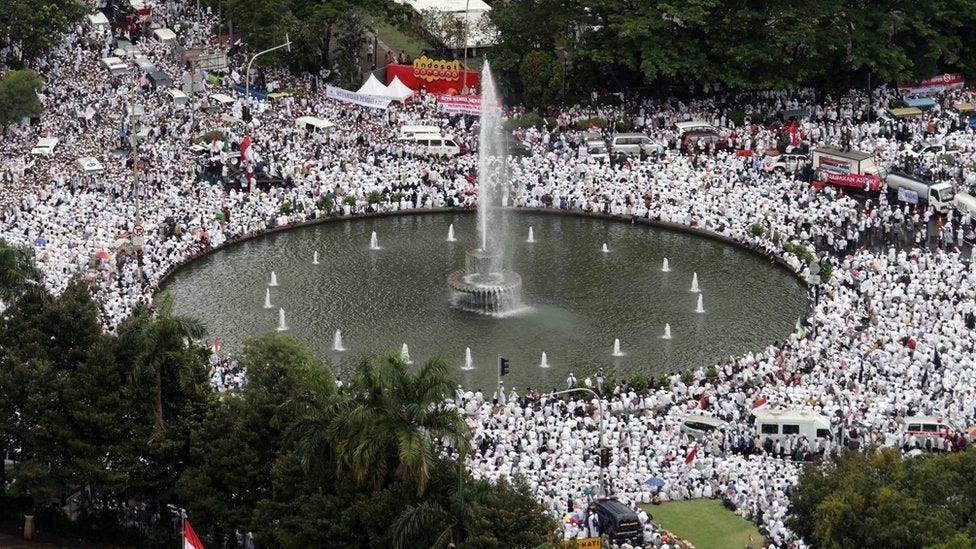
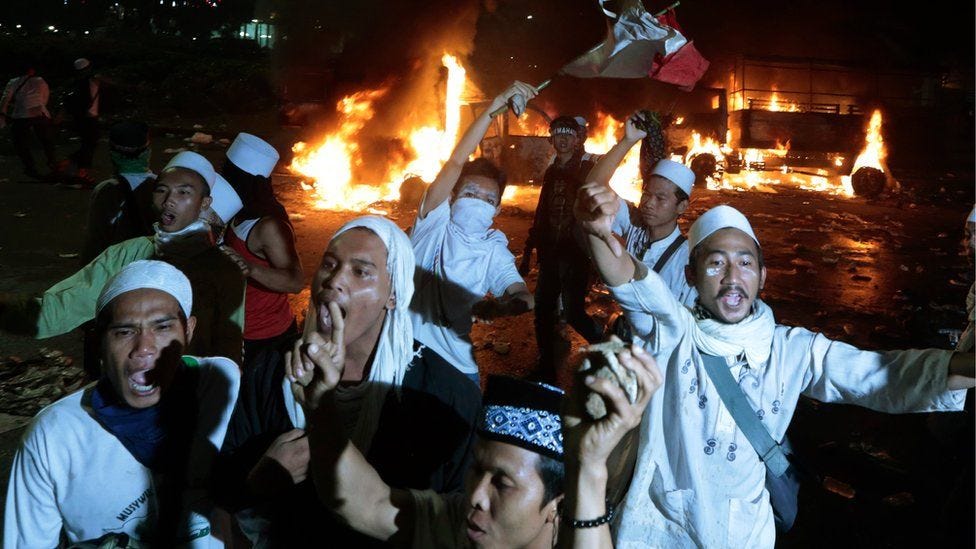
Robert Hefner (01:49:21.099)
Yes, that was a teaching moment for many Indonesians and a teaching moment that left more plural -minded Indonesians, including a large number of Muslim intellectuals. I mean, the center of gravity in the Muslim intellectual community is democratic and inclusive. There's no question about it, but mass organizations are quite different. And I think the Ahok campaign, two thousand seventeen two thousand sixteen two thousand seventeen two thousand eighteen really shook sh you know a lot of those muslim intellectuals who were pluralist and inclusive it startled them and scared them but that's why developments since then have been so significant so now we have not the dilemma. He becomes the chair in 2021, but he became the leader of ANSUR, the Muslim Youth Wing, 2012, 2013, 2014, 2012, 2013, 2014, and sort of very, even before some of the big turmoil of the Ahlulke era, ANSUR begins issuing these declarations that there must be no discrimination against non -Muslims, that we are equal citizens. When the AHA campaign breaks out, one wishes that N .U. and Muhammadiyah both congemed the campaign against the Christian governor publicly, but the condemnation did not win their rank and file. We know that. I did surveys of Muslims at this time, and most ordinary rank and file Muslims were not like the leadership. They thought, get him out of here.
But they did so not just because he was Christian, but because of the allegation that he had defamed Islam. That's a misrepresentation. He hadn't really defamed Islam. But some very clever politicians on, if we might, in quotes, we might call the Islamic right, not mainstream Manu or Muhammadiyya people, had woven together a video in which they made him sound as if he was saying the Quran itself has falsehoods in it. And that does amount. If a Muslim says in public in Indonesia that the Christian Bible has falsehoods in it, that person, that Muslim can be prosecuted legally for defamation slash blasphemy. The blasphemy law, in other words, has more to do with the policing of boundaries between religious communities and an effort to control open criticism, whether it's Christians on Muslims, Muslims on Christians, or anybody else. So that was the fact that Governor Ahawk had been misrepresented as actually defaming Islam by saying the Quran had falses in it that made the appeals of the Muhammadiyya and the Ennu leadership ineffectual. But again, if we go to those websites today, Humanitarian Islam, the main Ennu site, one sees loud and clearly references to Ahok and a clear affirmation that this was a mistaken, a misguided, an improper instrumentalization of religion for political purposes.
Alice (01:52:56.159)
But is that the majority of you now?
Robert Hefner (01:52:58.284)
I think it's, no, I don't think they've, this is again one of the areas where popular culture probably is still out of sync with the culture of the leadership, both Muhammadiyah, but especially Naudh al -Dulama. But I know the Naudh al -Dulama leadership well. I serve on one of their international boards and they are keenly aware that they have work to do and that's how they describe it. That's what they say. Our statements are not... premised on the assumption that they reflect the existing state of opinion in the Muslim community. They reflect the way that a proper profession of Islam, premised on the values of the equal human dignity, democracy and citizen inclusivity, a proper profession of Islam should go this way and of Muslim sociability and politics should go this way. So they recognize that there's a kind of deficit there. They're not fools. And they'll acknowledge this even with regard to the rank and file of their own organizations.
Alice (01:54:03.871)
Muslim Feminists
I'm with you. I'm with you. Okay, now I want to talk about Muslim feminists because as you were saying earlier, Indonesia has a very active network of Muslim feminists and in 2004 you write that progressive Muslims and gender reformers put forward a bill to reform family law, the counter legal draft, and you undertook a survey of mainstream scholars and found that there was strong opposition to this. So I wondered, do you think that counter legal draft could have been enacted at any other time of Indonesia's history?

Robert Hefner (01:54:04.683)
Probably not. And in fact, I mean, I wish it were otherwise. I wish I could respond otherwise, but probably not. I think this was the moment. And if the legislation, I knew the crafters, the people who were responsible for putting this legislation together, most of them were associated with Nātatū 'u Llama, but they weren't acting on the behalf of Nātatū 'u Llama. They were acting on behalf of the Ministry of Religious Affairs and the ministries of domestic affairs and then the Ministry of Education. So there was a kind of broad governmental cabinet alliance. And what happened is they were a little too ambitious. I agreed with everything that they were trying to achieve, but they included in the legislation, for example, proposals to transform law with regard to marriage, so as to provide fully equal opportunities for women to initiate divorce as opposed to men. Now, in fact, in reality, in Indonesia, the women do have, there's two different types of divorce, and women have the right to initiate a kind of divorce that's known as cool, K -H -U -L, and they can do it, but it has additional steps.
A man just has to say, I divorce thee, I divorce thee, I divorce thee, but that's classical Islamic jurisprudence. But for the classical jurisprudence to be realized, the man then officially has to go before an Islamic judge. Now in practice, in some parts of Indonesia, Aceh, many men don't bother with the going to the judge, but officially that's what you're supposed to do.
Women with khul, they can't just say I divorce thee, I divorce thee. They have to initiate. a process that goes through the courts right from the start. So if they're illiterate or if they're just not as knowledgeable, there are women NGOs associated with, in many instances, the large Muslim or the women's wings of the large Muslim organizations that will, they'll provide counsel on how to initiate a divorce, but procedurally it is a little bit more difficult. But that said, okay, now we go to the courts.
It's clear from court records that more than 80 % of divorces in Indonesia are, guess what, initiated by women. So even though the procedure is more difficult and it seems to favor the men's simple, I divorce thee, I divorce thee, I divorce thee, and I'm gonna go to this before I judge, the reality is that women show considerable agency in initiating divorce and most instances succeed at getting out of a difficult or problematic relationship. Everything changes.
Alice (01:57:28.915)
I should just interject, sorry, just one thing. When we talk about differences in procedure, I don't know how Khul is practiced in Indonesia, but my understanding of Khul is that a woman then has to forfeit a lot of the marital assets, like the maha. So it's not just a procedural difference, there's also an economic loss.
Robert Hefner (01:57:40.171)
Yes, he does. Yes. Yes.
Robert Hefner (01:57:44.971)
Yeah, that's right. And that by procedure, I was just incorporating all, but that's a very important point. But there is again a difference. The Mar or the betrothal gift is sometimes some people, some Muslim Indonesians, particularly those who travel internationally, or, you know, 2 % of the population of Indonesia of Arab ancestry. They're very diverse, lots of Indonesia's most prominent socialists were actually Arab Indonesians. So it's a complicated group. It's not uniformly conservative at all. But in Arab circles, Arabism circles, there is a tendency for, you know, to follow the letter of the law more strictly and to require, you know, the procedure be fulfilled. So it does take more time. It is more, a little bit more procedurally challenging. But the main point I wanted to make is that with the exception of those, I'm sorry, I lost my track. With the exception of Arabs and a few other kinds of international cosmopolitan Muslims, the mahr in most of Indonesia, that wedding gift is pretty, maybe it's a modicum. It might consist of five gifts of nice cloth. That's it.
Alice (01:58:47.603)
Yeah, in Uzbekistan they don't practice mahr at all really. It's even a new thing that some... But basically also with the khul she also loses marital assets, right? I mean she has to walk away without anything, I understood.
Robert Hefner (01:59:11.916)
No, she takes all wealth that she brought into the marriage. She takes out, at least that's how it's practiced in Indonesia, and that's very, very clear and much emphasized in the literature. And then secondly, there's a phrase that comes from Javanese called gonogini, any wealth that they've accumulated as a result of joint effort, not separate effort, but joint effort. For example, if they run a business together, is supposed to be equitably divided. So women actually often are typically not left penniless at all through divorce. They typically take a hefty portion of all the wealth that they brought in and then a portion of whatever wealth that they jointly accumulated. But that said, the latter, in particular, the jointly accumulated, tends typically to favor the male a little bit.
But the others, no and women do not, you're not facing impoverishment if you as a woman you decide to initiate divorce.
Alice (02:00:23.021)
Okay, because in other reasons, I think the way it's practiced, it's very economically costly for a woman to make a court divorce. Anyway, so you were saying that you think that because they mentioned the divorce law, that the divorce issue that made it harder to pass the counter legal draft.
Robert Hefner (02:00:36.652)
Yes. They were going to do away with all of that and equalize fully and do away with the economic penalties for women of divorce. So that issue caused great controversy. But there was another issue that caused even greater controversy. And again, this is the limits of tolerance in Indonesia, and it had to do with the legislation, the new law on marriage, also lifted all limitations on inter -religious marriage. So a Muslim marries a Hindu, a Muslim woman marries a Christian man, no problem. And that was deemed unacceptable, not just by religious conservatives, but it was overwhelming.
This was the most, I wasn't entirely surprised, but I was surprised by the scale. The overwhelming majority of people, and I interviewed more than 100 of religious scholars and educators on this point alone, and the overwhelming majority said, no, you can't do that. You can't do away with these controls or obstacles on a religiously mixed marriage. They're possible, but there are procedures that have to be respected and it's not easy
Alice (02:02:10.247)
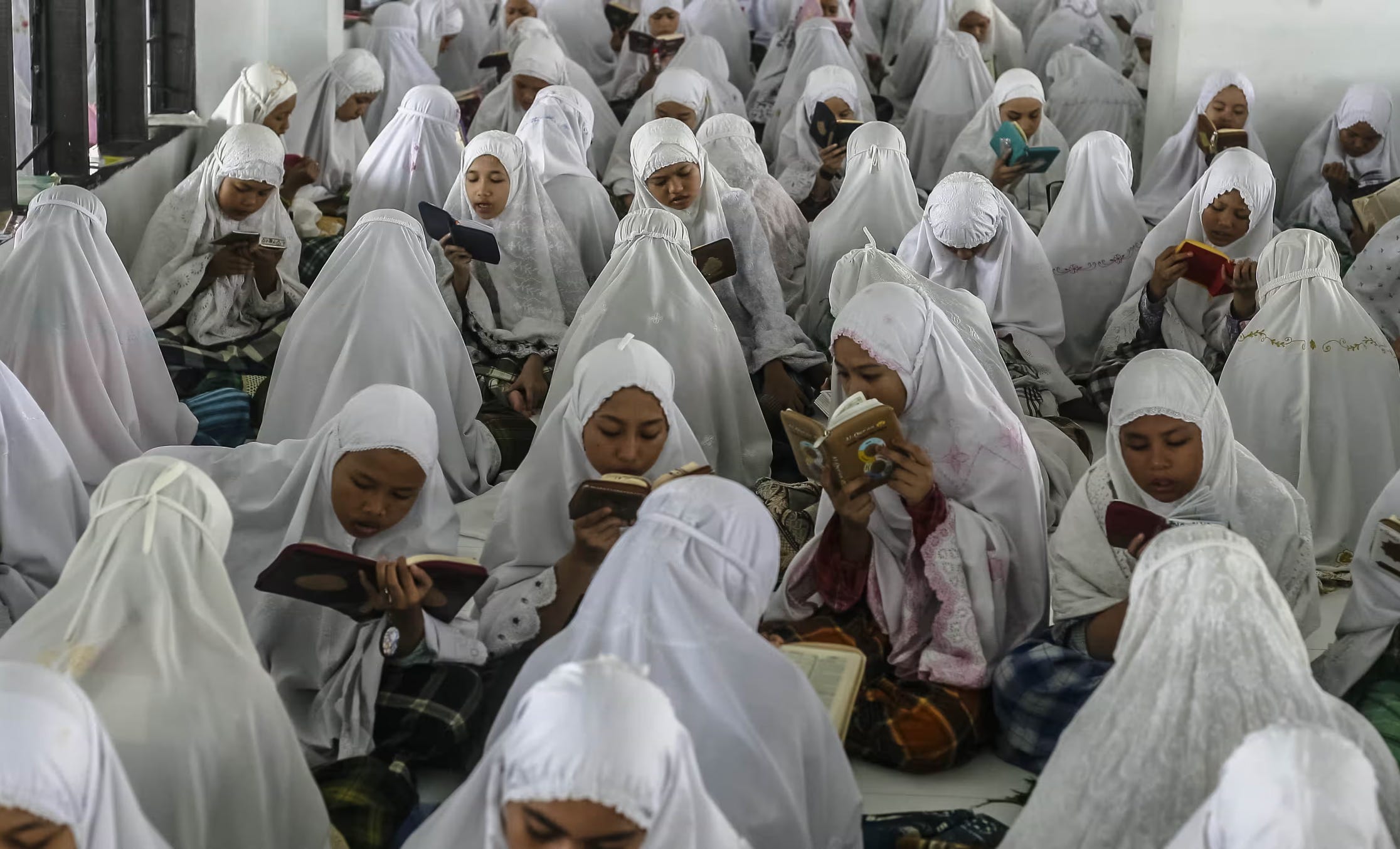
Interim summary
Okay, so now let me summarize our discussion so far. So Indonesia was historically diverse. There was this Hindu Buddhist tradition. There was the Adat, the customs and all this diversity back, you know, before the 19th century. Most people did not go to madrasas, but with economic development, with mass education, more people learn about piety. They embrace the Abanggan lifestyle, but in a very Indonesian way, respecting pluralism and diversity.
But then perhaps with democratization, political campaigning, or once most people become very religious, we get all these feedback processes, which encourage further religiosity. Now, now I want to understand the outcomes of that rise in public party focusing on gender and patriarchy. So I have a couple of questions here.
Do ideals of gender segregation dampen female economic advancement?
So in my own research with Muslims, for example, in India, in Morocco, in Egypt, in Turkey, and also in the UK, this emphasis on gender segregation and the idea that men and women, unrelated men and women should keep their distance. One thing I think I found in my own research is that men can feel very uncomfortable in women's presence. So then you may be reluctant to socialize together, to hang out together. And so like when, for example, when I was in Uzbekistan, men just felt more comfortable chatting with other men. And really that influences trade. So like, for example, guys at the market or guys working, for telecoms company, sort of high tech companies, where they will be more chatty just picking up the phone and doing deals, negotiating with other men. And so this onus on gender segregation can encourage a sense of fraternal ties, a sense of brotherhood. And that's also reinforced through praying together at the mosque, you know, this sense of unity, this sense of brotherhood.
And I wonder whether gender segregation strengthens those commercial networks of brotherhood, which then make it harder for women to advance economically. And then if we look at a lot of the economic data, we see one, that female labor force participation in Indonesia is stagnant. Two, when women work, it tends to be in self -employed enterprises, maybe like a bridal shop next to their house. And the gender pay gap isn't changing. And I sort of wondered to whether you think that that emphasis on gender segregation could have these economic effects.
Robert Hefner (02:04:32.329)
It does have economic effects, but I think they're a little bit different from what we might think based on the example of, for example, Egypt, Jordan, or even Uzbekistan, which is to say what? Which is to say that, again, women are already there in the marketplace and they're not retreating. And men, there are, number one.
Number two, the, as you heard me say, women today graduate from university at rates higher than men, and that's new that was not historically the case if you go back to the nineteen seventies even women's were about twenty percent of the university university students now they're about fifty six percent and they were fifty six fifty four fifty six percent of of the graduates of the graduate at a higher rate as well so and one consequence of that unlike for example we their great studies of higher education in places like jordan in egypt. Jordan especially is well known for having really turned the corner. Saudi Arabia has too, as far as women graduate now at higher rates than men. So it's like in Indonesia, but unlike Indonesia, both in Saudi Arabia, although it's changing a little there with women's businesses, but in Jordan, very few women, once they graduate from college, then go into any kind of public employment that takes them into public spaces. They basically...
Once they finish college, they have kids and spend time in the home, sometimes an extended family at that, so where the kind of patriarchal elements of patriarchal normativity are more present. That isn't the case in Indonesia. It's not entirely unknown. There are women who graduate from college and then have a kid and just go home, but lots and lots and lots of women, first of all, go to college and graduate.
Secondly, many of them go into the professions. Now, it is changing. The professions are still male dominated, but you can go into higher education. And you can go to just about any of the leading universities. It's particularly striking there. And you will find faculty where in the social sciences and humanities, not engineering and the natural sciences. So there's a little bit of a gender thing there, not unfamiliar to those of us who are familiar with higher education in the West, particularly the US. But if you go to the social sciences, humanity, the arts, and religious education, the numbers of women are huge, in some instances, on par, fully on par with those of men. So the kind of Jordan example that I cited is not seen or is seen on only very restricted scale in a country like Indonesia, women get hired. Yeah.
Alice (02:07:27.093)
Yeah, I totally accept that. But let me break it down a bit. So, I think one, yes, in the Middle East and North Africa have very low levels of female employment. And that reflects an idea where male honor is contingent on female seclusion. Indonesia is very different. And back to our previous discussion, they have this bilateral kinship. They have very weak constraints on female mobility. They've always had this history of women traders. So the absolute level of female employment has always been much higher in Southeast Asia. Absolutely.
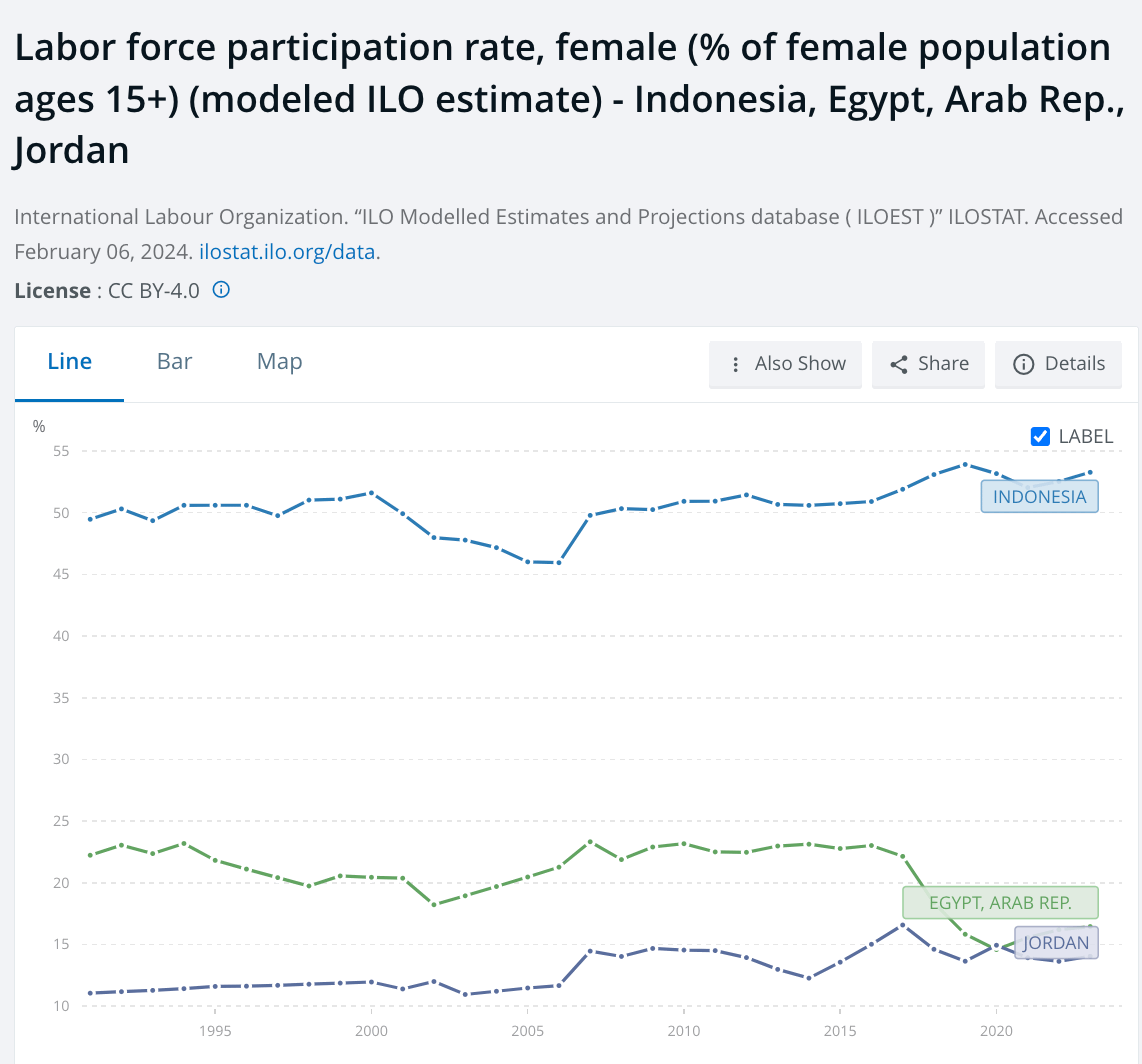
Then we see globally the rise of female education. And as I theorize that, that as men get educated, parents increasingly want educated wives and daughters. Where there's a strong concern for female seclusion, men get educated and then there's a big gender gap before women get educated. But as you say so brilliantly in your book, in Indonesia that gap was very small. People wanted both their sons and daughters to get educated and they embraced education.
But I don't think, as we've seen in the Middle East and North Africa, female education, and as you say, does not necessarily entail that women go into the workforce. So I totally accept that we've got this rise of female education and we've got these different levels of female employment, 100%.
But what kinds of jobs do women go into?


If men and women internalize this idea that I should keep my distance, from other men, then maybe you'd be more comfortable as a woman or as a husband for your wife to go into a public sector job where there are strict rules where you think everyone will behave properly and you're in charge of students.
I hear this a lot in many Muslim countries. People are fine with women going into government jobs, but you may be less comfortable with women going into commercial or very high paying jobs, which require a lot of building social connections, hanging out late at night. building all that social capital. Yes, so I think there's three separate things. One, the female employer, and two, the different levels, and three, what kinds of activities that people specialize in. Because for example, Thailand has seen a big rise of women going into senior management, commensurate with the rise of women's skills. Whereas in Indonesia, women's increase in skills doesn't seem to have translated into a smaller gender pay gap, or in terms of some of those top -notch professions, some of the higher levels of management that hasn't changed in like 20 years. That's my understanding of the labor market data anyway.
Robert Hefner (02:09:54.44)
Well and you may know you may have that to come and that labor market data better than i do right now i'd really yet that i think you're i think your basic point is right i think there are sectors where one notes great exceptions and one would be of course education you cited that already women are very well represented including at the upper echelons of university education and i would add university administration.
I would also add that this applies as well to the very prestigious State Islamic University system. It's a large sector, so state -supported Islamic University education. It's a very impressive program. I talk about it, I think you know, in the book, because it was one of State Islamic systems around the world. It was one of the first to really get in there and emphasize humanities, social sciences, discipline, and natural sciences in some Islamic university systems are regarded as secular and either they should not be there at all or they should be greatly diminished.
So at any rate, women, there are those sectors, education would be one, medicine is another very prestige written, notable prestige film. I don't have the statistics, but I think women are, my guess based on personal experiences is that women are well represented in the ranks of people graduating from law schools and with a law degree you don't necessarily become a lawyer in indonesia but you become somebody who provides legal advice consultation to any number of NGOs and indonesia is one of those countries among countries that has one of the largest NGO sectors in all senses of the term both political social civic and also religious NGOs it has a huge civil society sector and so
Some of those women grads are serving on important and prestigious consultative boards there. But across, I suspect, and I don't just suspect, I'm certain that you're right that there are those areas where the professions have an overwhelmingly male face to them still.
Alice (02:12:11.464)
So the reason I asked this is because you've had this over 30 years of ethnographic research and the more I learn about countries, I realized that it's your kind of perspectives that are so valuable in helping us understand what everyday relations are like. So the reason I ask about sociability or if people feel uncomfortable socializing with men and women, does that track with your observations? Like for example, when you go and observe an NGO or when you go and observe these Islamic events, do you see that afterwards people sit at the same lunch? Do they sit at the same table together? Over your 30 years of observations, do you see a rise in gender segregation and sociability? There's a workshop, people have lunch, is there a male table and a female table?
Robert Hefner (02:12:59.177)
The simple answer to that would be yes, yes. The more qualified or extended answer to that would be, but not to a degree that one might expect, least of all, based on, for example, the example of Jordan.
So I was at, I've gone to a number of international conferences, Muslim conferences, just about five or six just over the last two years, mostly at the invitation of Nata Tuhulamah. But there's Muslims from around the world and there's also diverse groups from within Indonesia, not just Nata Tuhulamah. And yes, the women's, the pattern of eating with, in a kind of same -sex segregated way.
Alice (02:13:18.147)
Right, right.
Robert Hefner (02:13:47.528)
It is very common. And then in a casual way, again, this will depend upon the organization. In some organizations, you automatically, you're in the same room, but women are on one side, men are on the other. And then there's sometimes an area where people aren't going to be too strict, but there's a little bit of blurring. Couples, for example, might say, no, I'm going to sit together. But you position yourself in an area where that's where that happens.
And, but my short answer is that there has been a great tendency over the last 30 years to segregate in a soft segregation rather than a kind of really, really strict segregation way. Last point, at some of the international conferences that I attend, for example, the R20, Religion 20 meeting that took place one week prior to the G20 in Bali in 2021.
the, or 2022, the, you know, you see you had people from diverse faiths. And here I, and you had a lot of, a good number of Muslims from other parts of the world. And here women were very prominent as speakers, as organizers, as session chairs. But again, in the more casual sociability settings, I had the impression that,
the indonesians were going to be a little bit more careful because they didn't want to upset some of their international visitors now that said as you heard me say i had conversations with some saudis there including some very very important powerful saudis and i was surprised to see the generosity of their statements in the expressed special of admiration that they had for indonesians including on matters of like women's education and employment
Alice (02:15:38.851)
Okay, I've just got three more questions about gender because I just want to sort of, you know, I've never been and I want to learn from you. Okay, so Sally White and others, they've got this paper suggesting that over time, Indonesians are less likely to support female leaders and that's consistent with other polling panel data by well value survey. Does that track your observations on the ground because
If you hear things like, the prophet says a nation ruled by women will never prosper, then maybe you think, maybe you say in a survey that women shouldn't lead, but is that, do you see a shift to that in your day -to -day observations?
Robert Hefner (02:16:14.472)
I see a heightened vulnerability of public meetings and public collaborations in Indonesia to be vulnerable to those types of sensibilities. So even people who do not agree with them, if they're inviting a broad portion of the Muslim community, they will be factoring it into their considerations. So this answer is yes.
Alice (02:16:39.971)
Okay, so many people interpret the Quran as commanding wifely obedience and Nancy Smith -Hepner has a fantastic 1988 paper about linguistic politeness in Indonesia and there's also been a more recent PhD on this topic and I was wondering based on your observations over the past 30 years, do you see a shift in people being more or less likely to use those linguistic terms of politeness within marriage or everyday speech? Like the gender aspect of language, is that changing?
Robert Hefner (02:16:50.728)
Yes.
Robert Hefner (02:17:08.573)
There's two things going on. One is that the general answer to the kind of gender differentiated politeness and civility is that it's yes, it's there and in some ways, or perhaps in new forms, it's there more than ever. That said, Indonesia is not immune to the casualization of public interactions that's taken place in the West.
I mean, sometimes I go to a meeting in the United States, you know, of what I assume are going to be some sort of powerful NGO and government officials, and I'm startling to see that, you know, everybody's taking Stanford and Silicon Valley as the model, and you know, you can wear a t -shirt if you want. And that was not, most certainly not the case in Indonesia, but it is becoming. more so today. It's a huge change to me because I am a child of the villages of Java where how you dress in what settings is very, very clear and you signify your responsiveness to other people's expectations and politeness. You signal your politeness to them by dressing in a modest and polite way. And I'm surprised to say, but I've seen it in a dramatic way. The number of people wearing men wearing ties, ties were very much part of a kind of international style for men. It's almost disappeared entirely. And okay, some involved, some of what you see is a shift towards more Indonesian styles of dress, you know, batik and stuff. But that has changed too. 10 years ago, the shift was from Western draft to Javanese style batik.
Now in part, I think because of an assertion of kind of the diversity of regional styles and the identification of Boutique with Javanese culture, which it was not associated previously, but it is. So now Boutique has sort of fallen out of fashion and some among the new styles are this kind of assertive casualness that we see all around the world today. I see it in China. I say, you know, I never would have thought I'd see a Chinese business person, you know, in a t -shirt, you know, and shoes without socks on an airplane or an airport, and it's of course very common.
Alice (02:19:44.995)
So going back to the politeness, so as I understand it, but of course I cannot speak it, in Java, a woman might use more respected, back in the 1980s, Nancy Smith-Hefner's work showing that women might use more respectful languages towards their husband. And I found that so interesting. So my first field work was nine months in the Gambia, and then I did a year in Zambia where I became, well, sort of fluent in the local language Bemba, and in Bemba you don't have this respect for this hierarchy, you don't have linguistic hierarchy so the wife will call her husband like Bashi Bwalya which means father of Bwalya and he might call his wife Bana Bwalya, mother of Bwalya so they're calling each other the same you don't have any of that or Lord or Master or anything like that. I was wondering do you see like have you seen a shift in linguistic gender hierarchy between couples in Indonesia?
Robert Hefner (02:20:44.041)
It's still there. I think it is diminishing. I think it's diminishing in some circles, those educated, more trans -nationally oriented, rather dramatically. But there are several influences. Again, one is the casualization process.
Robert Hefner (02:21:07.689)
But on the other hand, there's a sense of, no, that's Javanese or Indonesian culture, and now we want to appear more international and Muslim.
Alice (02:21:22.115)
Right, right, that's a great point. So we shouldn't use one indicator as a barometer of gender equality or not. Yes, I appreciate that point. We have to try and, that's why I have all these questions.
What are Indonesian mosques like for women?
So when I was in Uzbekistan, almost all the mosques cater to men. Like they don't even permit women. There was this one beautiful new mosque in Tashkent, but there's a parallel like shoebox for women and it's not glorified it's not nice at all what is the situation of mosques like for women like do women have a separate section are they at the back are they at the side do they have their own mosques how pretty are they?
Robert Hefner (02:22:00.104)
They are at the back or at the side and they are present in smaller numbers. That's the generalization. There's lots of regional variation and there's organizational variation. If you go to a Muhammadiyah, the modernist reformist, more urban based religious reform movement, Islamic reform movement in Indonesia, you'll often see lots of women in a separate section, but lots of women.
Lots of women indeed on numbers. I actually was at the Muhammadiyah National Conference earlier this year in February. I was attending something else and there was a Muhammadiyah Conference of the Bar. I'll go there. And I was surprised and delighted to see, first of all, that there were large numbers of women. They were playing, you know, they were sharing sessions and all the rest. But in other settings, you will see, you know, greater gender segregation and more male representation. I cite the example, you know, the classic example that I perhaps cite too much is Aceh. Aceh is more socially and gender conservative. It's not, you know, out of this world conservative, but it's a place where, you know, at night in the evening, a woman should not, is expected not to go out by herself, even if she's just walking down the block to see a sister or to go to a store. to buy some aspirin or something like that. So there's variation around indonesia.
Alice (02:23:31.14)
In the mosques where women are at the back, so Muslim women that I speak to, sometimes they say, if you're at the back and you've got children, it's sometimes difficult to hear at the back or it's less comfortable. Do you know if women at the back ever complain about being at the back? I think in religious organizations, and this goes for all religions, it's sometimes very difficult to change those institutions when you see it as divine commands.
But there can be a welfare cost of women being at the back as opposed to being at the side. Do when women are at the back, do they ever complain about it?
Robert Hefner (02:24:06.535)
Yes, and sometimes they complain and the result is they're put to the side. But I would say, again, I hesitate to try to do an exact algorithm on this. I would say the complaint is most likely to be voiced at meetings of national organizations where women, there's a strong preference, and again, I haven't done a statistical survey, but I've attended a lot of national meetings.
And my sense is no, women are not in the back, they're to the side. Particularly, but in the mosque, there is a higher incidence of women being put to the back sometimes when you speak with women, and this would be something you could ask about. Sometimes women say straight up, look, we don't want men looking at us. There's religious reasons, we don't want to distract them. And one thing one learns in...
Alice (02:24:37.796)
Okay.
Robert Hefner (02:25:01.959)
Muslim cultures generally, but this is true in Indonesia as well, everybody is aware that sexuality is part of social life. There's not a kind of Puritan, old style, 14th, 15th century Christian European sense that, no, that's not really there, or if it's there, it really should be. No, no, everybody is aware that humans are sexual beings, sexualities, and that men, male sexuality is... little bit more assertive and I think the way a lot of women would do it a little bit more easily distracted than is the case for women. So literally I have had this conversation where women have said we don't mind being in the back, we don't want the men looking at us, we know what that's going to cause trouble, distractions, and we're quite comfortable here with our sisters and children.
Alice (02:25:56.574)
What is Indonesia's secret? Because Malaysia, of course, is much more conservative. What do you think has shaped these two diverse trajectories?
Robert Hefner (02:26:08.326)
I just finished reviewing a book on Christian mobilization in Malaysia, which really is a story of sadness and exclusion, quite frankly. Malaysia is a country where the conflation of Malay ethnic chauvinism, sometimes called lordship or ketuanan, and Islamic identity has become, those two things have become so interconnected that true equality is difficult, and for some people, some Muslims, religiously unacceptable.
For many Muslim Indonesians, that's not the case. There is a deep, deeply felt commitment, yes, to Islam as the first and primary reality, but the idea of the nation and of nationalism, that appeals to so many Muslim Indonesians, not just at the elite level, but even out there in the countryside where I've lived many years, is just this idea of we are Indonesians. And yes, Muslims are 88 % of the population, but guess what? We recognize now it's seven religions and everyone, whatever their religion, is equal. Now does that mean, does that always play out in reality? Well, obviously there are social realities more complex, but is it an ideal to which many ordinary and leading Muslim political leaders, political figures, subscribe? Very much so. And it's a huge difference. The sweetly inclusive, if difficult to achieve, ideal of Indonesian nationalism. Multi -ethnic and multi -religious. It's really one of the two.
Alice (02:28:01.368)
But what explains this national culture?
Is it something that was cultivated by Pancasilla? I mean, what do you credit? When did this start? Does it go back to the 19th century?
Robert Hefner (02:28:28.42)
Many people, I mean Indonesian Muslims and Indonesians generally, talk about this all the time and the people who talk with greatest openness are Muslim intellectuals, particularly those associated with the Naudatul Ulama. And again, if one goes to these sites on humanitarian Islam, you can read an article which was written by the current head in English, written by the current head of NU, Yahya Cholil Staquf and the article, I forget the exact title, but it's something like how Indonesia came to Islam. And his whole point, this is startling, startling to me, his whole point is that Indonesian Islam builds on, it doesn't efface, it doesn't do away with, it builds on pre -Islamic sensibilities of inclusivity and tolerance, which he traces back.
He traces back to the very founding, the first centuries of the common era, but particularly to the 10th to the 15th century, the period before which there was only a tiny, tiny Muslim presence. So here you have the leader, just last observation here, the leader of the largest Muslim organization in Indonesia, which also happens to be the largest Muslim mass organization in the world. And he's saying that a key feature, of Islamic spirituality owes a debt, a civilizational debt, not a religious debt, you know, religion is religion, but a civilizational debt to Hindu, Buddhist, and generally non -Muslim spiritual legacies. That is astonishing that he would speak in that way in such an inclusive way rather than say, it's all Islam. It's all Islam. Everything we are is from Islam.
Alice (02:30:21.779)
Looking back, what do you think you got wrong about Indonesia? Or what happened that you didn't expect?
Robert Hefner (02:30:50.019)
Two things. One, I didn't expect the transition to democracy, which again, after a long period of authoritarian rule, basically 65, 66 to 1998, I didn't think the transition to democracy was going to prevail at that period. In other words, there was such an explosion of communal violence in the period from 1991 to 2002 that for the first time in my life, I've always been both a lover of Indonesia, and I am. I think I'm an objective social scientist as well, but I do, I think this is a remarkable country. But for the first time in my life, my confidence was shaken, deeply shaken.
There were... the internet had come online and there were people posting videos of people killing each other before YouTube would get in there and take them down. It was brutal, it was shocking, and it left me literally in despair. And so there was that moment and it was a two or three year period and then Indonesia out of those very difficult years. The Indonesia that I love, that I respect, and that I think is a remarkable place, it revives. It's not perfect, no place is perfect. Democracy is difficult everywhere, but it revives. And it doesn't, everybody's saying, well no, but eventually the Islamists, it's gonna be like Egypt. It isn't like Egypt. It isn't like Egypt. Nātatū -ul -Lāmā surges into the center and says, no way, we're a multi -ethnic, a multi -religious and democratic country.
And we are going to defend that and show the world an example of a Muslim majority society. So I got that wrong, but Indonesia got something right.
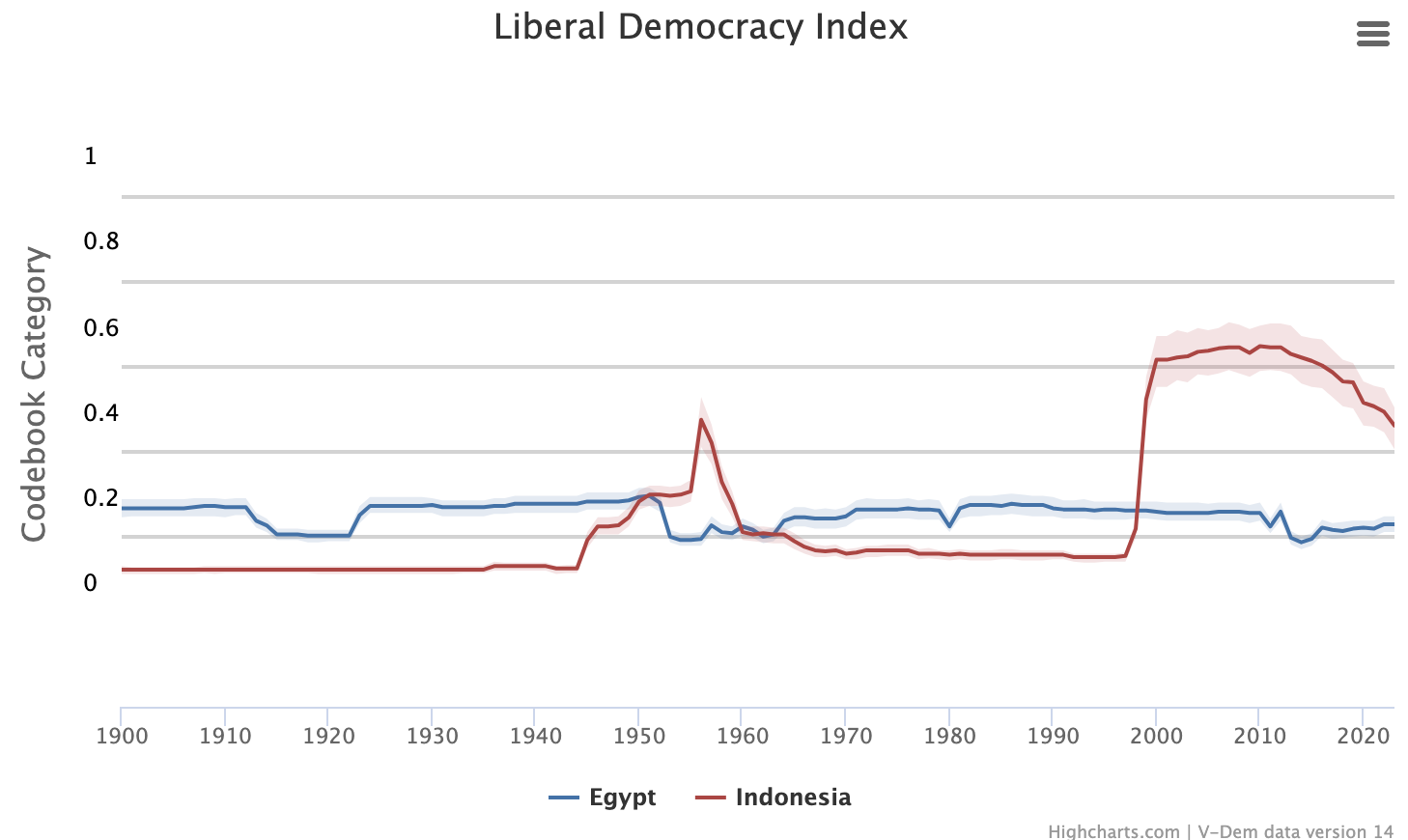
You want to push back on me?
Alice (02:33:01.159)
No, no, no. In fact, in that respect, I'd really recommend that people watch your documentary, “Unfinished Indonesia”, because I think that really captures the heterogeneity and also “Three Voices: Women and Women’s Movements in Indonesia”. I really loved your documentaries.


Honestly, I have taken up so much of your time and I'm so, so grateful. I really want to encourage all my listeners to read Professor Robert Hefner's new book, Islam and Citizenship in Indonesia. It's truly tremendous and this has been an absolute pleasure from someone who's researched so many different aspects all over the country. So thank you very, very much for your time.
Robert Hefner (02:36:51.04)
Great pleasure, great honor. I'm honored in particular because your podcast series is more brilliant than any that I have ever seen. It's what a great pleasure and an honor to join that illustrious company and your fine work. Thank you so much.
Alice (02:37:08.924)
Thank you!
Further resources:
Professor Hefner has co-produced a number of excellent documentary films including:
I also mentioned:
“Islamizing Intimacies: Youth, Sexuality, and Gender in Contemporary Indonesia” by Nancy J. Smith-Hefner
Saudi Arabia and Indonesian Networks: Migration, Education, and Islam Kindle Edition by Sumanto Al Qurtuby