


Norms matter, but how exactly? What are the precise mechanisms of cultural persistence? Drawing on my qualitative research in India, Mexico, Morocco, Zambia, Cambodia, Vietnam, Italy and Turkey, I suggest 8 ways in which culture perpetuates gender inequalities:
Loving mothers reproduce patriarchal sons
Men amass advantage and expect respect
Concern for social approval
Male-dominated public spaces are seen as lecherous
Dissent is suppressed
Despondency traps
Cultural celebrations naturalise inequalities
Religion
This post focuses on persistence. My next post is on disruption.
All names have been changed to preserve anonymity.
Cover artwork is by Dinara Satbayeva.
Loving mothers reproduce patriarchal sons
Some deny that culture matters. They think that female employment is mechanically suppressed by too much housework. But that’s only half the story. Women actually spend more time on household chores in countries where female domesticity is widely endorsed. This holds even for countries at similar levels of economic development. Culturally constructed ideals of motherhood raise the volume of care-work, making it difficult to combine with paid work.
In the absence of attractive job offers, most women in North Africa, Anatolia, the Middle East and South Asia remain at home. Loving mothers intensively care for their children (especially their sons). Boys may never learn to cook for themselves, let alone others. 47% of Indian men have never seen their fathers do any domestic work. It thus remains stereotyped as feminine.
The overwhelming majority of Indian men believe that “a woman’s most important role is to take care of her home and cook for her family”. Employed women in India actually receive fewer matrimonial suitors. If men feel entitled, resistance may incite violence. In Istanbul, Okan asked his wife Zeynep to make him a cup of tea. She said no; Okan became violent.
“I didn’t learn to cook until I moved out. It’s a pity. It leads to unhealthy relationships where guys expect their partners to play the role their mothers used to play” – Sunil, Bangalore.
“A woman tends to at least two children throughout her life: her child and the child’s father” – Hinal, Gujarat.
“They treat me like I’m a maid” - Fatima, Fes (after she prepared a delicious spread for iftar and none of her family members showed any appreciation).
Women themselves may view care as an expression of love. As Bhattacharya (2021) observes, “Many women find greater love, social recognition and self-worth in being caregivers, thereby steadily withdrawing from the world of paid employment”. This helps explain Indian female employment plummets not with childbirth, but marriage.
As loving devotion secures their son’s loyalty, mothers may then exercise authority over their daughters-in-law. In India, Morocco and Turkey, women sometimes detailed how their husbands remained mute while his mother was abusive. Viyan (a cleaner in Mardin) was beaten, abused and used like a maid by in-laws, while her husband remained silent. Pregnancy was extremely painful, yet they all dismissed her complaints. The fetus – it transpired - had been dead for a month.
“This is an exaggeration but if his mother told him to throw me in a fire he would” – Viyan.
Men amass advantage and expect respect
In patrilineal, patrilocal societies, baby boys are celebrated as scions of the family line. They grow up knowing they will inherit the family home and business. 83% of Indian men are permanently rooted in their natal homes. They are forever surrounded by kin.
Growing up, sons enjoy far greater freedoms – to study afar, explore new neighbourhoods, and hang out with their friends. By navigating new places and building trusted friendships, men become savvy and street-smart.
Across all societies, groups who predominate in socially valued domains are stereotyped as more competent and deserving of status. In countries where men monopolise prestigious positions, they continue to be revered. Pakistani women garment workers may not even question wage gaps, as they presume men to be more competent. Men, meanwhile, may become accustomed to deference and react aggressively to insubordination.
“If a woman at office interjects, they’d say “Shhh, we are talking”. Accepting authority from a woman is a challenge for them because they’ve been raised to believe they’re the centre of the universe. You sit back and a woman will always be subservient to you” – Bhavika, Bangalore.
“It was a boys' club, I was totally excluded, passed over for promotion” - Elif, Istanbul.
“If my mother spoke out, the uncles would say “Why are you speaking? Know your place” - Rozerin, Mardin.
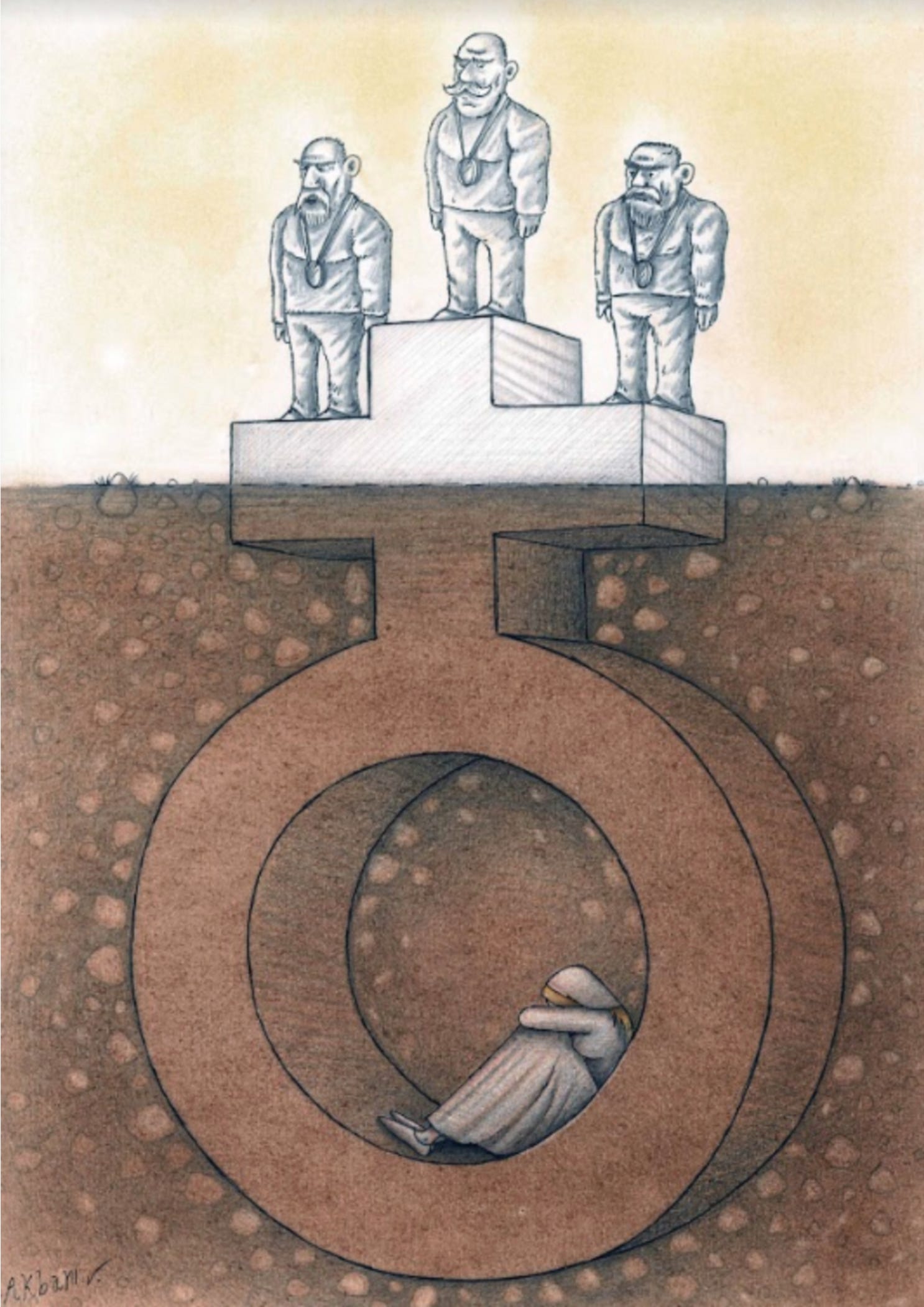
In north (but not south) India, women with outside earnings are more likely to experience domestic violence. Likewise, Bangladeshi women who join savings groups or work in garment factories are at heightened risk of domestic violence. To preserve their dominance, Bangladeshi men may try to control women’s earnings. Some try to earn a little money through home-based work, but they remain under family control.

Concern for social approval
Job scarcity, endemic precarity and scant state protection reinforce heavy reliance on kin. This necessitates concern for social approval.
Even if someone privately criticises inequalities, they may nevertheless conform for fear of ostracism. Since no family wants to deviate from presumed ideals and risk alienation, all remain trapped in a negative feedback loop in which women remain close to the home. When polled, 83% of Turkish men say that women have the right to work outside the home. Support is radically underestimated.
In Morocco, many young women emphasised strict policing by their brothers. If young men are only employed precariously and yet to gain social respect, they may guard their sisters’ reputations in order to preserve their own.
“Everything is so dependent on social relations: contacts, helping each other, solving problems, capitalism is so entrenched in social networks, these are built through reciprocation of favours, attending each other’s events and buying gifts. We still need that community. This is why we have all these annoying aunties when you are getting harassed” – Pooja, Haryana.
In India there is a lot of fear and anxiety. If you rock the boat, you’ll be poor. If you speak out you’ll be a social outcaste. They don’t want to face the consequences of going against the grain” – Aanya, Mumbai.
“It’s shameful, why are you not providing for your wife?” people will say – Shami, Bihar.
Male-dominated spaces are seen as lecherous
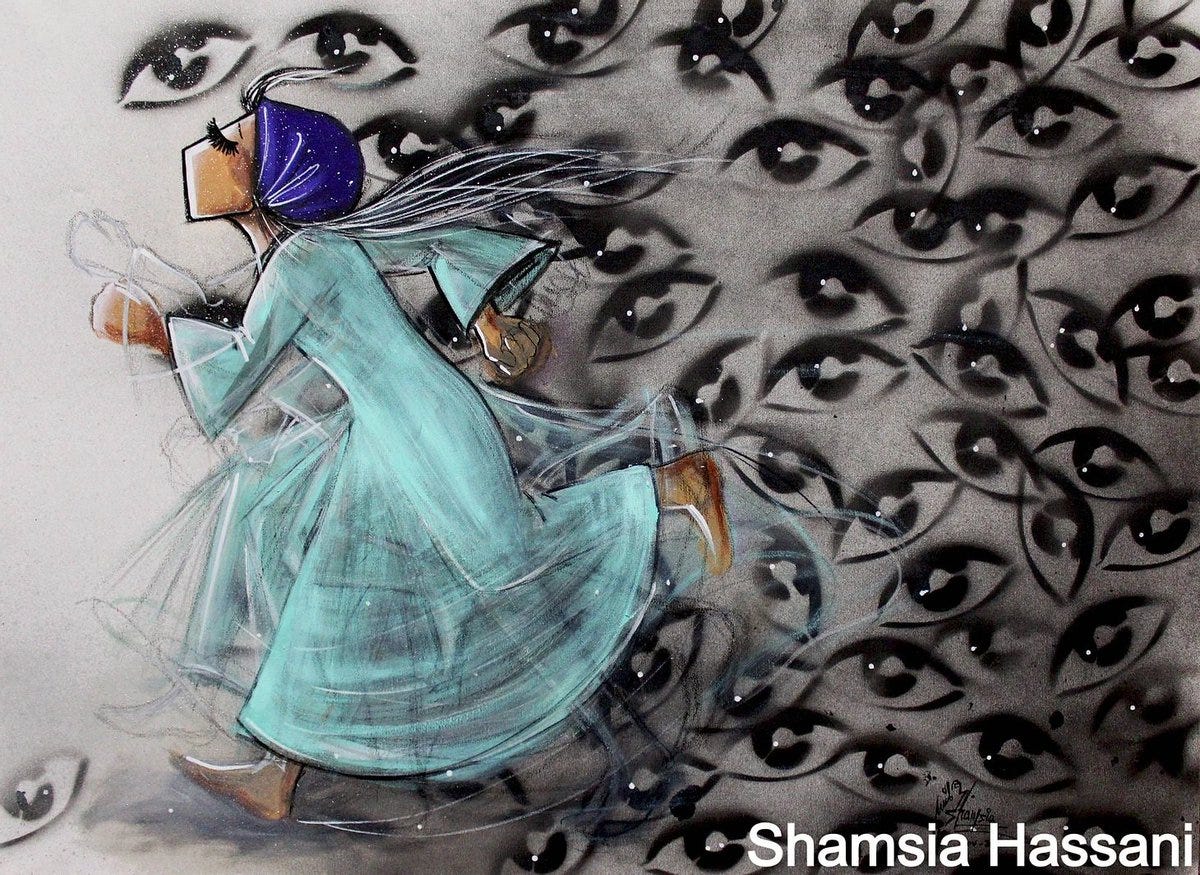
If buses, businesses and bureaucracies are overwhelmingly male, they may be seen as unsafe and inappropriate. Men lecher with impunity. ‘Good girls’ stay at home, while those who step out are subjected to slander. Girls may even restrict themselves - fearing sexual assault, shame and ostracism.
Surveillance is so strong in rural Bihar that young women may even relish open defecation as their only opportunity to get some fresh air, escape in-laws, and speak to their friends in privacy. In rural Odisha and Uttar Pradesh, women (and especially wealthy women) have very few friends. This limits their opportunities to share ideas, critique unfairness and build alliances outside the family.
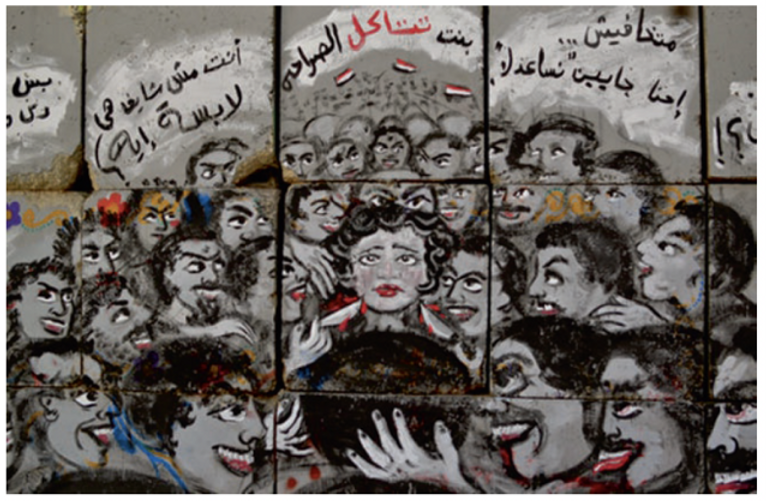
Women who venture out may be treated as prostitutes, vulnerable to abuse. Afifa, a tea seller, said: “when I sell tea, some men annoy me. They sometimes touch my body and harass me.” Since harassment is common knowledge, women who work in public bring shame on all their kin.
“Our national capital is unsafe for women, no matter what caste or community you are from. And if anything happens, shame on you, blame on you” – Eesha, Delhi.
“Sexual harassment is a real problem. Walking to the university, I’ll be harassed maybe 5 times. A taxi driver once wouldn't let me leave the car until I'd given him my number; he even rang my phone to check. Men grab my arm, asking for attention. A policeman asked to see my ID then said ‘what a pity you’re not older’” - Layla, Fes.
‘“Your life is over, ruined for ever” my parents told me. “If there’s a rumour then you’re not marriageable, you’re not respected, it’s over” – Aadvika, Chennai.
My father told me, “you travel with my face” (i.e. honour)” - Farah, Rabat.
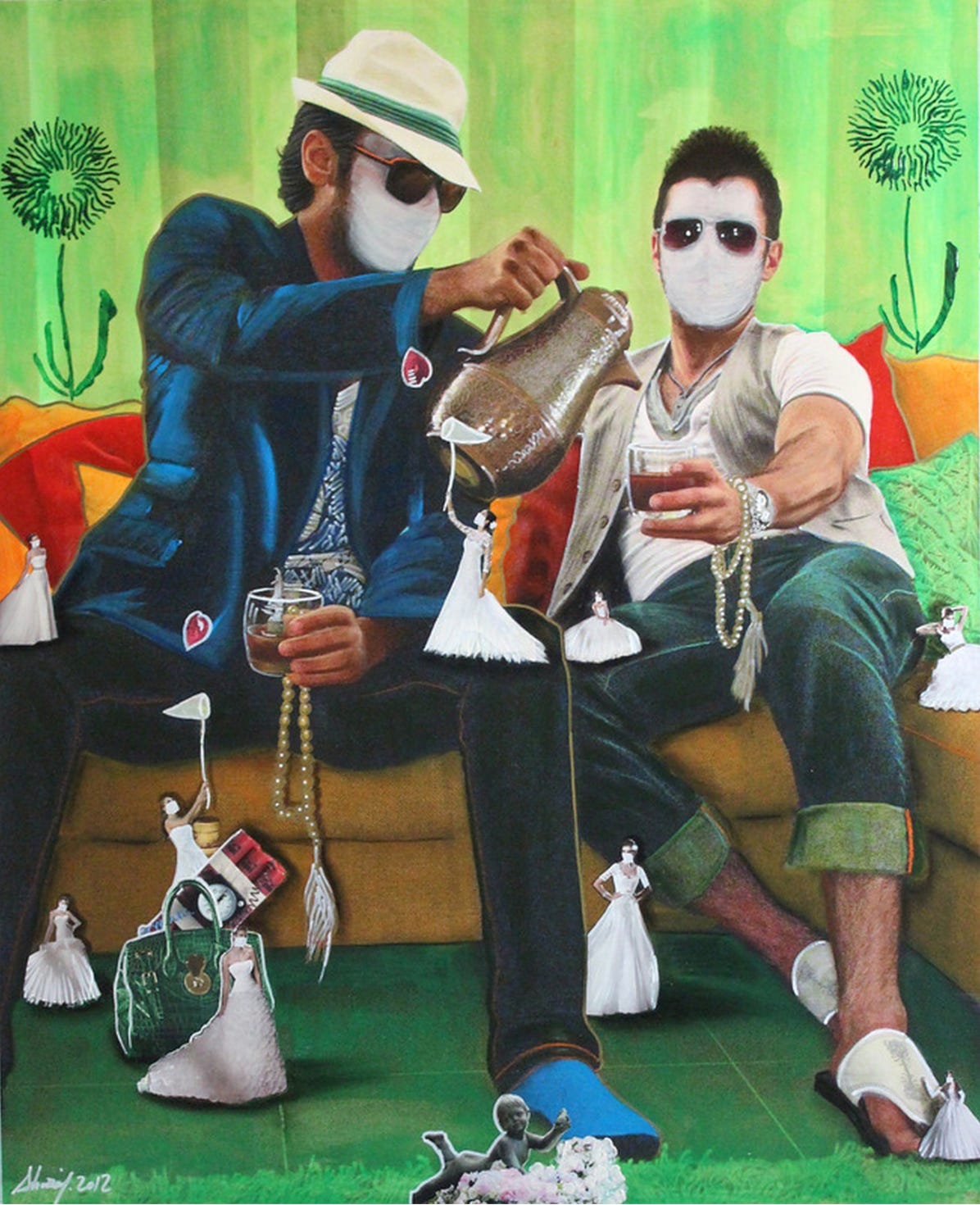
If sexual assault is regarded as bad as death, victims may keep quiet. 73% of survivors in Bangladesh remain silent. Many women told me that they had been abused or assault and never told anyone. Lechery thus persists with impunity. For Delhi’s middle class young men, ‘eve teasing’ is just a bit of fun. They resent women’s encroachment on their turf and eye any woman on the streets as fair game.
In urban neighbourhoods with high levels of sexual harassment, women are far less likely to seek outside employment. While men pursue Delhi’s finest colleges, women prioritise safety. Media reporting of sexual violence further inflames fears, suppressing female labour supply outside the home. The Delhi 2012 gang rape amplified widespread concerns; many women abandoned opportunities to study because they were scared.
“After 2012, we felt helpless and scared to go out after dark. I didn’t want to go to Delhi to study nor did any of my friends” - Lakshmi, Bangalore.
In Mumbai, women are not supposed to loiter in public. Likewise in Dhaka, ‘good Muslim women’ avoid spaces where they might encounter na-mahram people (those they could marry). Many women in Turkey, Iran, India and Morocco told me that their mothers forbid them from visiting their friends’ homes. Farah (now a 55 year old cleaner) was never permitted to go to the market alone. The café in their small Turkish town was exclusively male. Stepping out was shameful and inappropriate. Men would stare. Even if Indian parents send their daughters to college or faraway factories, they often choose colleges with strict curfews.
“I cannot leave my house alone in Haryana without a male escort. Within 3 minutes someone will call my mother. All eyes are on you, you blame yourself” - Priya.
To preserve family honour, Esmeray and her friends in Midyat were kept apart from men. They knew nothing of men outside their own families. So when along came a charming suitor, Esmeray was flattered by his sweet words of affection. She raced into marriage. That first year, he beat her seven times. Her mother’s life was much the same.
As long as parents fear for their daughters’ honour and safety, public spaces will remain male dominated. If women themselves are afraid, they may be nervous to venture out, and thus struggle to gain the confidence, capacities and friendships that help men navigate social and economic relationships.

Dissent is suppressed
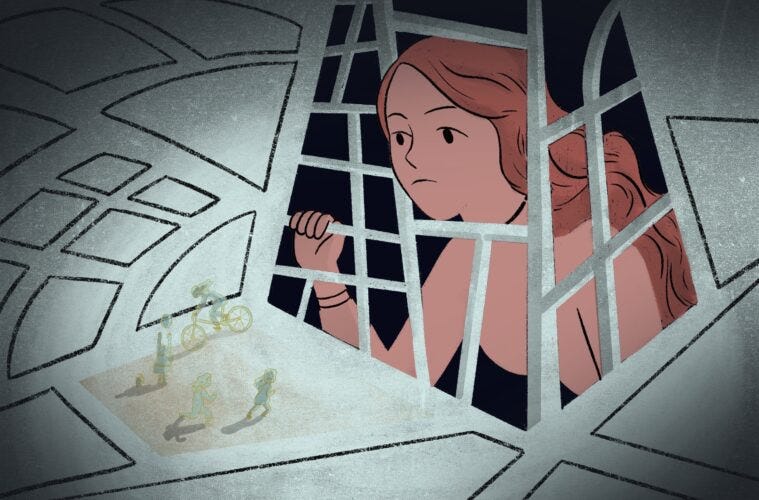
Girls are often taught to put others first, police themselves, and protect family honour. Since marriages are the lynchpin of kinship networks, daughters are socialised to please their in-laws and preserve marriages at all costs. ‘Good girls’ learn to stay quiet.
Whenever I asked her opinion, Premjyoti (a maid in Rajasthan) gave the same answer: “it’s tradition”. Never once did she express her own judgement. Men eating first and having far greater freedoms were all accepted as immutable. Like many other Indian women, she had never been encouraged to debate or critique independently. If women passively adjust, men learn they can get away with almost anything. Once, in a violent fit of rage, Premjyoti’s husband tied her up and starved her for five days.
Dissent is also suppressed through shame and intimidation.
“I felt very ashamed when I lost my virginity. After that, I was always friends with boys who had problems because I didn't consider myself worthy of a good relationship” - Parisa, Iranian
“I was constantly ashamed of my body. I felt like my body was not my own. When I was going through puberty, I was constantly told to cover up, to wear bigger clothes, to shut my legs. My father made me feel so disgusting. And this affected my sexual relationships, because I felt like my body was not my own” - Yildiz, Istanbul.
“Moral authorities put fear in your head. Mothers often say ‘If you do this, I will tell papa’” - Sonya, Delhi.
“I lived in constant fear, always walking on eggshells. The entire family was abusive, they ordered me to work, constantly criticised me and never showed appreciation. I wasn’t allowed to leave the house alone” - Dila, 74, Konya
Despondency traps
If men and women seldom see successful defiance, they may underestimate wider support and the possibility of cultural change. Resigned to their fates, they may endure rather than resist. This sustains a negative feedback loop.
“My friends are very controlled by their husbands. You have to dance to their tune. If she’s fifteen minutes late he gets mad. It’s very normalised in our culture” – Chakrika, Delhi.
“Live or die you stay in your house” - 19 year old, Rajasthan (who saw male violence as inevitable and inescapable)
Three months after her wedding, Aysenur already feels trapped. She has done everything ‘properly’: veiled since puberty, preserved her virginity, married into prosperity, and obliges her in-laws’ every instruction. Why then is she so sad? Her husband shows no affection, never makes her feel wanted. Her social life revolves around her mother-in-law, whose friends provide streams of unsolicited advice. “Get the grandfather’s jacket and shoes ready as he leaves the flat”. She smiles, listens, and shimmers like a statue. Her wedding gold is on proud display. Like others in religiously conservative Konya, he denies her permission to work or visit friends. Though filled with regret, Aysenur feels resigned to this life.

Cultural celebrations naturalise inequalities
Why do so many women still marry, despite high risks of abuse and control?
Because marriage and motherhood are still celebrated as crowning achievements. Roxana (37) and her friends in small-town Iran had one over-riding objective: to get married and take care of their husband. With relatives asking incessantly, women left on the shelf soon feel like failures.
“A single woman is constantly pestered about being unmarried. It would have been intolerable to live in India as a single woman past 35” - Meera, Delhi.
Religion
If scripture reveals God’s word and deviance is met with eternal punishment, it becomes rational to impose strict regulations. Without a culture of dissent, sacrosanct teachings go unquestioned. Piety then becomes necessary for social approval.
If female employment risks impropriety and jeopardises one’s place in Heaven, then labour supply only rises when wages are exceptionally high, so as to provide sufficient compensation. Religiosity thus weighs into what I call ‘the honour-income trade-off’.
“Earth is just an examination centre. What really matters is the afterlife. We will be judged, we have to account for our actions. If a woman moves in public, she may be sexually harassed or pursue an extra marital affair. If she commits adultery then the husband will also be punished in the afterlife… Life on earth is nothing, so pursuing material gains now pales in comparison to the afterlife” - Aaman, Mumbai.
“I used to be Muslim. My husband used to tell me that if I disobeyed him then God would hate and punish me. I believed this” - Farah, Rabat.
In India, Muslim women are less likely to participate in the labour force and earn money (though no less likely to make decisions). 67% of Hindu and 80% of Muslim Indians believe 'it is very important to stop women in their community from marrying outside their religion'. Pakistani Facebook users who pray daily and endorse religious absolutism are more likely to think that men have the right to beat their wives and refuse permission to work.
Strict Wahhabism has been power-charged by oil wealth. Indian return migrants from Saudi Arabia are more likely to say that a man should have the final word, more tolerant of gender-based violence and more likely to blame a woman if she gets molested.
After Hindu-Muslim riots, some communities have tightened surveillance, dress codes and curfews. Islamic organisations such as the Jamaat-e-Islamic have also gained influence by providing crucial relief. Communal violence thus seems to have exacerbated pre-existing inequalities.
This is consistent with a wider body of evidence suggesting that when people feel under siege, they seek strength through unity, want norm violators to be punished and gravitate towards supernatural punishment.

TLDR
Cultural preferences can reinforce a negative feedback loop. If female earnings are too paltry to compensate for the loss of male honour, women remain dependent on patriarchal guardians. Men’s far greater freedoms enable them to amass advantage, become revered as knowledgeable authorities, dominate public spaces and lecher at women with impunity. While many women are privately critical, their encroachments may trigger stares, harassment and backlash. Honour is preserved through strict guardrails, which inhibit collective critique and defiance. So women specialise in care-giving, breeding patriarchal entitlements.