Age 3, Azadeh triumphantly cartwheeled before guests in their Iranian home - showing off her skills! But her joy was instantly eclipsed by her parents’ disgust. As her skirt flipped down, they recoiled in horror. That’s Azadeh’s earliest memory - revulsion.
Years later, at a women’s rights conference in Sweden, Azadeh bounded up to me, introducing herself as an avid reader of my research. Instantly, we became pals, as Azadeh shared stories from western Iran, explaining why patriarchy persists her homeland and what enables the diaspora to achieve liberal freedoms. Again and again, we see the cardinal forces driving cultural evolution: power, punishment, and prestige.
Before Iran’s 1979 Revolution, Azadeh’s mother taught without a veil. But the new theocracy swiftly imposed the chador. “Why didn’t you protest?” - Azadeh once asked, anxious to know why their freedoms had been lost.
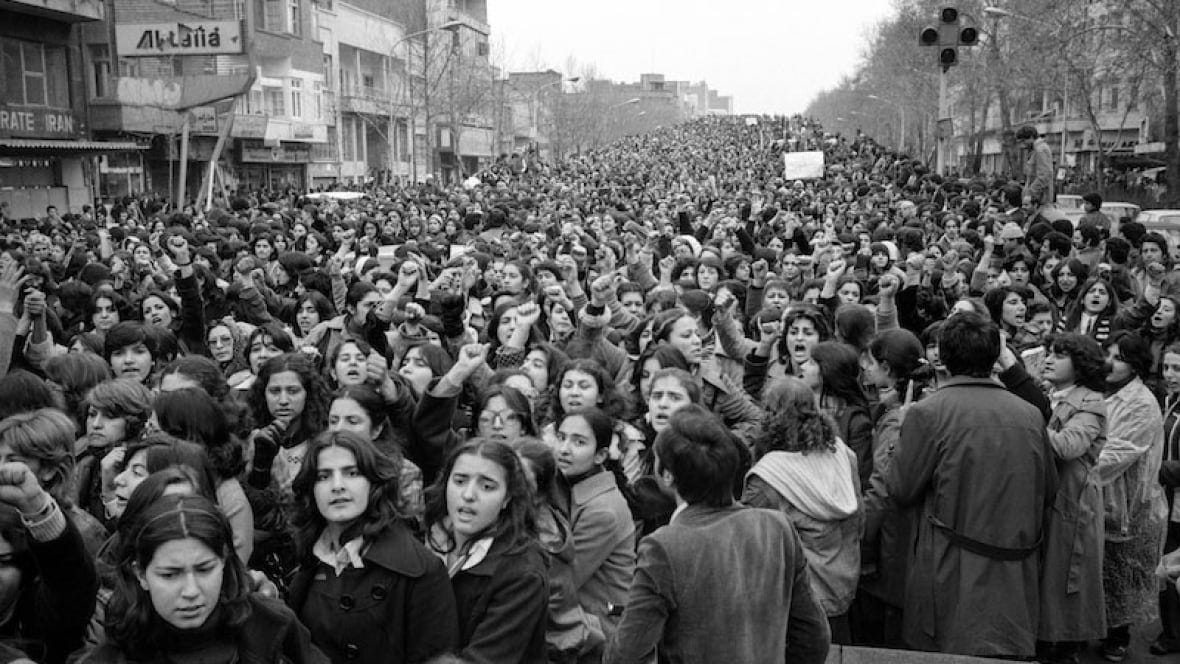
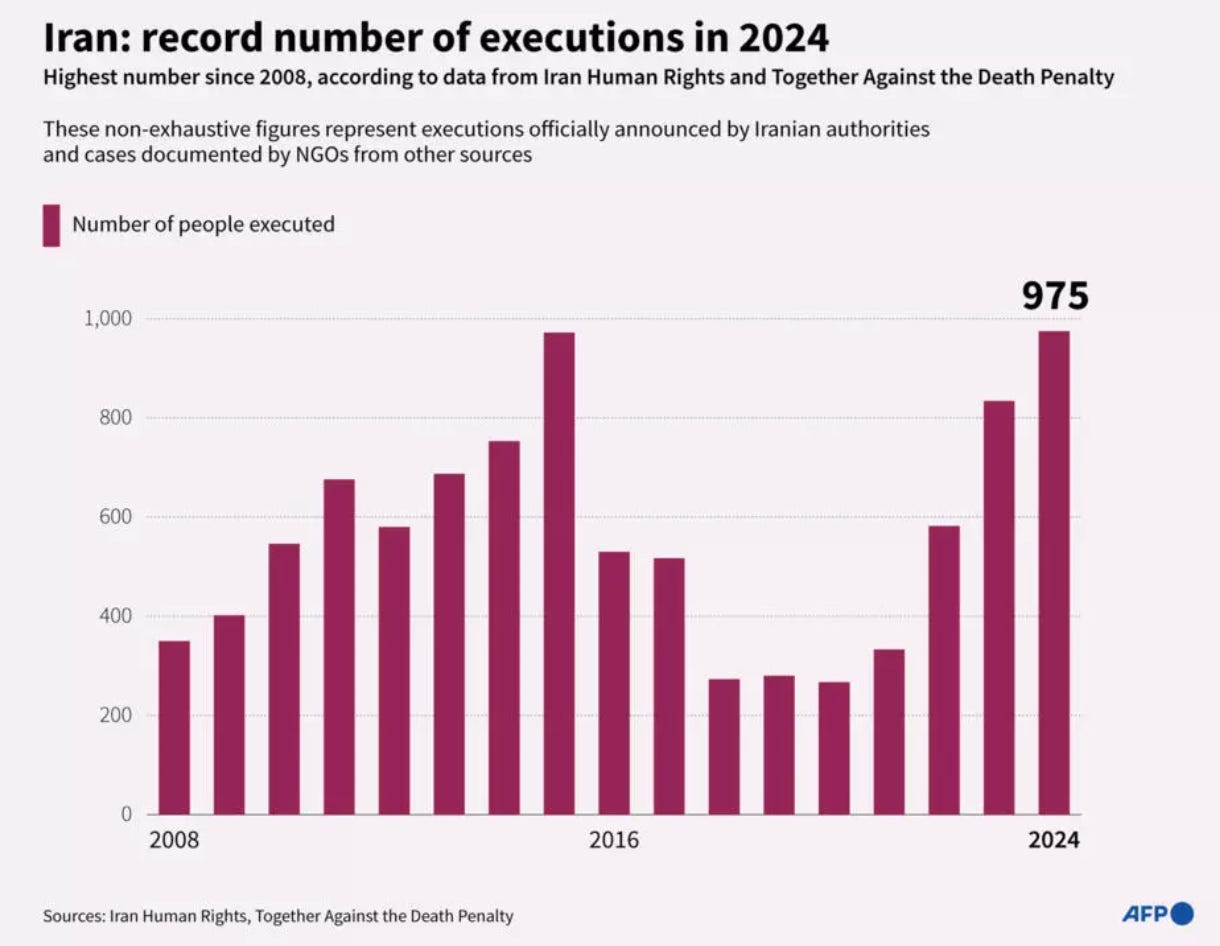
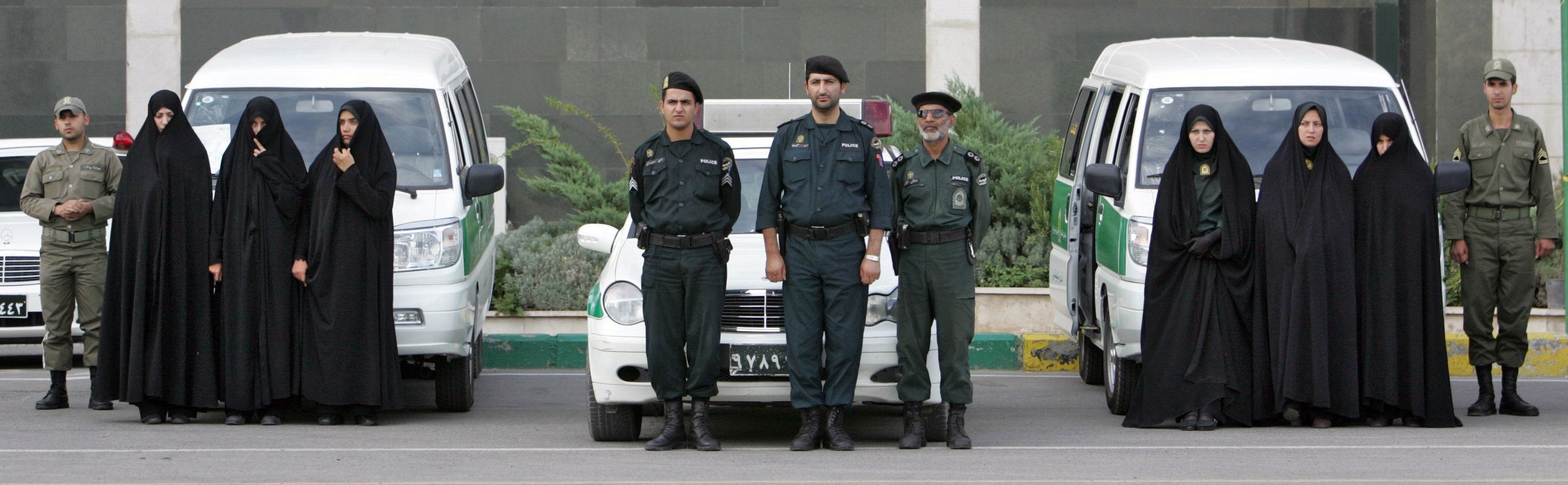
I nodded - well aware that many Iranian women had mobilised, but faced attacks by Khomeini’s supporters - brandishing knives, bricks, and broken glass, while shouting “Wear the veil, or we will punch your head” and “Death to the unveiled”. Seizing state power and leveraging oil wealth, clerics punished critics and instilled hisba moral policing. Over the past four decades of totalitarianism, dissidents have been tortured, imprisoned, and executed. With a theocratic state in power, Azadeh’s mother chose survival.
Growing up, Azadeh was constantly treated as if she was ideally invisible, erased to avoid ‘fitna’ (moral corruption). Yet even as she cloaked, men still groped her in the streets - as I’ve heard from many Iranian women. This constant scrutiny and harassment fuelled self-hatred:
“I wanted to escape from my body, I didn’t want my body. I wanted to escape from my body”.
Age 30, her father urged: “Don’t you want to cover more?”. Azadeh fumed in frustration. Like a pot set to max, she boiled over, frustrated by relentless shaming.
Today, 96% of Iranians say one of their major life goals is to make their parents proud. By raising their children for devotion, families ensure their preferences persist in the next generation.
Theorising patriarchy, Azadeh shared that even if an individual is not personally concerned about honour, they may still impose restrictions in order to gain social approval.
“I think men’s and brother’s policing primarily comes from their feelings of shame and social judgement…
Once, I was wearing a tight dress, and a man checked me out then gave my husband a negative look - like he had FAILED in his responsibility”.
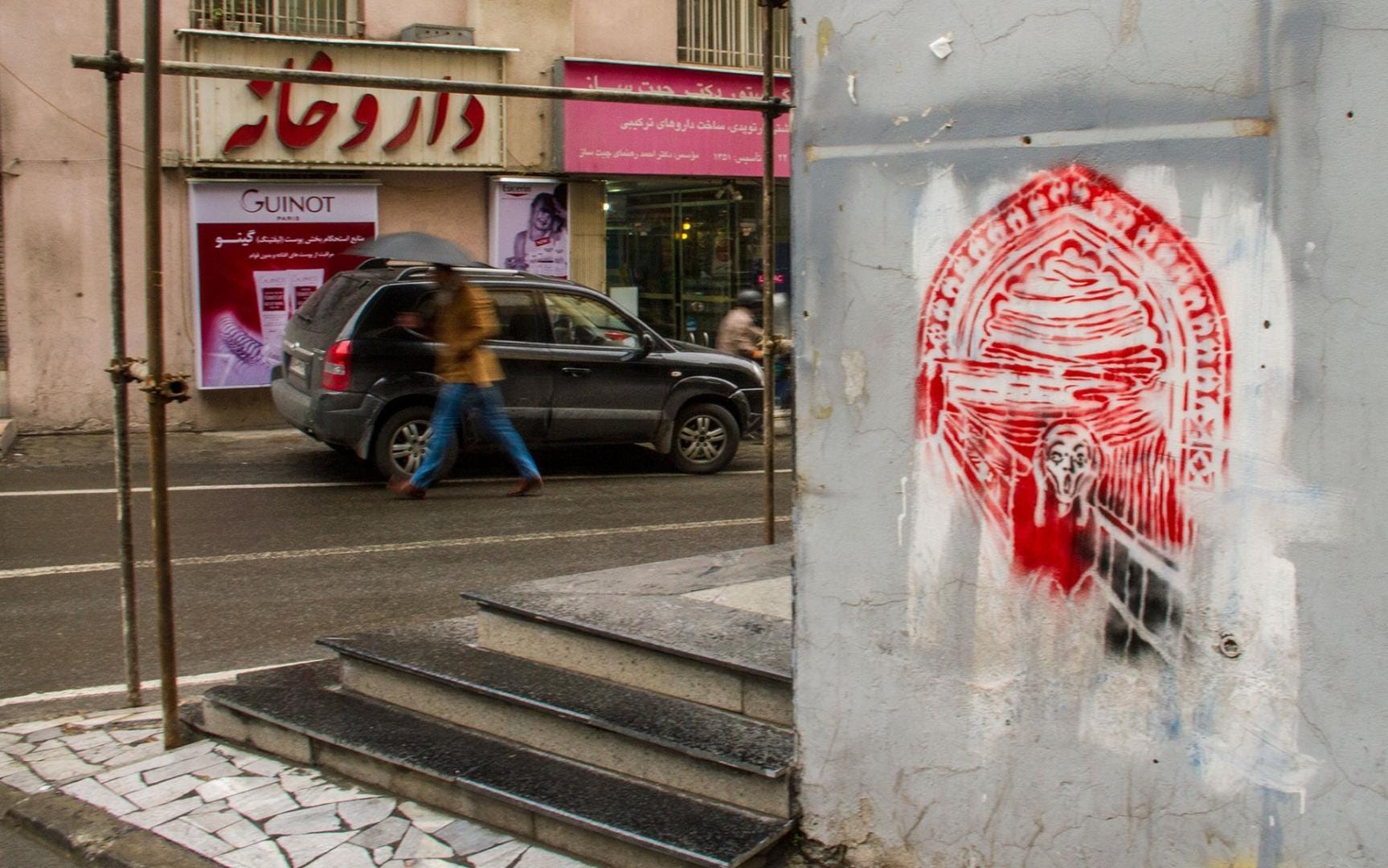
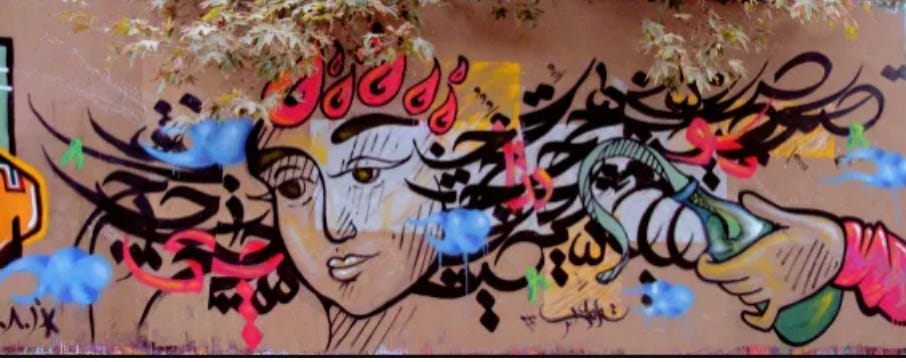
“An anonymous artist has combined Edward Munch’s figure from The Scream with the familiar arch of a mihrab, decorated with Islamic patterns. A mihrab is the part of a mosque that indicates the direction of Kaaba in Mecca, which Muslims face for daily prayers. Photo: Mehrnoush Cheragh Abadi”
Iranian jokes set expectations, ridiculing weak men who fail to enforce control. Mostafa Abedinifard’s study on Iranian jokes reveals that men from Rasht (a northern city) are often mocked as “gheyrat-less” cuckolds. One quip describes a Rashti man returning home to find men queuing to sleep with his wife; yet nevertheless insisting, “I can’t divorce her. Then I will have to go to the back of the line.” By jeering at female promiscuity, comedy reinforces the notion that family honour (nāmūs) hinges on chastity.
“At university I read books like “The Second Sex”, which made me want gender equality!”. (This resonated with my previous interviews in Turkey and India).
At her Iranian university, young men and women could also go on bus trips and hang out. That’s how Azadeh met her husband, and although he comes from a very religious family, she’s taught him to become more gender equal.
Nationally representative polling is extremely difficult - both in terms of access and self-censorship. But when I interview the Iranian diaspora in Turkey, Sweden and Britain, they tend to portray widespread conservatism, enforced through social sanctions. Ordinary men and women often seek to “Command right and forbid wrong”.
Moving to a London neighbourhood, surrounded by other professional couples, Azadeh and her husband noticed a stark shift. Visiting, his parents saw it too! Initially cautious, they soon realised “no one was watching or cared what women wore”. Absent scrutiny, they embraced newfound openness!
Azadeh’s story clearly reveals how families may instill disgust, amid expectations of ostracism. After state crackdowns, her mother hastened to cover, then raised her daughter for a society of watchful eyes. Yet with one flight, all this vanished! Poof!
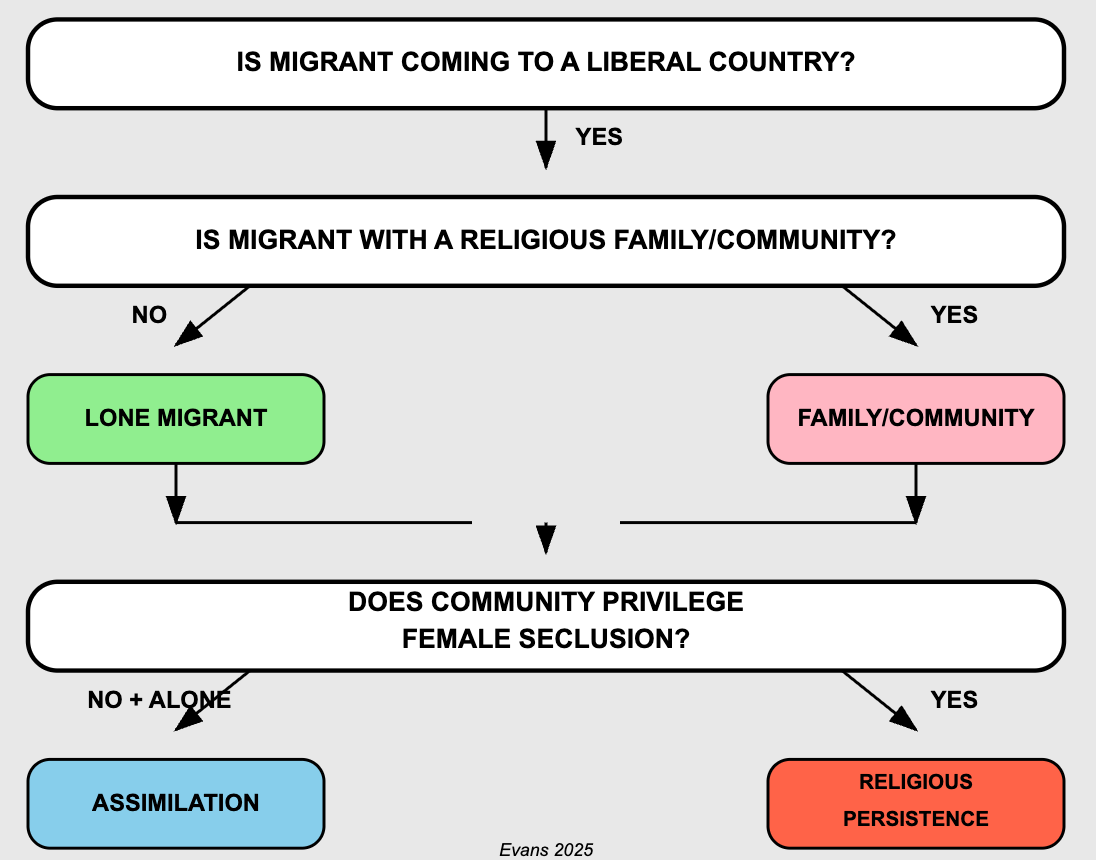
Migration does not necessarily enable escape from honour culture and policing. Crucially, it depends on whether the host community privileges female seclusion.
If people travel alone and move to a liberal area, they can freely assimilate.
Whereas if they are surrounded by a community that idealises seclusion and punishes deviation, we should anticipate cultural persistence.
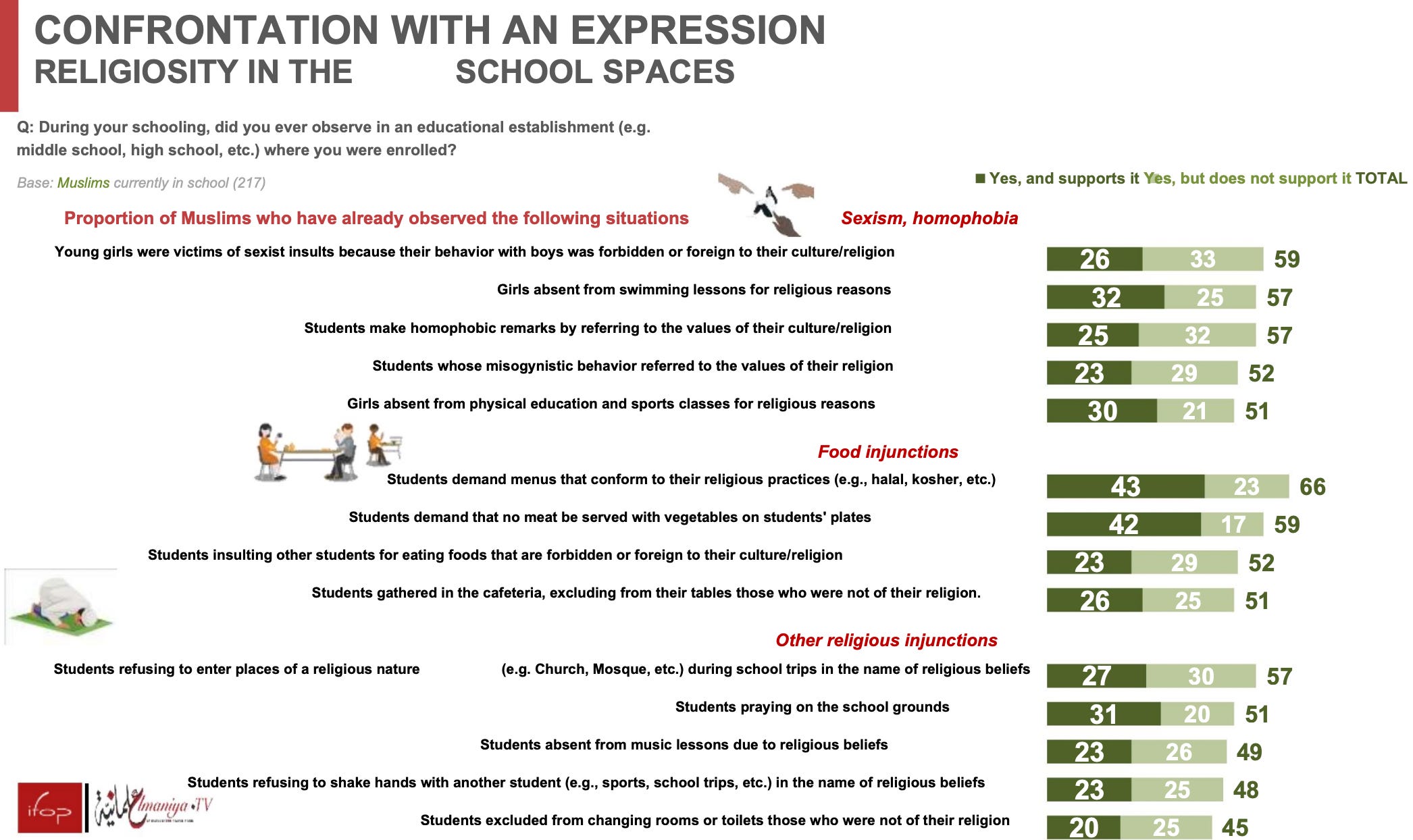
In an early paper on gender, I made a theoretical distinction between one’s internalised beliefs and norm perceptions about what is revered or condemned. Attitudinal surveys are increasingly applying this distinction, asking not just about one’s own preferences, but also the kinds of behaviour that cause ostracism.
Around half of French Muslims report observing students insulting other students for eating religiously forbidden foods, and excluding those who are of other faiths.
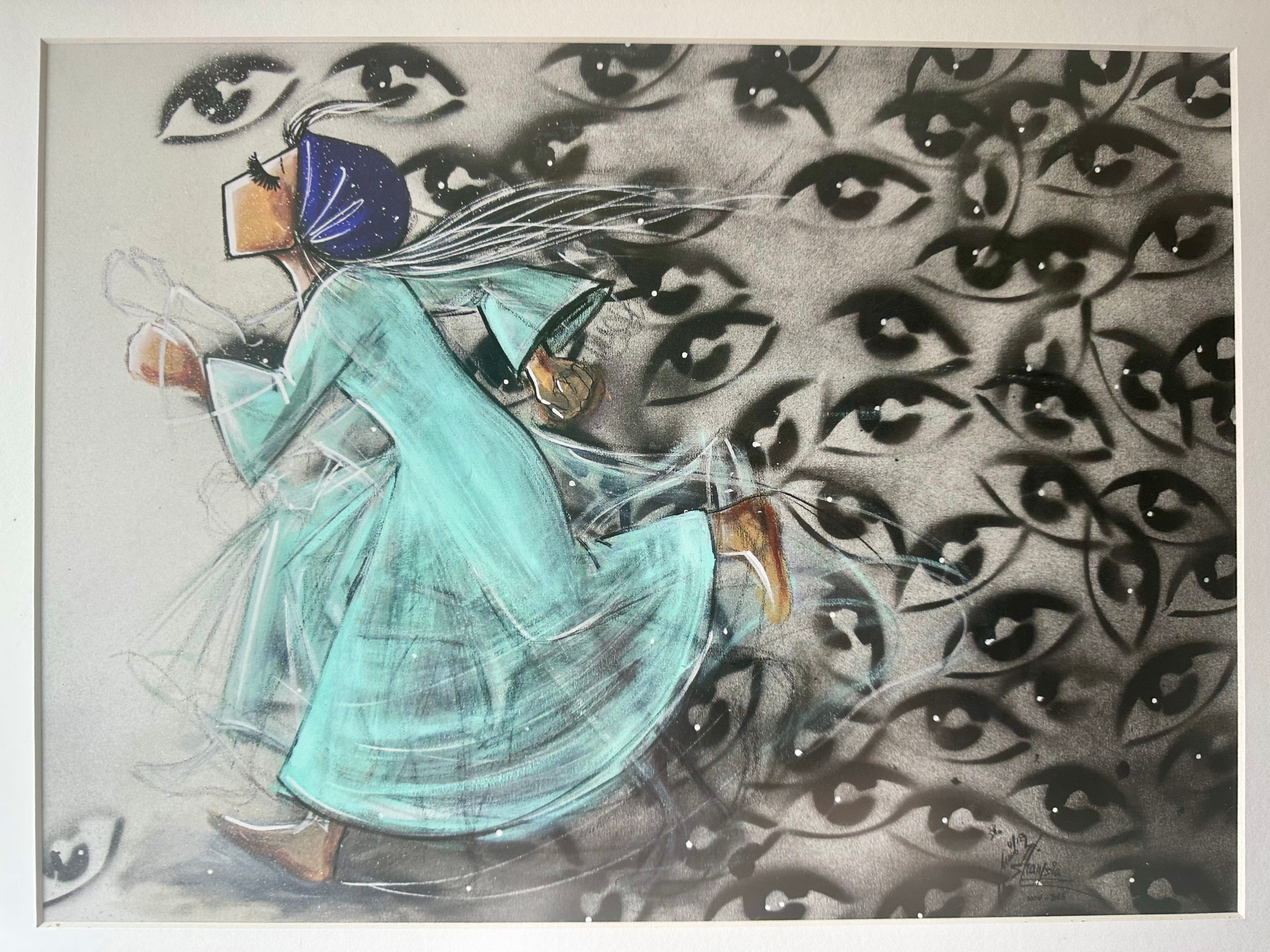
Such threats increase the social costs of deviation, making it harder for young girls and boys to step out of line. As shown in light green below, some students do NOT endorse this bullying, they merely describe its prevalence. This precisely echoes Azadeh’s experience in Iran.
Western governments often champion “women’s economic empowerment” overseas, but laissez-faire domestically. France’s immigrant communities are clustered in deprived banlieues, where schools have failed to prevent rampant bullying; Germans have done a terrible job in supporting Syrian women’s integration - with only 20% finding employment, rarely making Facebook friends with natives.
As a social scientist, I want to know:
How can governments do a better job on integration, so young migrants can harness their talents, thrive in their careers, achieve abundance, and enjoy liberal freedoms?
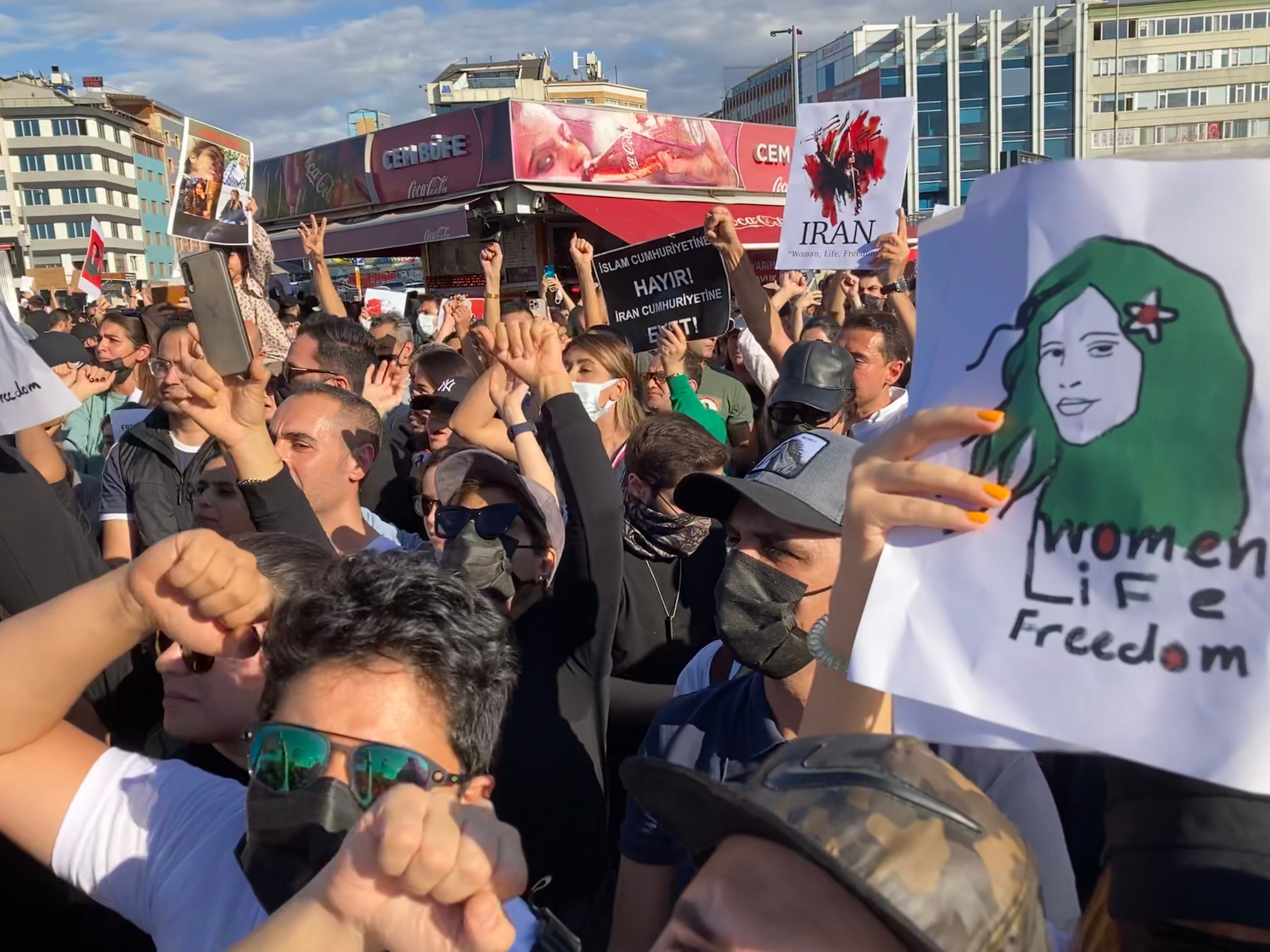
Finally, let me convey utmost gratitude to my Iranian interviewees, especially those who I met in Turkey when we rallied for something many readers take for granted: the freedom to wear, think, say, and love however you like.
(I took this photo in Istanbul. Iranian friends invited me to join a protest against the Islamic Republic. Afterwards, we went to a local pub for beers and everyone sang pre-revolutionary and anti-regime songs, celebrating defiance and Persian heritage).
I used to think Iranian popultion was by and large more liberal than it actually seems by reading this article. That makes me wonder... If I'm not mistaken, women are more than 50% of university students. What happens once they graduate, if only 13% have jobs? Is it like in the US in the 50s where they'd go to uni to get a husband?
I think I fail to understand this... Why would a family invest in female education, and open her eyes to "more", when there is no more.
It may be that my priors don't let me see clearly, or I lack the cultural understanding.
If I compare to Saudi, the state has had to open up, to negociate with itself to sell female rights as pious and correct...
Could you help me see what I'm missing in Iran (and prob Turkey), please?




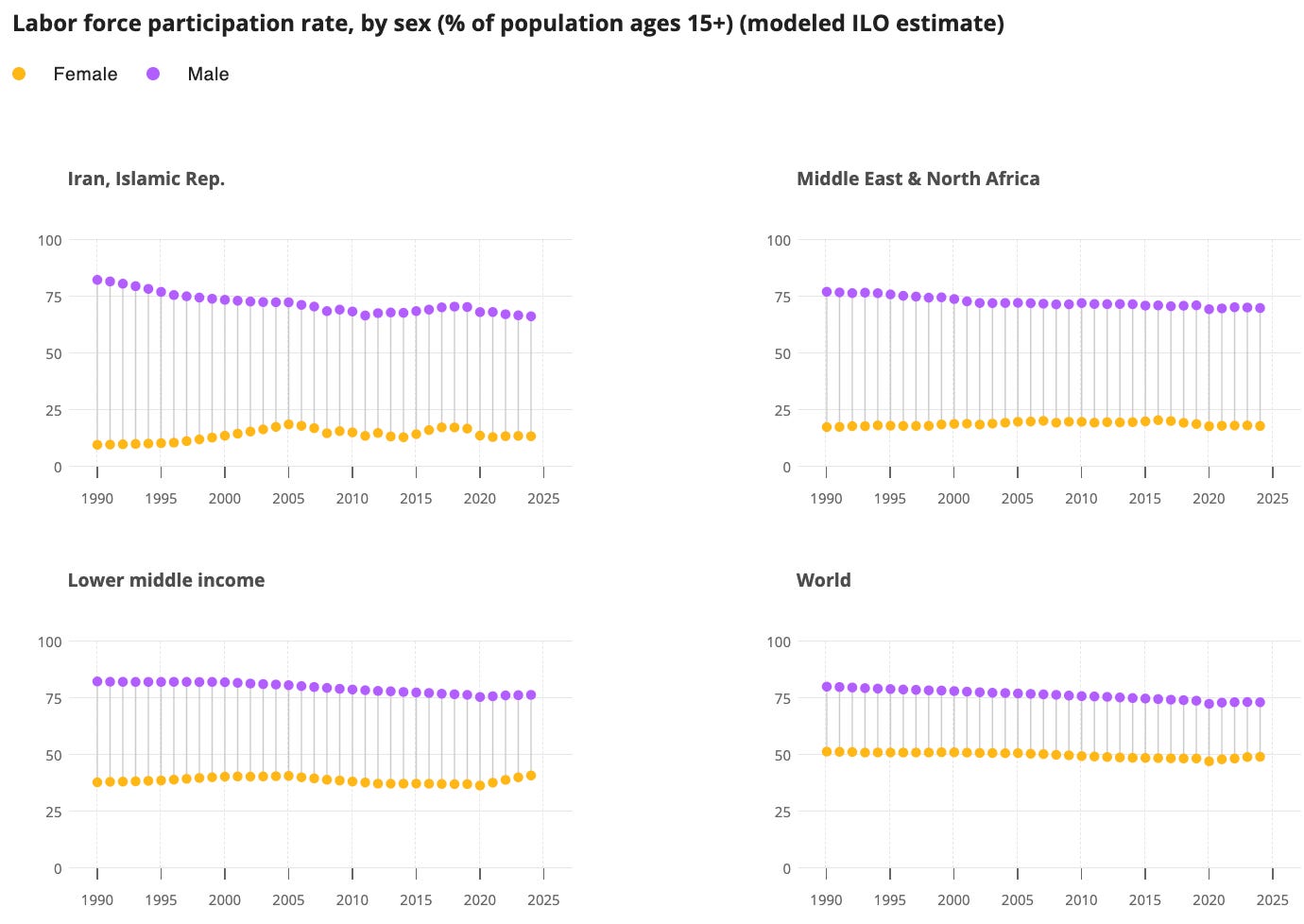

I used to think Iranian popultion was by and large more liberal than it actually seems by reading this article. That makes me wonder... If I'm not mistaken, women are more than 50% of university students. What happens once they graduate, if only 13% have jobs? Is it like in the US in the 50s where they'd go to uni to get a husband?
I think I fail to understand this... Why would a family invest in female education, and open her eyes to "more", when there is no more.
It may be that my priors don't let me see clearly, or I lack the cultural understanding.
If I compare to Saudi, the state has had to open up, to negociate with itself to sell female rights as pious and correct...
Could you help me see what I'm missing in Iran (and prob Turkey), please?