Imagine a young woman out with friends, their laughter echoing through the cafe. Amidst the chatter and camaraderie, her phone buzzes incessantly. Each notification demands her whereabouts, insists on proof of her location.
Who’s calling?
It's not her father or husband, but her brother.
In this essay, I unveil the often-overlooked role of brothers in perpetuating patriarchal control. Through interviews spanning Uzbekistan, Morocco, Turkey, India, and migrant communities in Canada, I propose a model of tight restrictions.
Crucially, we need to understand the pathways and perceived threats to men’s status.
The Middle East, North Africa, Central Asia, and South Asia are all ‘honour cultures’, in which men’s honour depends on female seclusion. In my interviews, young women repeatedly emphasised controlling brothers:
“Moroccan brothers police their sisters... One of my brothers smacked me in the face when he thought I was with a man… When I went to Turkey, my father said ‘You travel with my face’ [i.e. honour]” - Jamila (Rabat, Morroco).
“Those are my neighbours”, Fatima remarked about two guys we had just passed in Fes (Morocco). “Really? How come you didn’t greet them?”. “That would be disrespectful to my brothers”.
“My brothers always police their sisters, asking where they’re going, who they’re speaking to. At school, my brother interrupted me talking to a boy” - Layla (Rabat, Morocco).
“Dayooth is very important in Uzbekistan. A man will be shamed if he doesn’t have proper protective jealousy over his wife, his mother, his sister, his daughter” - Oybek (from Tashkent).
“Now everyone whose wife works, talks to other men or wears whatever she wants, people will use ‘dayooth’ towards her husband or brother or dada.. Now people would love to shame another person just for being softer and easier with his women” - Gulnora (Tashkent).
While many brothers protect their sisters out of loving devotion, honour cultures can also generate deadly consequences.
What happens when men’s honour is threatened?
In southeastern Turkey, I met a woman whose brother had caught her walking down the street with her boyfriend when she was 18. The ensuing beating lasted several hours, with her brother using his belt and her father a metal stick. Years later, she faced pressure to marry her cousin, a prospect she feared to refuse after another cousin had been murdered by her brother.
In Pakistan, honour killings remain pervasive. The Human Rights Commission of Pakistan reported 384 honour killings in 2022.
This year, Maria Bibi (22) was killed by her brother, Muhammad Faisal - allegedly because he caught her video-calling an unknown man. Another brother filmed his strangulation.
Cultural ideals extend beyond borders. Saman Abbas, who migrated from Pakistan to Italy with her family in 2016, disappeared after refusing an arranged marriage. Police released CCTV footage showing family members with spades, a crowbar, and a blue bag. A post-mortem revealed a broken neck, possibly due to strangulation.
Brothers police their sisters when their honour depends on chastity, which is at risk
Crucially, we need to focus on the pathways and perceived threats to men’s status.
Across the Middle East, North Africa, Central Asia and South Asia, male honour depends on the seclusion and chastity of their female kin.
However, a tension arises. Men in these communities closely observe how women are treated. When they consistently witness women being sexually teased and harassed, whether in real life or in media, they anticipate potential threats. Pakistani and Egyptian men often tell me, “I know what men are like”.
This situation creates a dual pressure on men:
To maintain their status by being seen as effective guardians
To protect their sisters from perceived community threats.
The result is a self-reinforcing cycle of social policing. As men perceive greater risks to women in their community, they tighten control over their sisters’ movements and interactions. This behaviour, observed by others, perpetuates and intensifies restrictive practices across the community.
Two further factors shape the direction of policing: insecurity and desirability.
Desirability.
When a man's female kin are young, attractive, and likely to attract male attention, we should expect far stronger restrictions.
Insecurity.
Young men who lack their own business, salaried jobs, or independent family can be especially insecure. Their sister’s propriety may be their primary source of honour, leading them to guard it more zealously.
This isn’t just about men’s egos, but social inclusion.
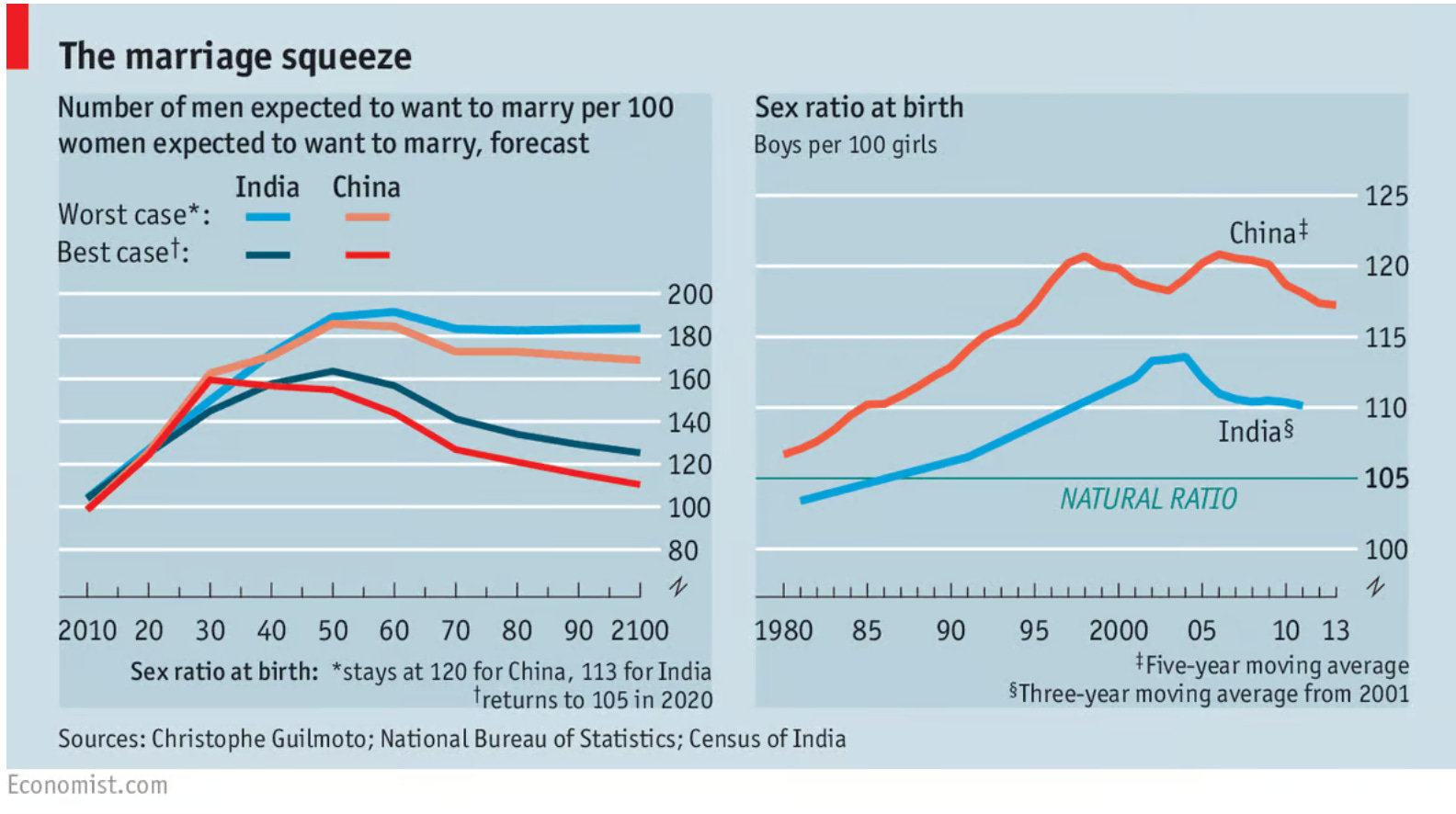
India’s marriage market is about to become extremely competitive (adverse sex ratios and falling fertility predict a bride-shortage). Young men will thus face intensified pressure to prove their worth. Yet what in-laws would want a man who cannot even protect his own sister?
For these reasons, young women in honour cultures are often strictly monitored by their brothers. Recognising these drivers, we can now identify powerful interventions.
Brotherly control is compounded by perceived threats
Loosening the strings of control requires addressing two cardinal factors: either reducing the relationship between male honour and female seclusion, or tackling perceived dangers.
In my model, the greatest threat does not come from women, but from other men who might harm or take advantage of one’s sister. Key therefore is to reduce this perceived fear of male aggression or misbehaviour.
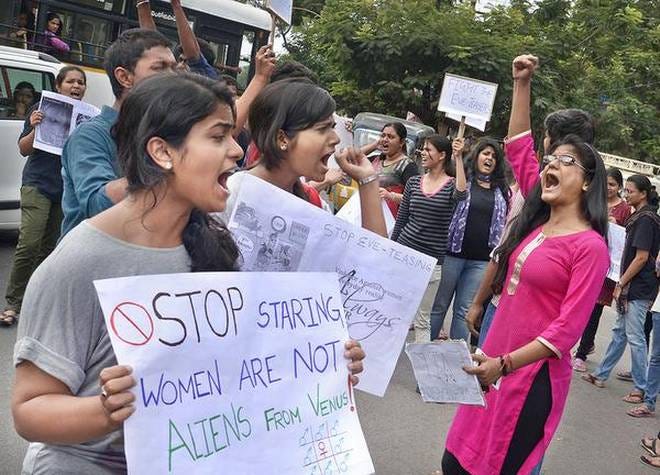
However, in some places, this fear is really pervasive. Pakistan provides a stark example of this reality, as vividly described by Fatima Bhojani, a writer from Islamabad:
“When I step outside, I step into a country of men who stare. I could be making the short walk from my car to the bookstore or walking through the aisles at the supermarket. I could be wrapped in a shawl or behind two layers of face mask.
But I will be followed by searing eyes, X-raying me. Because here, it is culturally acceptable for men to gape at women unblinkingly, as if we are all in a staring contest that nobody told half the population about, a contest hinged on a subtle form of psychological violence.
Bhojani illustrates why brothers might feel compelled to tightly control their sisters’ movements. In communities where women are constantly objectified, fears are inflamed.
If ’wolves’ lurk around every corner and women are taught that honour is primary, they may even accept close surveillance. After all, it is for their own good. Back to Fatima Bhojani:
“An elderly woman in my apartment building in Islamabad, remarked, “Apni izzat apnay haath mein” — Your honor is in your own hands. In Pakistan, sexual assault comes with stigma, the notion that a woman by being on the receiving end of a violent crime has brought shame to herself and her family. Societal judgment is a major reason survivors don’t come forward”.
Films, portraying one’s community, can shape expectations about the pathways and threats to men’s status.
Analysing thousands of movie scripts, Sunny Rai and colleagues find that Bollywood often focuses on shame, especially concerning female sexuality. Films frequently highlight sexual dangers and harassment - reinforcing pervasive distrust. Over and over, brothers are portrayed as responsible for guarding women’s virtue.
If young men see respected peers condemning even modest dressing, condemning it as provocative and irreligious, then brothers may amp up monitoring. In Uzbekistan, a 17 year old guy divulged that he was recently chastised for uploading a photo of his mother.
Recently, a British Muslim reprimanded women for wearing belts, threatened eternal damnation, and explicitly warned of ‘male threats’.
“Sisters nowadays, they’re wearing abaya, but they got this belt. Why you trying to show your figure? A woman who shows her figure will not come within 500 years of Jannah, bro. This is a hadith. And you’ve got thirsty brothers’.
Young women are most chaperoned, because they are most sexually desirable
One gender scholar said to me, ‘women gain status and freedoms with age’.
Honestly, I’m unconvinced.
In cultures where men’s honour depends on the chastity of their female kin, pretty young women are heavily restricted because they are the most desired, most likely to be seduced and thereby destroy men’s honour.
Older women’s greater mobility doesn’t really indicate status. Actually, it merely reflects less male attention and reduced sexual jealousy.
Let me share some examples from India and Uzbekistan:
In rural Bihar, women told me they typically stayed inside the house for two years after marriage, or at least until they had born a couple of children. [This preserves paternal certainty].
In a small town in Fergana Valley (Uzbekistan), I had lunch with five female friends. One had been married 17 years, had four children, and it was only now that her husband permits her to have lunch with female friends. Now that she is older and less attractive, her husband is less sexually jealous.
In conservative Namangan (Uzbekistan), I was the only woman under 50 at the market. Other young women were not even shopping. Men told me they did the shopping instead.
In rural Rajasthan, Muslim and Hindu women told me they were not permitted to go to weddings. Men said it could provoke jealousy (and fights).
Frankly, I’m baffled why some scholars claim that ‘women gain status with age’, because this omits causal mechanisms. Older women’s lack of desirability and economic insecurity means heightened dependence on sons. To secure patrilineal loyalty, mothers bind sons close, sometimes jeopardising marital love, thereby repeating cycles of abuse.
Pretty women are closely surveilled, especially by insecure brothers
In societies where male honour depends on female virtue, the most desirable women are the most restricted. Women gain ‘freedom’ only when society deems them too old to be desirable.
So, next time you hear about patriarchal control, don’t presume it’s fathers and husbands. Brothers, lacking alternative means of status, are often the ones policing their sisters’ every move.
Research hypotheses:
Brothers are guardians of their sisters’ virtue. This stems from their desire for status within honour-cultures, and their anticipation of threats, having observed widespread sexualisation with impunity. Addressing either driver might help sisters gain greater freedoms.
In South Asia, the Middle East and North Africa, girls without brothers may attain greater education, travel further for education, and may go on to get jobs. If families reduce their fertility and are content with only daughters, then those brotherless girls may gain new freedoms.
Bollywood films could reduce anxieties by celebrating respectful men, as effective bystanders, backed up by competent states. Conversely, constant media reporting of rape horror stories may fuel paternalism.
If law courts turn a blind eye to abuse, men learn they can assault with impunity. This holds globally, yet North America and European judges sometimes apply double standards. Just last year in Manchester, a father who beat his daughter with a metal bar, accusing her of meeting a boy, was allowed to walk free. Empirically, one might anticipate that stronger rule of law, protecting all girls, would reduce family violence.
I understand why courts in patriarchal societies like South Asia are too lenient with rapists and abusers. But what was going on with the court in Manchester? (Article was paywalled.)














 Tiktok failed to load.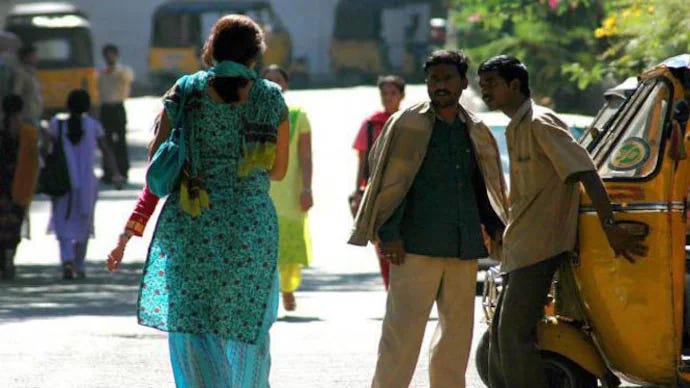

I understand why courts in patriarchal societies like South Asia are too lenient with rapists and abusers. But what was going on with the court in Manchester? (Article was paywalled.)
Not just brothers, but sometimes it's other female relatives on a power trip that do the policing to an insane extent.