
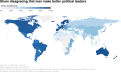

For a brief sliver of human history, modern economies generated mass demand for skills. Profitable firms and state bureaucracies sought highly-trained professionals capable of complex problem-solving. Stepping beyond maternal drudgery, women could marshal their wits, pursue careers, demonstrate their equal competence in socially valued domains and gain status. But for most of our past, power and prestige flowed to those who could command organised violence and achieve military might.
Warlords organised coalitions of armed men to seize new territories, capture labour, extract tribute, and return with concubines. The route to power and prestige thus lay in commanding militias who unleashed bloodshed in the anticipation of honour and booty. Masculinity thus became synonymous with dominance, and women’s security depended on the strength of their male protectors.
The earliest surviving writings typically commemorate conquest. Egyptian hieroglyphs celebrate pharaohs’ victories, Sumerian cuneiform glorifies warrior-king Gilgamesh; the Book of Moses narrates the Hebrew conquest of Canaan. Chinese bronze inscriptions commemorate campaigns against rival states, Homeric epics enshrine martial glory as male virtue, Assyrian annals list their captives, Roman triumphs revel in the humiliation of enemy defeat, while Mayan murals record subjugation. Across civilisations, elites inscribed victory as proof of divine favour and masculine glory.
If cities expanded but struggled to monopolise the use of force, then criminal gangs tried to gain the upper hand - using blackmail, intimidation and protection rackets to extract advantage. Men rallied into coalitions, which projected collective toughness, asserted dominance, defended shared honour, or else were humiliated as vulnerable losers.
Several new studies track violence through the ages - using skulls, bones and court records. Eisner and Peng (2026) show that cranial trauma was pervasive in prehistory. Baten, Benati and Sołtysiak (2022) find that everyday interpersonal violence in the Middle East rose during early urban competition but declined once these polities developed more effective internal governance. In the Andes, Arkush (2022) similarly documents waves of escalation followed by pacification under Inca imperial consolidation. In medieval England, Eisner and colleagues (2025) use coroners’ inquests to compare homicides between cities and show that killings were highest in Oxford, where young unattached male students enjoyed clerical privilege and weak enforcement.
Tying the knot, these datasets suggest that violence flourished when organised armed groups competed for resources without restraint - neither constrained by overarching empire or credible rule of law. Brutality only declined when credibly constrained by effective institutions.
Cracked Skulls from Prehistory
Ancient burials often included skeletons with evidence of trauma - either unhealed lethal blows or healed damage, indicating recurrent warfare. Until recently, studies typically focused on individual sites, making it difficult to discern broader trends, but Eisner and Peng’s fantastic new paper aggregates the evidence across all time periods and regions. (If you’re in the Bay Area and heard a scream of delight, I can only apologise).
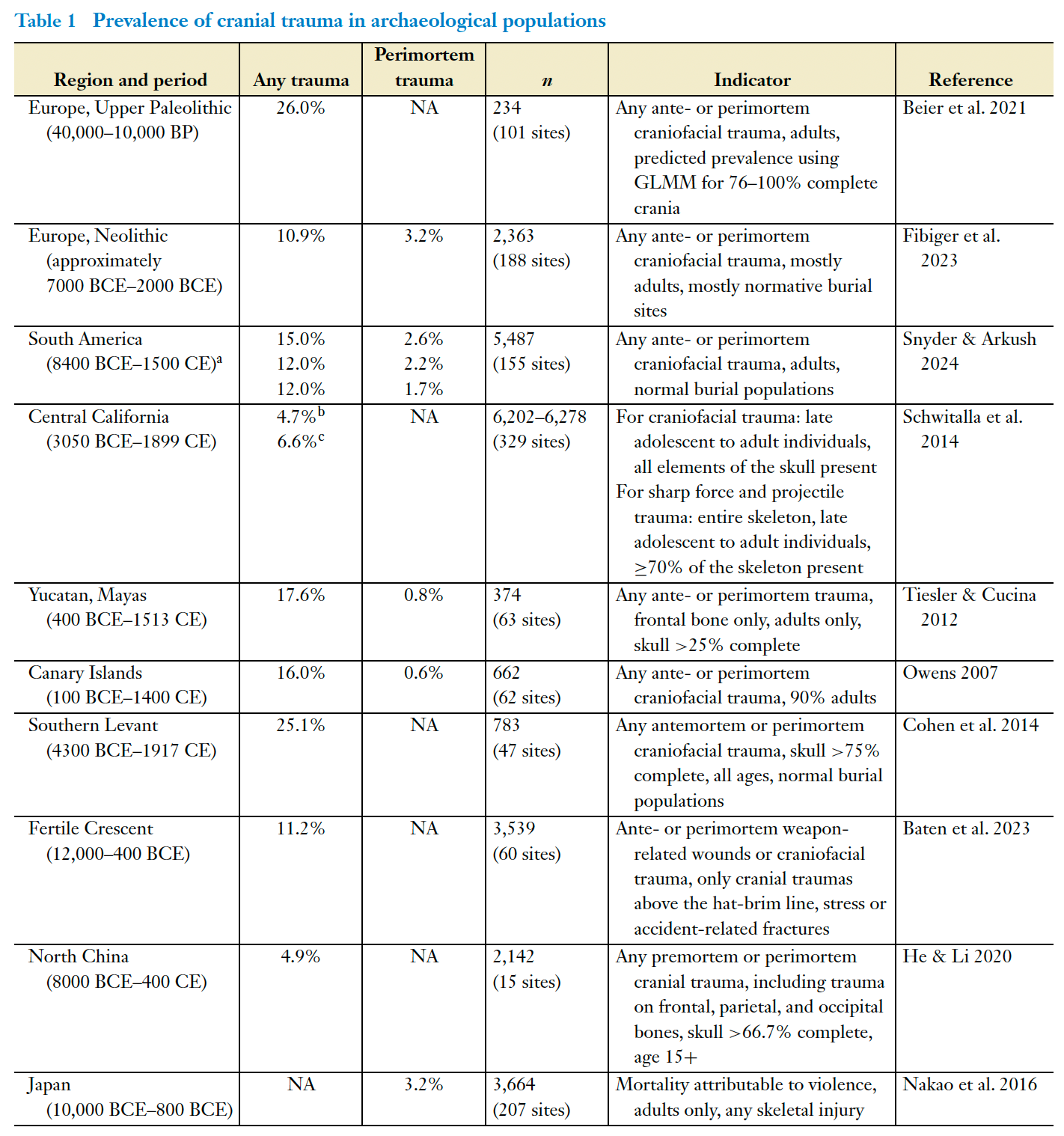
Across Europe, the Andes, the Levant, North China and pre-contact Mesoamerica, roughly 10–25% of adults show evidence of cranial trauma. In Neolithic Europe, 11% of skeletons bear violent head injuries, in the Southern Levant it’s over 25%. In pre-contact South America, rates cluster around 12–15%.
Caveat: all archaeological evidence must be viewed cautiously, since we only have access to that which survived. Any sample is of course a tiny fragment and partial.
Male Coalitions, Female Risk
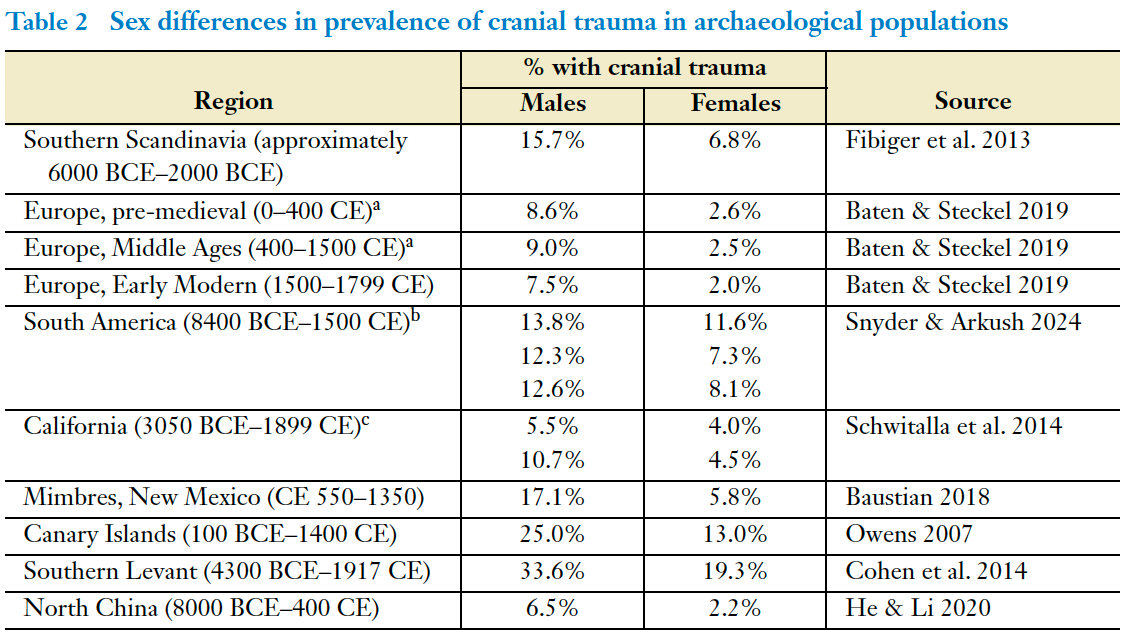
Men were typically two to four times more likely to exhibit cranial injuries, suggesting they were the primary actors in organised combat.
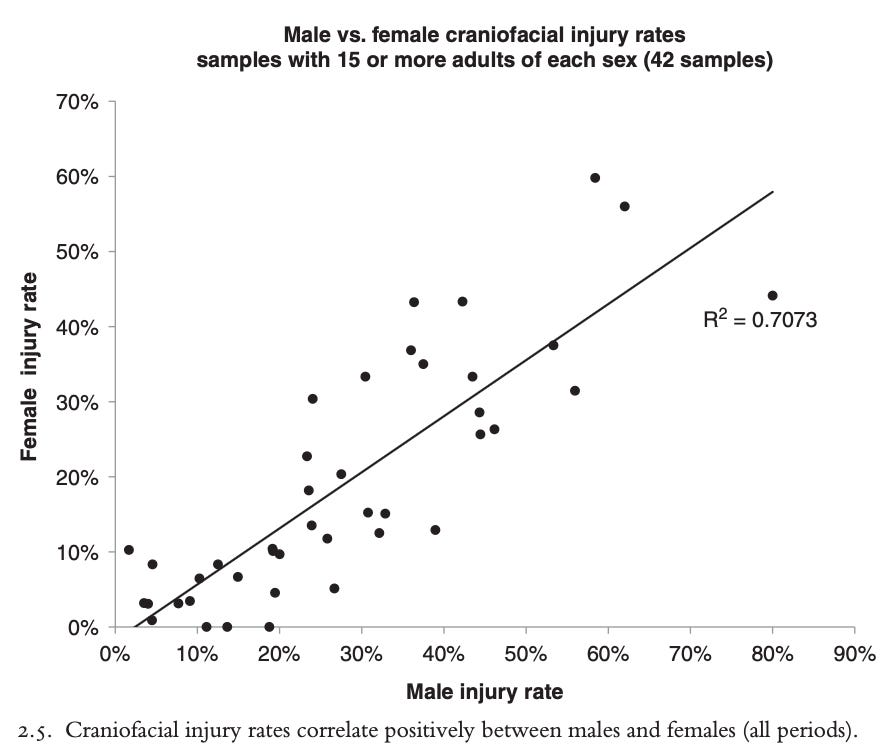
Crucially, rates of female trauma rise and fall alongside male trauma. In societies with high overall violence, women also show elevated rates of injury. While this study doesn’t tell us whether women were being murdered in war or by their husbands, it’s certainly clear that violent ecologies have large spillovers, with more victimisation of women. This aligns with my earlier analysis of pre-industrial small-scale societies and contemporary patterns in Latin America.
State Formation and Competition in the Middle East
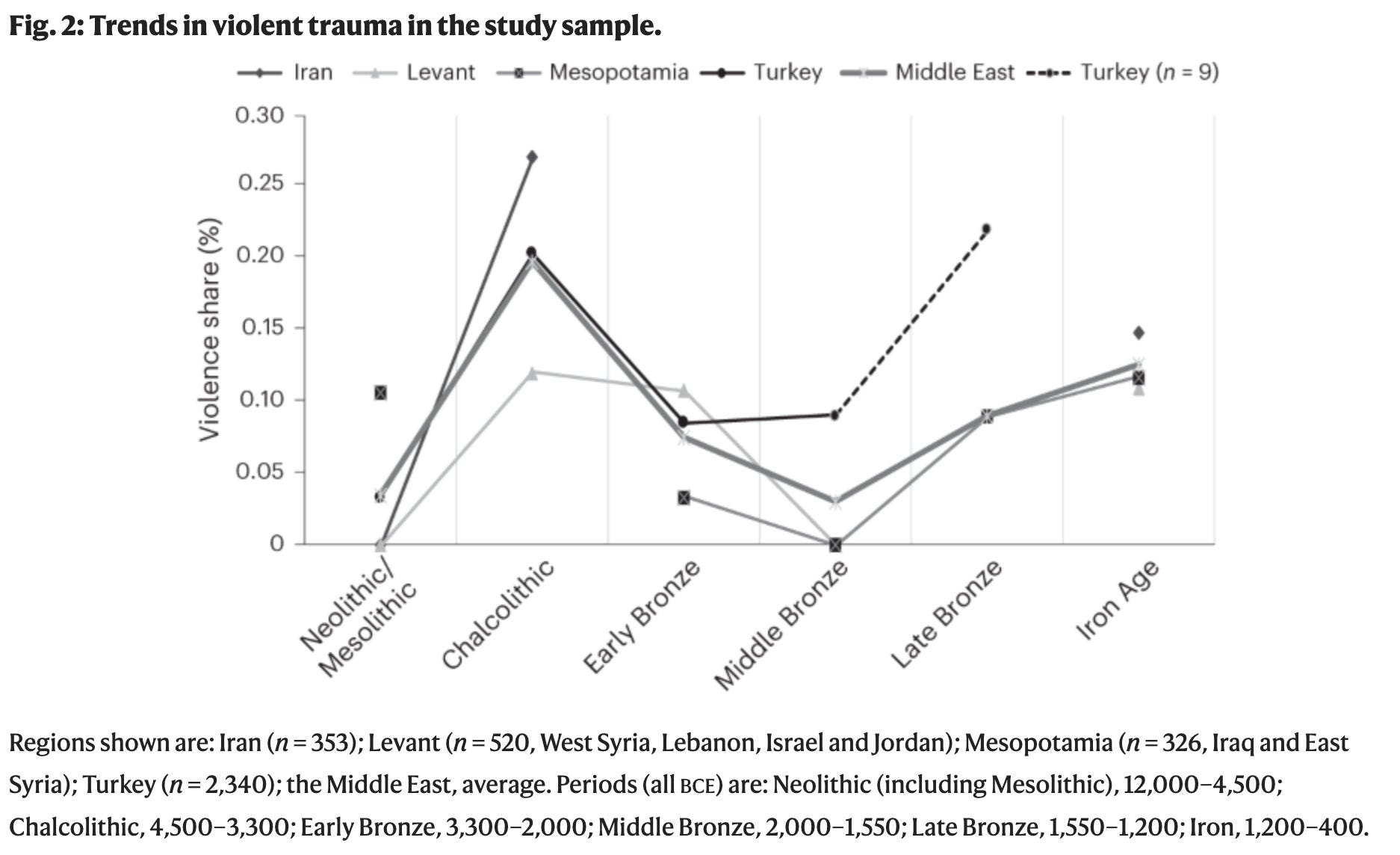
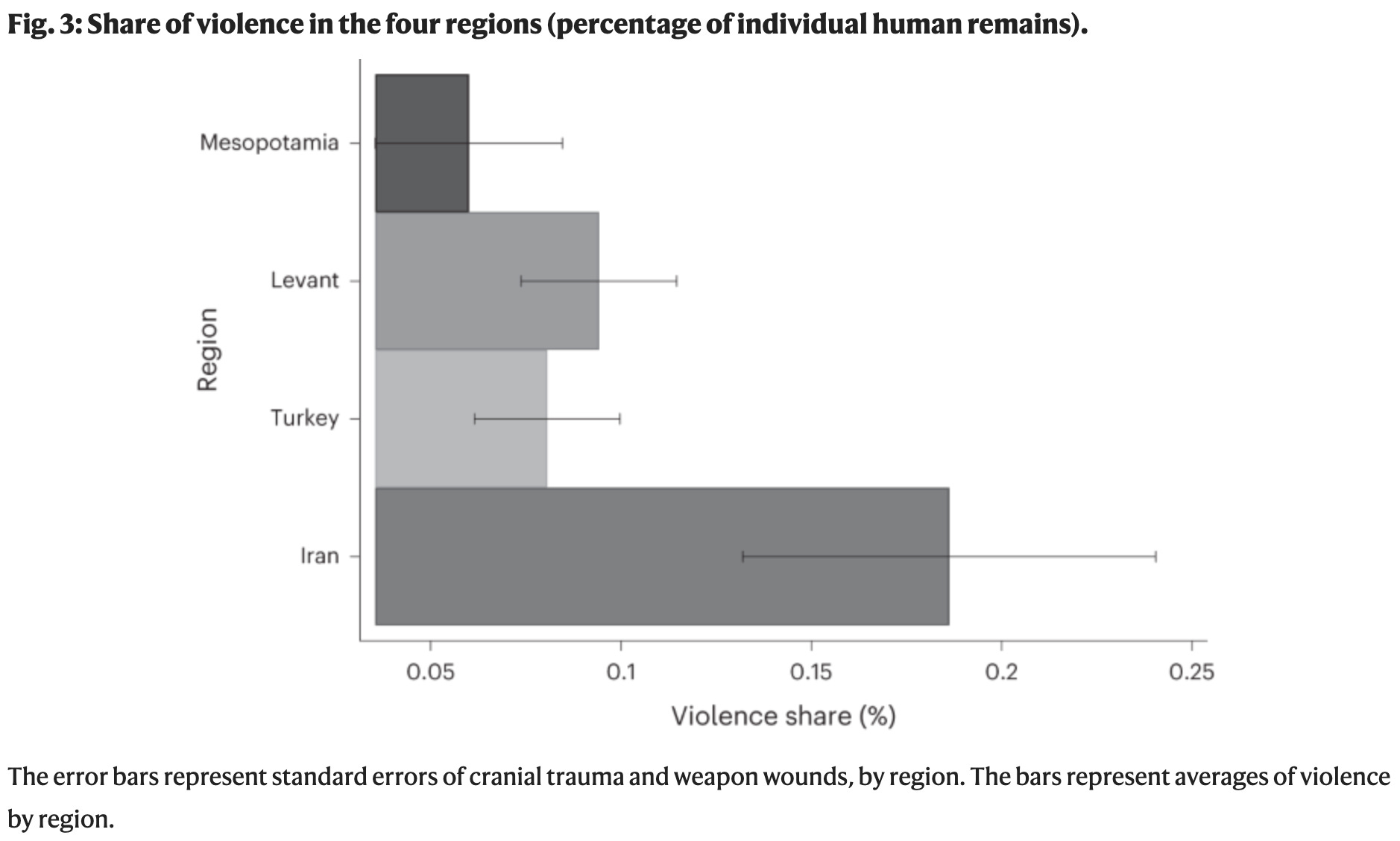
Baten, Benati and Sołtysiak analyse 3,539 individuals from across Turkey, Mesopotamia, the Levant and Iran, from 12,000 to 400 BCE, measuring interpersonal violence using cranial trauma and weapons-related injuries.
Trauma was relatively low during the Neolithic, when population density was sparse and groups could avoid each other. Violence peaked during the Chalcolithic period (c 4,500–3,300 BC), when early urbanisation and pro-state formation intensified resource competition.
Curiously, trauma seems to have declined during the Early and especially the Middle Bronze Age (c 3,300–1,500 BC). This was precisely when Mesopotamian polities developed consolidated territorial control, codified law, bureaucratic administration and expanding trade networks. The decline persists even after controlling for battle sites, military innovations and climate shocks. Baten and colleagues suggest that greater state capacity may have reduced everyday interpersonal violence.
However, violence rose again between the Late Bronze and Iron Ages (c 1,500–400 BC) - amid droughts, political fragmentation, mass migration, large-scale warfare, and imperial expansion.
Baten and colleagues suggest that early state formation coincided with greater violence, but once states achieved credible internal enforcement, then interpersonal violence declined within their territories. The implication is that stronger states can reduce violence, within their own walls. Though this is fragile.
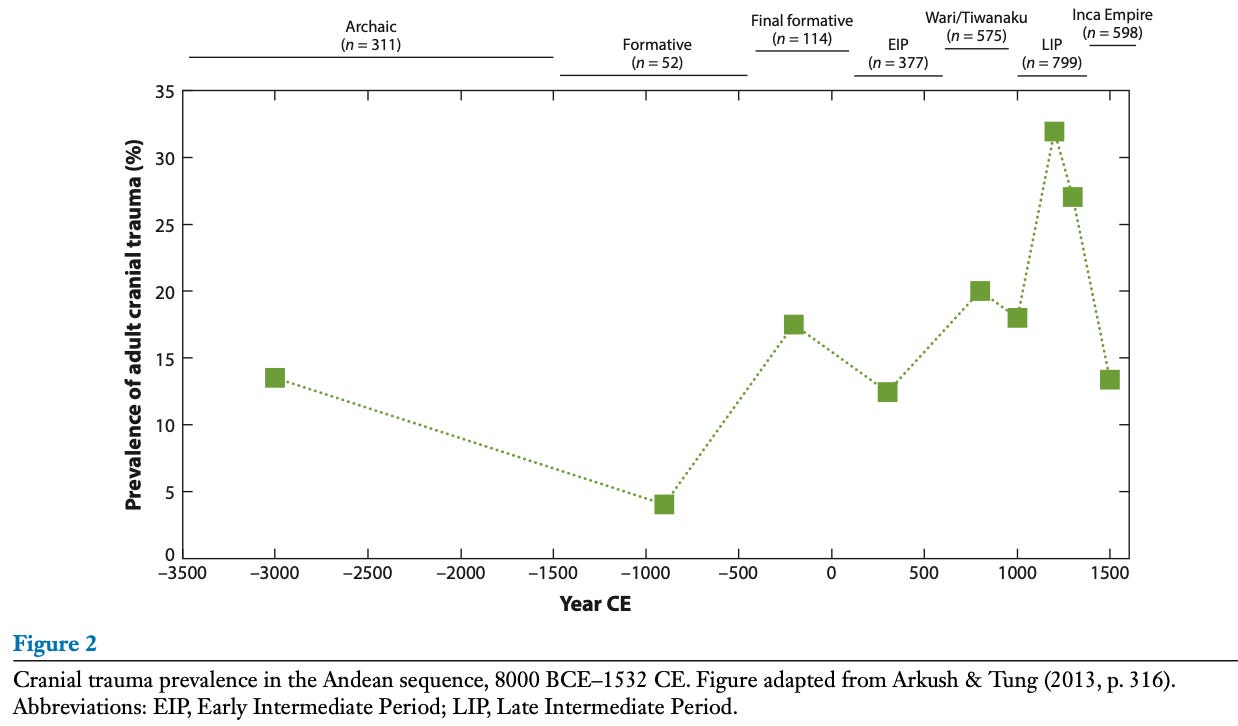
When did Violence peak in the Andes?
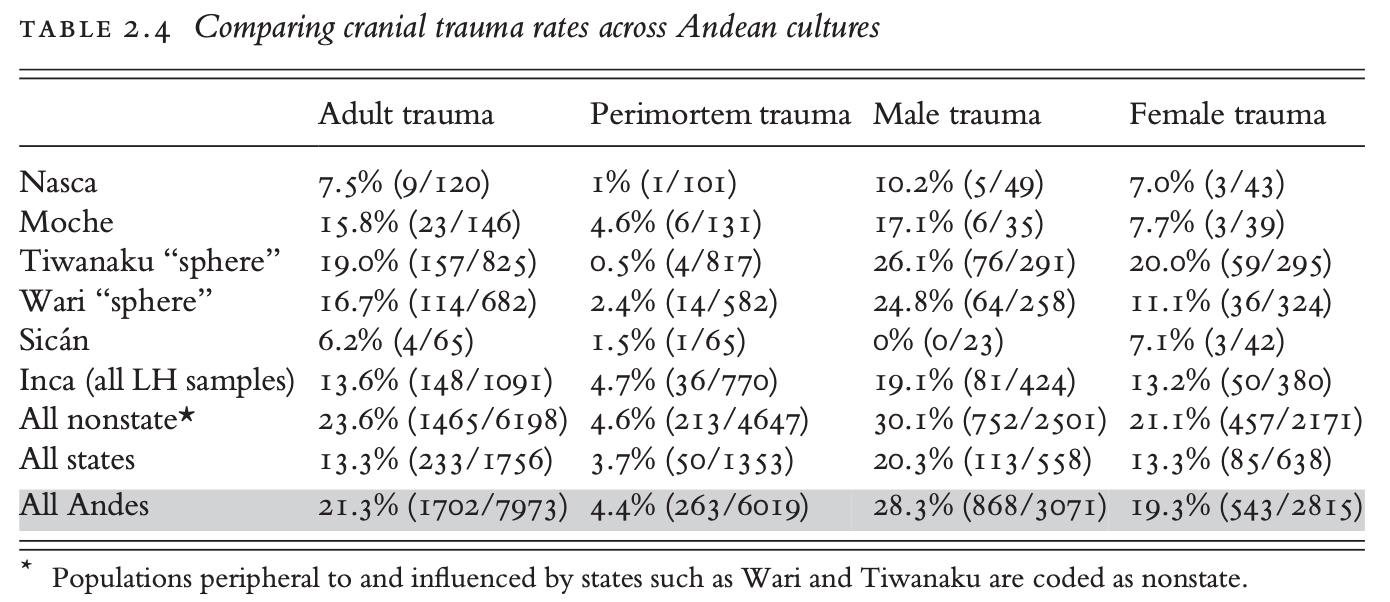
Elizabeth Arkush synthesises Andean datasets, tracking cranial and facial trauma over time, distinguishing between healed injuries (repeated fights) and perimortem, unhealed wounds (likely lethal blows).
After 400 BC, trauma rose alongside the proliferation of fortified hilltop settlements. Small-scale societies fled to the hills and erected protections, suggesting constant fear of attack. Sites such as Chankillo, with massive stone walls, parapets and controlled access points, reflect escalating inter-group conflict. In some highland regions, between 1000-1450 CE, over 30% of skeletons show evidence of trauma.
From the mid-15th century, violence appears to have declined. The consolidation of Inca imperialism dampened local cycles of inter-community warfare.
When Men Fight, Women Suffer
28% of all men show head or face trauma, compared with only 19% of women. Men were also more likely to accrue multiple wounds, suggesting repeated attacks. Women’s cranial trauma was often at the back or side of the head - presumably as they were fleeing or crouched in fear.
Across large samples, there is a strong positive correlation between male and female trauma. This holds across time and between different societies.
Spectacles
Andean leaders also created spectacles to affirm their political dominance. As Arkush details, they publicly paraded prisoners of war, hoisting up trophy-heads, carving victories into temple walls, and lauding this as part of spiritual regeneration.
From the first millennium BC, monumental centres across the northern and central Andes were saturated with violent imagery. At Cerro Sechín, granite panels depict rows of warriors and their dismembered bodies: severed heads, detached limbs, exposed innards. Temples were designed to evoke predation, with visuals of fanged mouths, feline deities, and divine consumption.
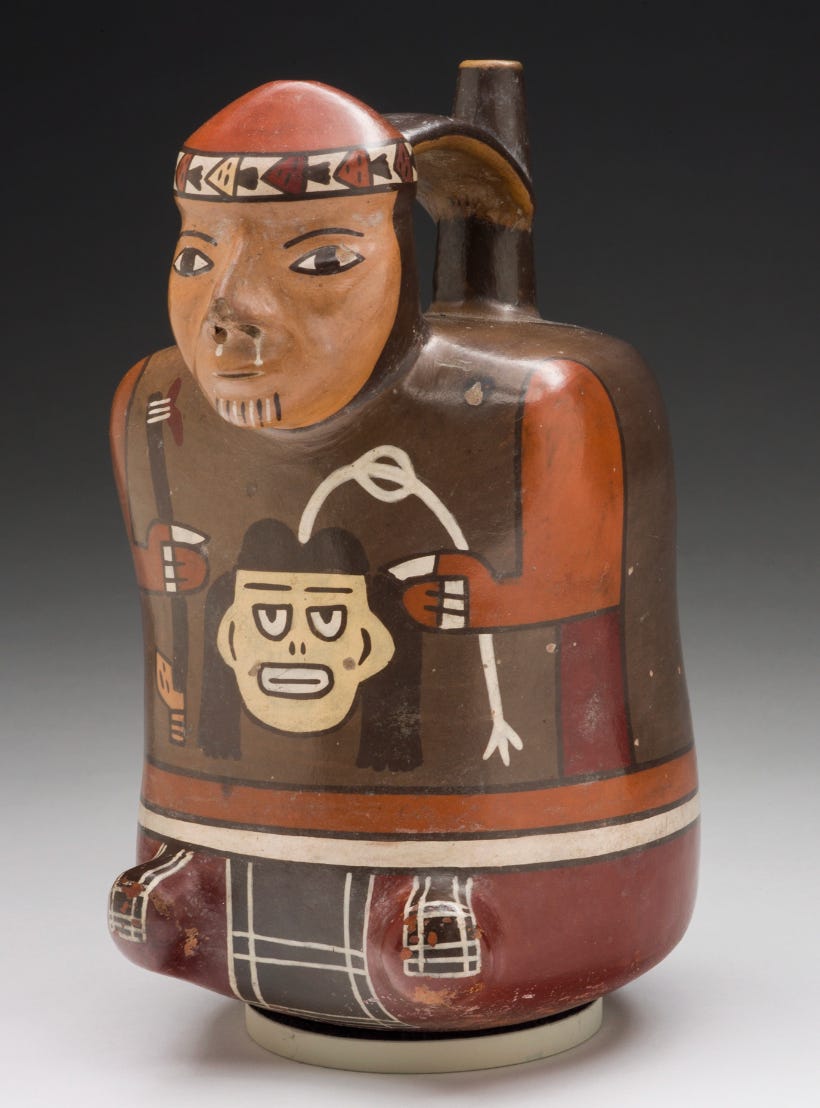
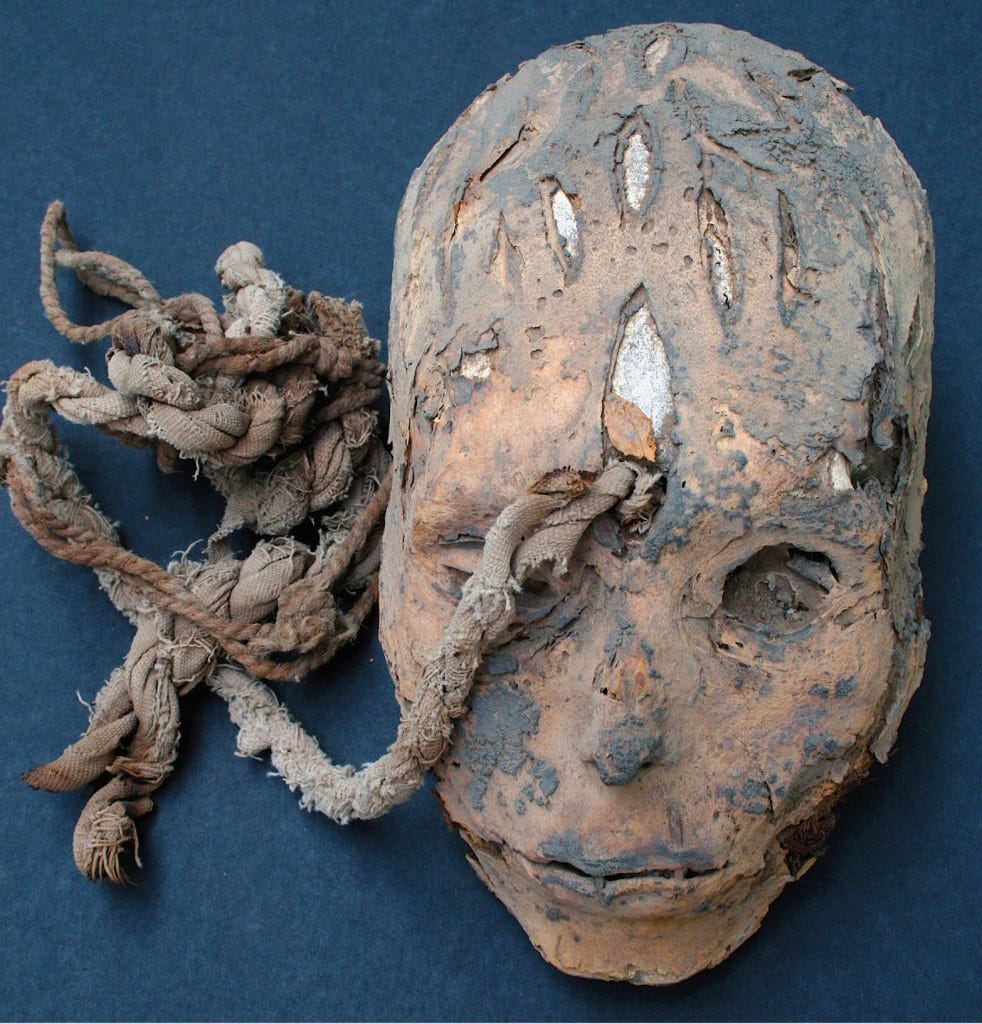
The Nasca (of Peru’s south coast) carefully prepared trophy heads by removing brains, drilling holes through fontal bones, applying paint, then carrying them in public processions. Trophy heads sometimes sprouted plants, to convey the link between decapitation and regeneration.
Even when attacks lessened during the first centuries of the common era, the Nasca continued to elevate trophy heads as symbols of warriors, political authority and magical fertility. Dominance and brutality gave men prestige.
Medieval Murders, Oxford’s Impunity
Comparing cities across Medieval England, Eisner and colleagues reveal the importance of enforcement.
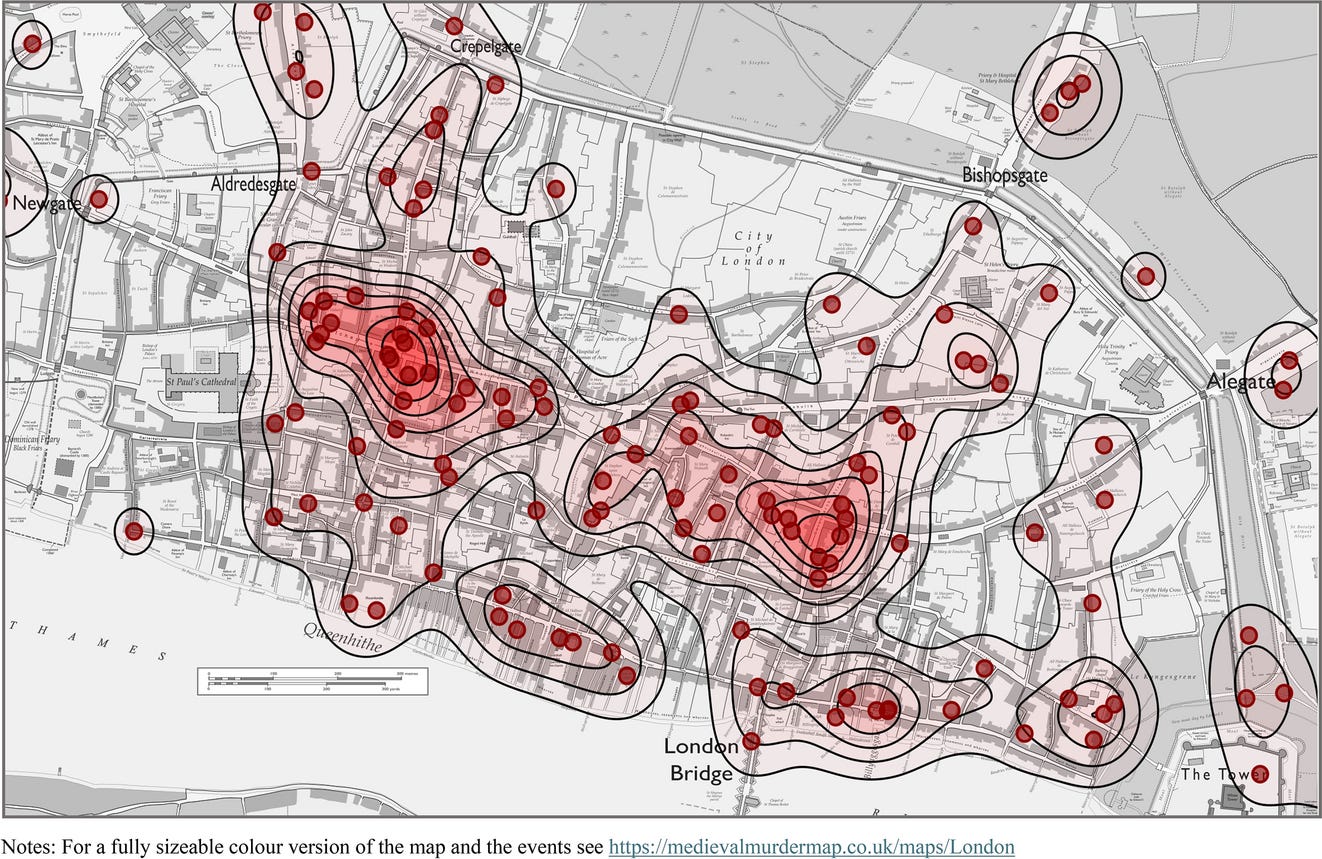
First up, they use coroners inquests to reconstruct recorded homicides in 14th century London, York and Oxford. Now, you’re probably imagining charming towns with participatory assemblies, guilds, courts, churches, and civic administration.
Um.
London and York’s estimated rates of homicide were 20-30 per 100,000 inhabitants - on par with contemporary Mexico. By contrast, Oxford’s was 90-100 per 100,000 inhabitants. Though for context, it was only a small town of 6,000 souls, so that worked out as 5 or 6 killings a year.
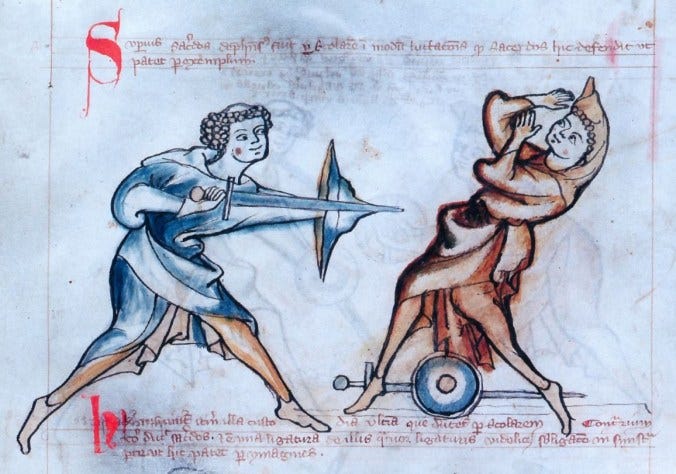
Over 90% of victims were male. Most killings were executed by groups. As was common across pre-modern Europe, attacks sometimes involves disfiguring someone’s face, so as to destroy their honour.
Why was Oxford so violent?
University towns were often dangerous. Large numbers of young males came alone and unaccompanied, then organised into student associations, divided by factional loyalties - ‘Northerners’ versus ‘Southerners’. 75% of all recorded victims and perpetrators were described as clericus/cleric - usually referring to individuals affiliated with the university, mostly students.
Legally classified as clerics, they were immune from prosecution under common law. Church courts were rather lenient, generally favouring penance, fines, or spiritual sanctions. In sum, a diverse motley of young men, high on testosterone, and getting off scott free.
Institutions really mattered (so my pal Acemoglu should be happy). Arrest rates were highest in London, lower in York, and lowest in Oxford. Credible governance and deterrence evidently proved pacifying, and that’s equally true today.
From Mobs to Magistrates
Smashed skulls remind us that organised violence was pervasive for most of human history. In such ecologies, men gained power by assembling mobs and militias, forging solidarity and glorifying domination. Bigger armies and sharper military innovations enabled ever greater extraction - of land, labour and tribute. Commanding force got you status.
When state enforcement was weak, private groups wrestled for advantage, battering rivals with stone axes, obsidian-edged macuahuitls, talwars and kris daggers.
As rulers monopolised force and courts gained authority, the returns to aggression began to fall. Only under these conditions could men (and much later women) pursue status in other domains - administration, commerce, innovation, and literature. (Or at least until AGI turfed us all out).
Anyone who tells you that there was some primordial feminist utopia where we all lived in harmony may be better suited to writing fiction.
Postscript
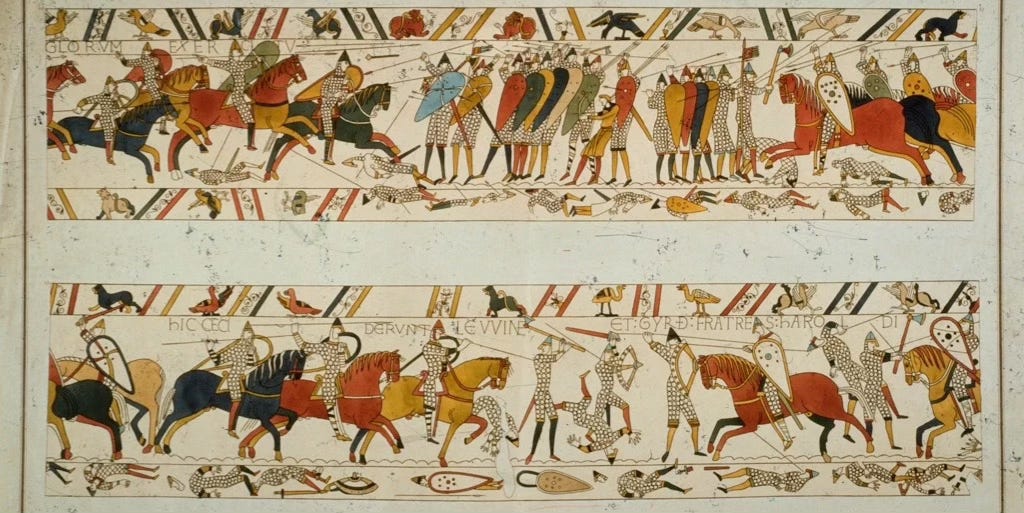
The Bayeux Tapestry depicts a pivotal moment in British history when it was conquered by Norman warlords. It includes 202 horses and 55 dogs; how many women?
To give another example of martial glory, let me share that my ex-army father decorated our home with spears, swords and paintings of battles. He then taught us how to fire guns, crossbows and slingshots. Though the only form of violence I pursued is savage trolling ;-)
Good article.
The Bayeux Tapestry and it's lack of women also illustrate your wider point about women being the victims of violence as one of the few scenes with a woman in it, is one where she and a child are escaping from a burning building as the Normans pillage the countryside.
Great post on violence thru history.
Tho mentioning a possible (likely?) future AGI threat is a bit off. Especially since the obvious & clear reduction in D.C. crime since Trump escalated enforcement against criminals, a perfect example of strong state reducing homicides, nor any other prior year intervention was noted.
Sadly, there has been a big increase in rapes in South Africa, along with more homicide & other crime. Due to weak, ethnic over state law focus. It’s likely that where there is more murder, there s also more rape, tho less skeletal evidence survives from the past.