
When women rise up to positions of power, they are often attacked. This holds worldwide - in the US, Mexico and even in Sweden. Why is this?
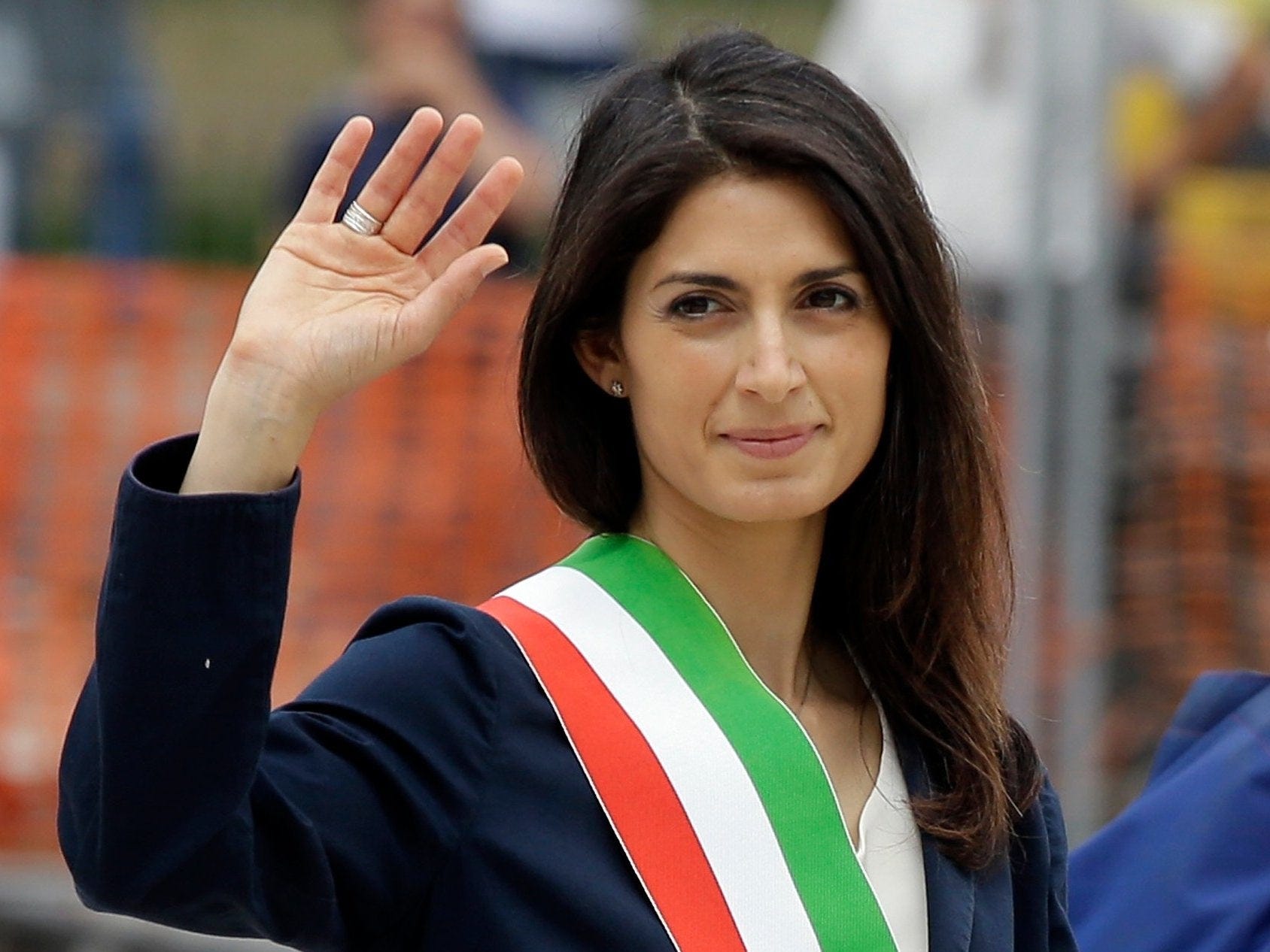
Gianmarco Daniele, Gemma Dipoppa, and Massimo Pulejo have a tremendous paper analysing (online and offline) attacks against Italian mayors.
To assess whether there are any sex differences in victimisation, they study victories that are marginal. 5.7% of narrowly-elected male mayors are attacked; 15.7% of marginally elected women.
But maybe women are just overly sensitive, perhaps this is a function of reporting? Actually, the trend holds even when excluding self-reported attacks. Nor is it a function of generalised violence. Eliminating various hypotheses, the authors show that (marginally elected) women are three times more likely to be attacked.

Why might this be?
The authors test and convincingly rule out:
Non-gendered characteristics, like qualifications and profession.
Policy-making. Male and female mayors (who are narrowly elected) have similar budget allocations.
Organised crime. Regardless of the mafia’s local strength, women are still more likely to be attacked.
Political orientation. Ideological leaning makes no difference.
Corruption.
Whatever women say or do, they are still more likely to be attacked.
Why might this be? Is it driven by municipalities that are more patriarchal?
Surprisingly no!
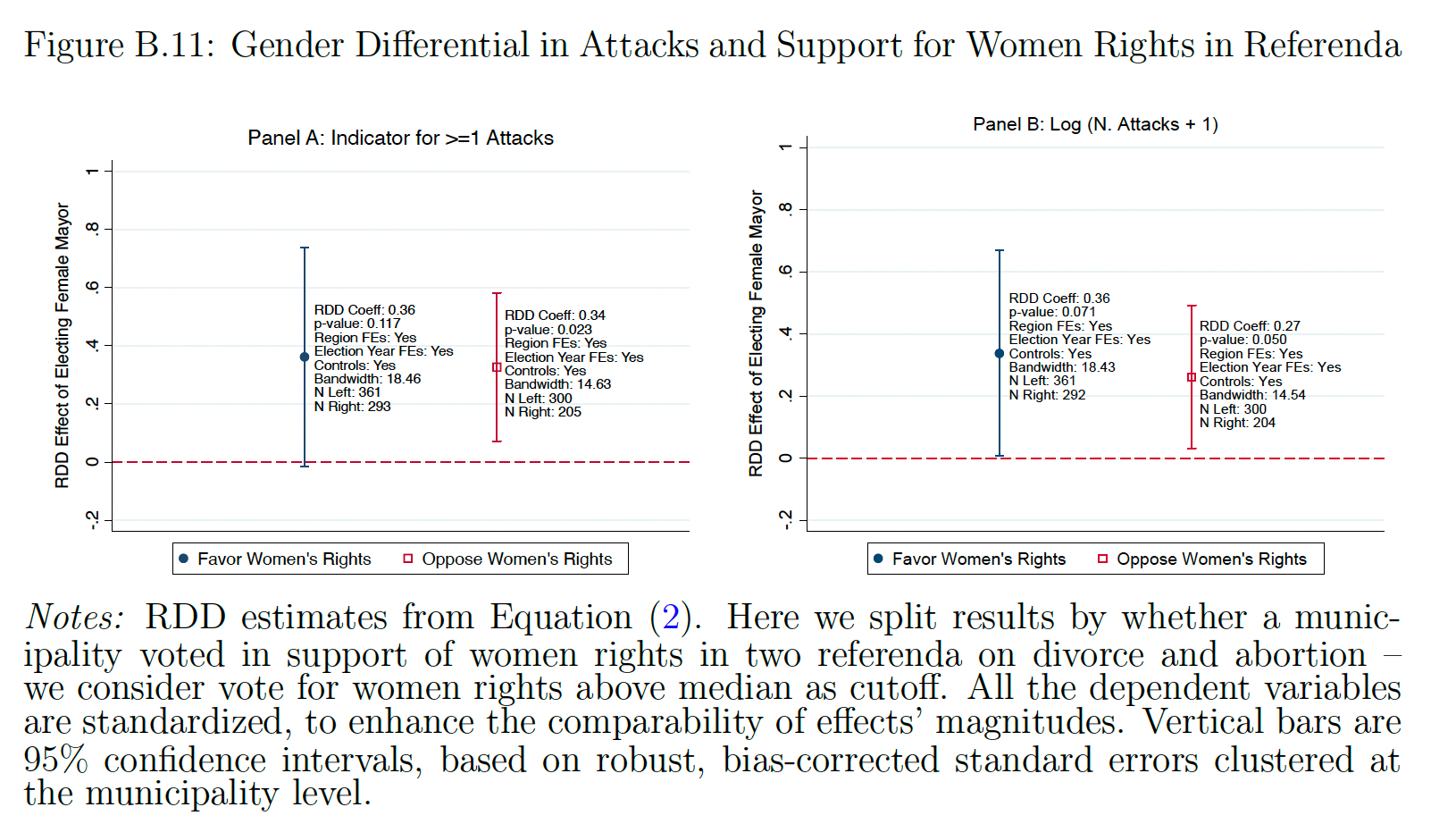
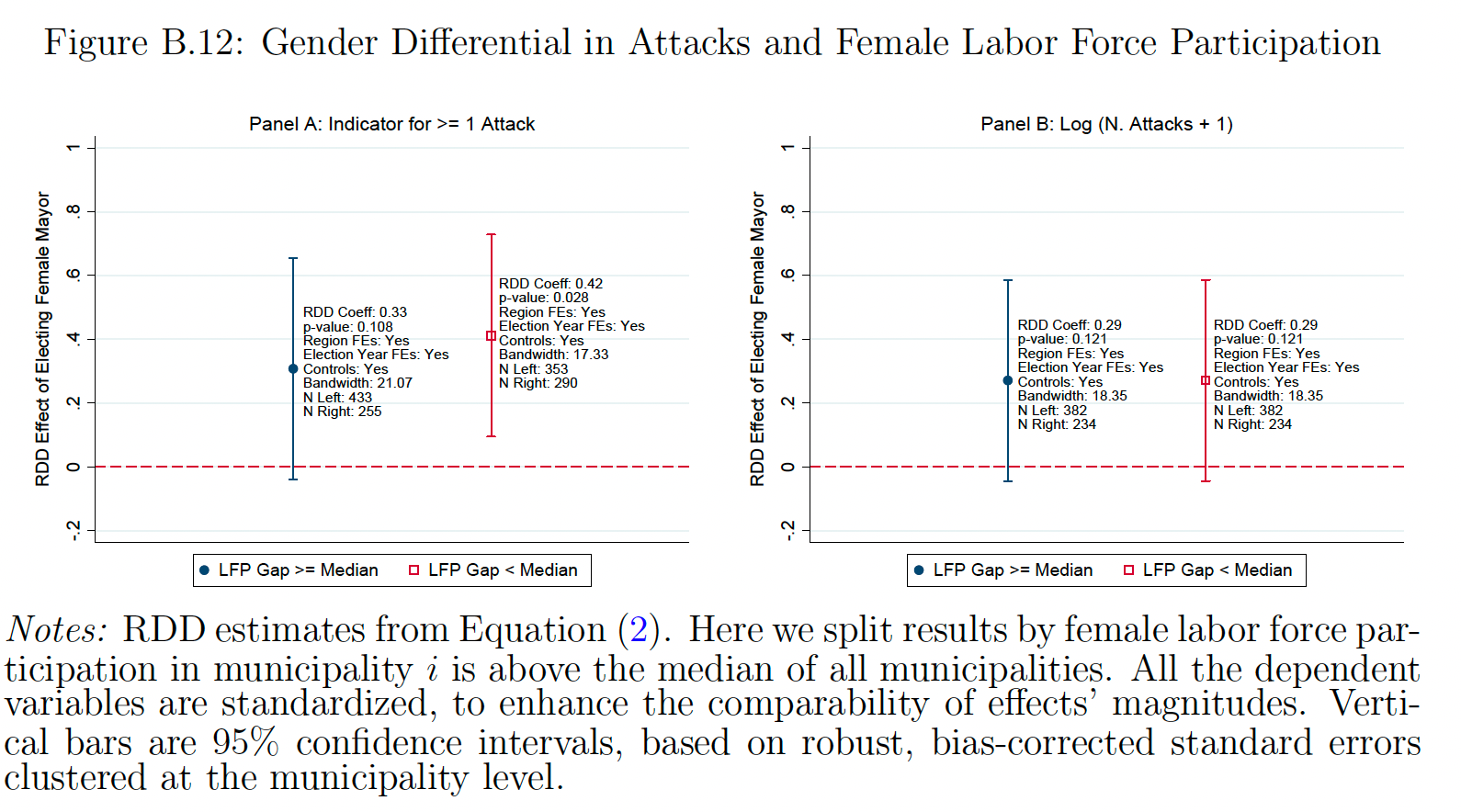
Even in Italian municipalities that historically voted for women’s rights or now have higher rates of female labour force participation, women are just as likely to be attacked. Sub-national cultural variation doesn’t seem to explain their results.
That doesn’t negate the importance of norms, of course. In more gender equal Sweden, the sex-difference in attacks is smaller.
What on earth is going on?
Patriarchal backlash
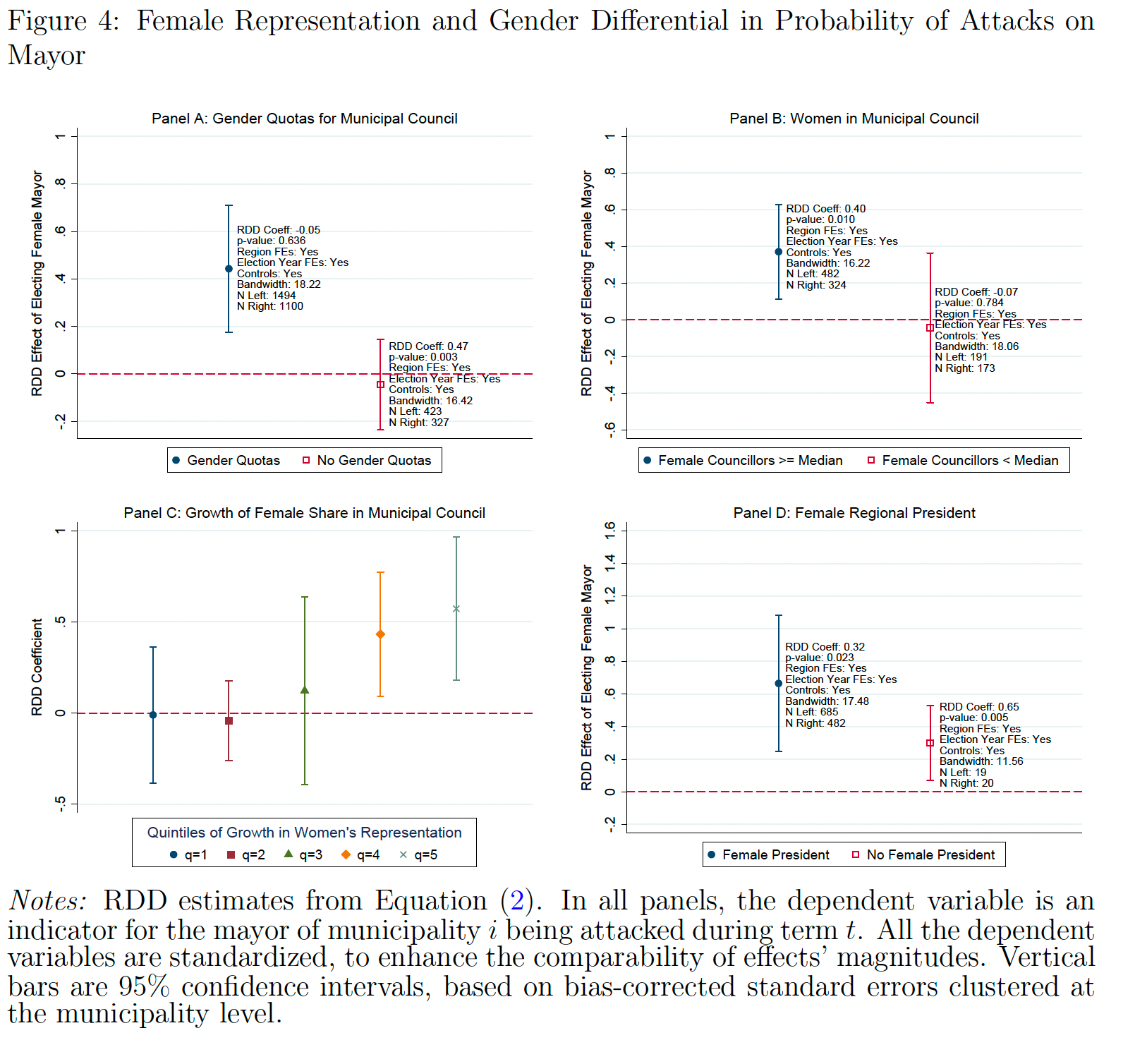
Since 2013, municipalities with over 5000 residents must use electoral quotas. This exogenously increases the share of women on the municipal council. Female mayors are only more likely to be attacked in these municipalities, where the quota has raised multiple women into positions of power.
The larger the growth in female representation, the greater the gender differential in violence. And when a woman governs the entire region, attacks on female mayors escalate.
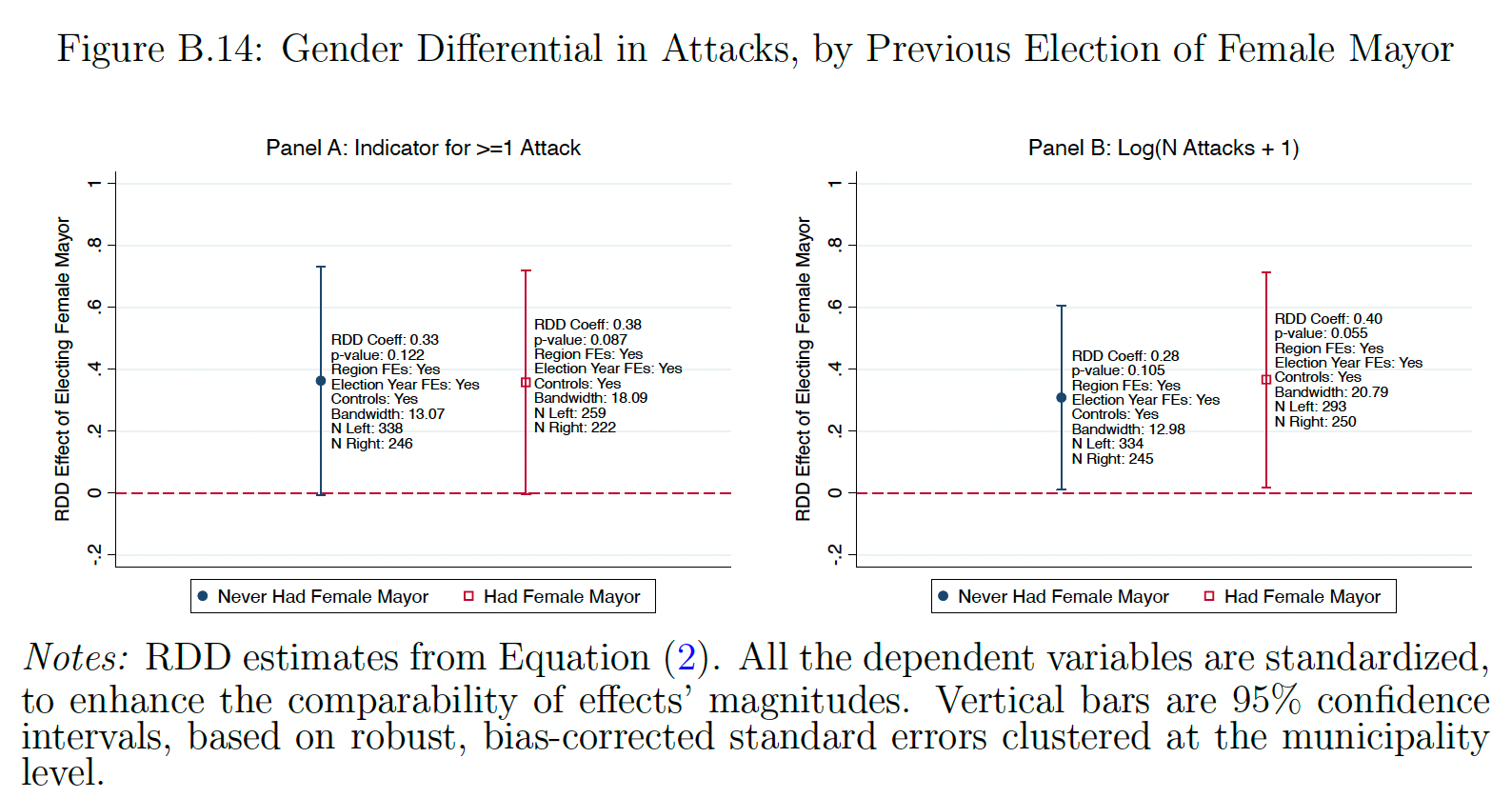
But if backlash is a function of patriarchy then perhaps it will lessen with prolonged exposure to women in positions of power? Actually no. Even in municipalities that previously elected a female mayor, there is still a sex-skewed ratio in attacks.
Forcing Women Out
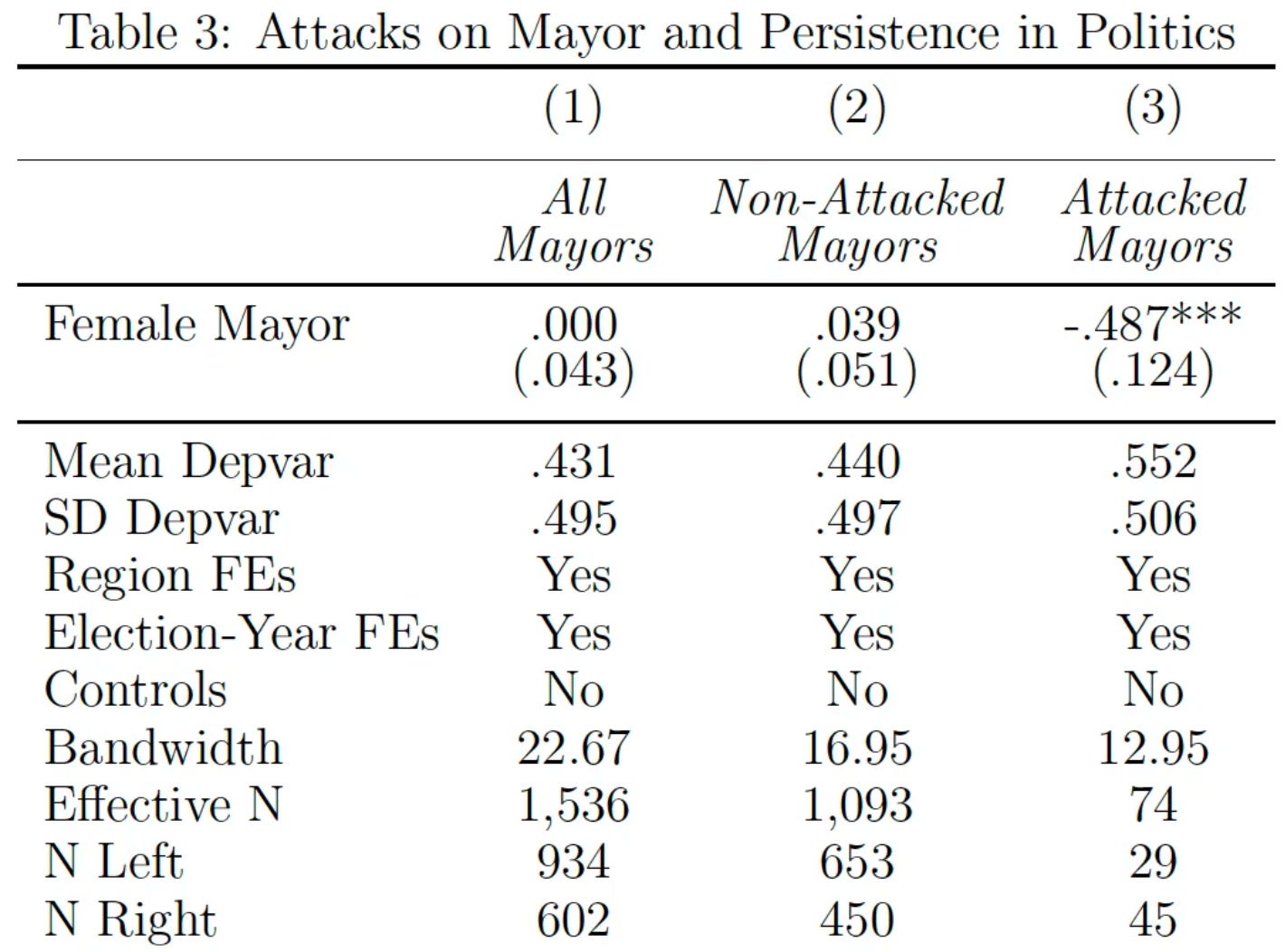
The gender gap in attacks is concentrated on mayors in their first term. That is, those who can be re-elected.
Female mayors who do not get attacked are just as likely as men to run again. Victims of attacks tend to withdraw. Violence works, it forces women out.
When women rise up and challenge patriarchal ideals, they face violent backlash. This is not unique to Italy. Feminist mobilisation in Spain also triggered resentment and votes for the far-right.
What about male unemployment?
22% of young Italian men are currently unemployed. 70% still live with their parents. They’re unable to get jobs, be independent, attract girlfriends, let alone start a family. Fertility has plummeted. It’s now the lowest in Europe. Life is tough.
A broader literature suggests that male unemployment can trigger hostile sexism. When American men lose work, sexual harassment goes up. They also tend to share abusive porn, oppose abortion, buy guns, and reject female politicians. White men retrenched in 2020 were more likely to support Trump. Backlash is most severe in communities where unemployment has disproportionately hit men.
Men who feel unfairly disadvantaged also tend to endorse hostile sexism, e.g. “women exaggerate problems they have at work”, “women seek to gain power by getting control over men”. This resentment holds in both China and America. Across Europe, young men in places with rising long-term unemployment express stronger opposition to women’s rights. So too in Brazil, Bolsonaro won more votes in places where economic recession adversely hit men.
I’d speculate that it’s not just a question of female power, but male insecurity.
That’s my only footnote to an otherwise fantastic paper on a global phenomenon: violence against women who dare to rise up.